Jump to Content
Actinic Keratosis Treatment Market - Size, Share, Industry Trends, and Forecasts (2024 - 2031)
Actinic Keratosis Treatment Market Size:
Actinic Keratosis Treatment Market size is growing with a CAGR of 5.50% during the forecast period (2024-2031), and the market is projected to be valued at USD 9,358.62 Million by 2031 from USD 6,118.60 Million in 2023.
Actinic Keratosis Treatment Market Scope & Overview:
Actinic Keratosis (AK) is a precancerous skin condition that arises because of prolonged sun exposure. Skin typically appears as rough, scaly patches on the sun-exposed area. The severe condition of actinic keratosis (AK) progresses to squamous cell carcinoma which is a type of skin cancer. The common type of actinic keratosis (AK) treatment generally consists of various procedures such as cryosurgery, chemical peel, curettage, photodynamic therapy, and others. The treatment also consists of topical medications that consist of various creams, gels, and others in formulations consisting of 5-fluorouracil (5-FU), Diclofenac sodium, Imiquimod, Tirbanibulin, and others.
How is AI Transforming the Actinic Keratosis Treatment Market?
AI is significantly impacting the actinic keratosis treatment market by enhancing diagnosis, improving treatment strategies, and potentially lowering costs. AI algorithms can analyze skin images with high accuracy, aiding in early and accurate detection of AK lesions, even those difficult to identify with the naked eye. This leads to timely intervention and potentially preventing progression to squamous cell carcinoma. Furthermore, AI is being explored for personalized treatment recommendations and monitoring patient progress.

Actinic Keratosis Treatment Market Dynamics - (DRO) :
Key Drivers:
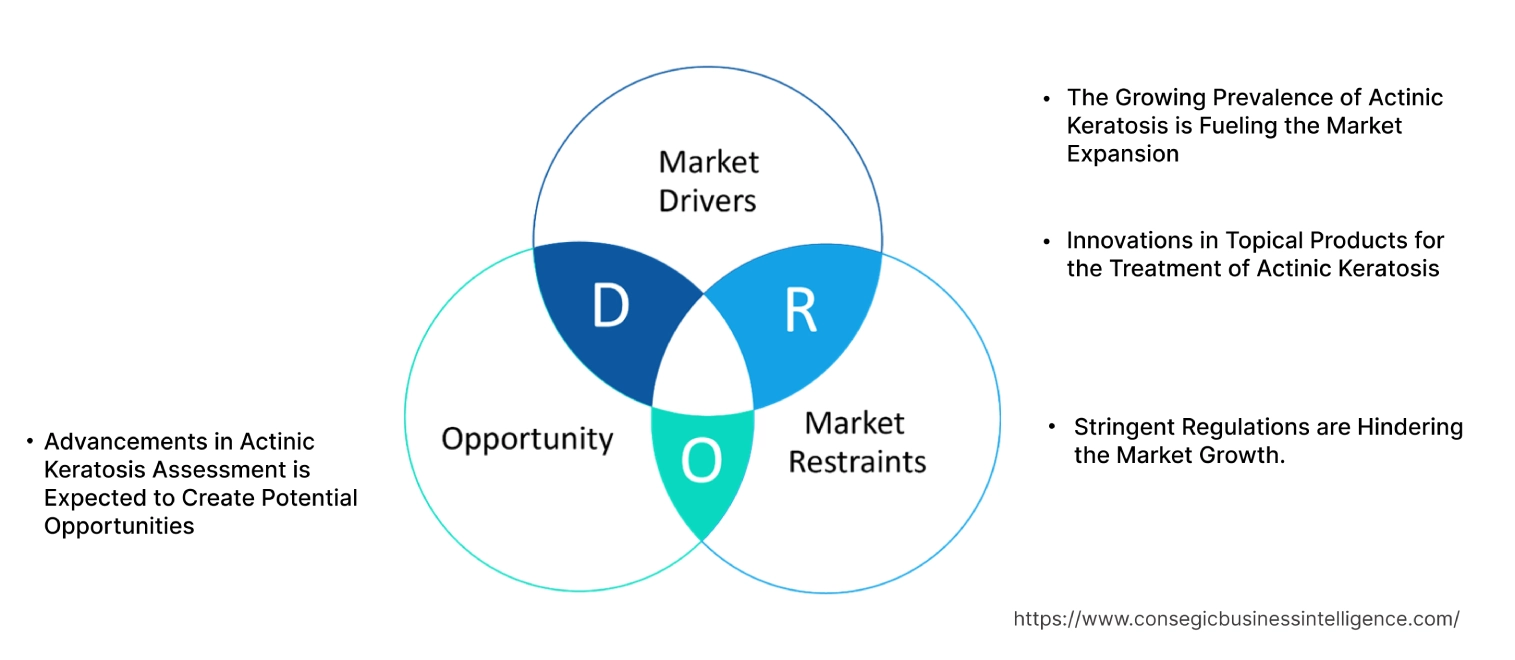
The Growing Prevalence of Actinic Keratosis is Fueling the Market Expansion
The significant rise in the cases of Actinic Keratosis is a prominent factor in accelerating market growth. The geriatric population is particularly susceptible due to their lifetime exposure to UV radiation and often inadequate sun protection measures.
Individuals with fair skin, light hair, and light-colored eyes are at increased risk because their skin contains less melanin pigment, offering less protection against UV damage. Additionally, those individuals who have spent significant time outdoors or in sunny climates are more likely to develop this actinic keratosis. These factors lead to the prevalence of actinic ketosis.
- For instance, Additionally, according to the new article published by News Medical, the prevalence of actinic keratosis varies across regions. In the United States, it affects approximately 10.2% of females and 26.5% of males. In the United Kingdom, the rates are lower, with 15% of males and 6% of females affected.
The rising awareness of sun exposure risks and the importance of early actinic keratosis detection and treatment is driving demand for effective and convenient treatment options. This trend is fueling the development of innovative therapies that align with patient preferences and lifestyle needs. As a result, the actinic keratosis treatment market is witnessing a significant rise, driven by the growing prevalence of actinic keratosis.
Innovations in Topical Products for the Treatment of Actinic Keratosis
The growing demand for effective treatment solutions is creating the requirement for advancements in topical products for this condition to prevent the risk of skin cancer in the future. Newer formulations of existing topical therapies, such as imiquimod, have been developed to improve efficacy and reduce side effects. These formulations often have lower concentrations or different delivery systems, leading to better tolerability. The development of novel formulations and combinations of medications is influencing the development of innovative products. These advancements are leading to improved patient outcomes and a growing demand for effective products.
Additionally, novel products are being introduced for the prevention and treatment of actinic keratosis.
- For instance, in 2021, Eucerin introduced sun protection cream, Eucerin ACTINIC CONTROL SPF100. This innovative product is specifically designed to prevent actinic keratosis and non-melanoma skin cancer, two common skin conditions primarily caused by excessive sun exposure.
Hence, based on the actinic keratosis treatment market analysis, the advancements, including the development of innovative topical products, are contributing to improved patient outcomes and a surge in the Actinic Keratosis Treatment market.
Key Restraints :
Stringent Regulations are Hindering the Market Growth.
The Actinic Keratosis treatment market is subject to stringent regulations designed to ensure patient safety. However, these regulations pose significant issues for pharmaceutical and medical device companies. The lengthy and complex drug development process, including rigorous and time-consuming clinical trials, demands substantial investment and resources. Delays in approval or non-compliance result in significant financial losses and prolonged development timelines.
Post-market surveillance and safety monitoring requirements further add to the regulatory burden. Companies must continuously monitor product safety and efficacy, which are costly and resource-intensive, especially for smaller players. Additionally, increasing pressure on cost-effectiveness and healthcare affordability impacts the pricing and reimbursement of new treatments.
The rigorous regulatory environment also stifles innovation within the industry, as companies are hesitant to invest in risky or unconventional approaches due to the high cost of failure. Overall, based on the analysis, the regulatory landscape delays product approvals, increases costs, and limits profitability, particularly for smaller companies, hindering the market.
Future Opportunities :
Advancements in Actinic Keratosis Assessment is Expected to Create Potential Opportunities
Research and Development activities along with advancements related to actinic keratosis assessment and diagnosis are expanding because of the rising prevalence of actinic keratosis and the need for proper diagnostic solutions. Researchers are exploring advanced dermoscopy techniques, such as polarized light dermoscopy and confocal laser scanning microscopy, to improve diagnostic accuracy. OCT provides cross-sectional images of skin tissue, allowing for the visualization of deeper layers. This technique helps differentiate between actinic keratosis lesions and other skin conditions. Additionally, AI-powered image analysis tools are being developed to analyze dermoscopic images and identify characteristic features of AK, improving diagnostic accuracy and efficiency.
Additionally, studies have been conducted to evaluate the use of an artificial intelligence (AI) algorithm for diagnosing actinic keratosis.
- For instance, According to the article published in the National Library of Medicine , research studies are conducted to evaluate the use of an artificial intelligence (AI) algorithm for diagnosing actinic keratosis using line-field confocal optical coherence tomography (LC-OCT) images. This AI system accurately graded actinic keratosis lesions in a large patient cohort, demonstrating strong agreement with the visual assessments of human experts. This non-invasive and rapid AI-based approach has the potential to improve the efficiency and accuracy of actinic keratosis diagnosis, leading to better clinical outcomes.
This increasing focus on accurate diagnosis has spurred significant research and development efforts for actinic keratosis. By enabling timely and accurate diagnosis, these advancements in diagnostic tools and techniques facilitate prompt initiation of preventive measures and aggressive treatment strategies. Consequently, the growing advancements and research and development activity in this area are creating potential actinic keratosis treatment market opportunities in the coming years.
Actinic Keratosis Treatment Market Segmental Analysis :
By Treatment:
Based on treatment, the market is bifurcated into procedure topical medication and oral.
Trends in the Treatment:
- The growing trend towards minimally invasive treatment solutions is in the treatment segment.
- The trends for the utilization of photodynamic therapy are driving the segment.
The topical medications segment accounted for the largest market share in 2023.
The segment is further categorized into cream, gels, and others.
- Topical medications, such as creams and gels and others, are commonly used in the treatment of actinic keratosis. These formulations often contain active ingredients like 5-fluorouracil (5-FU), diclofenac sodium, imiquimod, tirbanibulin, and others.
- They are applied directly to the affected skin and work by targeting the abnormal skin cells.
- 5-fluorouracil (5-FU) disrupts the development of abnormal skin cells. It's often used for multiple lesions. Diclofenac Sodium is a nonsteroidal anti-inflammatory drug (NSAID) that reduces inflammation and helps clear actinic keratosis lesions. Imiquimod stimulates the immune system to fight abnormal skin cells.
- These treatments are mainly prescribed by healthcare providers depending on the number, amount, and location of the lesion.
- Various topical medications are approved and introduced for the treatment of actinic keratosis.
- For instance, in 2021, Almirall introduced Klisyri® (tirbanibulin) to the European market for the treatment of actinic keratosis.
- Thus, based on the analysis, the use of topical medications consisting of various formulations is driving the rise of the segment.
The procedure segment is expected to grow at the fastest CAGR over the forecast period.
The procedure segment is further categorized into cryosurgery, chemical peel, curettage, photodynamic therapy, and others.
- The treatment of actinic keratosis typically involves a variety of procedures that are aimed at removing and destroying abnormal skin cells.
- Cryosurgery involves freezing the lesions with liquid nitrogen, causing them to fall off. Curettage is a technique where the lesions are scraped away with a small instrument. Photodynamic therapy uses photosensitizing cream and light to destroy abnormal cells. Chemical peels are used to remove the top layer of skin, including the affected areas.
- These procedures offer various options for treating actinic keratosis, with the choice of treatment depending on the severity and location of the lesions.
- Thus, the utilization of various procedures for the treatment of actinic keratosis is influencing the share of the segment in the coming years.
By End-User :
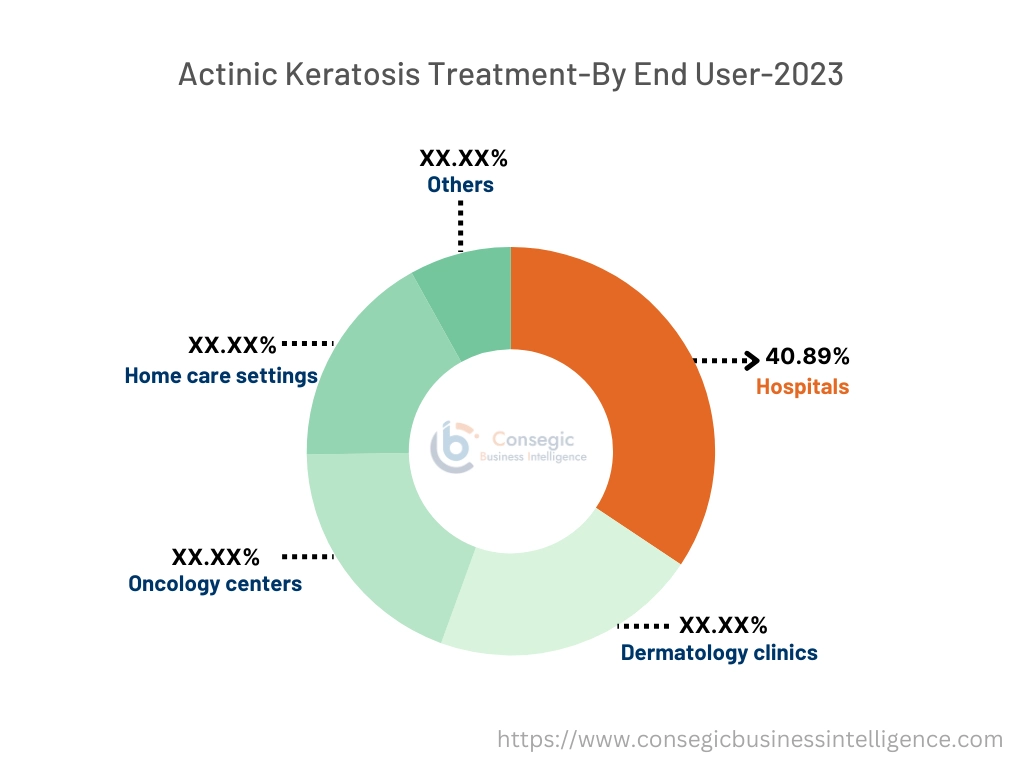
Based on end users, the market is categorized into hospitals, dermatology clinics, oncology centers, home care settings, and others.
Trends in the End-User:
- The growing trends for the use of actinic keratosis topical medications in homecare settings.
- With the trends and advancement of telemedicine, hospitals are exploring the use of remote monitoring technologies to track the progress of actinic keratosis patients and provide ongoing support.
The hospitals segment accounted for the largest market share of 40.89% in the year 2023.
- Hospitals serve a crucial role as primary centers for the comprehensive treatment of actinic keratosis, offering a sophisticated ecosystem of medical expertise and advanced technologies.
- Hospitals also offer the distribution of topical medications and procedures to their patients, which is a key factor driving the Actinic Keratosis Treatment market growth across the globe.
- The inpatient treatment approach in hospitals has evolved to encompass a multidisciplinary approach making availability of various specialists such as dermatologists and cancer specialists in a single place. Moreover, there is a rise in hospital settings that offer various solutions including procedures for the treatment of actinic keratosis.
- For instance, according to the data provided by the American Hospital Association, the U.S. boasts approximately 6,120 hospitals, many of which are equipped with advanced solutions to provide efficient actinic keratosis treatment.
- Thus, owing to the aforementioned factors hospitals serve a pivotal role in the treatment, providing comprehensive care in the actinic keratosis treatment market.
The dermatology clinics segment is expected to grow at the fastest CAGR over the forecast period.
- Dermatology clinics are healthcare facilities focused on providing treatments and solutions for skin-related issues. These settings offer a convenient and cost-effective alternative to traditional hospitals for a variety of skin procedures.
- Dermatologists diagnose and treat various skin conditions, such as acne, eczema, psoriasis, actinic keratosis, and skin cancer.
- Dermatology clinics are equipped with state-of-the-art technology and experienced dermatologists to ensure the safety and efficacy of skin procedures.
- Dermatology clinics offer a variety of treatments for actinic keratosis, tailored to the individual patient's needs.
- Additionally, they often offer a more personalized and patient-centered approach to care, with shorter waiting times and more one-on-one attention.
- Overall, as per the analysis, by offering a convenient, efficient, and cost-effective option for treating this condition, dermatology clinics play a crucial role in reducing the risk of future conditions and improving patient outcomes in the Actinic Keratosis Treatment market.
Regional Analysis:
The regional segment includes North America, Europe, Asia Pacific, the Middle East and Africa, and Latin America.
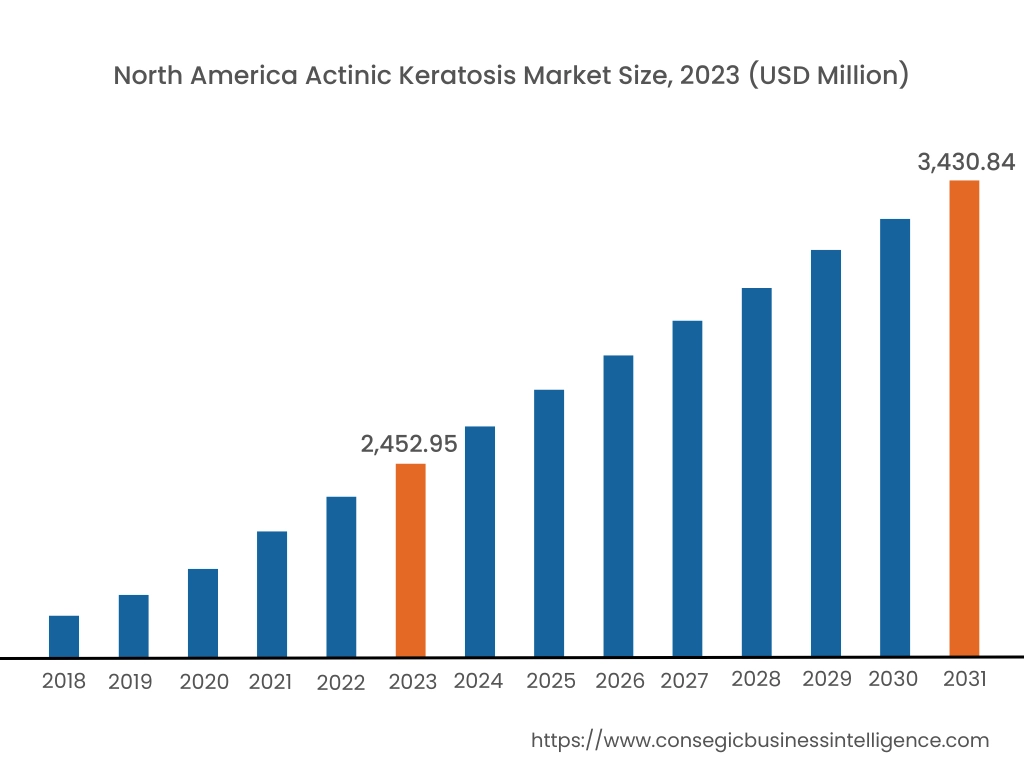
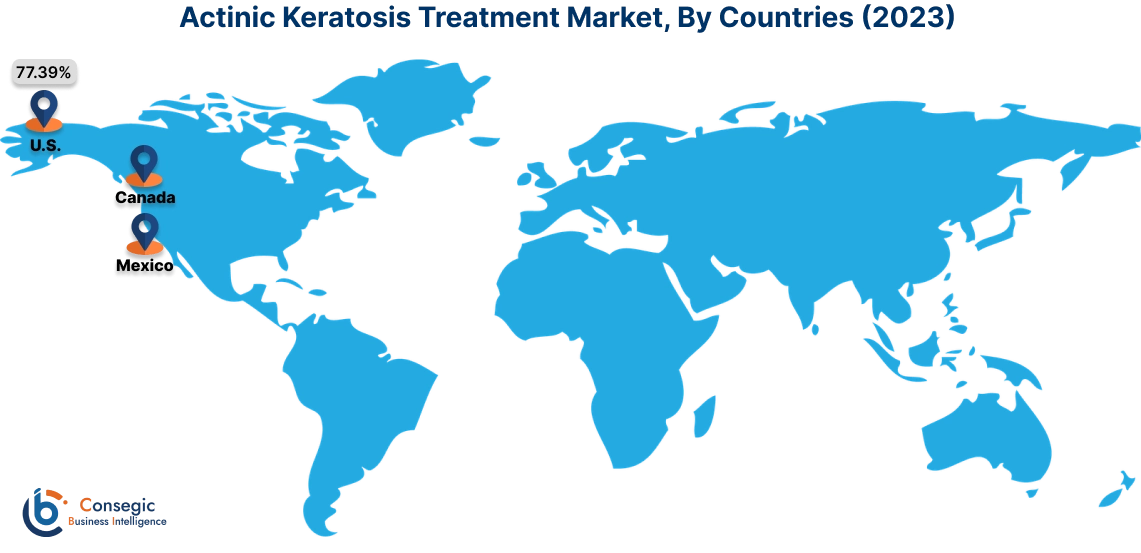
In 2023, North America accounted for the highest actinic keratosis treatment market share at 40.09% and was valued at USD 2,452.95 Million and is expected to reach USD 3,430.84 Million in 2031. In North America, the U.S. accounted for the highest market share of 77.39% during the base year of 2023.
The Actinic Keratosis Treatment market is gaining significant rise in North America owing to the confluence of multiple factors such as the region's aging population is particularly susceptible to this condition. As people age, they become more susceptible to conditions that are caused because of extreme sun exposure leading to actinic keratosis.
- For instance, According to the data published by the Skin Cancer Foundation, in 2024, states that Actinic keratosis is the most common precancerous skin condition, affecting over 58 million Americans.
Additionally, North America boasts a robust healthcare infrastructure with advanced diagnostic and treatment facilities, leading to timely intervention and improved patient outcomes. Moreover, as per the analysis, growing awareness about symptoms and risk factors among healthcare providers and the general public facilitates early recognition and prompt medical attention. Furthermore, significant investments in research and development are fueling the development of novel therapies and preventive strategies for Actinic Keratosis Treatment that aim to improve patient outcomes and reduce the burden of this condition. Overall, the combination of an aging population, high prevalence of actinic keratosis, advanced healthcare industry, increased awareness, technological advancements, strong healthcare insurance, and robust research efforts adhering to actinic keratosis treatment market trends position North America as a leading market for treatment and management.
The Asia Pacific market for Actinic Keratosis Treatments is experiencing the fastest growth with a CAGR of 7.6% over the forecast period.
The Asia-Pacific region is witnessing significant growth in the actinic keratosis treatment market. This growth is fueled by a rapidly aging population, rising healthcare expenditure, and improvements in healthcare infrastructure. As healthcare infrastructure develops and awareness about actinic keratosis and its risk factors increases, more cases are being diagnosed and reported. Moreover, growing healthcare investments and expanding access to pharmaceuticals in the region are further fueling demand for effective actinic keratosis treatments, as a larger patient population afford and access these treatments. As per the market analysis, his combination of factors is driving the actinic keratosis treatment market expansion in the Asia-Pacific region.
Europe boasts a well-developed healthcare infrastructure with advanced diagnostic and treatment facilities, enabling effective management and treatment of actinic keratosis. Actinic keratosis is a common precancerous skin condition in Europe, particularly among older populations with significant sun exposure. Additionally, growing awareness about actinic keratosis risk factors has led to earlier diagnosis and timely intervention. Recent advancements in dermatology have led to the development of effective treatments, including topical medications, cryotherapy, and laser therapy. Many European countries have strong public healthcare systems that provide accessible and quality healthcare services, including those for actinic keratosis treatment, further propelling market expansion.
The Middle East and Africa (MEA) region is witnessing a significant surge in the demand for actinic keratosis diagnosis and treatment solutions. Awareness campaigns and health education initiatives are increasing knowledge about this condition and its risk factors, leading to earlier diagnosis and timely treatment. Additionally, the burgeoning healthcare industry in the Middle East is playing a pivotal role in the actinic keratosis treatment market demand. Many countries in the MEA region are investing in developing their healthcare infrastructure, including building hospitals and clinics and improving access to advanced treatment solutions. The combined impact of these factors is creating a favorable environment for the growth of the actinic keratosis treatment market in the MEA region.
Latin America is emerging as a significant market for Actinic Keratosis treatment. The region's growing awareness of skin health, coupled with increasing disposable income and government initiatives to promote public health, is driving effective treatment options. This presents a promising prospect for healthcare providers, pharmaceutical companies, and medical device manufacturers to develop and deliver innovative solutions tailored to the specific needs of Latin American populations. By understanding the unique demographics, cultural factors, and healthcare infrastructure of the region, these stakeholders create targeted products and services that address the specific needs of Latin American patients. As healthcare infrastructure improves and awareness campaigns gain momentum, the market for AK treatments in Latin America is poised for substantial growth.
Top Key Players & Market Share Insights:
The Actinic Keratosis Treatment market is highly competitive with major players providing precise measurement between objects to the national and international markets. Key players are adopting several strategies in research and development (R&D) and product innovation to hold a strong position in the global actinic keratosis treatment market. Key players in the actinic keratosis treatment industry include-
- 3M(United States)
- Sun Pharmaceuticals (India)
- BIOFRONTERA AG (Germany)
- Bausch Health Companies Inc. (Canada)
- CryoConcepts LP (United States)
- Galderma (Switzerland)
- Almirall, S.A (Spain)
- BioLineRx Ltd (Israel)
- QualDerm Partners (United States)
- Cortex (Denmark)
Recent Industry Developments :
Product Launch:
- In December 2022, Biofrontera AG's launch of AMELUZ in Finland marks a significant step in expanding its European presence. This product, approved for treating actinic keratoses and basal cell carcinoma, is used with the BF-RhodoLED lamp as part of conventional photodynamic therapy or in daylight conditions. This strategic move strengthens Biofrontera's product portfolio and broadens its market reach within Europe.
Approvals:
- In December 2020, Almirall received FDA approval for Klisyri (tirbanibulin), a novel topical treatment for actinic keratosis. This approval strengthened the company's product portfolio in dermatology and opened up new market opportunities.
- In June 2020, Tolak (fluorouracil) 4% Cream used for the treatment of actinic keratosis has been successfully registered for use in the United Kingdom and 13 additional European countries.
Actinic Keratosis Treatment Market Report Insights :
| Report Attributes | Report Details |
| Study Timeline | 2018-2031 |
| Market Size in 2031 | USD 9,358.62 Million |
| CAGR (2024-2031) | 5.50% |
| By Treatment |
|
| By End-User |
|
| By Region |
|
| Key Players |
|
| North America | U.S. Canada Mexico |
| Europe | U.K. Germany France Spain Italy Russia Benelux Rest of Europe |
| APAC | China South Korea Japan India Australia ASEAN Rest of Asia-Pacific |
| Middle East and Africa | GCC Turkey South Africa Rest of MEA |
| LATAM | Brazil Argentina Chile Rest of LATAM |
| Report Coverage |
|
Key Questions Answered in the Report
How big is the Actinic Keratosis Treatment market? −
In 2023, the Actinic Keratosis Treatment market is USD 6,118.60 Million.
Which is the fastest-growing region in the Actinic Keratosis Treatment market? +
Asia Pacific is the fastest-growing region in the Actinic Keratosis Treatment market.
What specific segmentation details are covered in the Actinic Keratosis Treatment market? +
Treatment and End-user segmentation details are covered in the Actinic Keratosis Treatment market.
Who are the major players in the Actinic Keratosis Treatment market? +
3M (United States), Sun Pharmaceuticals (India), BIOFRONTERA AG (Germany), Bausch Health Companies Inc. (Canada), CryoConcepts LP (United States), Galderma (Switzerland), Almirall, S.A (Spain), BioLineRx Ltd(Israel), QualDerm Partners (United States), Cortex (Denmark).
Overview
Reputation & Certifications


Our Services
- Market Intelligence & Forecasting
- Custom Research Solutions
- Market Entry Strategy
- Competitive Intelligence
- Customer Insights
- Industry Innovation Analysis
- Investment Advisory