Introduction: The Changing Landscape of the Healthcare Industry
The healthcare industry is experiencing considerable change because of the shift in expectations of patients, advancements in technology, changes in demographics, and new models of healthcare delivery. Nowadays, patients are becoming more proactive in making decisions about their health and do not accept being passively treated by healthcare organizations. They want to receive easy access to healthcare facilities, personalized services, information, and positive outcomes from treatment. In turn, healthcare companies are introducing technologies, artificial intelligence, remote monitoring systems, automation and analytical software to increase efficiency and provide high-quality services to their clients. The development of chronic illnesses and aging of the population around the world leads to higher demand for accessible and constant healthcare services. Besides, rising expenses in healthcare encourage providers and customers to pay more attention to preventive care. All of the above-mentioned trends create favourable conditions for the pharmaceutical, medical devices, digital healthcare, hospitals, and healthcare technology companies.
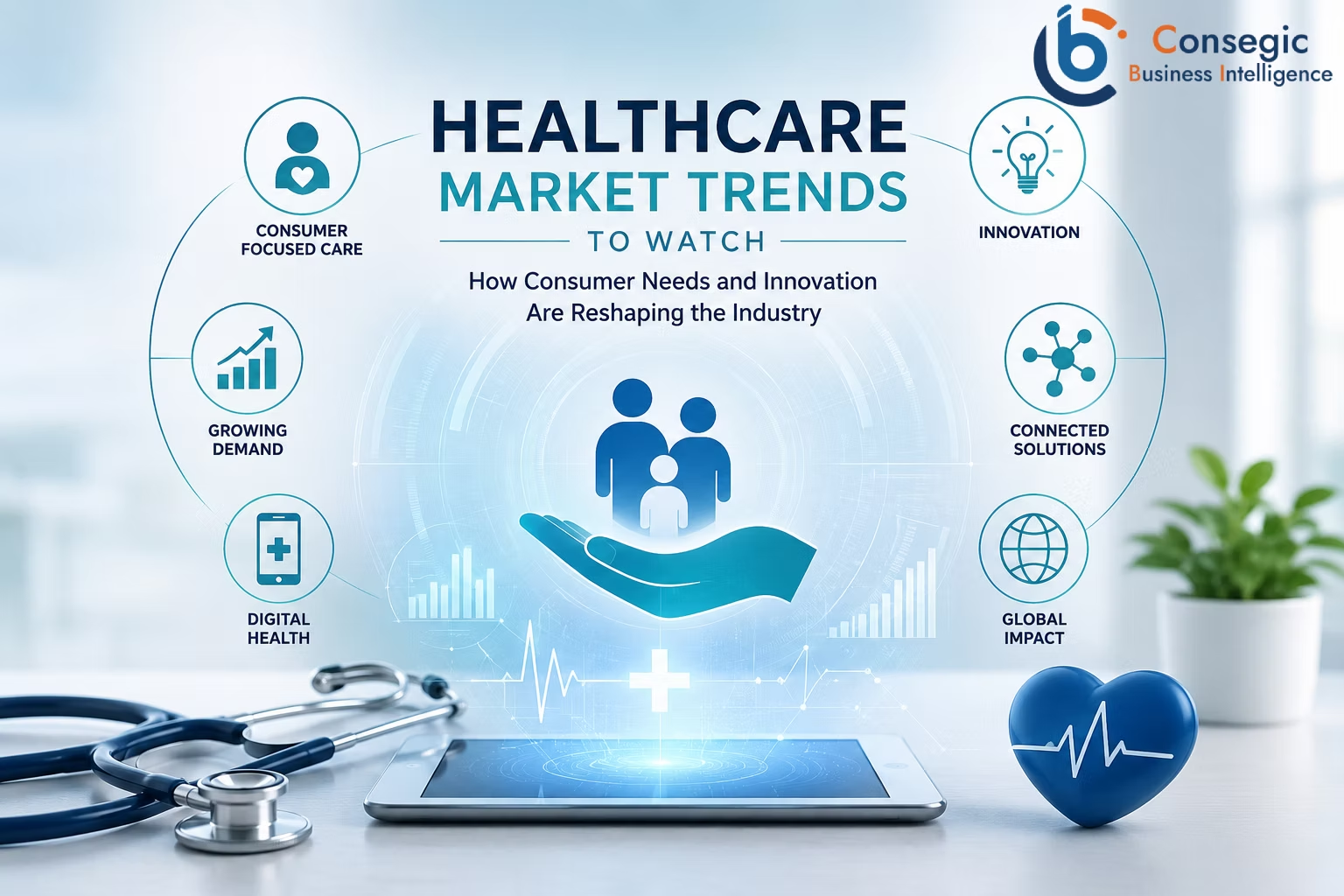
Rising Consumer Demand for Personalized and Patient-Centric Care
The consumer demand for personalized healthcare, which takes into account personal preferences and lifestyles, increases steadily. This trend motivates healthcare organizations to provide patients with more personalized services instead of standard approaches to treatment. Progress in genomics, data analytics, wearable technologies, and electronic medical records enables organizations to learn about the unique health characteristics of their clients and create corresponding personalized treatments. Consumers are interested in active participation in the process of making diagnostic and treatment decisions. The possibility of easy access to information about their condition also raises the consumer awareness of healthcare quality. To meet the needs of consumers, organizations should improve communication processes, introduce digital appointment system, offer personalized treatments and increase patient services. Personalized healthcare may also enhance adherence and satisfaction of patients under appropriate conditions. With the development of consumer awareness and choice, organizations that focus on convenience, communication, transparency, and personalization will get more opportunities in the market of healthcare.
Digital Health and Telemedicine Transforming Healthcare Accessibility
The development of digital health and telemedicine has transformed the manner in which consumers interact with the healthcare sector by providing consultations, monitoring, and health data through connected devices and online tools. Telemedicine technology allows patients to contact the doctors remotely, thus reducing the number of physical visits for appropriate consultations and follow-ups. In addition, this approach could prove useful for people living in underprivileged communities and those experiencing mobility and transportation problems. Furthermore, mobile apps, wearables, remote patient monitoring solutions, and electronic medical records are empowering consumers to take a proactive role in health management. With the help of such technologies, healthcare providers will be able to assess health parameters and detect possible issues at an early stage. On the other hand, digital platforms will facilitate some administrative tasks, including appointment setting, prescription administration, and communication. Nonetheless, cybersecurity, data privacy, interoperability, and lack of equal access to digital technologies are major issues that have to be overcome. It is anticipated that investment in the safe and convenient digital platform will help to expand the realm of connected healthcare.
Artificial Intelligence and Automation Driving Smarter Healthcare Delivery
AI and automation are becoming more and more common in healthcare as healthcare organizations attempt to become more efficient and effective. These technologies are capable of analyzing vast amounts of data and thereby enabling healthcare professionals to make decisions based on these observations and trends. Some examples of the application of AI and automation include the use of AI in the area of medical imaging and predictive analytics that will enable identifying patients requiring monitoring. Furthermore, there is the utilization of automation technologies for scheduling appointments, filling out necessary documents, processing billing, etc., allowing healthcare professionals to focus on their work with patients. Pharmaceutical and biotechnological companies apply AI in such areas as drug discovery and development. However, despite these possibilities, there are such issues that need to be addressed as data quality, algorithmic bias, cybersecurity, regulatory compliance, and human supervision. Thus, it seems that AI will serve as an addition to healthcare professionals rather than replacing them.
Preventive Care, Wellness, and the Shift Toward Consumer Health
Consumers of health products and services have started to place a premium on prevention of diseases as opposed to using curative services when illnesses develop. The trend towards wellness is also impacting the demand for prevention services, monitoring equipment, nutrition and fitness services among others. Wearables and mobile applications enable consumers to monitor various metrics of their activities including physical activities, sleeping patterns, heart beat rates, among other selected health metrics. They may help individuals to be more conscious of their health activities and adopt healthier behaviors. There is also increased focus by healthcare professionals on early diagnosis and risk management considering the prevalence of chronic illnesses which generate huge healthcare needs. Wellness programs are being developed by employers and insurers that may help to promote healthy living. Consumer health technologies must provide credible information and also ensure the safety of personal health information. The integration of the health industry, wellness, technology and consumer services will further enhance the market for preventive health services.
The Future of Healthcare: Innovation, Affordability, and Consumer Expectations
In the future healthcare market, the interplay between innovations, affordability, accessibility, and consumer expectations will be crucial. The future will see the continuation of the demand among consumers for convenient, customized, transparent, and digitalized health care services. While making innovations in health care organizations will have to deal with cost reduction and ensuring affordable and accessible health care at the same time. Innovations in the form of artificial intelligence, telehealth and telemonitoring, robotics, data analytics, and other emerging technologies can serve health care organizations well in delivering better health care. However, the use of those technologies will require appropriate infrastructures, professionals' skills, regulation, and good cybersecurity practices. Affordability will be of paramount importance as people will have to make their treatment decisions according to health care expenses. Organizations that will use both innovations and patient-oriented approaches will better be able to meet the requirements of the future. Overall, there is a tendency towards the formation of the ecosystem in which consumers will be actively involved, technology will facilitate better decision-making processes, and health care will become more proactive and outcome-driven.
Conclusion
The healthcare sector is moving toward a new era that is consumer-oriented and technologically advanced. Increasing consumer demands are making the healthcare organizations provide more convenient and accessible services to their customers in a transparent and personalized manner. Simultaneously, innovations in technology are aiding the healthcare providers to be more efficient, to make decisions and improve the healthcare outcomes. Yet, problems associated with affordability, cybersecurity, data privacy, regulations and equal access need to be overcome to ensure sustainable growth. With the continuous evolution of healthcare, organizations that will be able to merge innovation and consumers’ needs will be more likely to survive in the highly competitive environment.