Why the World Needs Battery Technologies Beyond Lithium-Ion?
The rapid development of electric vehicles (EVs), renewable energy systems and smart electronic devices has led to a significant increase in the demand for efficient energy storage solutions. While lithium-ion batteries have long held sway, prized for their high energy density and reliability, they are hitting practical limits on cost, safety, raw resource availability and environmental sustainability. Moreover, the increasing use of lithium, cobalt, and nickel is associated with several problems including the stability of supply chain, geopolitical issues, and environmental pollution caused by mining of these key raw materials. In light of the commitment of countries to net-zero emission goals, there is an urgent need to develop next-generation battery technologies characterized by high efficiency and lower reliance on rare materials. Additionally, solid-state batteries, sodium-ion batteries, lithium-sulphur batteries, and flow batteries can be considered as promising alternatives capable of providing higher energy density, fast charging capacity, longer battery life, and better safety. In addition, the commercialisation of post-lithium technologies is aided by advances in the field of artificial intelligence, new materials and battery production.
Emerging Battery Technologies Shaping the Future of Energy Storage
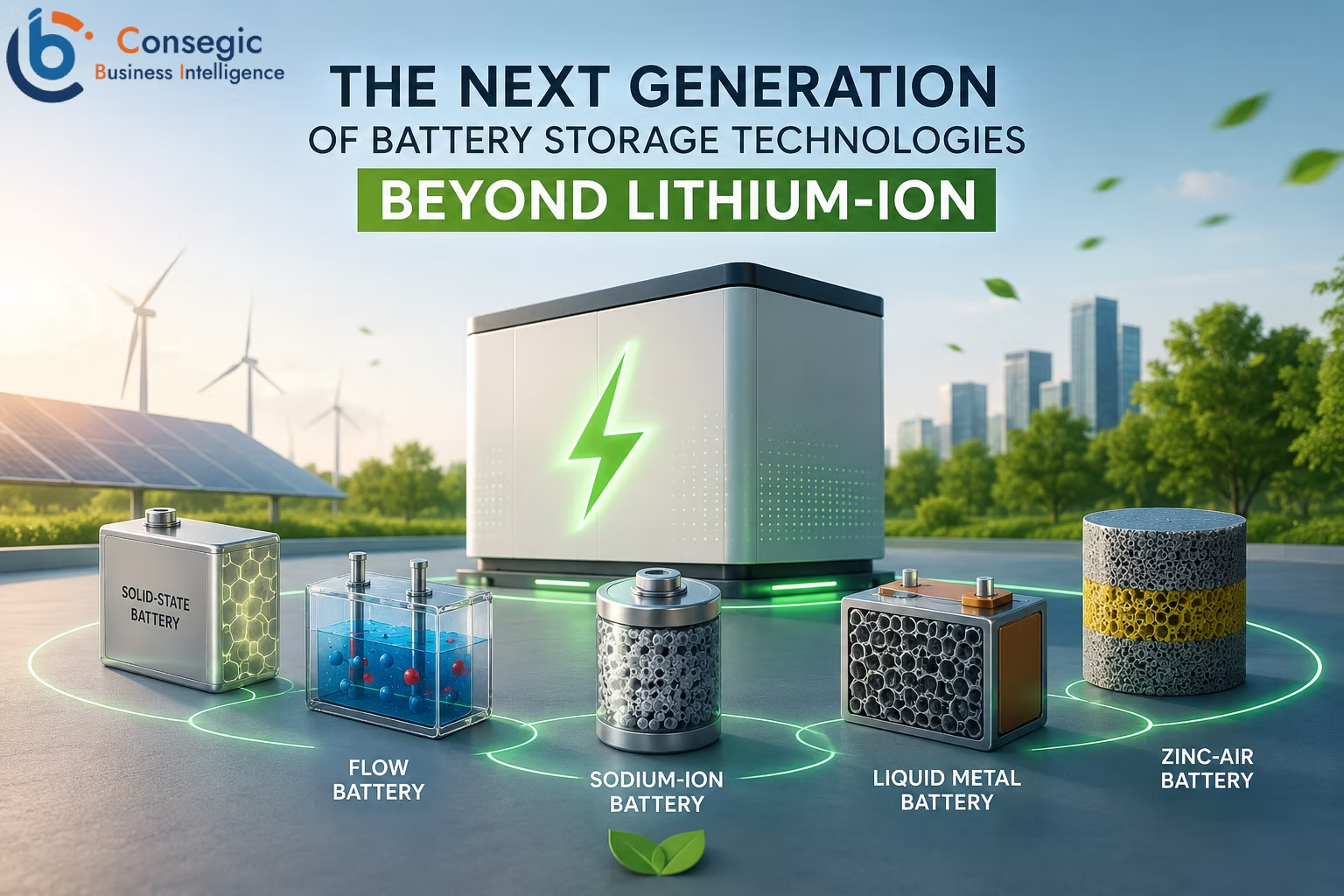
The next generation of battery storage technologies will go beyond traditional lithium-ion batteries to meet the world’s increasing energy needs. One of the prominent innovations includes solid state batteries, where solid electrolyte replaces the conventional liquid electrolyte. This results in better energy density, increased safety, and fast charging technology. Sodium-ion batteries are of great importance due to the abundance of sodium ions, their relatively low cost, and their application for the grid-scale energy storage. The energy density of lithium-sulphur batteries is greater compared to that of lithium-ion batteries, and there is no need for costly metals like cobalt or nickel. On the other hand, the longevity and scalability of flow batteries such as vanadium redox flow batteries has attracted much research interest. Apart from these, zinc-air, magnesium-ion, aluminium-ion, and potassium-ion batteries are under consideration due to their increased sustainability and reduced manufacturing costs. Other technologies include development in nanotechnology, solid electrolytes, and artificial intelligence-assisted battery development that can help in research and development of future battery technologies.
Advantages of Next-Generation Batteries Over Conventional Lithium-Ion Systems
The new generation of batteries comes with many advantages compared to traditional Li-ion batteries. One of the main advances is increased energy density, which allows for operating electric vehicles and portable gadgets for a prolonged time despite no changes in battery dimensions. Besides, many types of advanced batteries have fast-charging ability, providing for quick charging. Another important advantage is safety, especially in case of solid-state batteries, as they do not use liquid electrolyte and thus cannot overheat, leak, and go into thermal runaway. Many new batteries allow for increased cycle life – batteries can undergo many charging and discharging cycles while remaining effective. In addition, such types of batteries as sodium-ion or zinc-based ones lessen the dependence of batteries on rare and costly materials. These are just some of the examples of technologies that offer better recyclability and reduced environmental footprint and thus contribute to achieving global sustainability goals. Furthermore, increased temperature tolerance makes these batteries suitable for many different applications, including automotive, aerospace, defence, and renewables industry applications.
Challenges and Opportunities in Commercializing Advanced Battery Technologies
While technological progressions in recent years have been very impressive indeed, there are still some challenges facing the commercialization of innovative batteries. Advanced battery chemistries are currently in a phase of research and development and would need significant amounts of capital to enter mass production. Moreover, manufacturing costs, insufficient manufacturing capabilities, and difficulties associated with new materials are impeding their commercialization. There are also some technologies struggling with durability issues, low energy efficiency, or problems with sustaining their performance when functioning under the conditions of operation. However, developing supply chains of new materials and incorporating the batteries into current systems is an obstacle that can be overcome only if industries cooperate. All these obstacles bring along great opportunities. Additionally, countries have increased their investments in the development of energy, batteries, and manufacturing capabilities to secure their energy safety and decrease their reliance on critical minerals imported from abroad. Furthermore, companies, private enterprises, universities, and research organizations are cooperating in order to advance the commercialization through better designs of batteries and advanced manufacturing.
Future Outlook: The Role of Next-Generation Batteries in a Sustainable Energy Ecosystem
The next generation battery technology is set to play an important role in the transition of energy systems towards sustainability. The generation of renewable energy from sources such as solar and wind power will grow over time, making advanced batteries an important part in energy storage as the source of generation becomes variable in its nature. When it comes to transport sector, advancements in the technology will promote the use of electric vehicles through increasing the driving range of the vehicles, decreasing charging time and cutting down total cost of owning the vehicle. Other than transport, advanced energy storage solutions can be used in electronics, industry, aerospace, defence and smart cities. Additionally, recyclability and environmental aspects of battery production will continue to be researched in order to minimize the impact of production on the environment. The use of artificial intelligence in digital battery management will also increase efficiency, allow for better predictive maintenance and increase the life of the batteries. Furthermore, stronger policies and investments in the field of clean energy will help to advance the commercialization of post-lithium battery technology in the upcoming decade.
Conclusion
The next generation of battery storage technologies is ready to revolutionize the energy sector of the world by overcoming the disadvantages of the traditional lithium-ion battery technologies. Solid-state, sodium-ion, lithium-sulphur, and flow batteries have better safety, increased energy density, fast charging rates, and enhanced sustainability. However, some problems still exist with commercialisation, production costs and infrastructure required but constant advances in material science, artificial intelligence and government sponsored research efforts are bringing these technologies to market. The increasing demand for clean energy, electric transport, and power storage solutions makes these advanced battery storage technologies indispensable to achieve decarbonization and enhance energy security and efficiency of the industry.