Jump to Content
Brain Ischemia Market - Size, Share, Industry Trends, and Forecasts (2025-2032)
Brain Ischemia Market Size:
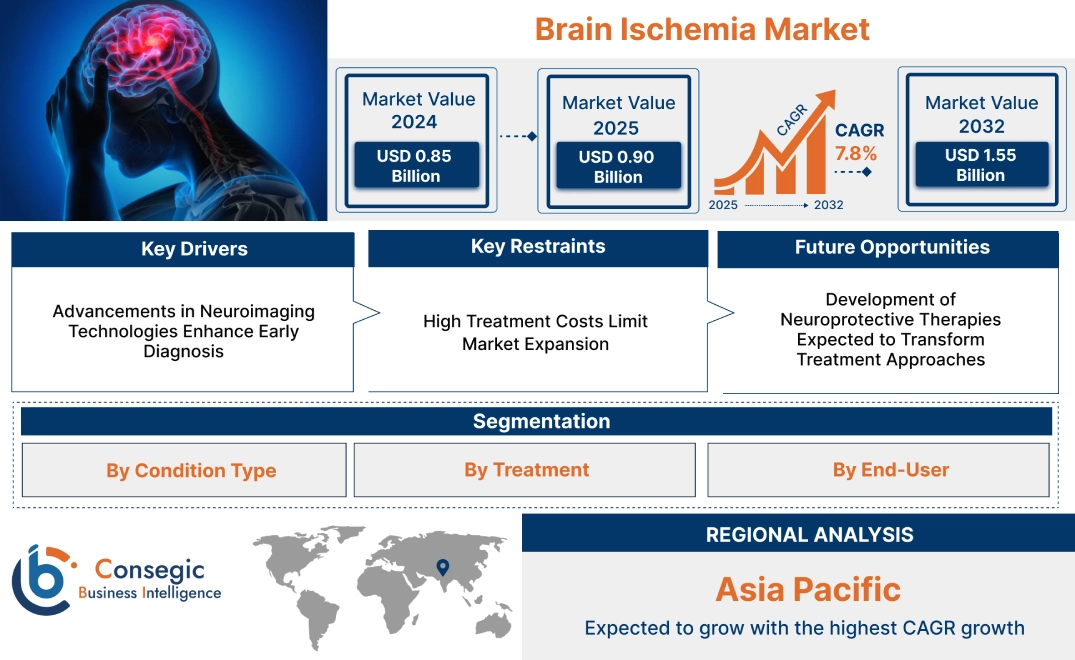
Brain Ischemia Market size is estimated to reach over USD 1.55 Billion by 2032 from a value of USD 0.85 Billion in 2024 and is projected to grow by USD 0.90 Billion in 2025, growing at a CAGR of 7.8% from 2025 to 2032.
Brain Ischemia Market Scope & Overview:
Brain ischemia occurs when reduced blood flow deprives brain tissue of oxygen and nutrients, leading to potential cell damage or death. It results from conditions such as blood clots, arterial blockages, or hemorrhages. Key symptoms include confusion, vision impairment, weakness, and loss of coordination.
Diagnosis involves imaging techniques, including MRI, CT scans, and cerebral angiography. Treatment options include thrombolytic therapy, anticoagulants, and surgical interventions to restore blood flow. Neuroprotective agents and rehabilitation therapies support recovery and prevent complications.
Brain ischemia treatment is essential in hospitals, specialty clinics, and research institutes. It is widely applied in neurology, cardiology, and emergency medicine. End users include healthcare providers, pharmaceutical companies, and medical device manufacturers.
Brain Ischemia Market Dynamics - (DRO):
Key Drivers:
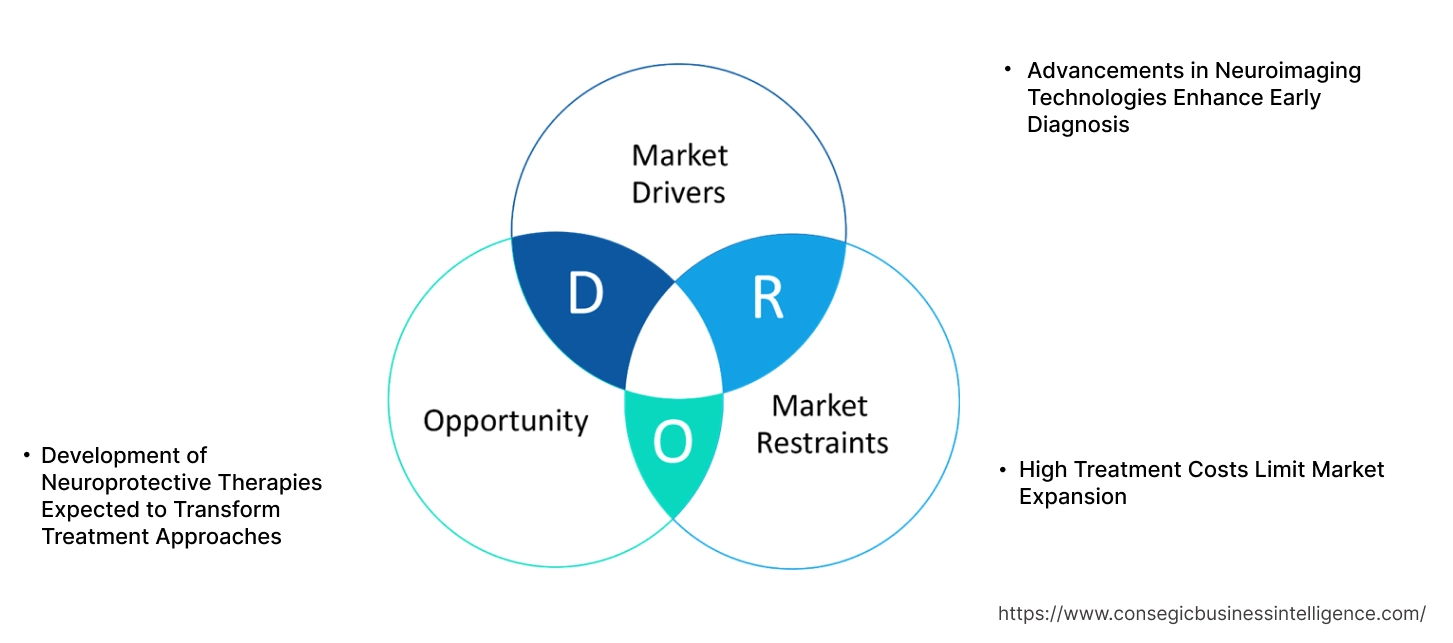
Advancements in Neuroimaging Technologies Enhance Early Diagnosis
The development of advanced neuroimaging technologies has significantly improved the early diagnosis of brain ischemia, leading to timely medical intervention. Magnetic resonance imaging (MRI), computed tomography (CT), and positron emission tomography (PET) have enhanced the ability to detect ischemic events at an early stage, reducing the risk of severe brain damage. These imaging technologies allow healthcare professionals to assess blood flow and tissue damage with high precision, ensuring accurate diagnosis and better patient management.
For instance, diffusion-weighted imaging (DWI) in MRI has been widely adopted for detecting acute ischemic strokes, allowing clinicians to differentiate between ischemic and hemorrhagic strokes. This advancement has increased the trend for high-quality diagnostic solutions, boosting the adoption of brain ischemia management techniques. Therefore, the increasing integration of advanced neuroimaging technologies in medical facilities is fueling the brain ischemia market demand for innovative diagnostic tools, propelling the brain ischemia market forward.
Key Restraints:
High Treatment Costs Limit Market Expansion
The cost of brain ischemia treatment remains a significant barrier to brain ischemia market growth, particularly in low- and middle-income countries. The expenses associated with neuroimaging, surgical interventions, rehabilitation, and long-term care create financial challenges for both healthcare institutions and patients.
Endovascular procedures such as mechanical thrombectomy, which are essential for treating acute ischemic stroke, require specialized medical equipment and trained professionals. The overall cost of a thrombectomy procedure can be prohibitively high, making it inaccessible for a large segment of the population. Furthermore, patients undergoing long-term rehabilitation, including physiotherapy and speech therapy, face additional financial burdens, limiting their access to optimal care.
Due to these financial constraints, many individuals in underdeveloped regions lack access to appropriate treatments, reducing the overall demand for brain ischemia-related medical solutions. Therefore, the high cost associated with treatment and rehabilitation remains a major challenge for brain ischemia market expansion.
Future Opportunities:
Development of Neuroprotective Therapies Expected to Transform Treatment Approaches
The increasing focus on neuroprotective therapies is expected to create significant brain ischemia market opportunities. Researchers and pharmaceutical companies are actively developing novel drugs and therapies to protect brain cells from ischemic damage, aiming to minimize neurological deficits and improve patient outcomes.
Several clinical trials are underway to evaluate the efficacy of neuroprotective agents in reducing cell death and enhancing brain recovery. For instance, advancements in stem cell therapy and gene therapy hold the potential to revolutionize treatment strategies by promoting neuroregeneration and restoring brain function in ischemic patients.
As pharmaceutical companies continue to invest in the research and development of neuroprotective drugs, the availability of effective treatment options is expected to increase. This development will not only improve survival rates but also enhance the quality of life for patients, thereby creating lucrative growth prospects for the brain ischemia market.
Brain Ischemia Market Segmental Analysis :
By Condition Type:
Based on condition type, the brain ischemia market is segmented into focal brain ischemia and global brain ischemia.
The focal brain ischemia segment accounted for the largest revenue in brain ischemia market share in 2024.
- Focal brain ischemia occurs when a blood clot obstructs a specific region of the brain, limiting oxygen supply and leading to localized neuronal damage.
- This condition is commonly associated with ischemic strokes, which are highly prevalent worldwide, contributing to its significant revenue share.
- The increasing incidence of stroke-related conditions and the growing adoption of thrombolytic therapies and mechanical thrombectomy procedures have fueled the segment's dominance.
- Additionally, advancements in neuroimaging techniques have enhanced the diagnosis and treatment efficacy for focal brain ischemia, strengthening its market presence.
- The rising awareness and availability of early intervention treatments for ischemic stroke have contributed to the brain ischemia market opportunities.
- Therefore, according to brain ischemia market analysis, an increasing cases of ischemic strokes globally have driven the prominence of the focal brain ischemia segment.
The global brain ischemia segment is anticipated to register the fastest CAGR during the forecast period.
- Global brain ischemia results from a significant reduction in blood flow to the entire brain, often due to cardiac arrest or severe hypotension.
- The rising cases of cardiovascular diseases, along with the increasing aging population prone to heart-related complications, contribute to the segment's anticipated trend.
- Research advancements in neuroprotective treatments and therapeutic hypothermia are improving patient outcomes, supporting brain ischemia market expansion.
- Additionally, growing investments in critical care infrastructure and enhanced emergency medical services have increased the survival rates of patients suffering from global brain ischemia.
- The ongoing focus on developing innovative treatment approaches for whole-brain ischemic injuries has led to a promising outlook for the segment.
- Thus, according to brain ischemia market analysis, advancements in neuroprotective strategies are expected to enhance the growth of the global brain ischemia segment.
By Treatment:
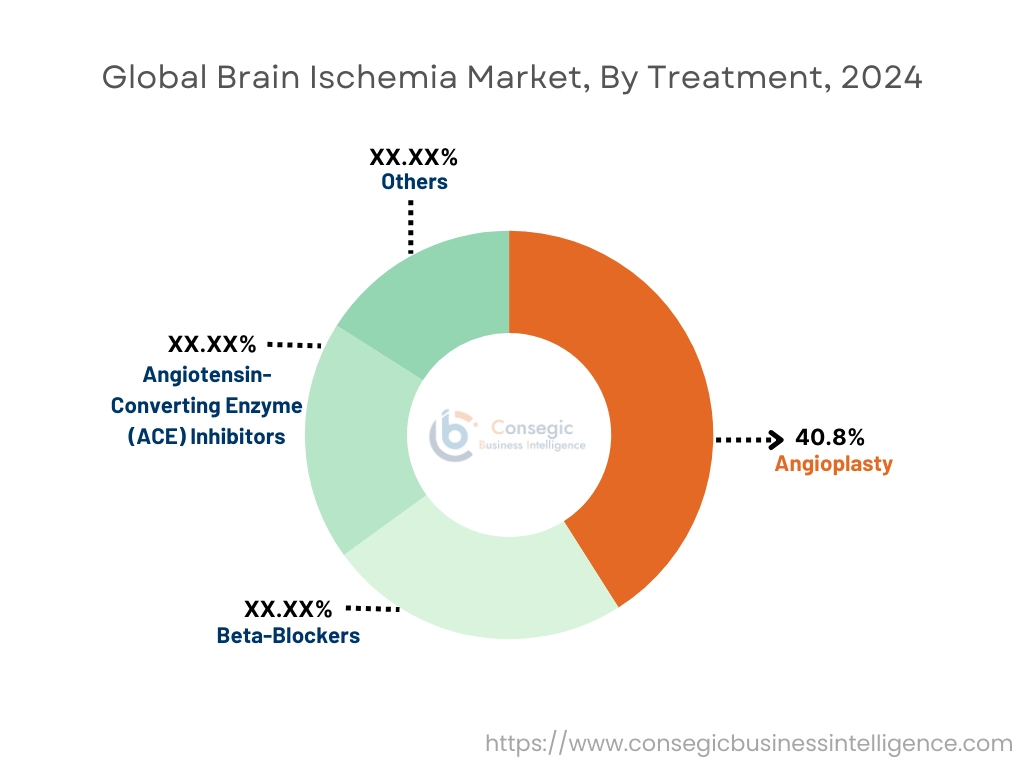
Based on treatment, the brain ischemia market is segmented into angioplasty, beta-blockers, angiotensin-converting enzyme (ACE) inhibitors, and others.
The angioplasty segment accounted for the largest revenue share of 40.8% in 2024.
- Angioplasty is a minimally invasive procedure that restores blood flow by widening narrowed or blocked arteries in the brain.
- The procedure is widely used due to its effectiveness in preventing recurrent ischemic strokes and reducing long-term disability.
- The growing adoption of catheter-based interventions and the increasing availability of skilled neurointerventional specialists have bolstered the segment's revenue.
- Technological advancements in stents and balloon catheters have improved procedural success rates, enhancing market penetration.
- The rising preference for endovascular treatments over traditional surgical procedures has contributed to the market leadership of angioplasty.
- Therefore, according to the market analysis, the increasing trend for minimally invasive stroke treatments has strengthened the market position of angioplasty.
The angiotensin-converting enzyme (ACE) inhibitors segment is anticipated to register the fastest CAGR during the forecast period.
- ACE inhibitors are widely prescribed for patients with hypertension and ischemic strokes, as they help regulate blood pressure and improve cerebrovascular function.
- The rising prevalence of hypertension, which is a significant risk factor for ischemic strokes, has led to increased trend for ACE inhibitors.
- These medications play a crucial role in secondary stroke prevention, further driving their brain ischemia market growth.
- The availability of generic ACE inhibitors has improved affordability, increasing accessibility in emerging markets.
- Additionally, continuous clinical research supporting the efficacy of ACE inhibitors in stroke management is expected to further drive segment expansion.
- Thus, according to the market analysis, the effectiveness of ACE inhibitors in managing ischemic stroke risk factors is fueling their rapid market adoption.
By End-User:
Based on end-user, the brain ischemia market is segmented into hospitals & clinics, research & academic institutes, and others.
The hospitals & clinics segment accounted for the largest revenue in brain ischemia market share in 2024.
- Hospitals and clinics are the primary centers for stroke diagnosis, treatment, and post-stroke rehabilitation.
- The availability of advanced imaging technologies, specialized stroke units, and interventional procedures contribute to the segment's revenue dominance.
- The increasing number of hospital admissions due to ischemic strokes has further strengthened the brain ischemia market demand for emergency and long-term care services.
- Many hospitals are investing in cutting-edge stroke management programs, enhancing the overall treatment landscape.
- Additionally, the expansion of healthcare infrastructure and reimbursement policies supporting stroke treatment have fueled the growth of the hospital segment.
- Therefore, according to the market analysis, the significant role of hospitals in acute ischemic stroke management has established them as key contributors to market revenue.
The research & academic institutes segment is anticipated to register the fastest CAGR during the forecast period.
- Research and academic institutes play a vital role in studying brain ischemia mechanisms, developing novel treatments, and conducting clinical trials.
- The increasing focus on precision medicine and neuroprotective therapies has led to higher research funding and collaboration with pharmaceutical companies.
- Advancements in regenerative medicine, including stem cell therapy and neurorestorative treatments, have contributed to the segment's rapid growth.
- Additionally, government and private sector initiatives supporting neurological research have expanded funding opportunities for academic institutions.
- The growing number of partnerships between universities, biotech firms, and healthcare organizations is accelerating innovations in ischemic stroke treatment.
- Thus, according to the market analysis, the emphasis on developing cutting-edge treatments for brain ischemia is boosting the research & academic institutes segment.
Regional Analysis:
The regional segment includes North America, Europe, Asia Pacific, Middle East and Africa, and Latin America.
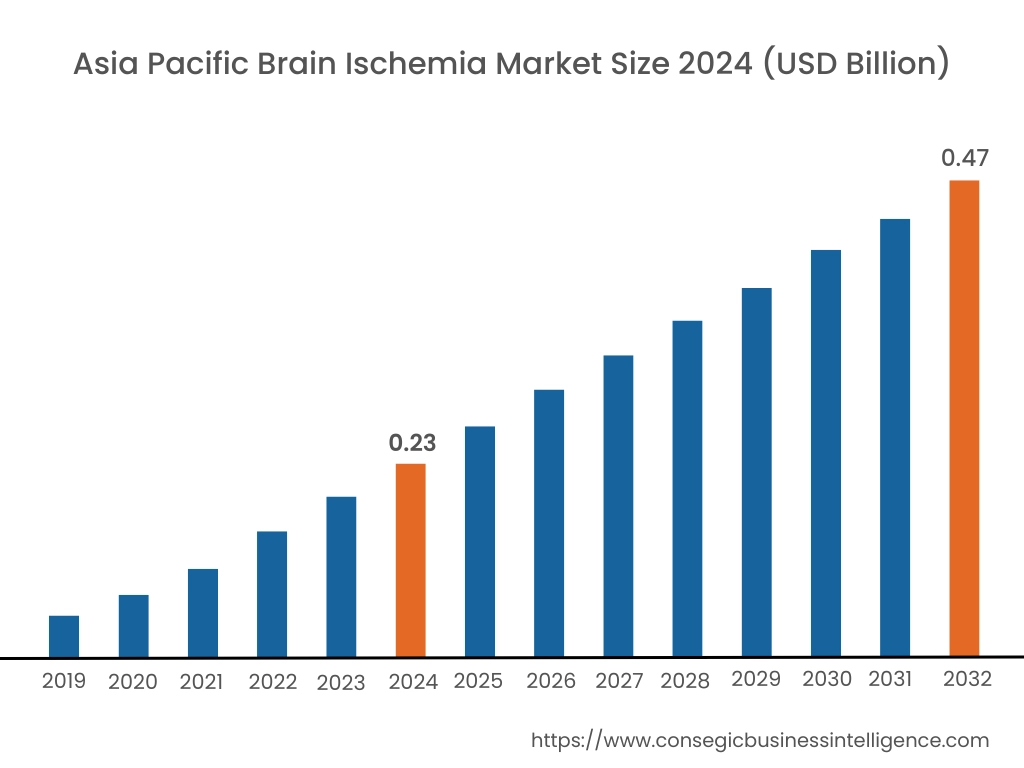
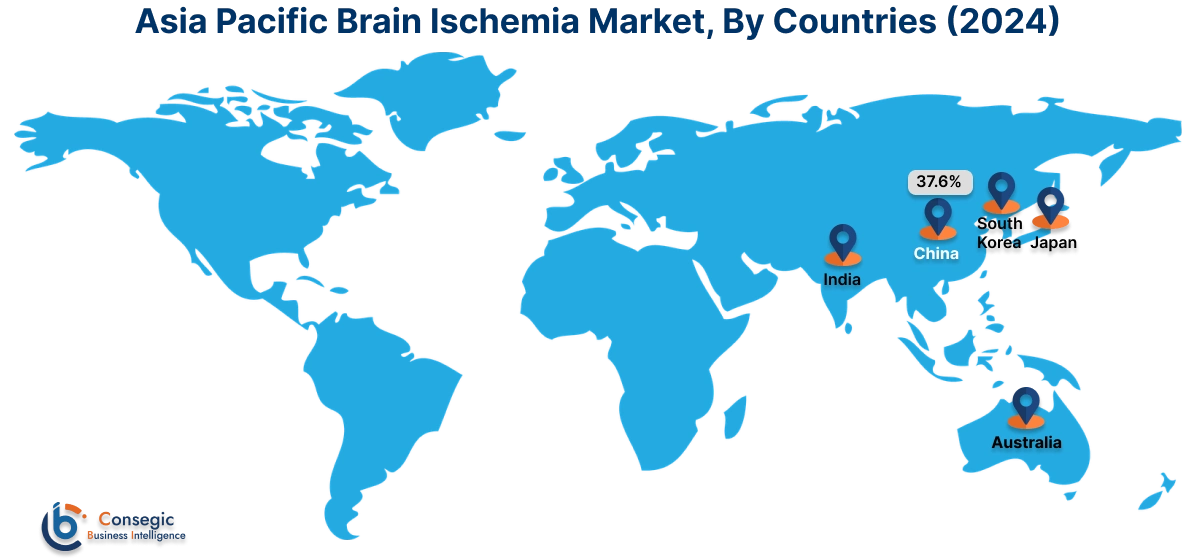
In 2024, Asia Pacific was valued at USD 0.23 Billion and is expected to reach USD 0.47 Billion in 2032. In Asia Pacific, the China accounted for the highest share of 37.6% during the base year of 2024. Asia-Pacific exhibits rising demand for brain ischemia treatments due to the increasing incidence of stroke and hypertension-related conditions in China, Japan, India, and South Korea. Rapid urbanization and changing lifestyle patterns contribute to higher risk factors, impacting brain ischemia market trends. Government initiatives to improve healthcare access and stroke management influence brain ischemia market growth. Expanding healthcare infrastructure and rising investments in medical research support the development of new diagnostic and treatment technologies. The growing adoption of telemedicine and artificial intelligence in stroke diagnosis enhances patient care. Regulatory frameworks and reimbursement policies affect the availability of advanced treatments, influencing market performance across different countries.
In 2024, North America was valued at USD 0.28 Billion and is expected to reach USD 0.50 Billion in 2032. North America holds a significant share in the brain ischemia market due to the high prevalence of stroke and cardiovascular diseases in the United States and Canada. The presence of advanced healthcare infrastructure and specialized stroke treatment centers influences market performance. Increasing awareness about early diagnosis and intervention supports trend for diagnostic imaging and treatment solutions. The availability of government funding and insurance coverage for neurological disorders enhances patient access to medical care. The presence of key pharmaceutical and biotechnology companies facilitates research and development of novel therapies. Regulatory policies and clinical guidelines impact the adoption of new treatment options, influencing market expansion.
Europe demonstrates steady demand for brain ischemia treatments due to the high burden of stroke-related conditions in countries like Germany, France, Italy, and the United Kingdom. The presence of established healthcare systems and advanced neuroimaging technologies supports early diagnosis and intervention. Government-led stroke prevention programs and public awareness campaigns impact market performance. Increasing adoption of minimally invasive procedures and endovascular treatments contributes to advancements in ischemic stroke management. Pharmaceutical companies actively engage in clinical trials and drug development to introduce innovative therapies. Stringent regulatory requirements influence the approval and commercialization of new treatment solutions, affecting market accessibility.
The Middle East and Africa exhibit developing market potential for brain ischemia treatments due to increasing healthcare investments and the rising incidence of stroke-related disorders. Countries like Saudi Arabia, the United Arab Emirates, and South Africa focus on improving healthcare infrastructure and stroke management services. Limited access to specialized neurological care and advanced medical technologies impacts treatment availability in certain regions. Government initiatives to enhance stroke awareness and prevention contribute to early diagnosis and intervention efforts. The rising prevalence of diabetes and hypertension, key risk factors for brain ischemia, influences brain ischemia market trends. Import regulations and healthcare expenditure variations affect the adoption of new treatment technologies.
Latin America experiences growing trend for brain ischemia treatments due to the increasing prevalence of stroke and cerebrovascular diseases in Brazil, Mexico, Argentina, and Chile. The expansion of healthcare facilities and stroke treatment centers influences market dynamics. Government programs aimed at improving stroke care and prevention impact market development. The availability of advanced medical technologies and pharmaceutical treatments varies across countries due to economic differences and healthcare funding. Public and private sector collaborations support research efforts in neurological disorders. Access to innovative therapies depends on regulatory approvals and reimbursement policies, affecting market penetration in the region.
Top Key Players & Market Share Insights:
The global brain ischemia market is highly competitive with major players providing products and services to the national and international markets. Key players are adopting several strategies in research and development (r&d), product innovation, and end-user launches to hold a strong position in the global brain ischemia market. Key players in the brain ischemia industry include-
- Boehringer Ingelheim International GmbH (Germany)
- Bristol-Myers Squibb Company (United States)
- Bayer AG (Germany)
- Amgen Inc. (United States)
- Daiichi Sankyo Company, Limited (Japan)
- F. Hoffmann-La Roche Ltd. (Switzerland)
- Pfizer Inc. (United States)
- AstraZeneca plc (United Kingdom)
- Johnson & Johnson (Janssen Pharmaceuticals) (United States)
- Sanofi S.A. (France)
Recent Industry Developments :
Product Launches:
- In February 2025, Johnson & Johnson MedTech introduced the CEREGLIDE™ 92 Catheter System. This next-generation .092” catheter, equipped with the INNERGLIDE™ 9 delivery aid, is designed to facilitate the insertion and guidance of interventional devices within the neurovascular system, aiming to enhance treatment outcomes for acute ischemic stroke patients.
Mergers and Acquisitions:
- In January 2025, Johnson & Johnson (J&J) announced a $14.6 billion acquisition of Intra-Cellular Therapies, aiming to enhance its portfolio of neurological drugs. Intra-Cellular's lead product, Caplyta, is approved for treating schizophrenia and bipolar depression.
Brain Ischemia Market Report Insights:
| Report Attributes | Report Details |
| Study Timeline | 2019-2032 |
| Market Size in 2032 | USD 1.55 Billion |
| CAGR (2025-2032) | 7.8% |
| By Condition Type |
|
| By Treatment |
|
| By End-User |
|
| By Region |
|
| Key Players |
|
| North America | U.S. Canada Mexico |
| Europe | U.K. Germany France Spain Italy Russia Benelux Rest of Europe |
| APAC | China South Korea Japan India Australia ASEAN Rest of Asia-Pacific |
| Middle East and Africa | GCC Turkey South Africa Rest of MEA |
| LATAM | Brazil Argentina Chile Rest of LATAM |
| Report Coverage |
|
Key Questions Answered in the Report
How big is the Brain Ischemia Market? −
In 2024, the Brain Ischemia Market was USD 0.85 Billion.
What will be the potential market valuation for the Brain Ischemia Market by 2032? +
In 2032, the market size of Brain Ischemia Market is expected to reach USD 1.55 Billion.
What are the segments covered in the Brain Ischemia Market report? +
The condition type, treatment and end-user are the segments covered in this report.
Who are the major players in the Brain Ischemia Market? +
Boehringer Ingelheim International GmbH (Germany), Bristol-Myers Squibb Company (United States), F. Hoffmann-La Roche Ltd. (Switzerland), Pfizer Inc. (United States), AstraZeneca plc (United Kingdom), Johnson & Johnson (Janssen Pharmaceuticals) (United States), Sanofi S.A. (France), Bayer AG (Germany), Amgen Inc. (United States), Daiichi Sankyo Company, Limited (Japan) are the major players in the Brain Ischemia market.
Overview
Reputation & Certifications


Our Services
- Market Intelligence & Forecasting
- Custom Research Solutions
- Market Entry Strategy
- Competitive Intelligence
- Customer Insights
- Industry Innovation Analysis
- Investment Advisory