Jump to Content
Gallstone Market - Size, Share, Industry Trends, and Forecasts (2025 - 2032)
Gallstone Market Size:
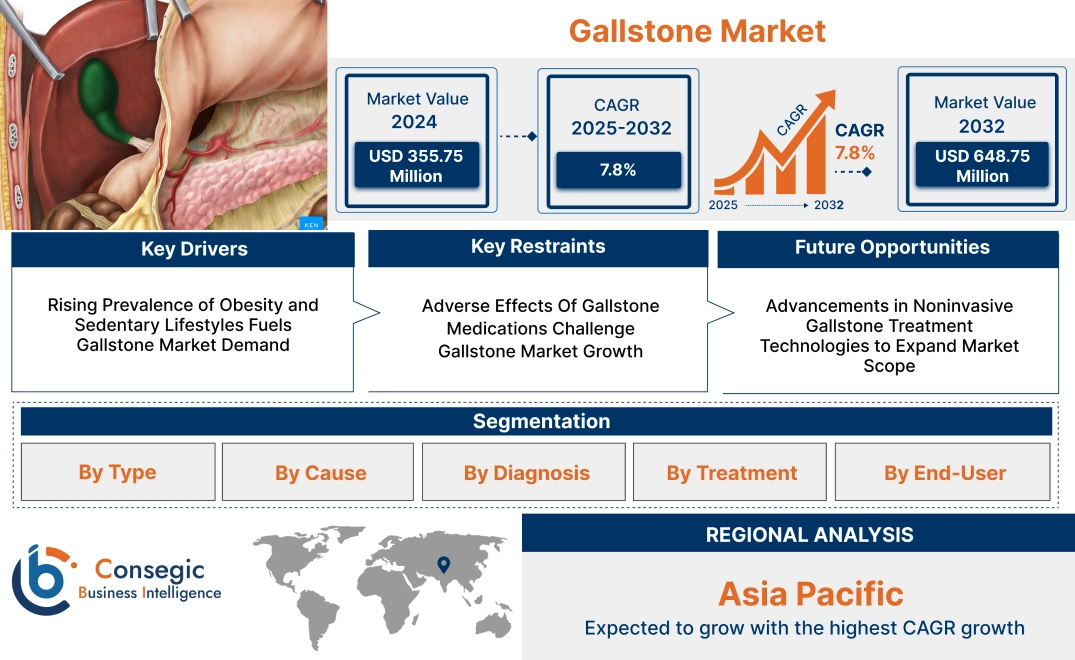
Gallstone Market size is estimated to reach over USD 648.75 Million by 2032 from a value of USD 355.75 Million in 2024 and is projected to grow by USD 377.16 Million in 2025, growing at a CAGR of 7.8 % from 2025 to 2032.
Gallstone Market Scope & Overview:
Gallstones are solid particles that form in the gallbladder, primarily composed of cholesterol, bilirubin, and calcium salts. They range in size and vary in composition. Gallstones develop due to an imbalance in the substances that make up bile, leading to crystal formation. Key characteristics of gallstones include their composition, varying density, and potential to obstruct bile flow. They are identified through diagnostic imaging techniques like ultrasound and CT scans.
Treatment options for gallstones include medications, minimally invasive procedures, and surgical removal. These methods provide relief from symptoms and prevent complications. Benefits include reduced pain, improved digestive function, and prevention of biliary tract infections. Applications involve diagnostics and therapeutic procedures in healthcare facilities. End-use industries include hospitals, diagnostic laboratories, and specialty clinics specializing in gastroenterology and hepatology. The gallstone market supports advancements in patient care and treatment outcomes.
Gallstone Market Dynamics - (DRO) :
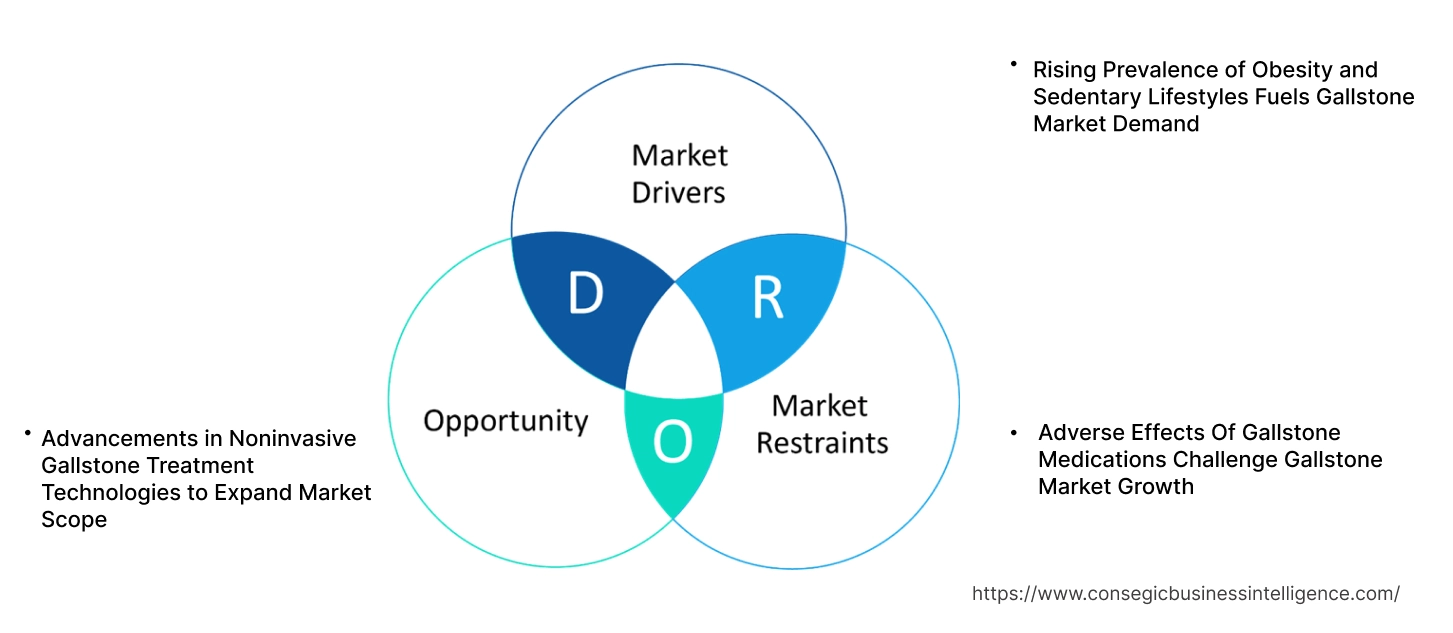
Key Drivers:
Rising Prevalence of Obesity and Sedentary Lifestyles Fuels Gallstone Market Demand
Obesity and sedentary lifestyles have been identified as significant contributors to gallstone formation, as they increase cholesterol levels in bile. This condition leads to the development of cholesterol gallstones, which are the most common type. Gallstone treatments, including surgical procedures like cholecystectomy and nonsurgical therapies, address this growing health issue effectively. For instance, laparoscopic cholecystectomy is widely adopted due to its minimally invasive nature and faster recovery times.
Therefore, the increasing prevalence of obesity and sedentary lifestyles is significantly boosting the gallstone market trend for gallstone treatment solutions.
Key Restraints:
Adverse Effects Of Gallstone Medications Challenge Gallstone Market Growth
Gallstone medications, including bile acid pills like ursodeoxycholic acid, are associated with side effects such as diarrhea, abdominal pain, and nausea. These adverse reactions limit patient compliance and preference for nonsurgical treatment options. Additionally, these medications often require prolonged usage, further discouraging patients from pursuing pharmaceutical interventions. For example, long-term use of ursodeoxycholic acid to dissolve small gallstones can be challenging for patients with underlying gastrointestinal disorders.
Thus, the side effects and limitations of gallstone medications pose a significant challenge to the gallstone market expansion.
Future Opportunities :
Advancements in Noninvasive Gallstone Treatment Technologies to Expand Market Scope
Emerging noninvasive treatment technologies, such as extracorporeal shock wave lithotripsy (ESWL), are anticipated to transform the gallstone treatment landscape. ESWL uses shock waves to break gallstones into smaller fragments, eliminating the need for invasive surgical procedures. This innovation addresses patient concerns regarding recovery time and surgical risks. For example, ongoing research focuses on enhancing the accuracy and effectiveness of ESWL for larger or multiple gallstones.
The development and adoption of advanced noninvasive technologies are expected to create substantial gallstone market opportunities in the coming years.
Gallstone Market Segmental Analysis :
By Type:
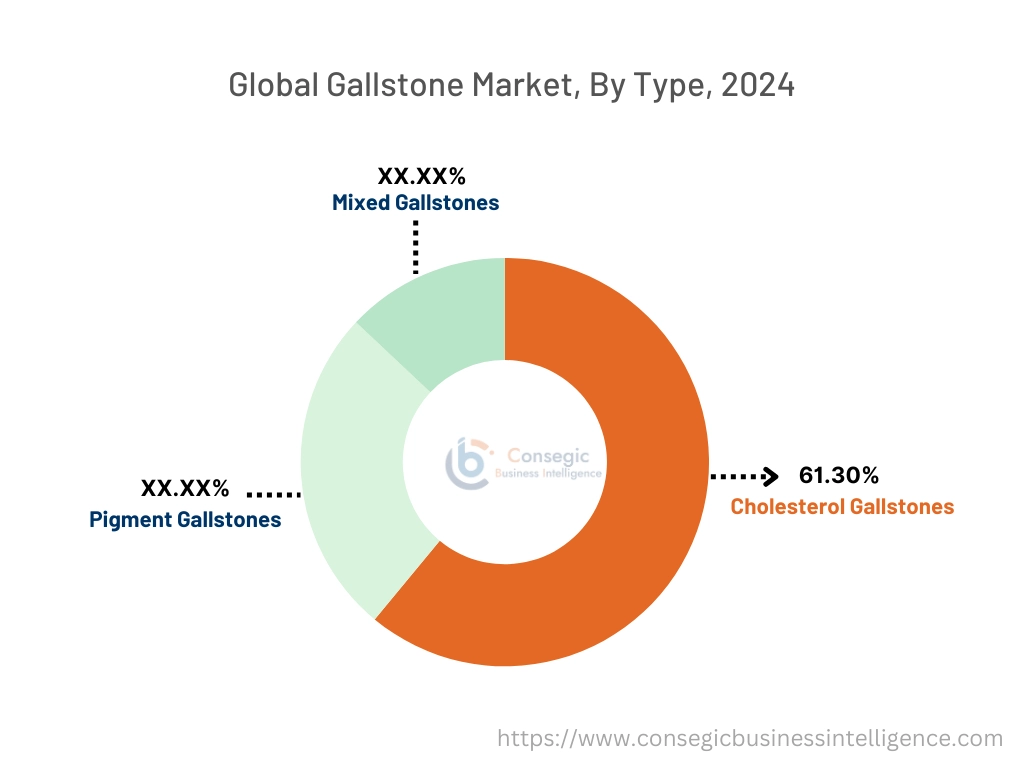
Based on type, the gallstone market is segmented into cholesterol gallstones, pigment gallstones, and mixed gallstones.
The cholesterol gallstones segment accounted for the largest revenue of 61.30% in the gallstone market share in 2023.
- Cholesterol gallstones are the most common type, consisting primarily of hardened cholesterol. They form when there is too much cholesterol in the bile, a fluid produced by the liver to digest fats.
- These stones are often yellow-green in color and may vary in size from tiny grains to large stones that may cause symptoms such as pain, nausea, and vomiting.
- Cholesterol gallstones are more prevalent in people with obesity, diabetes, high-fat diets, and those who have certain medical conditions, which increases their occurrence rate.
- The increasing number of obesity and high-fat diet-related cases worldwide is contributing to the gallstone market expansion of this segment.
- Cholesterol gallstones diagnosis is usually through ultrasound or CT scans, and they are typically treated through lifestyle changes, medication, or surgical procedures like cholecystectomy.
- Therefore, according to gallstone market analysis, the growing awareness of dietary factors and rising healthcare access, cholesterol gallstones will continue to dominate the market for the foreseeable future.
The mixed gallstones segment is anticipated to register the fastest CAGR during the forecast period.
- Mixed gallstones are composed of a combination of cholesterol and pigment. They are more common in patients with biliary tract infections, cirrhosis, or blood disorders such as sickle cell anemia.
- These stones are usually darker in color and are known to cause more frequent complications compared to pure cholesterol or pigment gallstones.
- Due to their complex composition and connection with other health issues, mixed gallstones are increasingly being identified, especially in the aging population.
- As the global population ages and the number of patients with blood-related conditions increases, mixed gallstones are expected to see significant trends in diagnosis and treatment.
- Thus, according to gallstone market analysis, the fastest gallstone market trend is driven by advancements in diagnostic technologies and the broader recognition of mixed gallstones in clinical settings.
By Cause:
Based on the cause, the gallstone market is segmented into Cholesterol Stone,Bilirubin, Concentrated Bile, and Others.
The cholesterol stone segment accounted for the largest revenue in gallstone market share in 2023.
- Cholesterol stones are formed due to an imbalance in the substances that make up bile, including cholesterol.
- These stones are common and account for a significant percentage of gallstone cases worldwide.
- The increasing prevalence of obesity, sedentary lifestyles, and unhealthy dietary habits has contributed to the rising cases of cholesterol stones.
- Medical advancements in diagnostic techniques, such as imaging and endoscopic ultrasound, have improved detection and treatment rates for cholesterol stones, further boosting revenue.
- These factors are expected to sustain the dominance of the cholesterol stone segment.
- Therefore, according to market analysis, the cholesterol stone segment’s large revenue share is supported by its high prevalence and advanced medical solutions that enhance detection and treatment rates.
The bilirubin segment is anticipated to register the fastest CAGR during the forecast period.
- Bilirubin stones, often associated with hemolytic conditions or liver diseases, are less common but pose significant health challenges.
- Their formation occurs due to excessive breakdown of red blood cells, leading to increased bilirubin levels.
- Rising cases of chronic diseases like liver cirrhosis and sickle cell anemia contribute to the demand for targeted treatment options for bilirubin stones.
- The development of minimally invasive treatment procedures, along with heightened awareness about early diagnosis, is expected to drive the growth of this segment at a rapid pace.
- Thus, according to market analysis, the bilirubin segment’s fast growth is driven by advancements in treatment and increased focus on chronic disease management.
By Diagnosis:
Based on the diagnosis, the gallstone market is segmented into ultrasound, imaging tests, endoscopic retrograde cholangiopancreatography (ERCP), blood tests, and others.
The ultrasound segment accounted for the largest revenue share in 2023.
- Ultrasound is widely used for detecting gallstones as it is non-invasive, cost-effective, and offers quick results without the need for radiation.
- It allows healthcare providers to detect gallstones with high accuracy and is a preferred method for initial diagnosis.
- Increasing incidences of gallstones, along with advancements in ultrasound technology, are driving this segment.
- Additionally, ultrasound is often used for follow-up diagnostics to monitor the condition.
- As a result, ultrasound remains the most common and preferred diagnostic method for gallstones.
- Thus, according to market analysis, the ultrasound segment is dominant in the market due to its widespread use, cost-effectiveness, and accuracy in diagnosing gallstones.
The imaging tests segment is anticipated to register the fastest CAGR during the forecast period.
- Imaging tests like CT scans and MRI are increasingly being used in complex cases or when ultrasound results are inconclusive.
- These methods provide detailed images and help in the accurate assessment of gallstones, particularly in cases where complications are suspected.
- As healthcare systems adopt more advanced imaging technologies, the demand for imaging tests is growing rapidly.
- This segment is benefiting from technological advancements in imaging systems, which improve diagnostic capabilities.
- Thus, according to market analysis, the imaging tests segment is expected to experience significant growth due to the rising adoption of advanced diagnostic imaging technologies and their effectiveness in complicated cases.
By Treatment:
Based on treatment, the gallstone market is segmented into open cholecystectomy, laparoscopic cholecystectomy, extracorporeal shock wave lithotripsy (ESWL), medications, and others.
The laparoscopic cholecystectomy segment accounted for the largest revenue share in 2023.
- Laparoscopic cholecystectomy is a minimally invasive surgical procedure for removing the gallbladder, which is commonly performed to treat gallstones.
- It offers several benefits, including shorter recovery time, smaller incisions, reduced hospital stays, and less post-operative pain.
- This procedure has become the standard treatment due to its effectiveness and patient-friendly nature, making it the preferred choice among surgeons.
- Furthermore, technological advancements in laparoscopic instruments have made the procedure safer and more efficient.
- Thus, according to market analysis, laparoscopic cholecystectomy holds the largest share of the treatment segment due to its popularity as a minimally invasive and effective procedure for treating gallstones.
The extracorporeal shock wave lithotripsy (ESWL) segment is anticipated to register the fastest CAGR during the forecast period.
- ESWL is a non-invasive treatment that uses shock waves to break up gallstones into smaller fragments, allowing them to be passed more easily.
- This method is especially beneficial for patients who are unable or unwilling to undergo surgery.
- As awareness of this non-invasive option grows, more patients are opting for ESWL, especially for smaller gallstones.
- Moreover, advancements in ESWL technology are improving its efficiency and outcomes, contributing to the growth of this segment.
- Thus, according to market analysis, ESWL is gaining momentum as a non-invasive treatment option, with increasing adoption expected to drive its rapid growth during the forecast period.
By End-User:
The gallstone market is segmented based on end-users into hospitals, ambulatory surgical centers, and specialty clinics.
The hospital segment accounted for the largest revenue share in 2023.
- Hospitals are the primary setting for the treatment of complicated gallstone cases, especially those requiring surgeries like cholecystectomy or ERCP.
- These facilities are equipped with advanced diagnostic and treatment tools, making them the go-to for severe cases of gallstones.
- Hospitals also have multidisciplinary teams of healthcare professionals, such as surgeons, radiologists, and gastroenterologists, to handle all aspects of gallstone care.
- Therefore, according to market analysis, as the global healthcare infrastructure continues to expand and more people seek medical treatment for gallstone-related issues, hospitals will maintain their leading position in the market.
The ambulatory surgical centers (ASC) segment is expected to register the fastest CAGR during the forecast period.
- ASCs provide outpatient services, including gallstone treatment procedures, in a cost-effective and time-efficient manner.
- These centers are becoming increasingly popular for less complicated cases, especially for patients undergoing laparoscopic cholecystectomy or lithotripsy.
- ASCs' ability to reduce costs compared to hospitals and their focus on high-volume surgeries are driving the growth of this segment.
- Thus, according to market analysis, as patients seek more convenient treatment options, the trend for ASCs continues to rise, especially for elective and less invasive procedures.
Regional Analysis:
The regional segment includes North America, Europe, Asia Pacific, the Middle East and Africa, and Latin America.
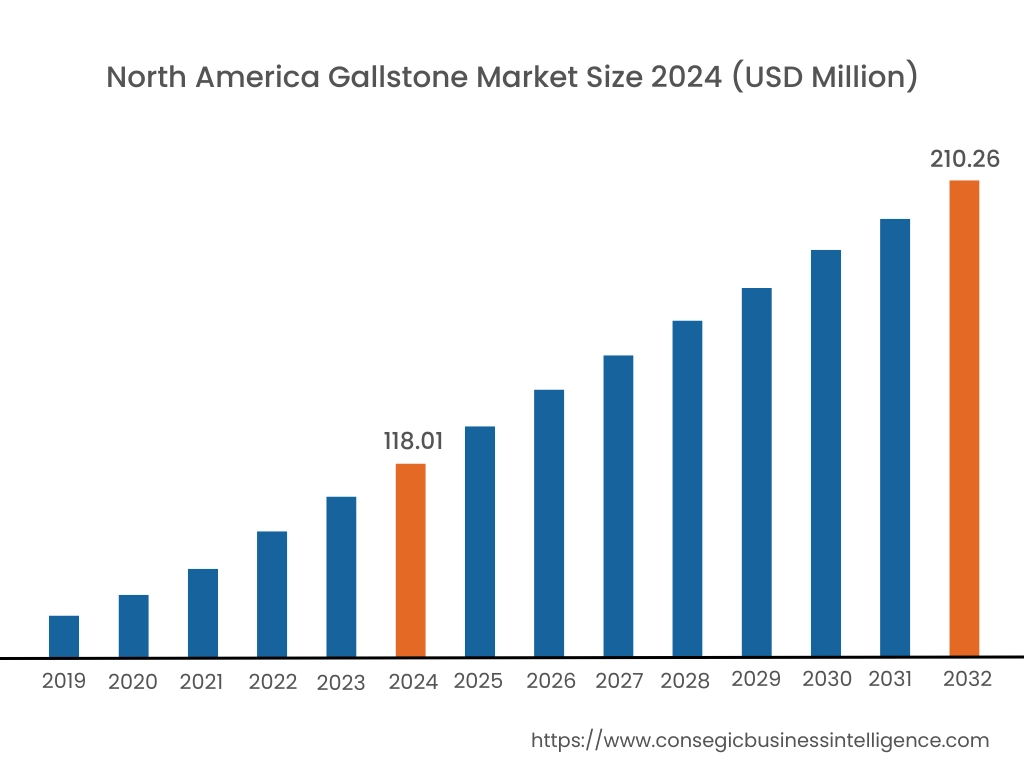
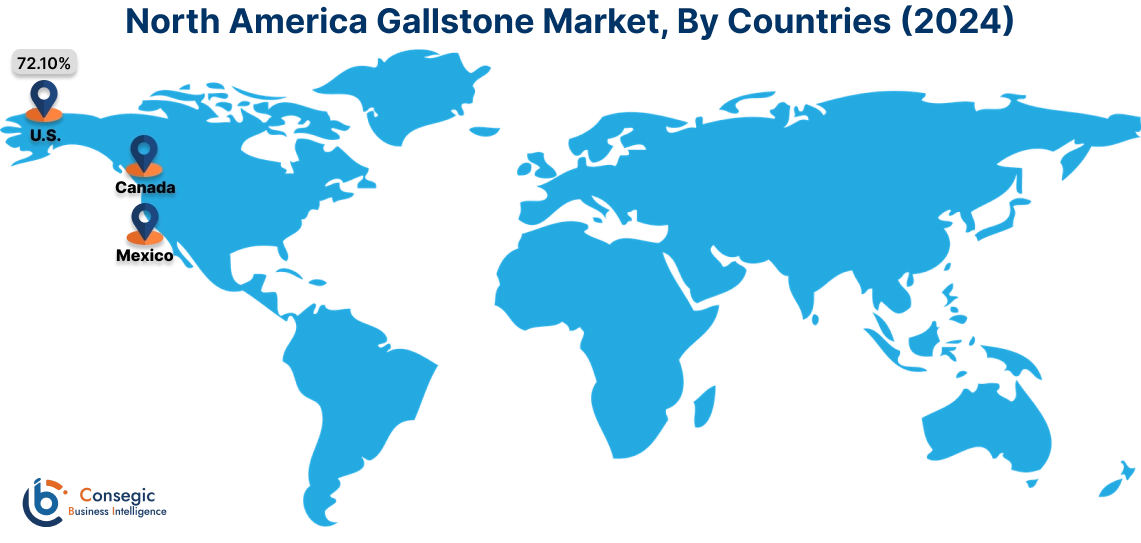
In 2024, North America was valued at USD 118.01 Million and is expected to reach USD 210.26 Million in 2032. In North America, the U.S. accounted for the highest share of 72.10% during the base year of 2024. Factors contributing to market performance include an aging population, increased awareness of gallstone-related health issues, and advancements in minimally invasive treatments. The trend of non-surgical treatments, such as lithotripsy and medications, is on the rise, reflecting the region’s focus on less invasive procedures. Additionally, the high prevalence of obesity and diabetes in North America has led to an increased incidence of gallstones, further boosting market demand.
In Asia Pacific, the market is experiencing the fastest growth with a CAGR of 8.3% over the forecast period. Asia-Pacific is witnessing significant growth in the gallstone market, driven by rapid urbanization, dietary changes, and rising healthcare awareness in countries like China, India, and Japan. The region has a large patient pool, with increasing cases of gallstones due to high-fat diets and sedentary lifestyles. Additionally, improvements in healthcare infrastructure and the expansion of medical services contribute to the availability of treatment options, including advanced surgery and non-surgical alternatives. China’s healthcare system modernization and increasing access to healthcare drive further gallstone market demand.
Europe represents a mature market for gallstones, with countries like Germany, the UK, and France playing a major role. The prevalence of gallstones is high due to aging populations and lifestyle factors, particularly in Western Europe. The market is mainly driven by the trend for both surgical and non-surgical treatments, including cholecystectomy and bile acid therapy. The adoption of advanced medical technologies, including endoscopic procedures, is also contributing to market expansion. The focus on preventive healthcare and improved diagnostic tools enhances early detection, which further influences the market.
In the Middle East and Africa, the gallstone market is developing, with increasing awareness and healthcare improvements leading to a rise in the trend for treatments. Countries like Saudi Arabia, UAE, and South Africa show a higher incidence of gallstones due to lifestyle factors such as poor diet, obesity, and genetic predisposition. While access to healthcare is improving, particularly in urban centers, the market is still challenged by disparities in medical resources across the region. Nonetheless, the trend for both surgical and non-surgical treatment options is expected to rise as healthcare infrastructure continues to advance.
The gallstone market in Latin America is growing, with Brazil, Mexico, and Argentina leading the market. Rising healthcare access, improved diagnostic capabilities, and an increasing prevalence of gallstone-related diseases contribute to the market's expansion. The region’s growing middle class and increasing healthcare investments further support the demand for treatment options, including laparoscopic surgery and bile acid medications. However, market growth is limited by economic disparities and healthcare accessibility in rural areas. Despite these challenges, the market is poised to benefit from better awareness and access to advanced treatment solutions.
Top Key Players and Market Share Insights:
The Global Gallstone Market is highly competitive with major players providing FWA to the national and international markets. Key players are adopting several strategies in research and development (R&D), product innovation, and end-user launches to hold a strong position in the Global Gallstone Market. Key players in the Gallstone industry include-
- AbbVie Inc. (United States)
- AstraZeneca PLC (United Kingdom)
- Mylan N.V. (United States)
- GSK PLC (United Kingdom)
- Sun Pharmaceutical Industries Ltd. (India)
- Bristol-Myers Squibb Company (United States)
- Johnson & Johnson (United States)
- Novartis AG (Switzerland)
- F. Hoffmann-La Roche Ltd. (Switzerland)
- Pfizer Inc. (United States)
Gallstone Market Report Insights :
| Report Attributes | Report Details |
| Study Timeline | 2019-2032 |
| Market Size in 2032 | USD 648.75 Million |
| CAGR (2025-2032) | 7.8% |
| By Type |
|
| By Cause |
|
| By Diagnosis |
|
| By Treatment |
|
| By End-User |
|
| By Region |
|
| Key Players |
|
| North America | U.S. Canada Mexico |
| Europe | U.K. Germany France Spain Italy Russia Benelux Rest of Europe |
| APAC | China South Korea Japan India Australia ASEAN Rest of Asia-Pacific |
| Middle East and Africa | GCC Turkey South Africa Rest of MEA |
| LATAM | Brazil Argentina Chile Rest of LATAM |
| Report Coverage |
|
Key Questions Answered in the Report
How big is the Gallstone Market? −
In 2024, the Gallstone Market was USD 355.75 million.
What will be the potential market valuation for the Gallstone Market by 2032? +
In 2032, the market size of Gallstone Market is expected to reach USD 648.75 million.
What are the segments covered in the Gallstone Market report? +
The type, diagnosis, treatment, distribution channel, and end-user are the segments covered in this report.
Who are the major players in the Gallstone Market? +
AbbVie Inc. (United States), AstraZeneca PLC (United Kingdom), Bristol-Myers Squibb Company (United States), Johnson & Johnson (United States), Novartis AG (Switzerland), F. Hoffmann-La Roche Ltd. (Switzerland), Pfizer Inc. (United States), Mylan N.V. (United States), GSK PLC (United Kingdom), Sun Pharmaceutical Industries Ltd. (India) are the major players in the Gallstone market.
Overview
Reputation & Certifications


Our Services
- Market Intelligence & Forecasting
- Custom Research Solutions
- Market Entry Strategy
- Competitive Intelligence
- Customer Insights
- Industry Innovation Analysis
- Investment Advisory