Jump to Content
Hidradenitis Suppurativa Market - Size, Share, Industry Trends, and Forecasts (2025-2032)
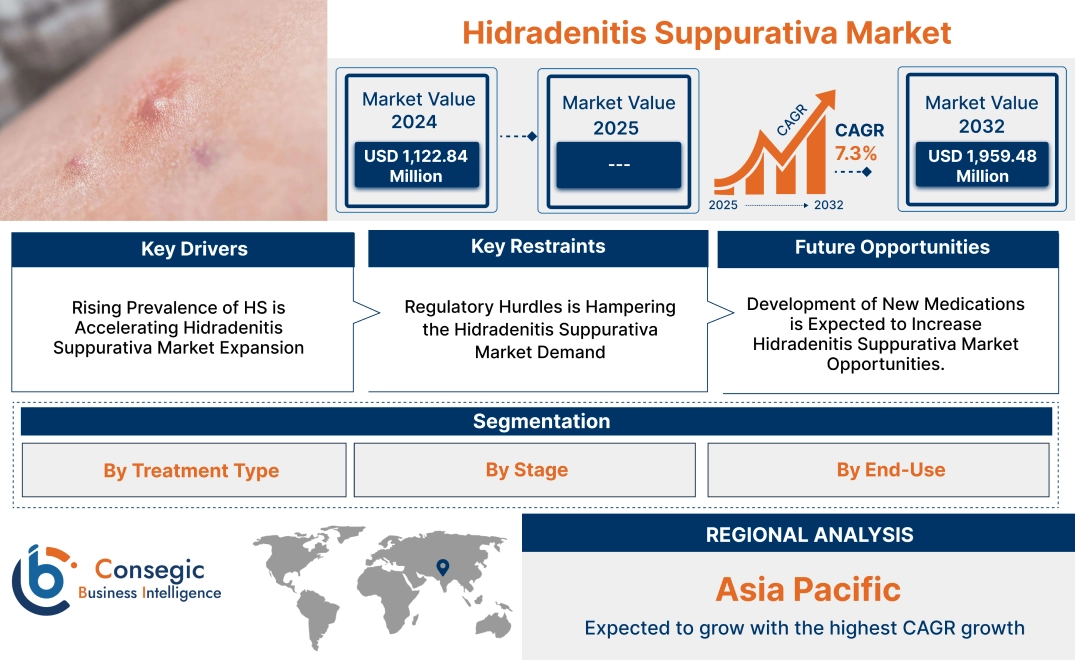
Hidradenitis Suppurativa Market Size:
Hidradenitis Suppurativa Market size is growing with a CAGR of 7.3% during the forecast period (2025-2032), and the market is projected to be valued at USD 1,959.48 Million by 2032 from USD 1,122.84 Million in 2024.
Hidradenitis Suppurativa Market Scope & Overview:
Hidradenitis suppurativa (HS) is a chronic inflammatory condition. This condition causes painful lumps, abscesses and tunnels on skin. They are more common in areas where skin rubs together, such as the armpits, groin, and under the breasts. It significantly impacts quality of life and is recurrent. The exact cause of HS is unknown. Although it is linked to genetic predisposition, hormonal imbalances, and immune dysfunction. Triggers such as obesity, smoking, and hormonal changes also exacerbate the condition.
HS progresses in three stages. It starts with isolated abscesses (Stage I). Then, it advances to recurrent abscesses with scarring (Stage II). Last, it culminates in widespread involvement with sinus tracts (Stage III). The treatment options include medications such as antibiotics, biologics, and hormonal therapies. In severe cases, surgical interventions are carried out. Incision and drainage, wide excision, and laser surgery are performed. Lifestyle changes, wound care, and managing comorbidities are essential for comprehensive care.
Hidradenitis Suppurativa Market Dynamics - (DRO) :
Key Drivers:
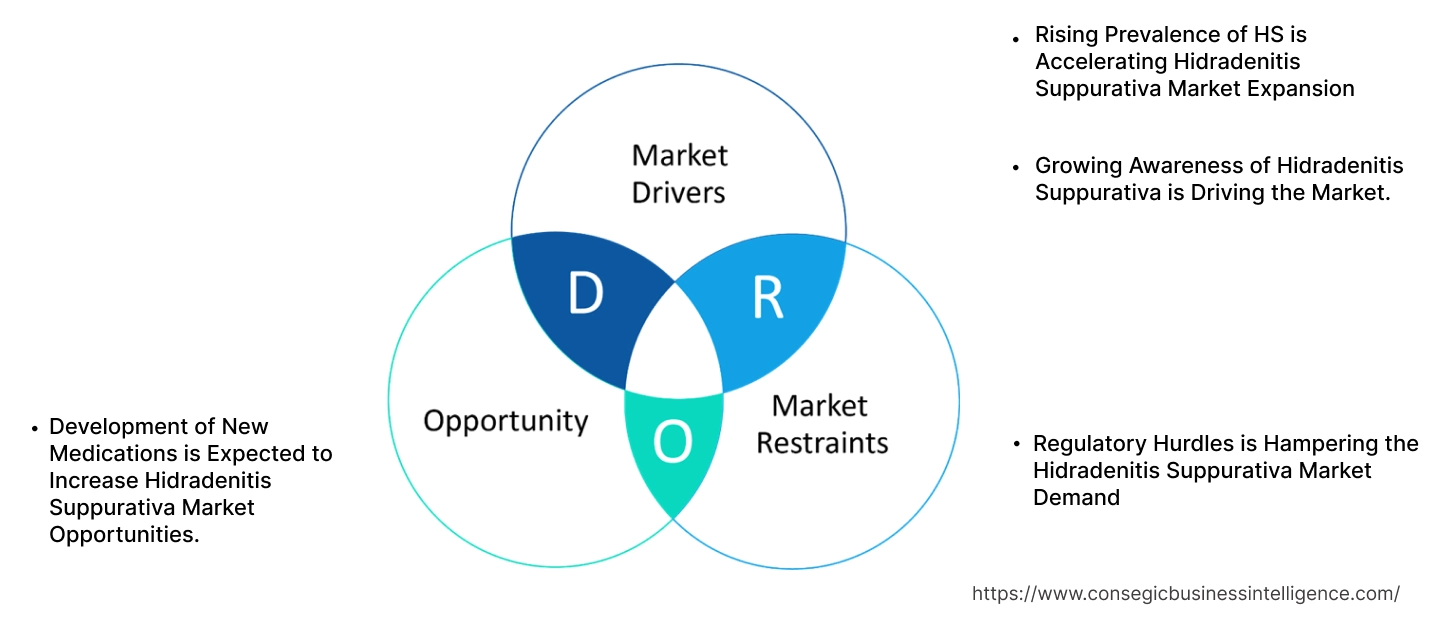
Rising Prevalence of HS is Accelerating Hidradenitis Suppurativa Market Expansion
Improved diagnostic capabilities are leading to more cases of HS being identified. Moreover, sedentary lifestyles and poor diet have led to an increase in obesity rates. Additionally, smoking rates remain high in certain regions. It is due to stress, targeted marketing, and addiction. This increased obesity and smoking, along with genetic predisposition have led to a rise in cases of HS, requiring effective treatment solutions.
For instance,
- According to an article published by the National Center for Biotechnology Information, in 2023, hidradenitis suppurativa exhibits a wide global prevalence range, estimated between 0.00033% and 4.1%. Notably, higher prevalence rates of 0.7-1.2% have been observed in European and US populations.
Overall, the rising prevalence of HS is significantly boosting the hidradenitis suppurativa market expansion.
Growing Awareness of Hidradenitis Suppurativa is Driving the Market.
HS is misdiagnosed due to a lack of understanding among both patients and healthcare providers. However, there are educational campaigns conducted by healthcare organizations to raise awareness. Moreover, non-profit organizations are helping patients understand their conditions and seek appropriate treatment. Additionally, advancements in communication platforms have made it easier to disseminate information about this condition.
For instance,
- In 2024, the American Academy of Dermatology published an article providing information on what is hidradenitis suppurativa. It also provided information on symptoms and underlying causes. The article also stated what are the treatments available for it.
Thus, growing awareness of this chronic inflammatory skin condition is accelerating the global hidradenitis suppurativa market growth.
Key Restraints:
Regulatory Hurdles is Hampering the Hidradenitis Suppurativa Market Demand
Developing new treatments, especially biologics and advanced therapies, requires rigorous testing. It also requires compliance with stringent regulatory standards. There are clinical trials that should be conducted to establish safety and efficacy. These long-term outcomes focusing on patients are time-consuming and costly. This delays the introduction of innovative treatments.
Moreover, the varying regulations across regions complicate global market entry. For example, approvals from bodies such as the FDA, EMA, or other local regulatory agencies involve different requirements. This creates barriers for companies aiming for international commercialization. Additionally, post-approval treatments must comply with ongoing pharmacovigilance requirements. This adds to operational and financial burdens. Henceforth, regulatory hurdles are hampering the hidradenitis suppurativa market demand.
Future Opportunities :
Development of New Medications is Expected to Increase Hidradenitis Suppurativa Market Opportunities.
Treatment options for HS were limited to antibiotics, lifestyle modifications, and surgical interventions. This left many patients with inadequate symptoms of relief. However, advancements in medical research have led to the development of innovative therapies. Some of them involve biologics, a class of medicines that come from living organisms. Moreover, interleukin antagonists, which are basically proteins used in many conditions, are also gaining attention.
For instance,
- In 2024, AbbVie’s Lutikizumab, an investigational interleukin antagonist, demonstrated positive outcomes in a Phase 2 clinical trial. It is designed for adults with moderate to severe HS. The program is now progressing to Phase 3 trials.
Overall, the development of new innovative medications to improve patient outcomes is expected to increase hidradenitis suppurativa market opportunities.
Hidradenitis Suppurativa Market Segmental Analysis :
By Treatment Type:
Based on treatment type, the market is categorized into medications and surgical.
Trends in Type:
- There is growing demand for biologics, due to their efficacy in moderate-to-severe HS.
- There are advancements in surgical techniques such as minimally invasive procedures used to reduce scarring.
The medications segment accounted for the largest market share in 2024 and is expected to grow at the fastest CAGR over the forecast period.
- Medications are further categorized into antibiotics, biologics, corticosteroids, and others.
- Medications dominate the hidradenitis suppurativa market trends. Various medication classes are used to treat this chronic skin condition.
- Antibiotics, including tetracyclines, are commonly prescribed to control bacterial infections and reduce inflammation.
- Moreover, hormonal therapies, such as oral contraceptives and anti-androgens are used. They help manage the hormonal triggers associated with HS.
- Moreover, biologics such as adalimumab, target specific immune pathways. They are used for moderate to severe cases, which offer long-term control. The development of new biologics is driving the segment.
- For instance, in 2023, the FDA approved Cosentyx as a new biologic treatment for moderate to severe hidradenitis suppurativa (HS).
- Overall, as per the market analysis, accessibility, versatility, and advancements are driving a segment in hidradenitis suppurativa market growth.
By Stage:
Based on stage, the market is categorized into hurley stage I, hurley stage II, and hurley stage III.
Trends in the Stage:
- Hurley stage II represents a significant portion of the market due to its moderate severity, requiring a balance of topical, oral, and potentially some procedural interventions.
- Increasing focus on early intervention in stage I to prevent progression to more severe stages.
The hurley stage II segment accounted for the largest market share in 2024.
- Hurley stage II dominate the hidradenitis suppurativa market trends. It is characterized by painful lumps that frequently recur. It creates abscesses that drain foul-smelling discharge. It also does the formation of sinus tracts under the skin.
- Patients in this stage typically experience moderate disease progression. Symptoms are severe enough to seek medical intervention. This makes them a key focus for treatment options.
- Lifestyle factors, such as obesity and smoking are leading to the growing prevalence of hurley stage II.
- For instance, according to a study published by Springer Nature, in 2022, in the rising prevalence of HS, the majority of patients, approximately 45.9%, fall within the moderate Hurley stage II category.
- Overall, as per the market analysis, the rising prevalence of stage II HS is driving segmental growth in the hidradenitis suppurativa industry.
The hurley stage III segment is expected to grow at the fastest CAGR over the forecast period.
- Hurley stage III is emerging as an important segment in the market due to the increasing recognition of the severity and impact of advanced disease.
- Stage III is characterized by widespread interconnected sinus tracts. It develops significant scarring on the body. Also, it creates extensive abscesses that cause severe pain and functional impairment.
- This stage requires intensive treatment, including both medical and surgical interventions.This makes it a growing area of focus in HS care.
- Surgical procedures include wide excisions or laser therapy which involve higher costs and more complex care.
- As awareness of HS improves, healthcare providers are identifying more severe cases that have previously gone untreated. Additionally, it involves the identification of misdiagnosed cases as well. This will drive a segment for the forecasted period.
By End Use:
Based on end-use, the market is categorized into hospitals, dermatology clinics, and others.
Trends in End-Use:
- The growing role of home healthcare providers in delivering post-operative care and medication management.
- Increasing adoption of digital health technologies, such as remote patient monitoring and mobile health applications, within clinical settings.
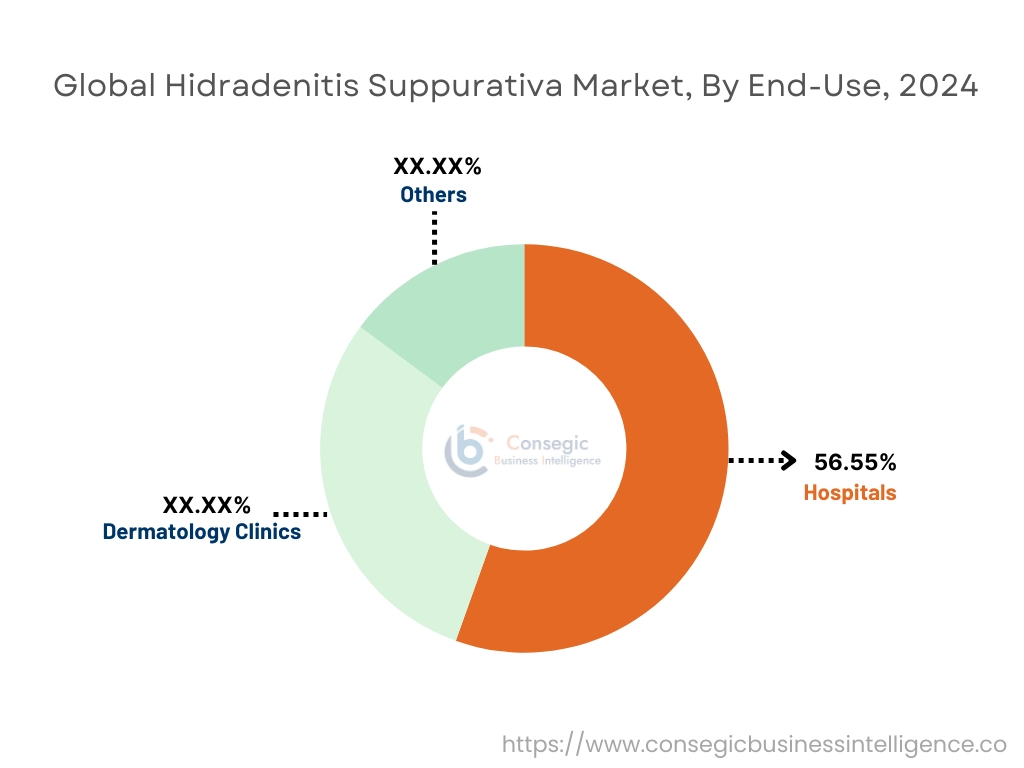
The hospitals segment accounted for the largest market share of 56.55% in 2024
- Hospitals dominate the market due to their ability to handle severe and complex cases. Patients with symptoms such as extensive abscesses, scarring, and sinus tracts necessitate specialized treatments.
- These include wide excision, laser therapy, and drainage surgical procedures, which are readily available only in hospitals.
- Moreover, hospitals play a critical role in the administration of biologic therapies. This requires monitoring for side effects and proper dosing.
- Growing populations, increased demand for specialized care, and government economic investment have led to a rise in the number of hospitals. This has improved the diagnostic and treatment capabilities, increasing patient access.
- For instance, according toFinancial Express, the number of hospitals in India increased by 27% from 2019 to 2024, rising from 30,000 to 38,000.
- Overall, as per the market analysis, increased accessibility by the growing number of hospitals across regions is driving segmental growth.
The dermatology clinics segment is expected to grow at the fastest CAGR over the forecast period.
- Dermatology clinics are emerging as a significant segment of the market. These clinics are becoming increasingly appealing to individuals who focus on outpatient care and non-invasive treatments.
- Patients value the shorter wait times and personalized attention provided in clinics compared to hospitals. This makes them an increasingly popular choice.
- Their ability to offer cost-effective treatments makes them a preferred option for patients with limited resources. This is contributing to their growing prominence in the market.
- According to market analysis, clinics are adopting advanced technologies, such as laser therapies. These are effective for treating localized lesions and minimizing scarring in HS patients.
Regional Analysis:
The regional segment includes North America, Europe, Asia Pacific, the Middle East and Africa, and Latin America.
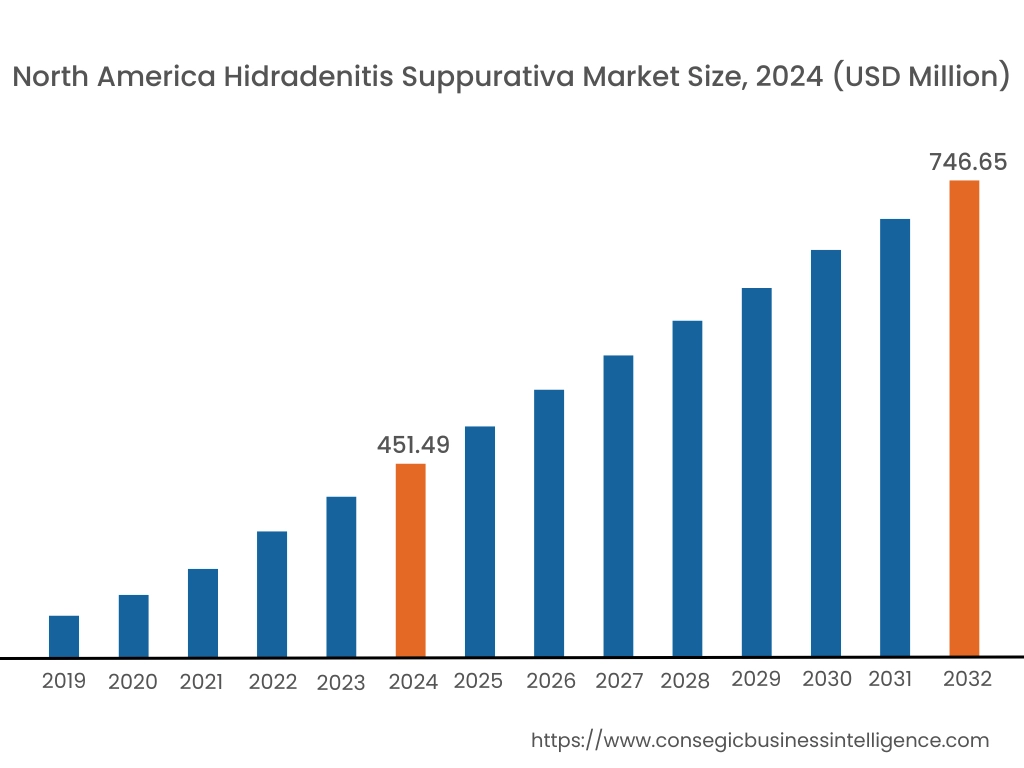
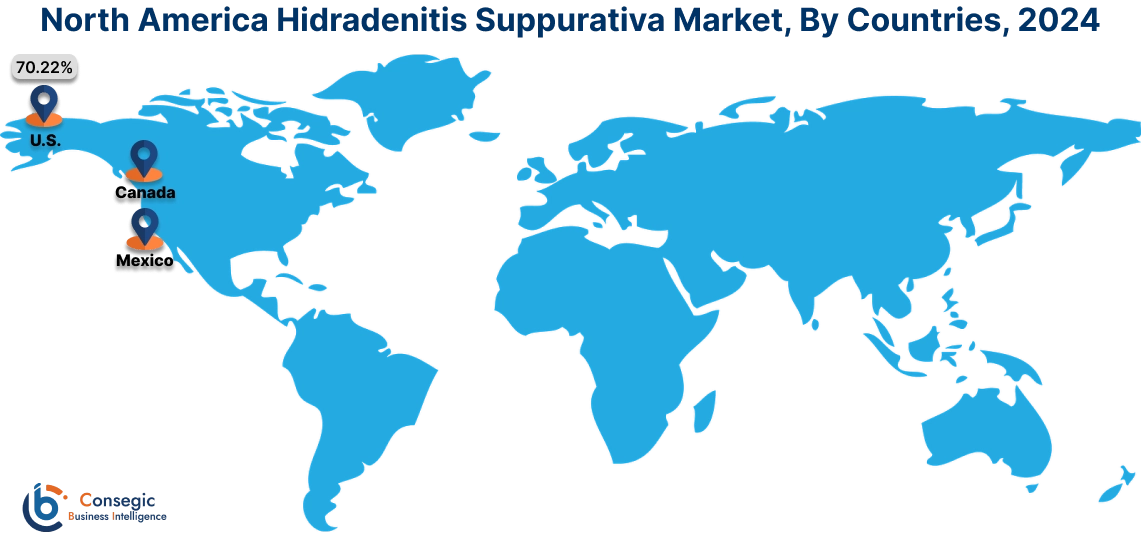
In 2024, North America accounted for the highest hidradenitis suppurativa market share at 40.21% and was valued at USD 451.49 Million and is expected to reach USD 746.65 Million in 2032. In North America, the U.S. accounted for the hidradenitis suppurativa market share of 70.22% during the base year of 2024. Rising smoking rates, obesity, and other factors have led to a growing number of HS cases in the region. These risk factors, along with greater access to healthcare services, have resulted in more patients seeking medical intervention. Moreover, the region has seen significant advancements in therapeutic development. New biologic drugs are gaining approval and offering improved treatment outcomes. Pharmaceutical companies are focusing on launching innovative therapies that report the unmet demand of patients with moderate to severe HS.
For instance,
- In 2024, UCB announced that the U.S. Food and Drug Administration (FDA) approved BIMZELX for the treatment of adults with moderate-to-severe hidradenitis suppurativa (HS).
Overall, the rising prevalence of HS cases, coupled with advancements, and the development of novel therapies is significantly driving market growth in the region.
In Asia Pacific, the hidradenitis suppurativa market is experiencing the fastest growth with a CAGR of 8.6% over the forecast period. The market is driven by multiple trends. Awareness campaigns by healthcare organizations and advocacy groups have significantly improved the understanding of HS. This awareness has been in both patients and medical professionals. This has led to earlier diagnosis and treatment. This was previously hindered by underreporting and a lack of understanding about the condition. Moreover, educational initiatives by non-profits are playing a vital role in raising awareness. Additionally, the region is witnessing substantial investments in healthcare industry infrastructure. This is driven by economic growth and government initiatives to improve healthcare access. Countries such as India, China, and Southeast Asian nations are focusing on expanding medical facilities and increasing the availability of advanced treatment options.
Europe's hidradenitis suppurativa market analysis states that several trends are responsible for the progress of the market in the region. The market is driven by growing patient advocacy and supportive reimbursement policies. Patient advocacy groups and organizations are actively working to increase the availability of HS treatments. They are working on reducing stigma and improving access to care. Through campaigns, support networks, and collaboration with healthcare providers, these groups are empowering patients to seek timely medical attention. Moreover, supportive reimbursement policies across many European countries ensure that patients have access to effective therapies. National health systems and private insurers provide coverage for biologics, surgical interventions, and other treatments. This reduces the financial burden on patients.
The Middle East and Africa (MEA) hidradenitis suppurativa market analysis states that the region is also witnessing several trends for notable surge. There are advances in medical training among healthcare professionals. This has led to better diagnosis of HS, which was previously underdiagnosed in the region. Improved diagnostic tools and guidelines have enabled earlier and more accurate detection, allowing patients to receive timely and appropriate treatment. Additionally, the region is witnessing the growth of specialized dermatology and healthcare clinics. This is particularly true in urban areas and economically advancing countries such as the UAE, Saudi Arabia, and South Africa. These clinics offer focused care for conditions such as HS and provide access to advanced treatments. This includes biologics and surgical procedures.
Latin America's hidradenitis suppurativa market size is also emerging and limited retail penetration in rural areas poses challenges. There are collaborative efforts between healthcare providers, pharmaceutical companies, and research organizations. These efforts are to improve treatment options and expand access to care. These partnerships are facilitating clinical trials and knowledge sharing. Moreover, it is helping the introduction of advanced therapies, enhancing the overall management of HS in the region. Additionally, there is a growing demand of minimally invasive surgical techniques. They offer effective solutions for severe HS cases with reduced recovery times. It also has lower risks compared to traditional methods.
Top Key Players and Market Share Insights:
The Hidradenitis Suppurativa market is highly competitive with major players providing products to the national and international markets. Key players are adopting several strategies in research and development (R&D) and product innovation to hold a strong position in the global Hidradenitis Suppurativa market. Key players in The Hidradenitis Suppurativa industry include-
- UCB Biotechnology (Belgium)
- AbbVie (U.S.)
- Priovant Therapeutics (U.S.)
- UNION Therapeutics (Denmark)
- MoonLake Immunotherapeutics (Switzerland)
- Novartis (Switzerland)
- Incyte (U.S.)
- Eli Lilly and Company (U.S.)
- Aclaris Therapeutics (U.S.)
- Boehringer Ingelheim (Germany)
Recent Industry Developments :
Product Launch:
- In August 2024, UCB Biotechnology received the U.S. Food and Drug Administration (FDA) approval for BIMZELX (bimekizumab-bkzx) for the treatment of adults with moderate-to-severe HS.
- In October 2023, Novartis announced the U.S. Food and Drug Administration (FDA) approval for Cosentyx (secukinumab), a fully human biologic that targets interleukin-17A, for the treatment of moderate-to-severe HS in adults.
Hidradenitis Suppurativa Market Report Insights :
| Report Attributes | Report Details |
| Study Timeline | 2019-2032 |
| Market Size in 2032 | USD 1,959.48 Million |
| CAGR (2025-2032) | 7.3% |
| By Treatment Type |
|
| By Stage |
|
| By End-Use |
|
| By Region |
|
| Key Players |
|
| North America | U.S. Canada Mexico |
| Europe | U.K. Germany France Spain Italy Russia Benelux Rest of Europe |
| APAC | China South Korea Japan India Australia ASEAN Rest of Asia-Pacific |
| Middle East and Africa | GCC Turkey South Africa Rest of MEA |
| LATAM | Brazil Argentina Chile Rest of LATAM |
| Report Coverage |
|
Key Questions Answered in the Report
How big is the Hidradenitis Suppurativa market? −
In 2024, the Hidradenitis Suppurativa market is USD 1,122.84 Million.
Which is the fastest-growing region in the Hidradenitis Suppurativa market? +
Asia Pacific is the fastest-growing region in the Hidradenitis Suppurativa market.
What specific segmentation details are covered in the Hidradenitis Suppurativa market? +
Treatment Type, Stage and End-Use segmentation details are covered in the Hidradenitis Suppurativa market
Who are the major players in the Hidradenitis Suppurativa market? +
UCB Biotechnology (Belgium), AbbVie (U.S.), Novartis (Switzerland), Incyte (U.S.), Eli Lilly and Company (U.S.), Aclaris Therapeutics (U.S.), Boehringer Ingelheim (Germany), Priovant Therapeutics (U.S.), UNION Therapeutics (Denmark), and MoonLake Immunotherapeutics (Switzerland)
Overview
Reputation & Certifications


Our Services
- Market Intelligence & Forecasting
- Custom Research Solutions
- Market Entry Strategy
- Competitive Intelligence
- Customer Insights
- Industry Innovation Analysis
- Investment Advisory