Jump to Content
Immersive Display Entertainment Market - Size, Industry Share, Growth Trends and Forecasts 2025-2034
Market Scope & Overview
The immersive display entertainment industry is a fast-growing and highly advanced area of the entertainment, media, and extended reality (XR) platform including virtual reality (VR), augmented reality (AR), mixed reality (MR) and spatial computing technologies that offer immersive entertainment experiences in gaming, live events, theme parks, cinematic experiences, and interactive attractions. A variety of different types of displays are considered immersive displays, including head-mounted displays (HMDs) with stereoscopic visual displays using two micro-OLED or LCD screens with models at 4K-8K resolutions at 90-144 Hz refresh rates to reduce motion sickness, AR glasses with transparent on-top displays based on waveguides or refractive optics.
Examples of immersive entertainment applications include virtual reality games with graphical rendering of 4K resolution per eye allowing narrative-based experiences, social VR platforms allowing avatars and social interaction in persistent digital worlds, location-based entertainment with overlay of VR experiences onto theme park attractions and motion platforms, cinematic VR experiences and 360-degree video experiences, AR-enhanced live events that overlay digital graphics on real sport.
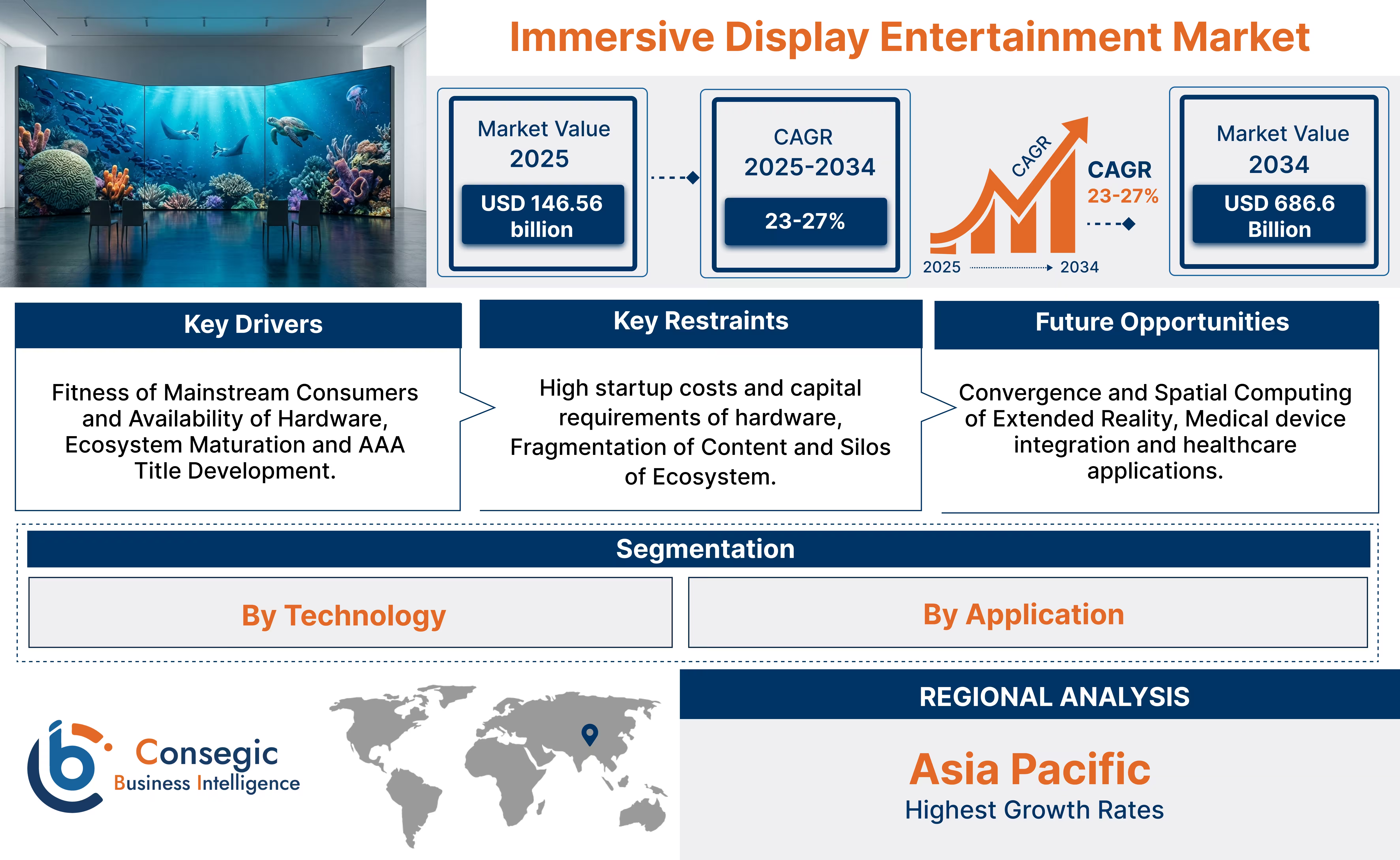
The market itself, with a size of USD 146.56 billion in the base year of 2025, is estimated to grow significantly to USD 686.6 billion+ by 2034 with compound annual growth rates (CAGR) of 23-27 percent over the 2026-2034 forecast period based on market definition and geographic coverage. This extraordinary growth curve is a manifestation of accelerating mainstream consumer adoption based on price cuts in hardware accessibility (USD 1,200-1,500 entry points to USD 300-500 accessible segment products), content library growth with 500+ commercial VR game titles released each year, social platform development including metaverse integration to support persistent virtual worlds, enterprise adoption through corporate training, industrial visualization, and remote.
Key Market Insights
- Rapid market expansion with strong CAGR of 23-27%, projected to grow from USD 146.56 billion (2025) to over USD 686.6 billion by 2034
- Increasing adoption of immersive technologies such as VR, AR, MR, and spatial computing across entertainment and enterprise applications
- Declining hardware costs improving accessibility, with devices shifting from premium pricing to mass-market affordability
- Strong growth in content ecosystem, including 500+ new VR titles annually and expansion of social and metaverse platforms
- Rising demand across multiple applications such as gaming, live events, theme parks, and interactive cinematic experiences
Dynamic Immersive Display Technology and Experience Architecture
Modern immersive entertainment spaces have combined advanced display technologies, sensory systems, content delivery systems to produce multisensory experiences that are virtually indistinguishable perceptually with physical reality. Display technology Micro-OLED displays at the technological edge reaching 4K resolution per eye (2048 x 2560 pixels per display) with a refresh rate of 90-144 Hz and each pixel displayable in a perfect black color with no motion sickness because of the absence of ghosting artefacts. LCD display technology with LCD display that is still under development to meet the mid-market segment with 1832 × 1920 resolution per eye and a 90 Hz refresh rate and at affordable cost.
Haptic feedback is growing beyond simple vibration to more complex force-feedback systems such as exoskeleton gloves that offer finger-level haptic feedback with the ability to sense object weight, texture and resistance with accuracy in the range of 1–2-millimeter spatial resolution and 1-10 Newton force levels. Neural haptic studies are underway to develop haptic perception that would allow the feeling of pressure, temperature and pain by the use of specific stimulation patterns to produce a complete and elaborate sensory experience.
Gaze contingent rendering optimization with eye tracking to reduce computational costs by foveated rendering, which concentrates high quality visual data at the gaze point and peripheral vision is low-quality data to reduce graphics processing demands by 40-60 percent. Simultaneously, eye-tracking as a means of providing social presence by means of avatar eye-contact rendering and attention-based interaction paradigm of UI.
State-of-the-art audio rendering that provides spatial audio via binaural processing algorithms, HRTF (Head-Related Transfer Function) convolution, and object-based audio files such as Dolby Atmos place sounds in 3-D space with 5-millimeter localization accuracy to provide multisensory spatial awareness. AI-based personalization of content that is dynamically modified based on real-time player behavior, learning preferences and dynamically adjusted difficulty to keep users engaged at varying levels of skill and taste.
Immersive hardware installed base of 150 or more units as of 2025 indicating high levels of consumer acceptance of Meta Quest platform with 50.8 percent market share in AR/VR headset segment (Q1 2026), XREAL with 12.1 percent market share, and various competitors with Sony, Apple, Microsoft and HTC holding large market shares. Hardware production costs falling by 15-20 per cent. a year by optimizing processes and increasing production volumes to allow retail prices to drop and profitability to remain high to support further market growth.
Key Drivers
Fitness of Mainstream Consumers and Availability of Hardware.
The immersive technology industry is moving past an early-adopters stage to mass-market consumer acceptance because hardware prices have decreased substantially while users find the technology simpler to operate. A fall in the average headset prices, as the higher prices of models now drop to affordable USD 300-500 units, has increased the size of the target market, especially among the gaming and entertainment population.
At the same time, most top producers like Meta have perfected the ergonomics of devices, wireless operation, and independent processing functions, removing the reliance on advanced PCs. This has made the onboarding process simple and minimized the overall cost of ownership. The association of VR/AR ecosystems with smartphones, social media, and app stores has further enhanced adoption because of the integration of immersive experiences into the currently existing digital behavior.
Simultaneously, ongoing R&D investments facilitate component reduction, enhanced display resolution (e.g. pancake lenses) and increased battery efficiency which combine to maximize user experience, at reduced manufacturing costs. This cycle of cost reduction + experience improvement is a virtuous cycle that is essential in long-term volume growth and increasing penetration in emerging markets.
Ecosystem Maturation and AAA Title Development.
The development of immersive technologies is becoming more content-focused than hardware-focused, and AAA-quality content serves as one of the main distinguishing factors to platform success. Large gaming companies are investing in VR games which require substantial funding to create high-quality narrative-driven experiences that resemble traditional console games.
The industry now produces over 100 commercial titles each year because its ecosystem has expanded to support various genres such as simulation, fitness, education, and social interaction- beyond gaming. The user retention and engagement metrics which VR technology currently experience, must undergo improvement through this diversification process.
The cross-platform development tools and engines (like Unity and Unreal Engine) have created a new development method which streamlines the process of developing software. Although fragmentation remains, an improved ROI is being achieved by content scalability across devices as more interoperability is being achieved. Recurring revenue streams through subscription-based content models and in-app monetization are also emerging and stabilizing the ecosystem monetarily.
Key Restraints
High startup costs and capital requirements of hardware.
Although entry-level devices have been lowered in price, the high-performance immersive systems have been prohibitively costly to a great percentage of the global population, especially in the price-sensitive emerging economies. High-end devices with new features (e.g. high-resolution displays, eye tracking, spatial computing) remain priced expensive, and are only accessible to both high-income individuals and specialized enterprise customers.
Enterprise adoption, in both a literal and figurative sense, encompasses not only the purchasing of hardware but also substantial ancillary investments in both software and infrastructure development (custom) as well as employee training. There is reluctance amongst organizations, particularly SMEs, with limited budgets against these initial expenses, coupled with their comparatively lengthy payback periods.
This economic obstacle makes mass-scale deployment a slowness, resulting in a technological capability versus market penetration gap.
Fragmentation of Content and Silos of Ecosystem.
The immersive technology market is very fragmented and there are various competing platforms that run in closed ecosystems. Every platform tends to necessitate platform-specific development, which greatly escalates time, cost, and technical complexity to content creators.
Such division causes the lack of content per platform making consumers see less value and slows hardware uptake. The developers will focus on major platforms that have bigger user bases and this will create a market concentration risk and lack of competition.
Moreover, the absence of universal content portability and interoperability limits the ability to have seamless user experience between devices. Ecosystem silos will persist until industry-wide standardization enhances, resulting in greater scalability and innovation efficiency.
Future Opportunities
Convergence and Spatial Computing of Extended Reality.
The development of immersive technology has reached a major milestone through the creation of extended reality systems which combine virtual reality with augmented reality and mixed reality technologies. The nature of interaction is being redefined by spatial computing platforms that have made digital content seamlessly interact with the physical environment.
Improvements in passthrough technology, depth sensing, and real-time rendering are making high-fidelity mixed reality experiences, where digital objects appear in the world as natural and integrated with real-world environments. This opens other uses other than entertainment such as productivity, design and education.
Moving even further, Brain-computer interfaces (BCIs) and other studies focused on more advanced gesture trackers might remove the use of conventional input devices, allowing more natural and immersive interfaces. This movement towards natural user interfaces will lead to a much greater adoption and open new use cases in industries.
Medical device integration and healthcare applications.
Healthcare is among the most lucrative long-term growth opportunities of immersive technologies because of highly-valued, outcome-based applications. VR and AR applications are becoming more and more integrated in clinical practice to support telemedicine, surgical planning, and patient rehabilitation.
The telemedicine platforms that are more engaging, such as immersive platforms, can lead to a better diagnosis and patient satisfaction. VR-based distraction therapy is becoming a non-pharmacological intervention in the area of pain management, decreasing the need to use medication and its side effects.
Another high-impact area is in mental health treatment, where immersive environments can be used to provide controlled exposure therapy to PTSD and anxiety and phobias. These applications offer personalized, scalable, and repeatable treatment options, which fill gaps in conventional healthcare systems.
The immersive technologies will become an inseparable part of the next-generation healthcare delivery systems as regulatory frameworks will evolve and clinical validation will rise.
Market Segmentation Analysis
By Technology Type: Immersive Display Architecture Classification
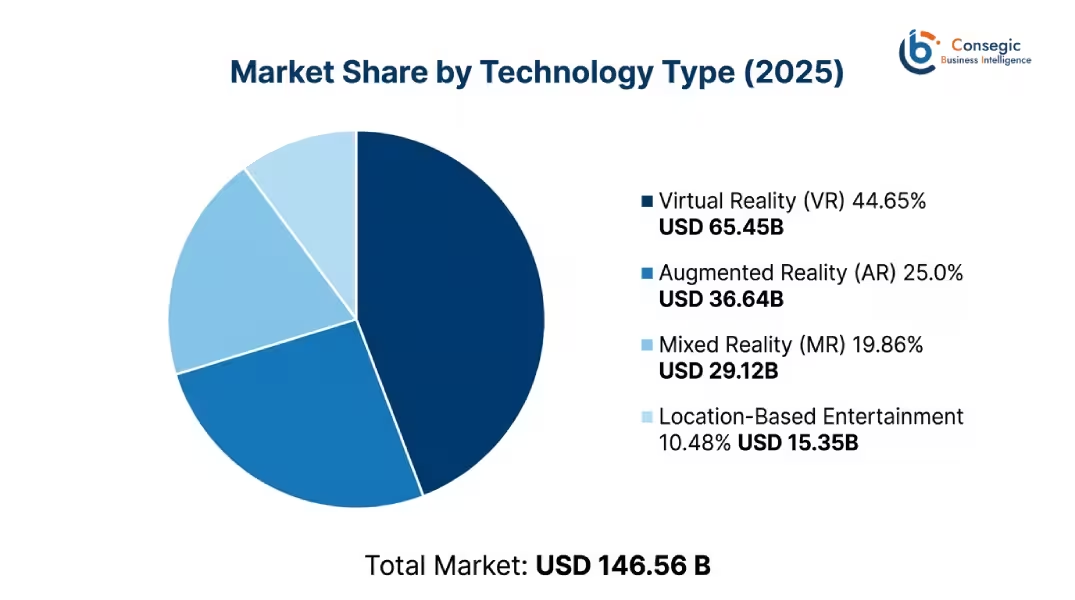
Virtual Reality (VR): USD 65.45 Billion (44.65 percent of market value) in 2025, projected to USD 297.73 Billion by 2034
VR technology of largest immersive segment with 40-50 percent market share with full sensory immersion via stereoscopic displays, positional tracking and haptic feedback. VR primary application focus in gaming (70 percent of VR market value), social platform (15 percent), and enterprise training (15 percent). VR market with 25-30 percent CAGR, where the main growth will be due to low-end standalone devices (Meta Quest line), a growing gaming library, and the use of social platforms.
Augmented Reality (AR): USD 36.64 Billion (25.0 percent of market value) in 2025, projected to USD 165.88 Billion by 2034
AR technology that takes 20-30 percent of the market share with transparent display overlays that facilitate mixed reality experiences with both digital content and real-world experience. Mobile AR (75 percent of AR market value), AR glasses (15 percent), and location-based AR experiences (10 percent) are the concentration locations of AR applications. AR market with 29.7 percent CAGR driven by maturation of mobile AR ecosystem, and creation of AR glasses, and increase in enterprise use of AR applications.
Mixed Reality (MR) and Spatial Computing USD 29.12 Billion (19.86 percent of market value) in 2025, estimated USD 131.84 Billion in 2034.
Mixed reality which is an embodiment of convergent experience combining VR and AR features with seamless interaction between the digital and physical world. MR applications in the focus of professional visualization, industrial design, and remote collaboration. MR market with 28-32 percent CAGR due to development of spatial computing platform and expansion of enterprise adoption.
Location-Based Entertainment (LBE) and Venue Experiences: USD 15.35 Billion (10.48 percent of market value) in 2025, which is projected to USD 69.5 Billion in 2034.
LBE as physical venue-based immersive experiences such as theme park attractions, VR arcades, and cinematic installations. LBE market exhibiting a 28-32 percent CAGR whose main growth is driven by experience quality improvement, growth in the chain of venues, and development of hybrid physical-digital experiences.
Regional Market Analysis
North America: Leadership in the market and domination of a high-end segment.
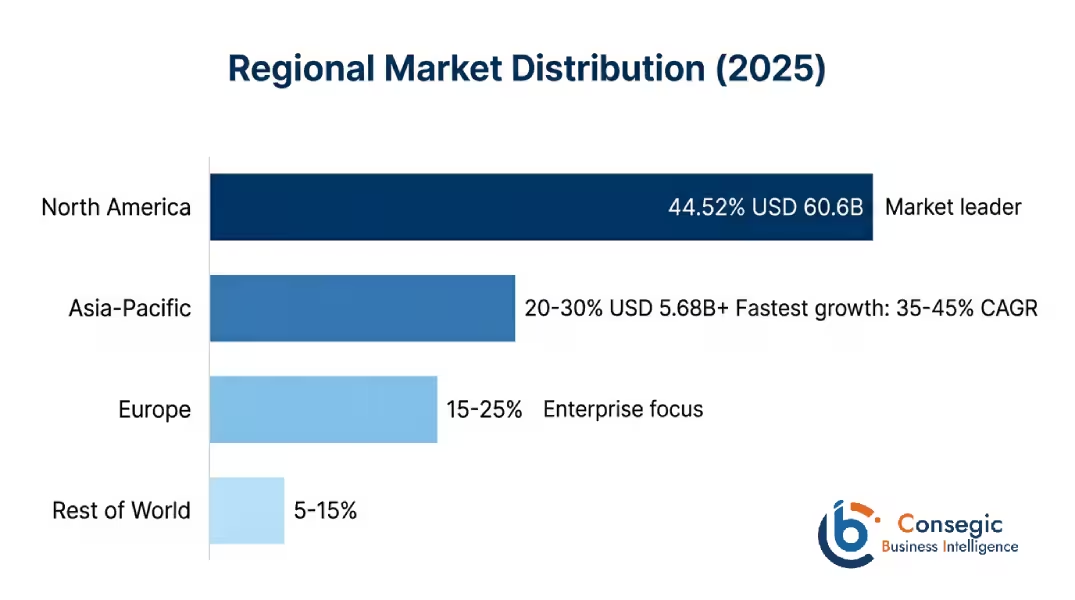
North America as the biggest regional market with 44.5255 percent global market share of USD 60.6 billion in 2025, which is a measure of consumer affluence, maturity of technology infrastructure, and concentration of contents ecosystem. United States market with the highest hardware adoption and penetration of Meta Quest platform of over 30 million units. North American market expansion to 27.6 percent CAGR by 2034 with an increase in enterprise adoption, expansion in content library and proliferation of entertainment venues. Premium market positioning of an average hardware price of USD 600-800 to sustain healthy manufacturer margins and investment rates.
Asia-Pacific: Fast-paced Growth and New Market Prospect.
Asia-Pacific with 20-30 percent of global market share worth USD 5.68 billion in 2025 with the highest growth rates of 35-45 percent CAGR due to the increase in consumer base, mobile VR ecosystem, and location-based entertainment venue proliferation. China market leadership comes from 200+ VR arcade venues which support a strong mobile VR ecosystem while a metaverse platform is under development. India and Southeast Asia as high-growth opportunity markets with emerging consumer affluence and content adjustment making them able to expand their market quickly. Asia-Pacific market with the highest growth rate of 23 percent and expected growth of market share to 35-40 percent by 2034 indicates the rise of the middle-class and accelerated uptake of technology.
Europe: Managed Market Enterprise-oriented.
Europe with 15-25 percent worldwide market share capturing regulatory needs, data privacy emphasis, and robust enterprise adoption. The European market is expanding at 22-26 percent CAGR and compliance with regulations leads to enterprise adoption and healthcare/education applications. Data privacy laws such as GDPR that provide compliance obligations and national fragmentation with market regulations.
Competitive Landscape and Key Market Players
Strategic Positioning and Market Leadership
Meta Platforms - Hardware Dominating Platform and Metaverse Investment.
Meta controls more than 50.8 percent market share of AR/VR headsets in Q1 2026 by market penetration of Meta Quest line (more than 80+ million installed base). The meta competitive advantages that are based on platform ecosystem integration with social network, content library of 500+ commercial VR titles, aggressive pricing that allows it to penetrate the market (Meta Quest 3 cost USD 399), and metaverse investment over USD 50 billion that support platform differentiation. Meta is estimated to generate USD 20-30 billion of immersive entertainment revenue annually through hardware sales, software licensing, and advertising integration.
Apple Inc. - Leadership and Premium Market Positioning in spatial computing.
Apple Vision Pro with a high-end market listing at USD 3,500, focusing on business and high-end consumer markets with processing and graphics and design power. Apple competitive strengths based on ecosystem integration with iOS, macOS, and cloud services, brand positioning and spatial computing research leadership. The annual growth potential of the immersive computing business is USD 2-5 billion at present with the revenue corresponding to Apple and its potential to grow as market matures and prices lower to allow mainstream adoption.
Sony Corporation- Gaming-Centric VR Leadership.
Sony PlayStation VR platform with projected 12-15 percent console VR market share via gaming ecosystem and exclusive content deals. PlayStation VR2 growth to embrace PC and future generation consoles with a view to market growth. Sony competitive strengths such as gaming franchise relationship, manufacture of hardware, and network.
HTC and Valve - PC VR and Enterprise Focus.
HTC retaining 8-10 percent market share in PC VR market with portfolio of Vive platform in consumer and enterprise applications. Valve retaining high-end PC VR status with Valve Index device priced as an enthusiast product (USD 1,499) and content creation. These corporations with estimated revenues of USD 2-3 billion per year in the form of hardware sales and software ecosystem.
Microsoft- Enterprise VR/Mixed Reality Leadership.
Microsoft to gain enterprise positioning using HoloLens mixed reality devices as well as development of immersive applications to serve the needs of enterprise customers such as CAD/design, remote collaboration, and industrial visualization. Microsoft bringing in estimated USD 1-2 billion revenue yearly by means of enterprise software licensing and consulting.
Emerging Enterprises and Local Chiefs.
XREAL capturing 12.1 percent market share in AR/VR headset market by developing AR glasses and integrating mobile AR ecosystem. Chinese firms such as Pico (subsidiary of ByteDance) building a market presence by offering competitive prices and being in the new market. Local players that assist in market penetration and localized content.Recent Industry Developments
Hardware Technology Advancement and Product Launches (2024- 2025).
In March 2026, Meta revealed Meta Quest 4 featuring micro-OLED displays, with 4K resolution per eye and 120 Hz refresh rates with haptic, AI-driven personalization of content at USD 499. In January 2025, Apple started commercial availability of Vision Pro with spatial computing focus and high-end positioning at USD 3,500. In November 2024, Sony announced the expansion of PlayStation VR2 to PC platform to expand access to VR gaming. In September 2025, Samsung stated that XR headset was making an entry into the immersive market with enterprise and consumer positioning.
Expansion of Content Ecosystems and AAA Title Development (2024-2025)
In February 2026, Ubisoft announced USD 250 million investment in AAA VR game development portfolio. In December 2024, Valve published Half-Life 2 Episode Three on Valve Index that sets a new AAA gaming standard. Electronic Arts revealed VR sports simulation titles of franchise giants in July 2025. In May 2025, Netflix revealed immersive streaming content series which would debut on VR platforms.
Enterprise Adoption and Professional Applications (2024-2025)
In March 2026, Mayo Clinic reported the integration of surgical VR simulation that lowered surgical complications by 22 percent. In January 2025, Microsoft declared the development of enterprise collaboration platforms that combine HoloLens 2 and metaverse ecosystems. In October 2024, BMW said it would implement immersive design review platforms that will cut design cycle time by 30 percent.
Persistent Virtual World Development and Metaverse (2024-2025)
In February 2026, Epic Games revealed the expansion of Fortnite metaverse platform to immersive headsets. In December 2024, Meta declared the user base of Horizon Worlds of 20 million monthly active users. In August 2025, Roblox declared expansion of the immersive platform that will support VR/AR experiences.
Market Report Insights
| Report Attributes | Report Details |
|---|---|
| Study Timeline | 2022–2034 |
| Base Year | 2025 |
| Forecast Period | 2026–2034 |
| Market Size in 2025 | USD 146.56 Billion |
| Market Size in 2034 | USD 686.6 Billion |
| CAGR (2026–2034) | 23-27% |
| By Technology | VR (44.65%), AR (25.0%), MR (19.86%), LBE (10.48%) |
| By Application | Gaming (44.65%), Location-Based (25.0%), Live Events (14.61%), Enterprise (9.86%), Esports (5.92%) |
| By Region | North America (44.52%), Europe (15-25%), Asia-Pacific (20-30%), Rest of World (5-15%) |
| Key Players | Meta (50.8%), Apple, Sony, Microsoft, HTC, XREAL, Regional Players |
| Global Installed Base | 150+ Million Units (2025) |
| Hardware Price Range | USD 300-3,500 (depending on device tier |
| Report Coverage |
|
Key Questions Answered in the Report
What is the world market size of immersive display entertainment? −
The worldwide immersive display entertainment market is estimated to attain USD 146.56 billion by the year 2025 and is set to grow to USD 686.6 billion+ by the year 2034, which is equivalent to the compound annual growth rate of 23-27 percent based on market definition and geographical area.
What are the major forces of growth in the international immersive display entertainment industry? +
Hardware availability via price cut of USD 1,200-1,500 historic entry point to USD 300-500 mainstream pricing segments allowing mass-market adoption and mainstream consumer usage beyond early adopters. Meta Quest platform with 50.8 percent market share and 80+ million installed bases with traction in the ecosystem and acceptance by consumers.
Are there any major regional differences in the global market? +
The regional differences are based on the differences in consumer affluence, maturity of the technology infrastructure, content availability, and regulatory environment. North America exhibits the highest market maturity of 44.52 percent market share with consumer affluence to adopt premium hardware, well established gaming and entertainment ecosystems, high enterprise adoption in training and simulation, and content concentration to aid platform differentiation.
Which is the competitive environment in the international immersive display entertainment industry? +
The competitive structure in the global market of immersive display entertainment has a very high degree of concentration with Meta holding massively dominant market share of about 50.8 percent in AR/VR headset market through ecosystem integration and competitive prices, and Apple holding premium market positioning at USD 3,500 Vision Pro price point, Sony with leadership in console VR market, and niche players such as HTC, Valve, and XREAL.
Overview
Reputation & Certifications


Our Services
- Market Intelligence & Forecasting
- Custom Research Solutions
- Market Entry Strategy
- Competitive Intelligence
- Customer Insights
- Industry Innovation Analysis
- Investment Advisory