Jump to Content
Knee Hyaluronic Acid Injection Market - Size, Share, Industry Trends, and Forecasts (2025-2032)
Knee Hyaluronic Acid Injection Market Size:
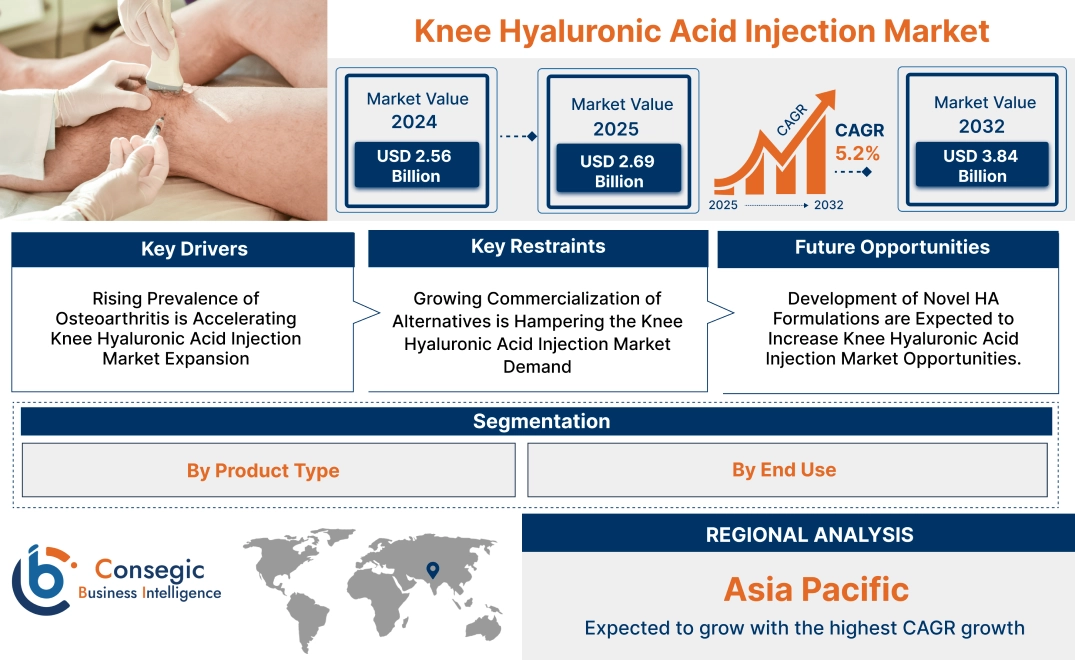
Knee Hyaluronic Acid Injection Market size is growing with a CAGR of 5.2% during the forecast period (2025-2032), and the market is projected to be valued at USD 3.84 Billion by 2032 from USD 2.56 Billion in 2024. Additionally, the market value for the 2025 attributes to USD 2.69 Billion.
Knee Hyaluronic Acid Injection Market Scope & Overview:
Knee hyaluronic acid injection is a treatment for knee osteoarthritis. Hyaluronic acid (HA) is a natural substance found in joint fluid. However, its level decreases with age or due to arthritis. These injections are mainly used when medications and therapies do not provide enough relief. These injections provide lubrication and cushioning to the knee. This helps the knee to move smoothly and reduce discomfort. The injections include single-injection (one dose for quick relief), three-injections (administered over three weeks for moderate relief), and five-injections (spread over five weeks for longer-lasting effects). The procedure is performed in hospitals, orthopedic clinics, and ambulatory surgical centers (ASCs).
Knee Hyaluronic Acid Injection Market Dynamics - (DRO) :
Key Drivers:
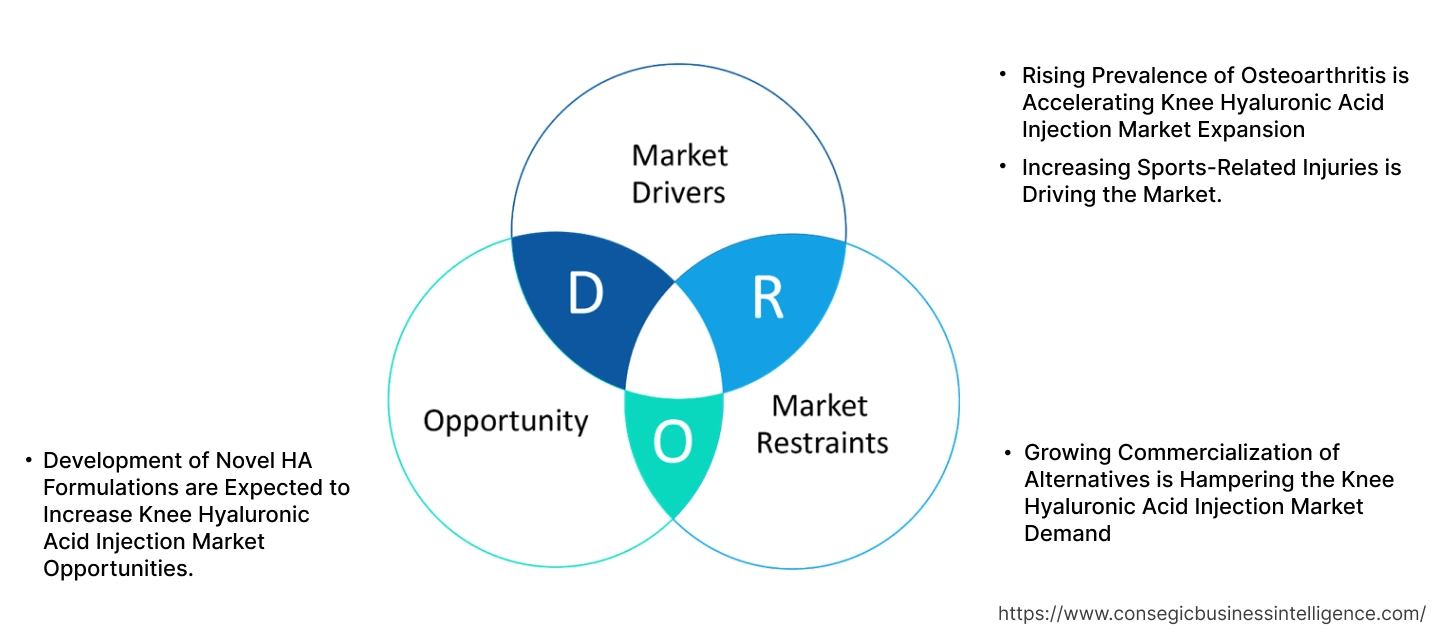
Rising Prevalence of Osteoarthritis is Accelerating Knee Hyaluronic Acid Injection Market Expansion
Osteoarthritis (OA) is a joint disease where the cartilage wears down. This causes pain and stiffness in the knee. Knee hyaluronic acid injection is used to reduce pain. It is also used to improve movement by adding lubrication to the joint. These injections are a good option for people who do not get enough relief from painkillers. Growing aging population and obesity rates, putting more stress on joints have led to increased cases of osteoarthritis.
For instance,
- According to a study published in Frontiers, OA affected 607 million people worldwide in year 2021, with more than 45 million new diagnoses occurring that year. This has required knee HA injections to manage condition, thus driving market growth.
Overall, rising prevalence of osteoarthritis is significantly boosting the knee hyaluronic acid injection market expansion.
Increasing Sports-Related Injuries is Driving the Market.
Sport injuries include injuries to muscles, joints, or bones caused by activities such as football, jumping, running, and others. Knee hyaluronic acid injection help athletes by reducing sprain and pain at the injury. These injections speed up recovery. They protect the knee from further damage. This treatment is safe and allows them to return to their sports activities faster. More people are engaging in physical activities leading to an increase in sport injuries cases.
For instance,
- According to an article published by Hospital for Special Surgery, serious knee injuries among teen athletes grew by 26% in 2023 when compared to previous year. Athletes are using these knee HA injections for pain recovery and prevent long-term damages, thus driving the market share.
Thus, increasing sports-related injuries are accelerating the global knee hyaluronic acid injection market growth.
Key Restraints:
Growing Commercialization of Alternatives is Hampering the Knee Hyaluronic Acid Injection Market Demand
The market faces competition from other substitutes available in the market. Corticosteroid injections, one of the alternative provides quick pain relief and reduce inflammation. This makes them effective for short-term management. Moreover, platelet-rich plasma (PRP) therapy helps heal damaged tissues by using the body's own growth factors. This promotes long-term joint repair. Additionally, stem cell therapy offers potential regeneration of cartilage. This slows osteoarthritis progression. Also, in many countries, insurance does not fully cover HA injections.
This makes them expensive for patients. Hence, the growing commercialization of alternatives is hampering the knee hyaluronic acid injection market demand.
Future Opportunities :
Development of Novel HA Formulations are Expected to Increase Knee Hyaluronic Acid Injection Market Opportunities.
New hyaluronic acid (HA) formulations are being developed to improve pain relief and joint protection. Researchers are creating high-molecular-weight and cross-linked HA. This stays in the knee joint longer and provides better lubrication. Moreover, extended-release HA injections are also being tested to reduce the number of treatments needed. Additionally, manufacturers are developing new formulas of HA combined with other ingredients.
For instance,
- In 2023, Synartro initiated the first human clinical trial of its lead drug candidate, SYN321. It combines hyaluronic acid with diclofenac for the treatment of OA. Synartro plans to manufacture trial products by 2024 or 2025. This creates potential for the market.
Overall, development of novel HA formulations is expected to knee hyaluronic acid injection market opportunities.
Knee Hyaluronic Acid Injection Market Segmental Analysis :
By Product Type:
Based on product type, the market is categorized into single-injection, three-injection, and five-injection.
Trends in Product Type:
- There is a growing demand favoring single-injection hyaluronic acid formulations due to their convenience and reduced patient visits.
- Manufacturers are investing in needle technology and formulation enhancements to minimize injection pain and discomfort.
The three-injection segment accounted for the largest market share in 2024.
- Three-injection segment dominated the knee hyaluronic acid injection market trends. This regime involves receiving one injection per week for three weeks.
- This method provides better and longer lasting pain relief. It allows the HA to build up in the knee joint.
- This improves lubrication and reduces discomfort. It is effective in managing osteoarthritis in patients with moderate symptoms.
- It also offers a balance in cost efficiency when compared to the five-injection regime. This regime is widely provided by many hospitals and clinics. This makes it accessible to a larger pool of patients.
- Overall, as per the market analysis, increasing awareness of non-surgical treatment options for knee pain management is driving a segment in to knee hyaluronic acid injection market growth.
The single-injection segment is expected to grow at the fastest CAGR over the forecast period.
- Single injection segment is emerging in the market trends. It is becoming more popular because it is quick and convenient.
- Also, it requires only one visit to the doctor.Patients prefer it because it saves time. It avoids the discomfort of multiple injections.
- Many insurance companies are starting to cover single injections, making them more accessible. As demand grows, manufacturers are expanding their production and launching into new regions.
- For instance, in 2024, LG Chem launched Synovian, a cross-linked single-hyaluronic acid injection for osteoarthritis in China.
- According to market analysis, manufacturers tapping into emerging markets support segmental growth in the industry for the upcoming years.
By End-Use:
Based on end-use, the market is categorized into hospitals, clinics, ambulatory surgical centers, and others.
Trends in the End-Use:
- The growing adoption rate of knee HA injections in sports medicine clinics for athletes and active individuals.
- There is a growing demand for administering knee HA injections in outpatient settings, such as ambulatory surgical centers. This is driven by cost-effectiveness and patient convenience.
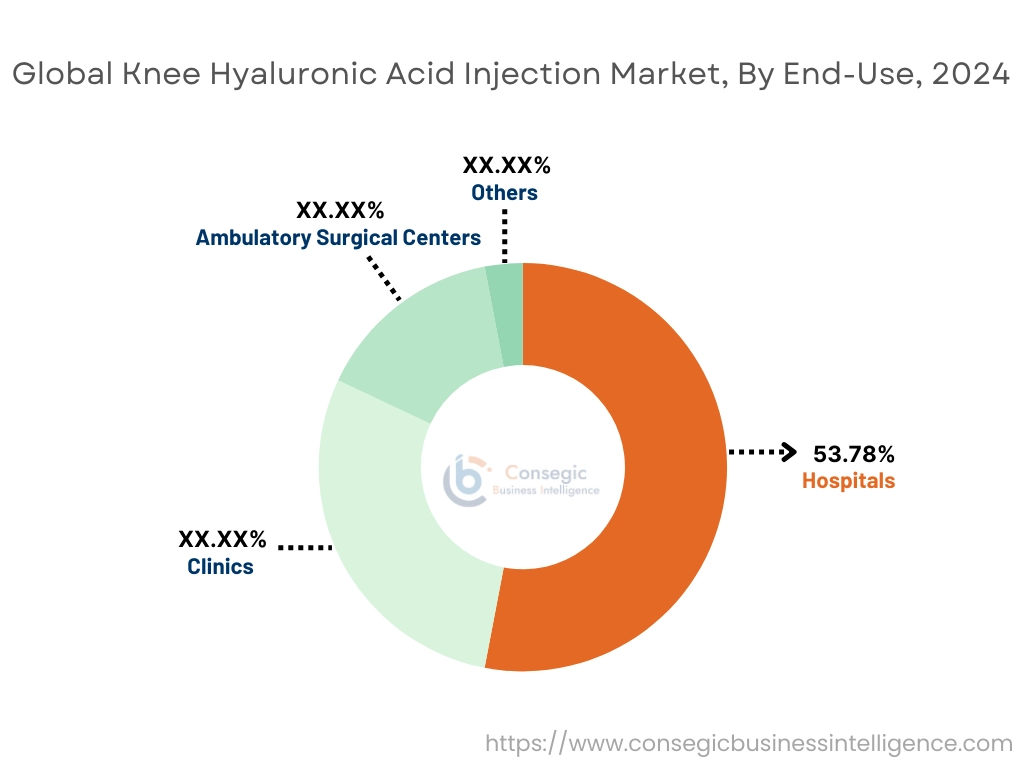
The hospitals segment accounted for the largest market share of 53.78% in 2024.
- Hospitals segment dominated the knee hyaluronic acid injection market trends. They handle a high number of osteoarthritis patients. This includes those with severe cases.
- Many people prefer hospitals because they have experienced doctors, advanced equipment, and better infrastructure.
- Increased demand for specialized care and government investment have led to a rise in the number of hospitals.
- For instance, according to Financial Express, the number of hospitals in India increased by 24% from 2019 to 2024, rising from 43,500 to 54,000. This has improved the treatment capabilities, increasing patient access.
- Overall, as per the market analysis, the rising number of hospitals is driving segmental growth in the knee hyaluronic acid injection industry.
The clinics segment is expected to grow at the fastest CAGR over the forecast period.
- The clinics segment is emerging in market trends. They offer faster and more convenient treatment compared to hospitals.
- Many patients prefer clinics because they have shorter waiting times and a simpler appointment process.
- The cost of treatment in clinics is lower than in hospitals. This makes it a more affordable option for many patients.
- As insurance coverage for HA injections improves, more clinics are expected to offer these treatments. Moreover, with advancements in HA formulations, clinics are offering long-lasting single and multi-injection treatments also.
- Thus, according to market analysis, the segmental growth of clinics is expected for the forecasted years.
Regional Analysis:
The regional segment includes North America, Europe, Asia Pacific, the Middle East and Africa, and Latin America.
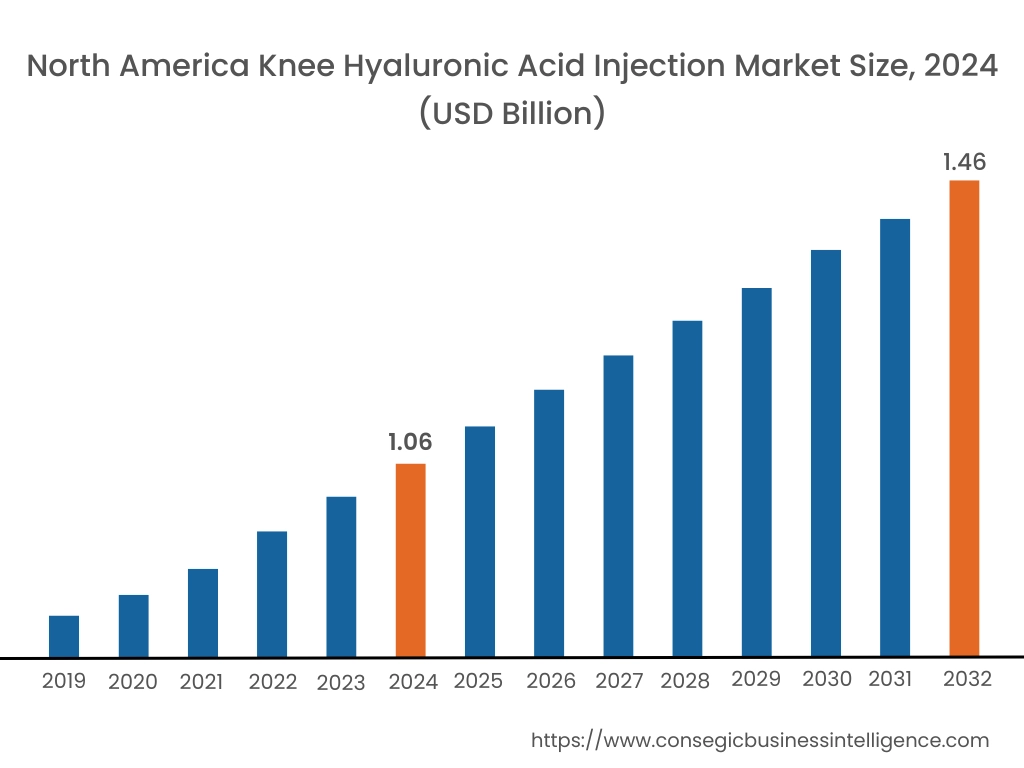
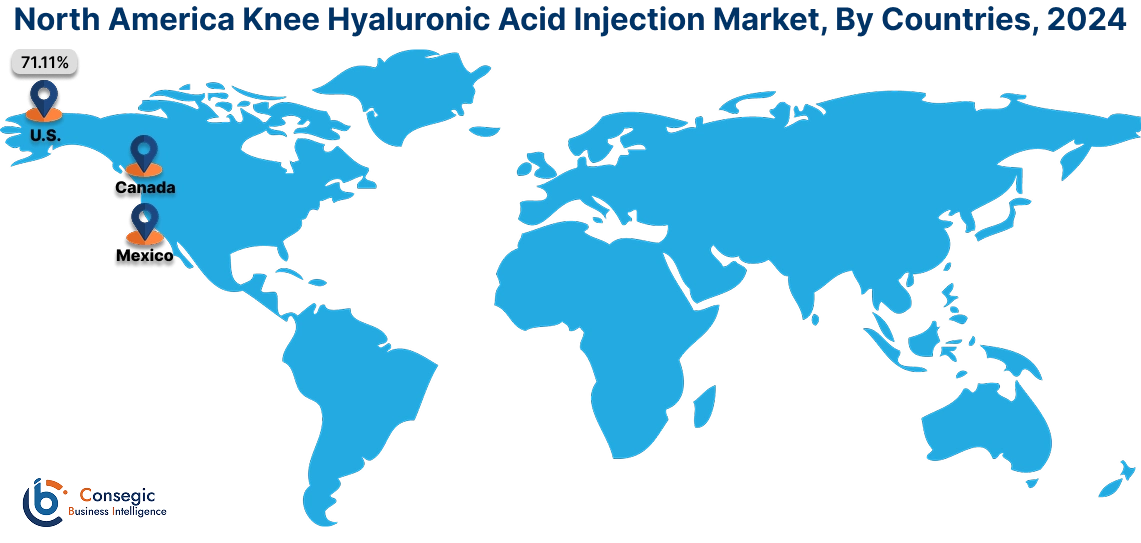
In 2024, North America accounted for the highest knee hyaluronic acid injection market share at 41.22% and was valued at USD 1.06 Billion and is expected to reach USD 1.46 Billion in 2032. In North America, the U.S. accounted for knee hyaluronic acid injection market share of 71.11% during the base year of 2024. In the region, there is an increasing aging population and rising obesity rates. This has led to an increase in cases of osteoarthritis, which is knee pain and joint damage.
- For instance, according to the Centers for Disease Control and Prevention, osteoarthritis is the most widespread type of arthritis in U.S. and it impacted more than 32 million people in year 2023. This is pushing patients to seek effective treatments such as knee hyaluronic acid injection to relieve pain and improve movement.
Moreover, the adoption of single-injection therapy is also growing because it is convenient and requires only one doctor’s visit. Many patients prefer it over multiple-injection treatments as it saves time and reduces discomfort. Overall, rising osteoarthritis and sing-injection adoption is driving the market in the region.
In Asia Pacific, the knee hyaluronic acid injection market is experiencing the fastest growth with a CAGR of 7.1% over the forecast period. In the region, awareness about knee osteoarthritis and its treatments is growing. More people are learning about hyaluronic acid injections as a safe and effective way to reduce knee pain. Governments, healthcare organizations, and medical companies are running awareness programs to educate patients and doctors. Moreover, the number of hospitals in APAC is also increasing. Many hospitals are adding specialized departments for joint care and arthritis treatment. With better infrastructure and experienced doctors, more patients are trusting hospitals for HA injections. These factors are driving the market in the region.
Europe's knee hyaluronic acid injection market analysis states that several trends are responsible for the progress of the market in the region. In the region, reimbursement coverage for knee hyaluronic acid injection is improving. This is making the treatment more affordable for patients. Many countries now include HA injections in their healthcare plans. This reduces out-of-pocket costs. This also encourages more people to choose HA injections instead of other treatments. However, European health authorities have high safety and effectiveness standards for medical treatments. The approval process for injections is slow and costly. This delays market entry, acting as restraint for the market.
The Middle East and Africa (MEA) knee hyaluronic acid injection market analysis states that the region is also witnessing several trends for notable surge. The number of ambulatory surgical centers (ASCs) and clinics is increasing. Many patients prefer these facilities because they offer quick and specialized treatment without the long waiting period at hospitals. Moreover, healthcare industry expenditure in MEA is also rising as governments and private companies invest more in treatments. However, the availability of alternative treatments, such as corticosteroids and physical therapy, are limiting the adoption of hyaluronic acid injections.
Latin America's knee hyaluronic acid injection market is also emerging. Advancements in hyaluronic acid formulations are improving treatment effectiveness. New HA injections last longer and provide better pain relief for knee osteoarthritis. High-molecular-weight and cross-linked HA help the joint stay lubricated for a longer time. This reduces the need for frequent injections. Moreover, there is a growing preference for non-surgical treatments in Latin America. Many people want to avoid knee surgery due to high costs, long recovery times, and surgical risks. However, reimbursement policies for hyaluronic acid injections are limited in region, affecting patient access.
Top Key Players & Market Share Insights:
The Knee Hyaluronic Acid Injection market is highly competitive with major players providing products to the national and international markets. Key players are adopting several strategies in research and development (R&D) and product innovation to hold a strong position in the global Knee Hyaluronic Acid Injection market. Key players in The Knee Hyaluronic Acid Injection industry include-
- Sanofi S.A. (France)
- Zimmer Biomet (U.S.)
- Fidia Farmaceutici S.p.A (Italy)
- Meiji Seika Pharma Co., Ltd. (Japan)
- Hanmi Pharm Co., Ltd. (South Korea)
- Bioventus LLC (U.S.)
- Ferring B.V. (Switzerland)
- Anika Therapeutics, Inc. (U.S.)
- LG Chem (South Korea)
- Bioiberica (Spain)
Knee Hyaluronic Acid Injection Market Report Insights:
| Report Attributes | Report Details |
| Study Timeline | 2019-2032 |
| Market Size in 2032 | USD 3.84 Billion |
| CAGR (2025-2032) | 5.2% |
| By Product Type |
|
| By End-Use |
|
| By Region |
|
| Key Players |
|
| North America | U.S. Canada Mexico |
| Europe | U.K. Germany France Spain Italy Russia Benelux Rest of Europe |
| APAC | China South Korea Japan India Australia ASEAN Rest of Asia-Pacific |
| Middle East and Africa | GCC Turkey South Africa Rest of MEA |
| LATAM | Brazil Argentina Chile Rest of LATAM |
| Report Coverage |
|
Key Questions Answered in the Report
How big is the Knee Hyaluronic Acid Injection market? −
In 2024, the Knee Hyaluronic Acid Injection market is USD 2.56 Billion.
Which is the fastest-growing region in the Knee Hyaluronic Acid Injection market? +
Asia Pacific is the fastest-growing region in the Knee Hyaluronic Acid Injection market.
What specific segmentation details are covered in the Knee Hyaluronic Acid Injection market? +
Product Type and End-Use segmentation details are covered in the Knee Hyaluronic Acid Injection market
Who are the major players in the Knee Hyaluronic Acid Injection market? +
Sanofi S.A. (France), Zimmer Biomet (U.S.), Bioventus LLC (U.S.), Ferring B.V. (Switzerland), and Anika Therapeutics, Inc. (U.S.) are some major players in the market.
Overview
Reputation & Certifications


Our Services
- Market Intelligence & Forecasting
- Custom Research Solutions
- Market Entry Strategy
- Competitive Intelligence
- Customer Insights
- Industry Innovation Analysis
- Investment Advisory