Jump to Content
Optic Nerve Glioma Market - Size, Share, Industry Trends, and Forecasts (2025 - 2032)
Optic Nerve Glioma Market Size:
Optic Nerve Glioma Market size is growing with a CAGR of 6.3% during the forecast period (2025-2032), and the market is projected to be valued at USD 714.29 Million by 2032 from USD 442.01 Million in 2024.
Optic Nerve Glioma Market Scope & Overview:
Optic nerve glioma is a rare type of brain tumor that develops along the optic nerve, the pathway that connects the eye to the brain. It is mostly found in children, especially those with neurofibromatosis type 1 (NF1), a genetic disorder that increases the risk of developing various tumors. These tumors typically grow slowly, which makes them difficult to detect in the early stages. The most common symptom is vision problems, which range from mild visual disturbances to complete blindness.
Treatment options vary depending on the individual case and encompass surgical intervention, radiation therapy, chemotherapy, targeted therapy and emerging alternative therapies. The primary end-users of these services and treatments consist of hospitals, clinics, diagnostic centers, ambulatory surgical centers, and specialized oncology facilities.
How is AI Impacting the Optic Nerve Glioma Market?
AI is impacting the optic nerve glioma market by enhancing diagnosis, treatment planning, and drug discovery. AI-driven algorithms analyze complex medical images, like MRIs, with greater speed and accuracy, enabling earlier and more precise detection and tumor characterization. This technology also helps to personalize treatment by predicting a patient's response to specific therapies and optimizing radiation and surgical planning. Furthermore, AI is accelerating the development of new drugs by identifying potential target compounds and streamlining the screening process, which could lead to more effective, targeted treatments for this rare and challenging condition.

Optic Nerve Glioma Market Dynamics - (DRO) :
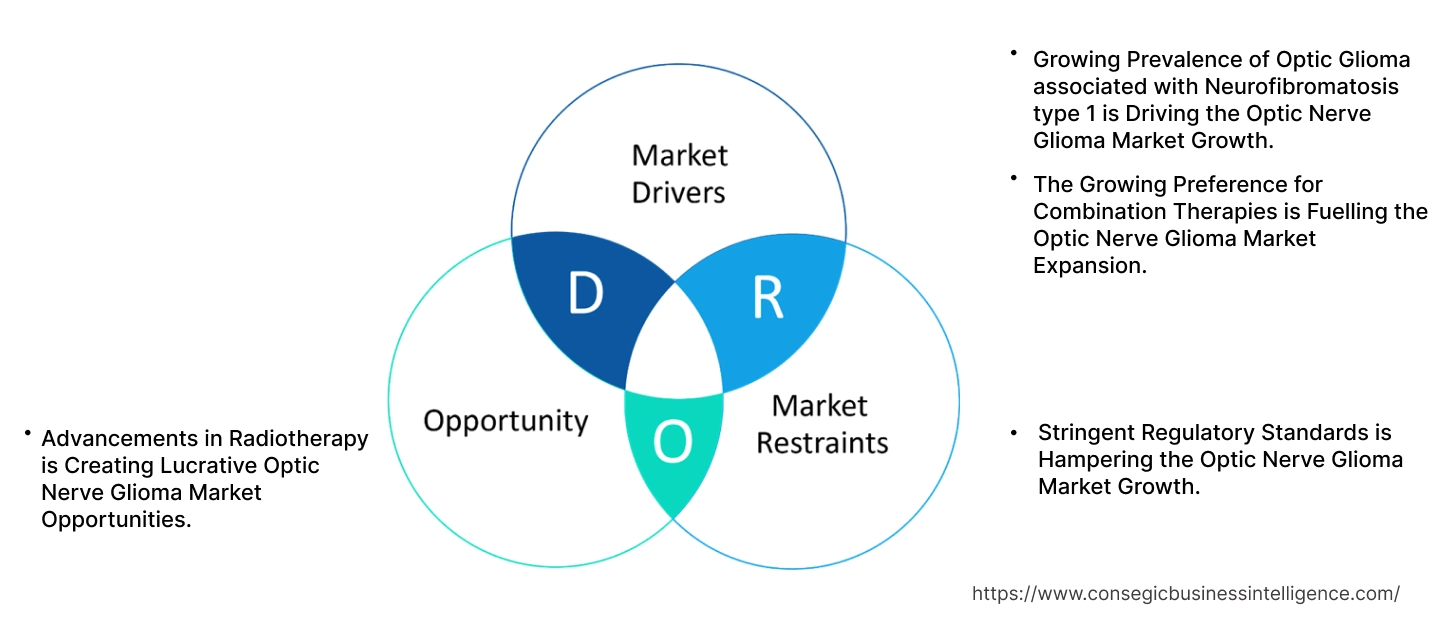
Key Drivers:
Growing Prevalence of Optic Glioma associated with Neurofibromatosis type 1 is Driving the Optic Nerve Glioma Market Growth.
The growing prevalence of optic glioma associated with Neurofibromatosis type 1 (NF1) is a significant driver of the optic nerve glioma market growth. NF1 is a genetic disorder that increases the risk of developing various tumors, including optic nerve glioma. As the understanding of NF1 and its associated conditions grows, more cases of optic glioma are being diagnosed, particularly in children.
- According to the data published by the American Academy of Ophthalmology, states that Neurofibromatosis type 1 (NF1) is a genetic disorder with an estimated incidence of 1 in 4,000 individuals. One of the most concerning complications associated with NF1, particularly in childhood, is the development of optic glioma. These tumors arise along the optic nerve, the pathway connecting the eye to the brain. Optic glioma is estimated to occur in approximately 15% of affected children. The risk of developing symptomatic optic gliomas is highest during the first six years of life.
Overall, the escalating prevalence of optic glioma, particularly in children with Neurofibromatosis type 1 (NF1), is a key factor propelling the demand of the market. As medical knowledge surrounding NF1 and its associated complications advances, more cases of optic glioma are being identified, particularly in the pediatric population.
The Growing Preference for Combination Therapies is Fuelling the Optic Nerve Glioma Market Expansion.
The growing preference for combination therapies is significantly fueling the development of the market. Combination therapies, which involve the use of two or more treatment modalities such as chemotherapy, radiotherapy, and targeted therapies, have shown promising results in improving treatment outcomes and enhancing tumor control. By combining different treatment approaches, clinicians leverage their synergistic effects to achieve better disease management and potentially improve long-term outcomes for patients with optic glioma. This growing preference for combination therapies is driving the development of new treatment regimens and contributing to the overall development of the market.
- According to the data published by NCBI, in 2023, states that Bevacizumab-based therapies have shown significant promise in treating optic nerve glioma. Studies have reported objective responses and rapid improvement in visual symptoms in up to 86% of refractory cases. Furthermore, combining bevacizumab with irinotecan has demonstrated a 2-year progression-free survival rate of 47.8% in patients with recurrent low-grade gliomas, highlighting the potential benefits of combination therapies in improving treatment outcomes.
Thus, the increasing adoption of combination therapies, utilizing a multifaceted approach that integrates various treatment modalities, is a major driving force behind market development.
Key Restraints:
Stringent Regulatory Standards is Hampering the Optic Nerve Glioma Market Growth.
Stringent regulatory standards imposed by government bodies worldwide pose significant constraints in the market. These regulations, designed to protect the environment and public health, increase production costs and slow down product development. The development and approval of new therapies for rare diseases like optic glioma require rigorous clinical trials to demonstrate safety and efficacy. These trials pose a difficulty to conduct due to the small patient population and the need for specialized expertise. The lengthy and complex regulatory processes associated with drug development and approval delay the introduction of new treatments to the market.
Compliance with these regulations increases the cost of product development and testing. Moreover, evolving federal regulations accelerate annual compliance and operating costs throughout medical industry supply chains. Thus, the impact of these stringent regulations on the Optic Nerve Glioma market expansion is multifaceted.
Future Opportunities :
Advancements in Radiotherapy is Creating Lucrative Optic Nerve Glioma Market Opportunities.
Advancements in radiotherapy are creating lucrative opportunities within the market. Modern techniques, such as proton beam therapy and intensity-modulated radiation therapy (IMRT), offer increased precision in targeting the tumor while minimizing radiation exposure to surrounding healthy tissues, particularly the optic nerve and the developing brain. Proton beam therapy utilizes protons, which are positively charged particles, to deliver radiation. Moreover, Intensity-modulated radiation therapy (IMRT) employs a complex pattern of small radiation beams of varying intensities to conform to the three-dimensional shape of the tumor. This allows for a more precise delivery of radiation to the tumor while sparing healthy tissues.
- According to ecancer, in 2024, states that an 11-year-old Ghanaian boy diagnosed with a left-sided optic nerve glioma in July 2023. He presented with blurred vision in the left eye, mild eye protrusion, and reduced vision. Imaging revealed a significant enlargement of the optic nerve. The successful treatment of this case using intensity-modulated radiotherapy highlights the potential of advanced radiation techniques to effectively manage optic glioma, preserve vision, and control tumor development, even in resource-limited settings.
Overall, the growing adoption of these advanced radiotherapy techniques is expected to influence optic nerve glioma market opportunities in the coming years.
Optic Nerve Glioma Market Segmental Analysis :
By Treatment:
Based on treatment, the market is categorized into surgery, radiation therapy, chemotherapy, targeted therapy and others.
Trends in the Treatment:
- Growing trends for targeted therapies is providing personalized treatment options
- There is an increased adoption of genetic profiling and biomarkers to tailor therapies based on tumor characteristics.
The chemotherapy segment accounted for the largest market share in 2024.
- Chemotherapy is a major treatment utilized for optic nerve glioma, especially for progressive tumors.
- Chemotherapy is a systemic treatment for cancer that uses medications to kill or slow the development of cancer cells throughout the body.
- It works by interfering with various cellular processes, such as DNA replication and cell division.
- Chemotherapy drugs are administered through different routes, including intravenously, orally, or directly into the spinal fluid.
- It involves using medications to interfere with the cancer cell’s ability to grow and divide.
- Common chemotherapy regimens for optic glioma include combinations like vincristine and cisplatin among others.
- These drugs help shrink the tumor, stabilize its development, and potentially improve vision in some cases.
- For instance, according to the data published by NCBI, in 2023, states that among patients with Neurofibromatosis type 1 (NF1), visual acuity outcomes following chemotherapy for optic nerve glioma demonstrate a mixed response. Approximately 24% of patients experience an improvement in visual acuity, while 35% maintain stable vision. Additionally, a common chemotherapy combination for optic glioma involves the use of cisplatin and etoposide. This regimen has demonstrated promising outcomes, with a 3-year progression-free survival rate (PFS) reaching 78%.
- Thus, the aforementioned factors are influencing the optic nerve glioma market demand and trend
The targeted therapy segment is expected to grow at the fastest CAGR over the forecast period.
- Targeted therapy for optic nerve glioma aims to selectively attack specific molecules within cancer cells, minimizing harm to healthy tissues.
- One prominent example is bevacizumab, a monoclonal antibody that targets vascular endothelial growth factor (VEGF).
- VEGF plays a crucial role in tumor angiogenesis, the formation of new blood vessels that supply the tumor with nutrients.
- By inhibiting VEGF, bevacizumab disrupts tumor blood supply, hindering its development and progression.
- This approach offers the potential for improved treatment results with fewer side effects compared to traditional chemotherapy.
- Overall, targeted therapy for optic glioma represents a promising approach that focuses on selectively attacking specific molecules within cancer cells, minimizing harm to healthy tissues.
By End User:
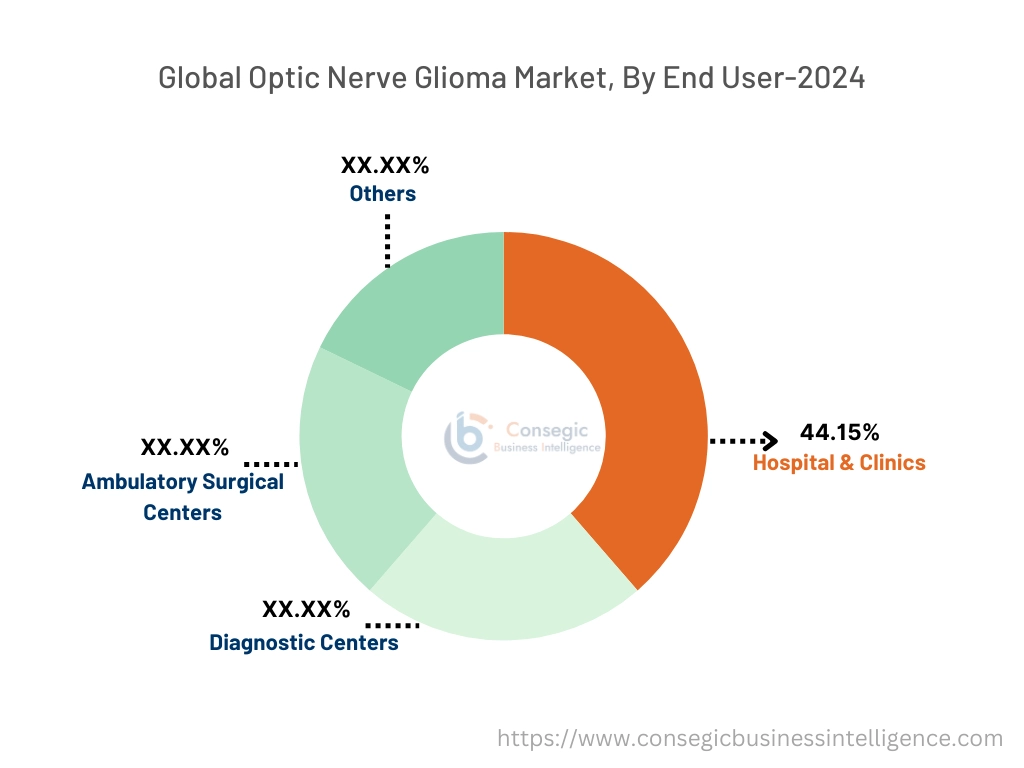
Based on end user, the market is categorized into hospital & clinics, diagnostic centers, ambulatory surgical centers, and others.
Trends in the End User:
- Rise in the development of cancer hospitals for the diagnosis and treatment of this condition.
- The growing trend for ambulatory surgical centers is enhancing the segment.
The hospital & clinics segment accounted for the largest market share of 44.15% in the year 2024.
- Hospitals and clinics serve as the primary end-users within the market.
- These institutions are responsible for the diagnosis, treatment, and ongoing management of patients with this condition.
- They acquire and utilize various medical devices, pharmaceuticals, and services, including diagnostic imaging equipment (MRI, CT), chemotherapy drugs, targeted therapies, radiotherapy equipment, and surgical instruments.
- Furthermore, hospitals and clinics employ specialized medical professionals such as neuro-oncologists, ophthalmologists, and radiation oncologists who play crucial roles in diagnosis, treatment planning, and ongoing care of patients with optic glioma. The development of new cancer hospitals is influencing proper diagnosis and treatment of optic glioma.
- For instance, in 2024, Aster DM Healthcare, one of the largest integrated healthcare providers in India launched three noteworthy initiatives, Precision Oncology Clinics, the Aster Cancer Grid, and Onco Collect. The newly launched initiatives aim to revolutionize cancer care including care for optic nerve glioma by offering personalized, data-driven, and research-based treatments, emphasizing genomic approaches to improve patient outcomes.
- Thus, based on the market analysis, the aforementioned factors are influencing the optic nerve glioma market trends in coming years,
The ambulatory surgical centers segment is expected to grow at the fastest CAGR over the forecast period.
- Ambulatory surgical centers (ASCs) primarily focus on outpatient procedures, yet they also play a significant role in shaping the demand for treatments related to optic nerve gliomas.
- Additionally, ASCs facilitate certain minor surgical interventions that are necessary for managing this condition.
- This involvement not only enhances patient access to care but also contributes to the overall treatment landscape for individuals affected by this condition.
- Thus, based on the optic nerve glioma market analysis, while primarily focused on outpatient procedures, Ambulatory Surgical Centers (ASCs) indirectly influence the treatment landscape for this condition by facilitating certain minor surgical interventions that are necessary for managing the condition. This contributes to enhancing patient access to care, thus influencing the optic nerve glioma market demand and trends.
Regional Analysis:
The regional segment includes North America, Europe, Asia Pacific, the Middle East and Africa, and Latin America.
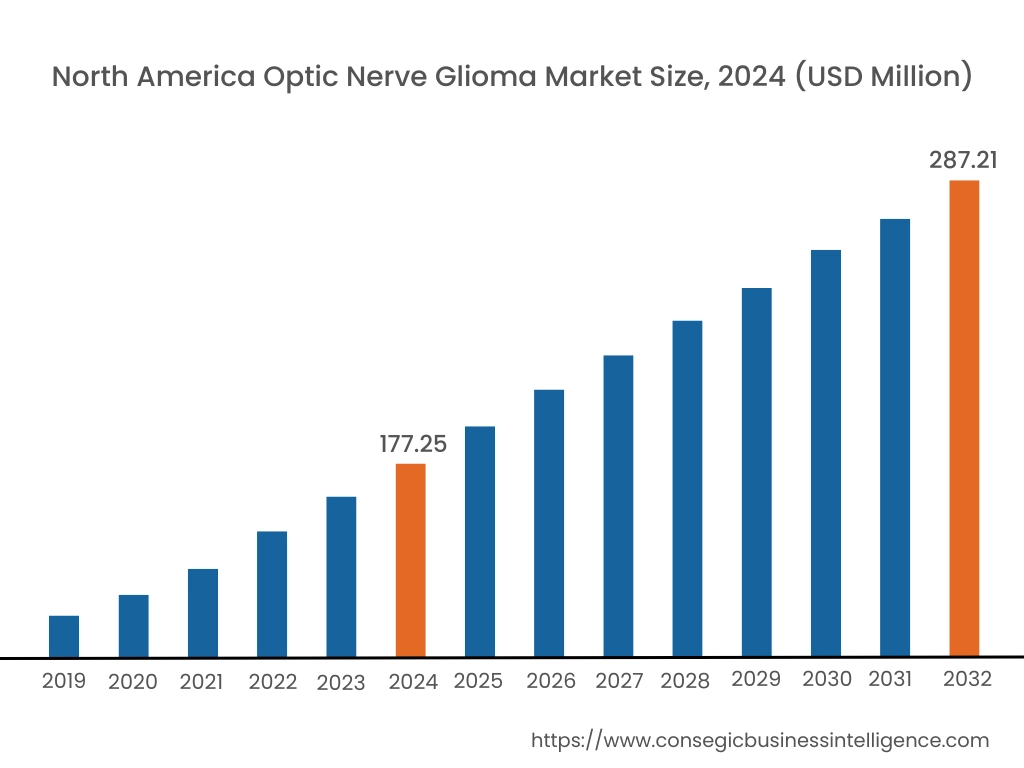
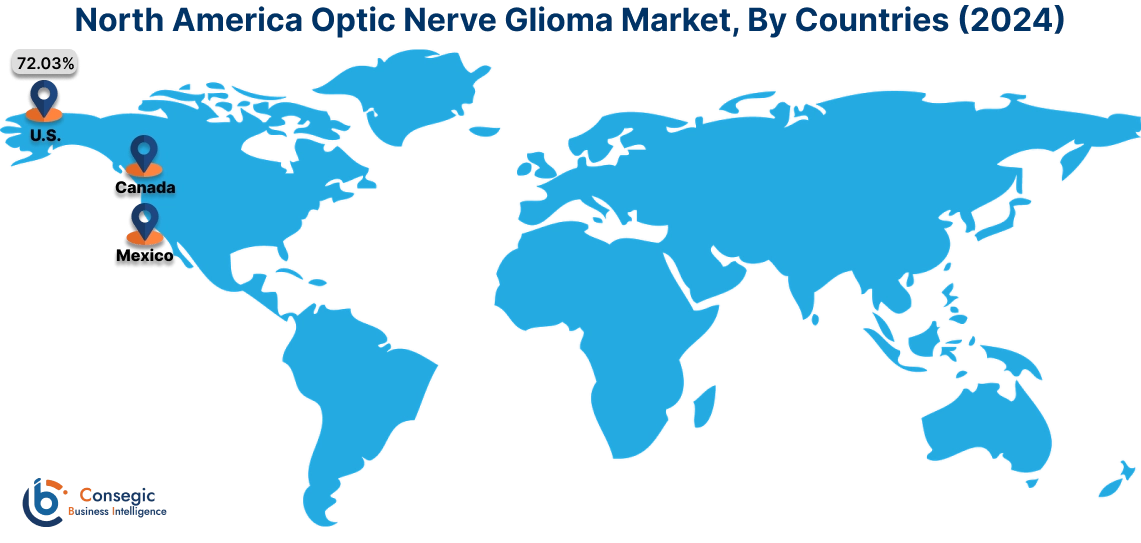
In 2024, North America accounted for the highest optic nerve glioma market share at 40.10% and was valued at USD 177.25 Million and is expected to reach USD 287.21 Million in 2032. In North America, U.S. accounted for the highest market share of 72.03% during the base year of 2024. A significant portion of optic nerve gliomas in North America are diagnosed in children with NF1, a genetic disorder that increases the risk of developing these tumors. Advanced imaging techniques like MRI are readily available for accurate diagnosis. Neuro-ophthalmological expertise is concentrated in major medical centers, allowing for comprehensive assessments. Access to a range of treatment options, including observation, surgery, chemotherapy, and radiation therapy (including advanced modalities like proton beam therapy and IMRT), is generally available. Clinical trials investigating novel therapies are conducted at major research hospitals. The rise in the number of hospitals in North America region is influencing the rise in the diagnosis and treatment of this condition.
For instance,
- In May 2023, Huntsman Cancer Institute at the University of Utah announced the opening of its hospital expansion, the Kathryn F. Kirk Center for Comprehensive Cancer Care and Women’s Cancers. Located on the north end of Huntsman Cancer Institute, the 220,000-square-foot building increases the cancer hospital’s inpatient capacity by nearly 50% and adds exam rooms, surgical suites, screening facilities and other services along with screening for condition such as optic nerve glioma, allowing more patients in the Mountain West to receive world-class cancer care.
Thus, based on the optic nerve glioma market analysis, the rise in the screening and treatment for various cancers is influencing the demand of the market.
Asia Pacific is experiencing the fastest growth with a CAGR of 6.8% over the forecast period. Treatment options for optic nerve glioma in the Asia-Pacific region show significant variation, particularly when comparing developed and developing economies. In developed countries such as Japan, South Korea, and Singapore, patients have better access to a wide array of modern therapeutic interventions. These include not only traditional chemotherapy regimens that are commonly employed but also novel targeted therapies, including drugs like bevacizumab, which specifically inhibit tumor development by blocking angiogenesis. Awareness campaigns aimed at educating both the public and healthcare professionals about optic nerve gliomas, particularly in the context of neurofibromatosis type 1 (NF1), have also contributed to increased recognition and timely intervention. These initiatives highlight the profound impact that this condition have on vision and overall quality of life, especially in pediatric patients. Thus, based on the market analysis, these factors are influencing the optic nerve glioma market trends in the coming years.
Europe plays a crucial role in the analysis of the Optic Nerve Glioma market, marked by a steady growth trajectory. This growth is largely fueled by significant advancements in medical research focused on neuro-oncology, which has led to improved diagnostic techniques and therapeutic options for children affected by this rare tumor. Moreover, there is a growing emphasis on pediatric oncology as a specialized area of healthcare, prompting more resources and research funding to address the specific needs of young patients with complex conditions like optic nerve glioma. Overall, Europe’s commitment to advancing understanding and treatment of this condition is driving positive changes in the market landscape.
The treatment for optic nerve glioma in the Middle East and Africa presents a diverse landscape. In developed nations within these regions, access to modern diagnostic tools and treatment options. Increased awareness of rare diseases, including optic nerve glioma, is gradually improving. This leads to earlier diagnosis and access to appropriate care. The availability of advanced imaging techniques like MRI is increasing in many parts of the region. This facilitates accurate diagnosis and treatment planning. International collaborations and partnerships between medical institutions in these regions and those in more developed countries are fostering knowledge exchange and improving access to advanced treatment options. Research efforts are gradually increasing in some countries within the region, contributing to a better understanding of this condition and the demand of more effective treatment strategies.
Latin America is an emerging region in the optic nerve glioma market share, with significant potential for innovation. Increased awareness among healthcare professionals about this condition and its association with neurofibromatosis type 1 (NF1) lead to early diagnosis and more timely interventions. improvements in healthcare infrastructure across many Latin American countries, including better access to diagnostic imaging (MRI) and specialized medical care, enhance the quality of care for patients with this condition. Growing collaborations among medical institutions and researchers within the region facilitate the sharing of knowledge, improve treatment protocols, and contribute to advancements in the understanding and management of this condition. While access vary, some Latin American countries have access to modern treatment options like chemotherapy, targeted therapies, and in some cases, advanced radiation techniques, which improve treatment outcomes.
Top Key Players and Market Share Insights:
The Optic Nerve Glioma market is highly competitive with major players providing precise products to the national and international markets. Key players are adopting several strategies in research and development (R&D) and product innovation to hold a strong position in the global Optic Nerve Glioma market. Key players in the market include-
- Genentech, Inc (United States)
- Novartis AG (Switzerland)
- AstraZeneca (United Kingdom)
- Merck KGaA (United States)
- Bristol-Myers Squibb (United States)
- Pfizer (United States)
- AdvaCare Pharma (United States)
- Teva Pharmaceuticals, Inc. (Israel)
Optic Nerve Glioma Market Report Insights :
| Report Attributes | Report Details |
| Study Timeline | 2019-2032 |
| Market Size in 2032 | USD 714.29 Million |
| CAGR (2025-2032) | 6.3% |
| By Treatment |
|
| By End User |
|
| By Region |
|
| Key Players |
|
| North America | U.S. Canada Mexico |
| Europe | U.K. Germany France Spain Italy Russia Benelux Rest of Europe |
| APAC | China South Korea Japan India Australia ASEAN Rest of Asia-Pacific |
| Middle East and Africa | GCC Turkey South Africa Rest of MEA |
| LATAM | Brazil Argentina Chile Rest of LATAM |
| Report Coverage |
|
Key Questions Answered in the Report
How big is the Optic Nerve Glioma market? −
In 2024, the Optic Nerve Glioma market is USD 442.01 Million.
Which is the fastest-growing region in the Optic Nerve Glioma market? +
Asia Pacific is the fastest-growing region in the Optic Nerve Glioma market.
What specific segmentation details are covered in the Optic Nerve Glioma market? +
Treatment and End User segmentation details are covered in the Optic Nerve Glioma market.
Who are the major players in the Optic Nerve Glioma market? +
Genentech, Inc (United States), Novartis AG (Switzerland), AstraZeneca (United Kingdom) are some of the major players in the market.
Overview
Reputation & Certifications


Our Services
- Market Intelligence & Forecasting
- Custom Research Solutions
- Market Entry Strategy
- Competitive Intelligence
- Customer Insights
- Industry Innovation Analysis
- Investment Advisory