Jump to Content
Apraxia Market - Size, Share, Industry Trends, and Forecasts (2025-2032)
Apraxia Market Size:
Apraxia Market size is growing with a CAGR of 7.4% during the forecast period (2025-2032), and the market is projected to be valued at USD 4,403.85 Million by 2032 from USD 2,502.45 Million in 2024. Additionally, the market value for 2025 attributes to USD 2,677.89 Million.
Apraxia Market Scope & Overview:
Apraxia is a neurological condition where a person has difficulty in performing movements. Their muscles do not work properly. It happens when the brain struggles to send signals to the body. There are different types of this neurological condition. Ideomotor type affects gestures and tools. Ideational types make it hard to plan multi-step tasks. Buccofacial type affects facial movements. Constructional type impacts drawing or building things. Speech type makes speaking difficult. Medical professionals use physical tests, MRI, and CT scans to check the body and brain structures. The treatment for this condition includes medications such as neuromuscular blocker agents, antiparkinson agents, anticholinergic agents and therapies such as occupational, physical, and occupational. Hospitals, clinics, and rehabilitation centers provide care for this neurological condition.
How is AI Transforming the Apraxia Market?:
AI is playing a vital role in transforming the apraxia market. AI-powered tools are used for enhancing assessment, treatment, and accessibility of speech therapy for individuals with apraxia and related communication disorders. Moreover, AI-powered tools can analyze speech patterns, identify deficits, and provide personalized interventions, potentially improving outcomes and making therapy more accessible and efficient.
Additionally, AI algorithms can analyze large datasets of speech samples to identify differences and variations in characteristics of apraxia, which further leads to earlier and more accurate diagnosis. Thus, the factors are expected to drive the market growth in upcoming years.

Apraxia Market Dynamics - (DRO) :
Key Drivers:
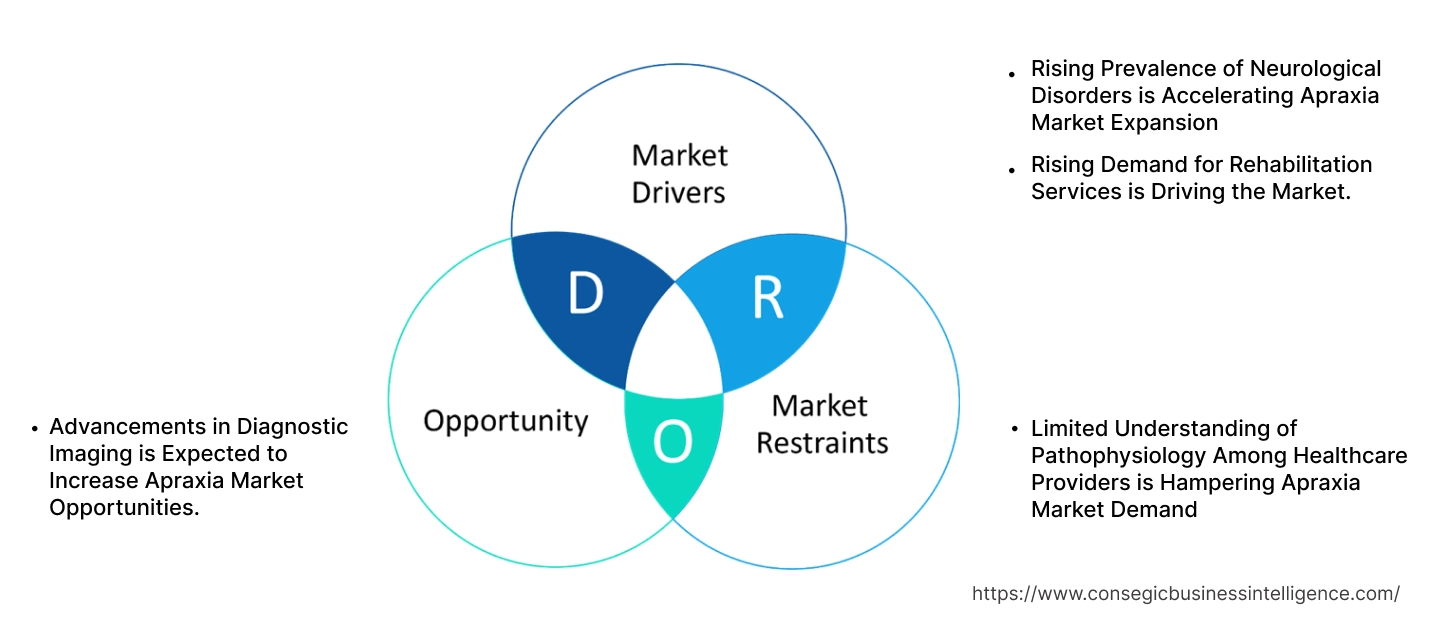
Rising Prevalence of Neurological Disorders is Accelerating Apraxia Market Expansion.
Neurological disorders are diseases that affect the brain and nerves. Some common disorders include stroke, Parkinson diseases, and Alzheimer’s disease. If a person is suffering from these neurological disorders, their movements are damaged, making it harder to perform tasks such as speaking or writing, causing apraxia. Poor diet, lack of exercise, and high stress has led to increase in the cases of neurological disorders.
For instance,
- According to an article published by Centers for Disease Control and Prevention, in 2024, every year more than 790,000 people suffer from strokes in U.S. This has led to increased cases of apraxia, leading to demand of diagnosis and treatment. This is driving the market share.
Overall, the rising prevalence of neurological disorders is significantly boosting the apraxia market expansion.
Rising Demand for Rehabilitation Services is Driving the Market.
Rehabilitation services help patient recover and improve their ability to perform daily tasks. These services include occupational therapy, which helps with everyday activities such as dressing and eating. It also includes physical therapy, which improves movement and strength. Moreover, speech therapy helps patients with communication and swallowing problems. Patients are decreasing the consumption of medications and are preferring rehabilitation services due to growing awareness of benefits.
For instance,
- According to Mastermind Behavior Services, prescription medication uses among physical therapy patients decreased significantly from 70% in 2016 to 57% in 2021. This includes demand of physical therapy for apraxia as well, thus driving the market.
Thus, rising need for rehabilitation services are accelerating the global apraxia market growth.
Key Restraints:
Limited Understanding of Pathophysiology Among Healthcare Providers is Hampering Apraxia Market Demand.
There is limited awareness among healthcare providers about this neurological condition. For example, apraxia of speech is often diagnosed as autism, dysarthria, and aphasia by healthcare professionals. It is because of its co-occurring nature with other neurological deficits. This makes it harder for doctors to diagnose it accurately.
Moreover, the pathway to diagnosis is very complex. There is no single test to confirm it. Medical professionals use physical exams, speech assessments, and brain scans such as MRI or CT scans to evaluate. However, these tests do not give clear results all the time. Owing to this, many doctors and therapists are not fully trained to recognize this condition, leading to misdiagnosis and delayed treatment. Hence, the limited understanding of pathophysiology among healthcare providers are hampering the apraxia market demand.
Future Opportunities :
Advancements in Diagnostic Imaging is Expected to Increase Apraxia Market Opportunities.
Functional MRI is allowing clinicians to observe brain activity during motor tasks. This is providing insights into the neural networks involved in praxis and how they are affected in apraxia. Moreover, diffusion tensor imaging, a specialized MRI technique, maps the white matter tracts, revealing disruptions in the neural pathways crucial for motor planning and execution. Additionally, industry players are developing specific MRIs for brain imaging.
For instance,
- In 2024, GE HealthCare received FDA clearance new head-only MRI scanner, SIGNA MAGNUS for advanced neuroimaging. It has the potential to improve the detection of neurological conditions and distinguish co-occurring conditions. This creates potential for market growth.
Overall, advancements in diagnostic imaging are expected to increase apraxia market opportunities.
Apraxia Market Segmental Analysis :
By Type:
Based on type, the market is categorized into diagnosis and treatment.
Trends in Type:
- Clinical observation and neurological examinations remain fundamental diagnosis methods. This focuses on motor planning and execution deficits.
- Virtual reality, robotics, and other technologies are being integrated into therapy to enhance engagement and outcomes.
The treatment segment accounted for the largest market share in 2024 and is expected to grow at the fastest CAGR over the forecast period.
- Treatment segment dominated the apraxia market trends. It is further categorized into medications and therapy.
- Medications such as neuromuscular blocker agents, antiparkinson agents, anticholinergic agents, and others are given to help with movement and brain function.
- Therapies such as physical, occupational, and speech are given to improve communication, daily tasks, and strengthen muscles.
- There is growing awareness of the benefits these therapies provide which is leading to increased need for physical therapy. Government and private organizations are improving access to healthcare for the same.
- For instance, according to Empower EMR, the number of employed physical therapists increased by approximately 8.12% from 2020 to 2021. This is improving access to patients both in urban and rural areas.
- Overall, as per the market analysis, the focus on improving healthcare access is driving a segment in apraxia market growth.
By Apraxia Type:
Based on apraxia type, the market is categorized into ideomotor, ideational, buccofacial or oral, constructional, and others.
Trends in Apraxia Type:
- Childhood apraxia of speech is gaining greater attention among speech-language pathologists and researchers. This is leading to improved diagnostic tools and intervention programs for children with this disorder.
- Constructional type affects drawing and constructional abilities. It is being increasingly studied in relation to its impact on visuospatial skills and daily living activities.
The ideomotor segment accounted for the largest market share in 2024
- Ideomotor segment dominated the apraxia market trends. It is a condition where people have trouble in performing learned movements.
- They face these issues even though their muscles work properly. Doctors diagnose it through physical exams and brain exams.
- Treatment includes occupational therapy to improve daily tasks. Repetitive practices and visual hues help patients relearn movements.
- Proliferation of online resources has played a crucial role in improving awareness of this condition.
- For instance, Propel Physiotherapy published an article, in 2022, stating what is ideomotor apraxia, symptoms, and treatment options available for it. This awareness has increased the visits for diagnosis and treatment purposes.
- According to market analysis, the growing awareness amongst patients regarding this neurological condition is driving the segmental growth.
The buccofacial or oral segment is expected to grow at the fastest CAGR over the forecast period.
- The buccofacial or oral segment is emerging the market trends. It is a condition where a person has difficulty in making facial movements.
- They struggle with actions such as whistling, blowing, winking, coughing, or lip movements.
- Physical examinations and brain scans are used to diagnose the condition. Occupational therapy is also given to patients to regain control.
- Speech therapy is given in treatment to improve muscle coordination for speaking and facial movements.
- There are innovations in rehabilitation technologies. It includes virtual reality, robotics, and brain-computer interfaces. This will drive the segment for the upcoming years.
By End Use:
Based on end-use, the market is categorized into hospitals, clinics, rehabilitation centers, and others.
Trends in the End-Use:
- Rehabilitation centers, both inpatient and outpatient, are crucial for providing intensive and specialized therapy. They focus on making individuals relearn motor skills and improve their functional independence.
- Clinics, including neurology clinics, occupational therapy clinics, and speech therapy clinics, provide ongoing management, follow-up care, and periodic assessments.
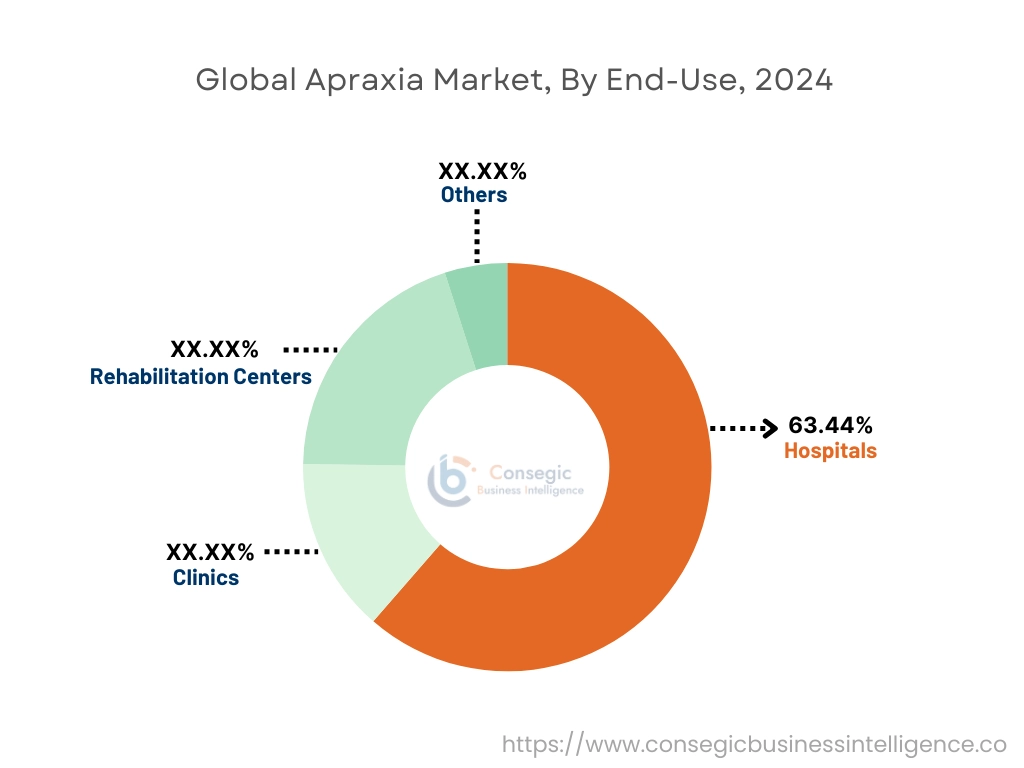
The hospitals segment accounted for the largest market share of 63.44% in 2024.
- The hospitals segment dominated the market trends. They have a large infrastructure and adequate staff for patient care.
- They have all necessary instruments such as advanced MRI and CT scans for the diagnosis.
- Also, they have skilled neurologists, speech therapists, occupational therapists, and other specialists to provide treatment.
- Governments are increasing the healthcare industry spending and are improving healthcare access.
- For instance, according to Digital Sansad, the number of government hospitals in India increased from 25,778 in 2019 to 41,245 in 2021. This has increased access to patients.
- Overall, as per the market analysis, government focusing on increasing healthcare access is driving segmental growth in the apraxia industry.
The rehabilitation centers segment is expected to grow at the fastest CAGR over the forecast period.
- The rehabilitation segment is emerging in the market. They are healthcare facilities that provide therapies to help individuals recover from regain lost function.
- These centers offer a structured environment staffed by trained professionals. This includes occupational therapists, physical therapists, and speech therapists.
- They provide personalized treatment plans and more time for patients to practice movements and speech exercises.
- The growing awareness of apraxia among healthcare providers and the public will the drive the segment.
- Moreover, as per the market analysis, advancements in rehabilitation techniques and technologies, such as virtual reality and robotics will further support the segmental growth for the forecasted years.
Regional Analysis:
The regional segment includes North America, Europe, Asia Pacific, the Middle East and Africa, and Latin America.
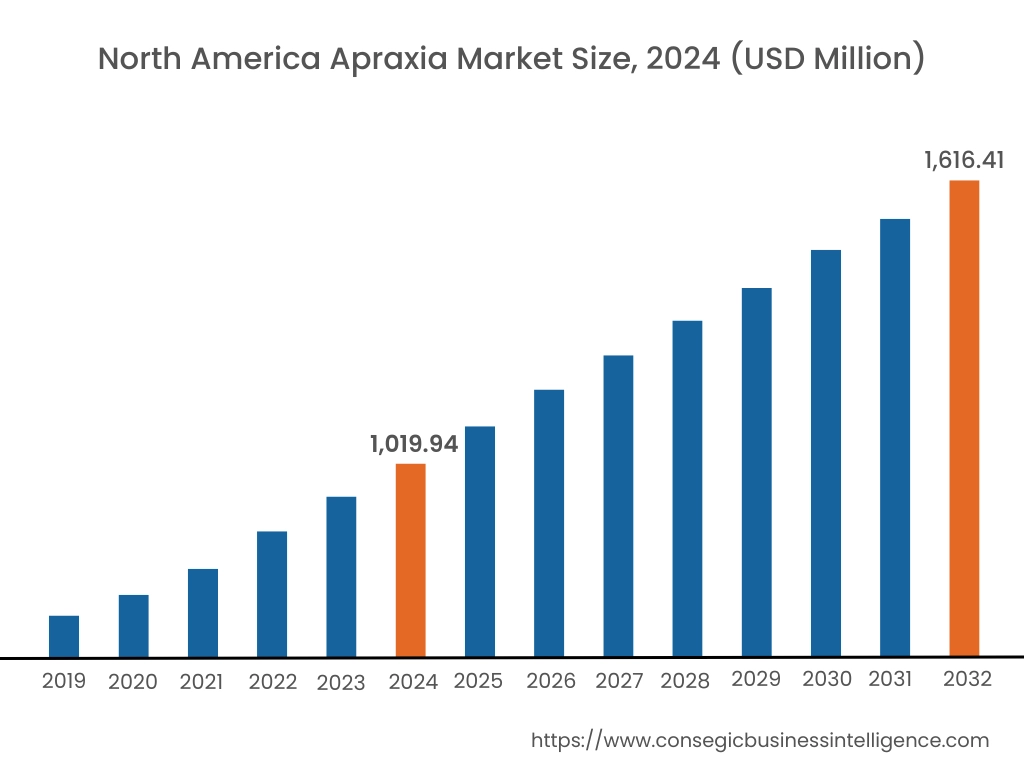
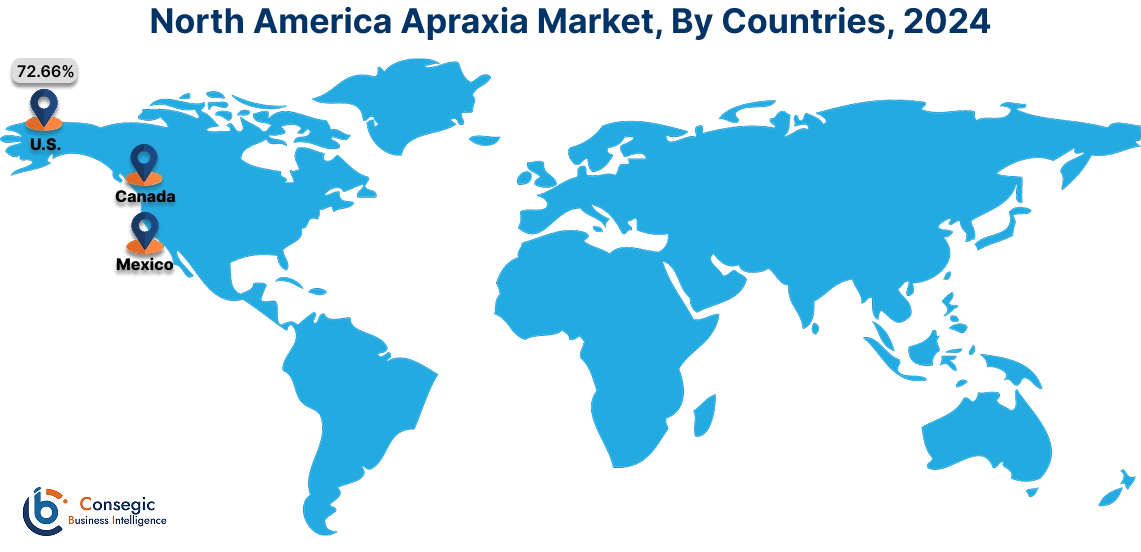
In 2024, North America accounted for the highest apraxia market share at 40.76% and was valued at USD 1,019.94 Million and is expected to reach USD 1,616.41 Million in 2032. In North America, the U.S. accounted for the highest apraxia market share of 72.66% during the base year of 2024. Neurological disorders such as stroke, traumatic brain injury, Parkinson’s disease, and Alzheimer’s are increasing in North America. These conditions damage the brain’s ability to control movement and speech, leading to apraxia.
- For instance, according to an article published by Heart and Stroke Foundation of Canada, in 2024, there are approximately more than 108,700 cases of stroke each year in Canada. This leading to apraxia is driving the need for its diagnosis and treatment.
Moreover, physical therapy is in high demand because many patients struggle with body coordination and movement control. Therapy helps improve motor skills, making daily activities easier. Overall, rising prevalence of neurological disorders and physical therapies for its treatment is driving the market in region.
In Asia Pacific, the apraxia market is experiencing the fastest growth with a CAGR of 10.1% over the forecast period. The number of hospitals is increasing in the APAC region due to rising populations, and urbanization. More hospitals mean better access to diagnosis and treatment for patients. Moreover, educational programs, social media campaigns, and healthcare initiatives are helping people understand the importance of early diagnosis and therapy. More parents are seeking speech therapy for children, and stroke patients are learning about physical and occupational therapy. This growing awareness is increasing the demand for specialized treatment centers and trained therapists in the region.
Europe's apraxia market analysis states that several factors are responsible for the progress of the market in the region. Europe is improving diagnostic imaging with better MRI, CT scans, and functional brain imaging. These technologies help doctors detect brain damage earlier and more accurately. Many hospitals and clinics are using AI-assisted imaging and neurological assessments to improve diagnosis. Countries such as Germany, the UK, and France are leading in advanced healthcare, making it easier for patients to get tested and treated. Moreover, many European countries offer government-funded healthcare that covers apraxia diagnosis and treatment costs.
The Middle East and Africa (MEA) apraxia market analysis states that the region is also witnessing several trends for notable surge. Governments and private companies in the region are investing in rehabilitation centers to improve treatment. Many new speech therapy and occupational therapy centers are opening, especially in countries such as the UAE, Saudi Arabia, and South Africa. These centers help patients recover after strokes, brain injuries, or neurological disorders. Moreover, more children in MEA are being diagnosed with pediatric apraxia of speech (CAS). Parents are seeking early intervention programs to help their children develop communication skills.
Latin America's apraxia market size is also emerging. Latin America is adopting new technologies to improve speech and motor therapy for apraxia. AI-powered speech therapy apps, virtual reality (VR) rehabilitation, and robotic-assisted therapy are becoming more common in countries such as Brazil, Mexico, and Argentina. These technologies help patients practice movements and speech exercises more effectively. Teletherapy is also growing, making treatment accessible to people in remote areas who cannot visit rehabilitation centers regularly. International collaborations with companies from the US and Europe are bringing advanced rehabilitation methods to the region.
Top Key Players & Market Share Insights:
The Apraxia market is highly competitive with major players providing products to the national and international markets. Key players are adopting several strategies in research and development (R&D) and product innovation to hold a strong position in the global Apraxia market. Key players in The Apraxia industry include-
- Siemens Healthineers (Germany)
- GE Healthcare (U.S.)
- Boehringer Ingelheim (Germany)
- Hitachi Corporation (U.S.)
- Novartis AG (Switzerland)
- Organon & Co (U.S.)
- Philips Healthcare (Netherlands)
- Pfizer, Ins (U.S.)
- Canon Medical Systems (Japan)
- AbbVie (U.S.)
- Fujifilm Healthcare Solutions (Japan)
- Fonar Corporation (U.S.)
Apraxia Market Report Insights :
| Report Attributes | Report Details |
| Study Timeline | 2019-2032 |
| Market Size in 2032 | USD 4,403.85 Million |
| CAGR (2025-2032) | 7.4% |
| By Type |
|
| By Apraxia Type |
|
| By End Use |
|
| By Region |
|
| Key Players |
|
| North America | U.S. Canada Mexico |
| Europe | U.K. Germany France Spain Italy Russia Benelux Rest of Europe |
| APAC | China South Korea Japan India Australia ASEAN Rest of Asia-Pacific |
| Middle East and Africa | GCC Turkey South Africa Rest of MEA |
| LATAM | Brazil Argentina Chile Rest of LATAM |
| Report Coverage |
|
Key Questions Answered in the Report
How big is the Apraxia market? −
In 2024, the Apraxia market is USD 2,502.45 Million.
Which is the fastest-growing region in the Apraxia market? +
Asia Pacific is the fastest-growing region in the Apraxia market.
What specific segmentation details are covered in the Apraxia market? +
Type, Apraxia Type, and End-Use segmentation details are covered in the Apraxia market.
Who are the major players in the Apraxia market? +
Siemens Healthineers (Germany), GE Healthcare (U.S.), Philips Healthcare (Netherlands), Pfizer, Ins (U.S.), Canon Medical Systems (Japan), AbbVie (U.S.) are some major players in the market.
Overview
Reputation & Certifications


Our Services
- Market Intelligence & Forecasting
- Custom Research Solutions
- Market Entry Strategy
- Competitive Intelligence
- Customer Insights
- Industry Innovation Analysis
- Investment Advisory