Jump to Content
Bioresorbable Scaffolds Market - Size, Share, Industry Trends, and Forecasts (2025-2032)
Bioresorbable Scaffolds Market Size:
Bioresorbable Scaffolds Market size is estimated to reach over USD 2,976.49 Million by 2032 from a value of USD 1,644.35 Million in 2024 and is projected to grow by USD 1,741.67 Million in 2025, growing at a CAGR of 7.7% from 2025 to 2032.
Bioresorbable Scaffolds Market Scope & Overview:
Bioresorbable scaffolds are medical devices used in vascular interventions to provide temporary support to blood vessels. These scaffolds gradually dissolve and are absorbed by the body over time. The scaffolds are made from biocompatible materials that break down naturally without the need for surgical removal. Key features include enhanced healing, reduced risk of long-term complications, and elimination of the need for permanent implants.
These scaffolds are utilized in cardiovascular, orthopedic, and other medical treatments. They find applications in hospitals, clinics, and specialized medical centers. These scaffolds offer significant benefits, including improved patient outcomes, minimized long-term treatment risks, and easier recovery processes.
How is AI Impacting the Bioresorbable Scaffolds Market?
AI is significantly impacting the bioresorbable scaffolds market by accelerating material discovery, optimizing scaffold design, and enhancing manufacturing precision. AI-driven computational models can predict degradation rates and mechanical properties, streamlining the development process. Additionally, AI is enabling the creation of patient-specific scaffolds and optimizing manufacturing processes through automation. Moreover, AI algorithms can predict the potential success of a bioresorbable scaffold treatment based on various factors, helping clinicians make informed decisions.

Bioresorbable Scaffolds Market Dynamics - (DRO) :
Key Drivers:
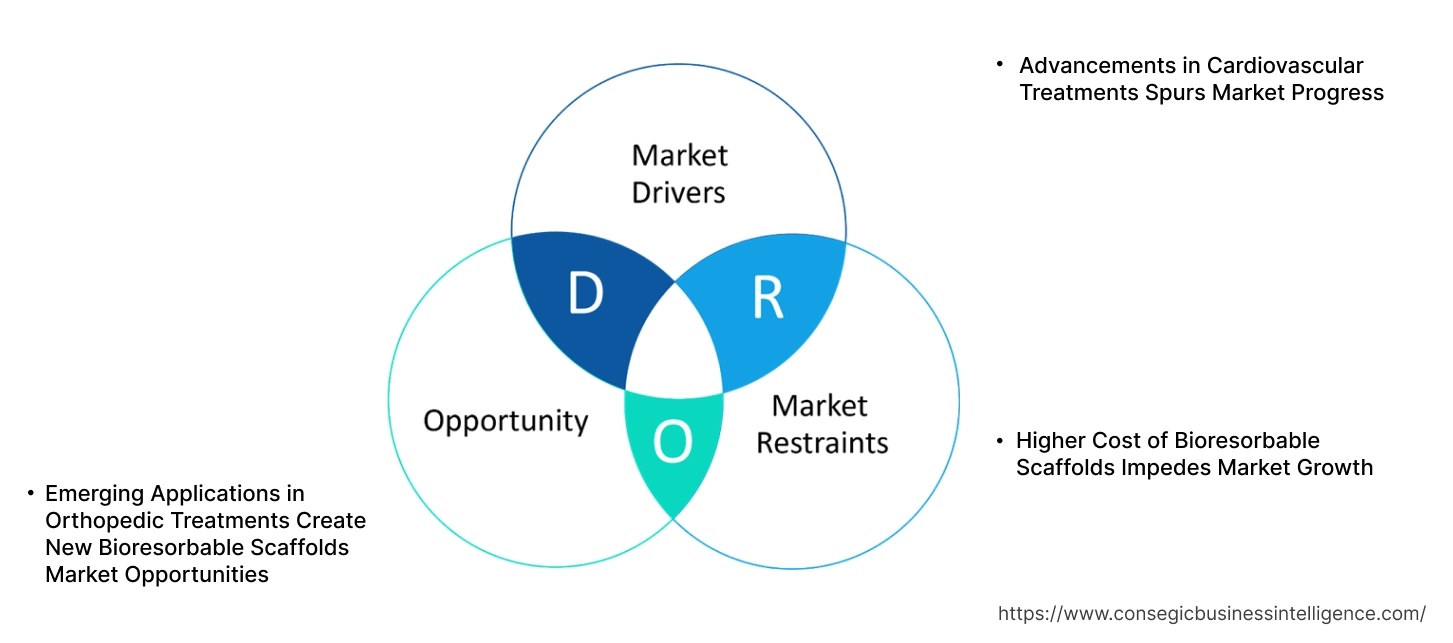
Advancements in Cardiovascular Treatments Spurs Market Progress
Bioresorbable scaffolds (BRS) are increasingly being utilized in the treatment of cardiovascular diseases, particularly in coronary artery disease. These scaffolds are designed to provide temporary support to the arteries after angioplasty, gradually dissolving over time, unlike permanent metal stents. The primary driver for the bioresorbable scaffolds market growth is the rising trend for more effective and less invasive treatments for cardiovascular conditions. Unlike traditional metal stents, BRS eliminates the need for long-term implantation, reducing the risks of thrombosis and inflammation. The use of these advanced scaffolds offers patients a more natural recovery process, without permanent foreign bodies remaining in the body.
Therefore, the increasing adoption of bioresorbable scaffolds in cardiovascular procedures accelerates bioresorbable scaffolds market demand and trend.
Key Restraints:
Higher Cost of Bioresorbable Scaffolds Impedes Market Growth
Despite their advantages, bioresorbable scaffolds are considerably more expensive than traditional metal stents. This higher cost is due to the advanced materials and intricate manufacturing processes required to produce these scaffolds. Additionally, the cost of bioresorbable scaffolds may include the need for specialized training for healthcare professionals and increased monitoring to ensure patient safety. These factors contribute to the reluctance of some hospitals and healthcare providers, particularly in developing regions, to adopt bioresorbable scaffolds as a primary treatment.
As a result, the higher cost presents a significant barrier to the widespread adoption of these technologies in the market.
Future Opportunities:
Emerging Applications in Orthopedic Treatments Create New Bioresorbable Scaffolds Market Opportunities
Bioresorbable scaffolds are finding new applications in the field of orthopedics, particularly in bone repair and regeneration. These scaffolds are used to support bone healing by providing temporary structural support, which gradually resorbs as the bone regenerates. With the increasing focus on regenerative medicine, bioresorbable scaffolds hold potential to be integrated into treatments for fractures, spinal injuries, and joint reconstruction. The development of advanced materials for orthopedic applications offers the opportunity to expand the market for bioresorbable scaffolds beyond cardiovascular procedures.
Therefore, as innovations in orthopedic treatments advance, the bioresorbable scaffold market is expected to diversify and grow in this emerging field.
Bioresorbable Scaffolds Market Segmental Analysis :
By Material:
Based on material, the market is segmented into polymeric scaffolds and metallic scaffolds.
The polymeric scaffolds sector accounted for the largest revenue in bioresorbable scaffolds market share in 2024.
- Polymeric scaffolds are composed of biodegradable polymers such as polylactic acid (PLA) and polyglycolic acid (PGA), which gradually break down in the body after serving their function.
- These scaffolds are widely used in medical applications due to their favorable biocompatibility and ability to support cell growth.
- As a result, they are used extensively in treating coronary artery diseases and peripheral artery diseases.
- The increasing bioresorbable scaffolds market trend for minimally invasive surgeries and the rising preference for devices that can naturally dissolve within the body have led to the widespread adoption of polymeric scaffolds.
- This segment is poised to maintain its dominance due to advancements in material science and enhanced manufacturing technologies.
- Therefore, according to bioresorbable scaffolds market analysis, the polymeric scaffolds segment leads the market, benefiting from their biocompatibility and growing preference for minimally invasive treatments.
The metallic scaffolds sector is anticipated to register the fastest CAGR during the forecast period.
- Metallic scaffolds are made from bioresorbable metals like magnesium and iron, which provide greater mechanical strength than polymers.
- These scaffolds offer promising applications in treating arterial diseases, where high strength is essential to maintain vessel integrity during healing.
- As bioresorbable metals slowly degrade without requiring a second surgical procedure for removal, they align with current trends of improving patient outcomes and reducing post-operative complications.
- Ongoing research in metallic alloy compositions and surface coatings is likely to drive the market for metallic scaffolds, making them one of the fastest-growing segments.
- Thus, according to bioresorbable scaffolds market analysis, the metallic scaffolds sector is set for rapid growth, driven by innovations that enhance strength, degradation rates, and biocompatibility.
By Application:
Based on application, the market is segmented into coronary artery disease treatment and peripheral artery disease treatment.
The coronary artery disease treatment sector accounted for the largest revenue in bioresorbable scaffolds market share in 2024.
- Coronary artery disease (CAD) is one of the leading causes of death worldwide, driving significant bioresorbable scaffolds market trend for effective treatments.
- Bioresorbable scaffolds play a crucial role in treating CAD by supporting the artery during healing and dissolving after fulfilling their purpose, thereby reducing the risk of long-term complications.
- The increasing prevalence of CAD, along with the growing adoption of bioresorbable scaffolds in interventional cardiology, has spurred this segment’s dominance.
- Additionally, advancements in scaffold design, such as improvements in drug-eluting scaffolds, further bolster the market for coronary artery disease treatment.
- Therefore, according to market analysis, the coronary artery disease treatment segment remains dominant, driven by the high incidence of CAD and the benefits of bioresorbable scaffolds.
The peripheral artery disease treatment sector is anticipated to register the fastest CAGR during the forecast period.
- Peripheral artery disease (PAD) is increasingly being recognized as a major health concern, especially with the aging global population.
- Bioresorbable scaffolds are becoming an attractive treatment option for PAD, as they provide the necessary support for arteries without the need for permanent foreign objects.
- The growing focus on non-permanent solutions that reduce the risk of re-stenosis is expected to drive the adoption of bioresorbable scaffolds in PAD treatment.
- Additionally, technological advancements are improving scaffold designs for use in peripheral arteries, contributing to the bioresorbable scaffolds market
- Thus, according to market analysis, the peripheral artery disease treatment segment is set to experience significant growth, supported by the increasing prevalence of PAD and advances in bioresorbable scaffold technologies.
By End-User:
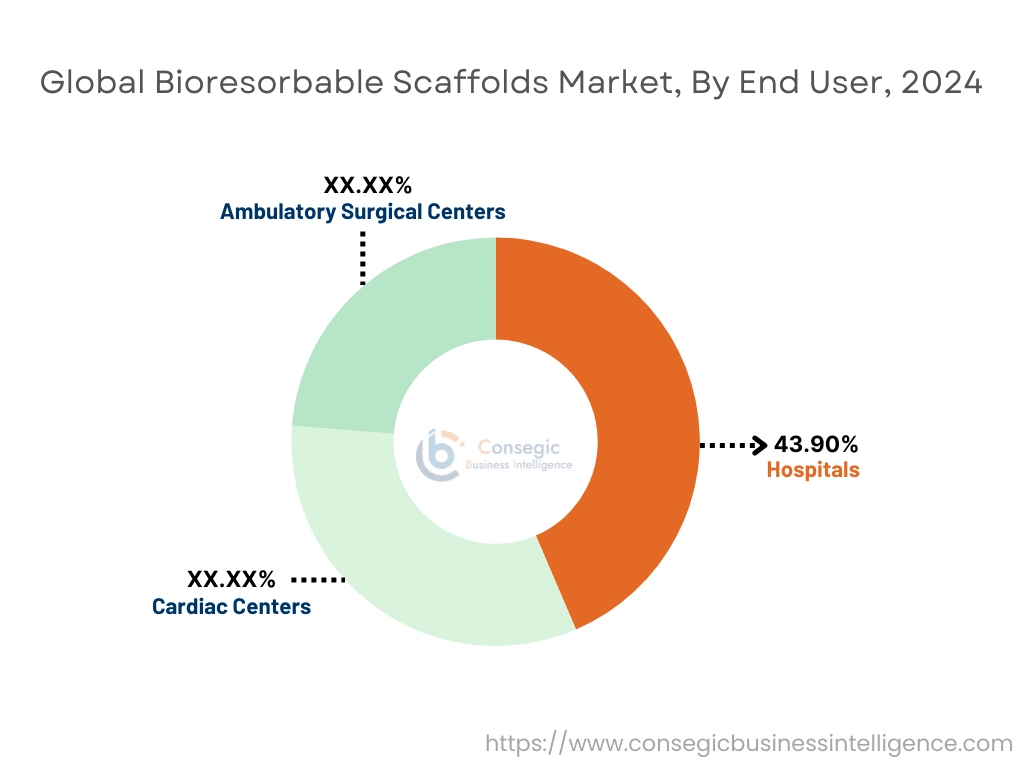
Based on end-users, the bioresorbable scaffolds market is segmented into hospitals, cardiac centers, and ambulatory surgical centers.
The hospital sector accounted for the largest revenue share by 43.90% in 2024.
- Hospitals are the primary setting for the treatment of coronary and peripheral artery diseases, where bioresorbable scaffolds are increasingly utilized in surgical procedures.
- The availability of advanced medical equipment, skilled professionals, and a broad patient base make hospitals the leading end-users of bioresorbable scaffolds.
- Moreover, hospitals are adopting these devices as part of comprehensive treatment plans for cardiovascular diseases, with growing evidence supporting their safety and efficacy.
- The steady trend for minimally invasive surgeries and advanced cardiovascular interventions ensures hospitals will continue to be the largest segment for bioresorbable scaffold adoption.
- Therefore, according to market analysis, the hospital sector remains the largest end-user, driven by its role in managing cardiovascular diseases and increasing adoption of advanced scaffold technologies.
The ambulatory surgical center segment is anticipated to register the fastest CAGR during the forecast period.
- Ambulatory surgical centers (ASCs) are gaining popularity due to their cost-effectiveness and ability to handle less complex surgeries.
- With the increasing trend for outpatient procedures and a growing preference for minimally invasive surgeries, ASCs are expected to become key players in the bioresorbable scaffolds market.
- These centers are leveraging the benefits of bioresorbable scaffolds, such as reduced recovery times and the avoidance of implant removals, to offer more efficient treatments for vascular diseases.
- The expansion of ASCs and their increasing capacity to handle complex interventional procedures will contribute to the rapid growth of this segment.
- Thus, according to market analysis, ambulatory surgical centers are poised for rapid growth, driven by the shift towards outpatient procedures and the adoption of innovative medical technologies.
Regional Analysis:
The regional segment includes North America, Europe, Asia Pacific, Middle East and Africa, and Latin America.
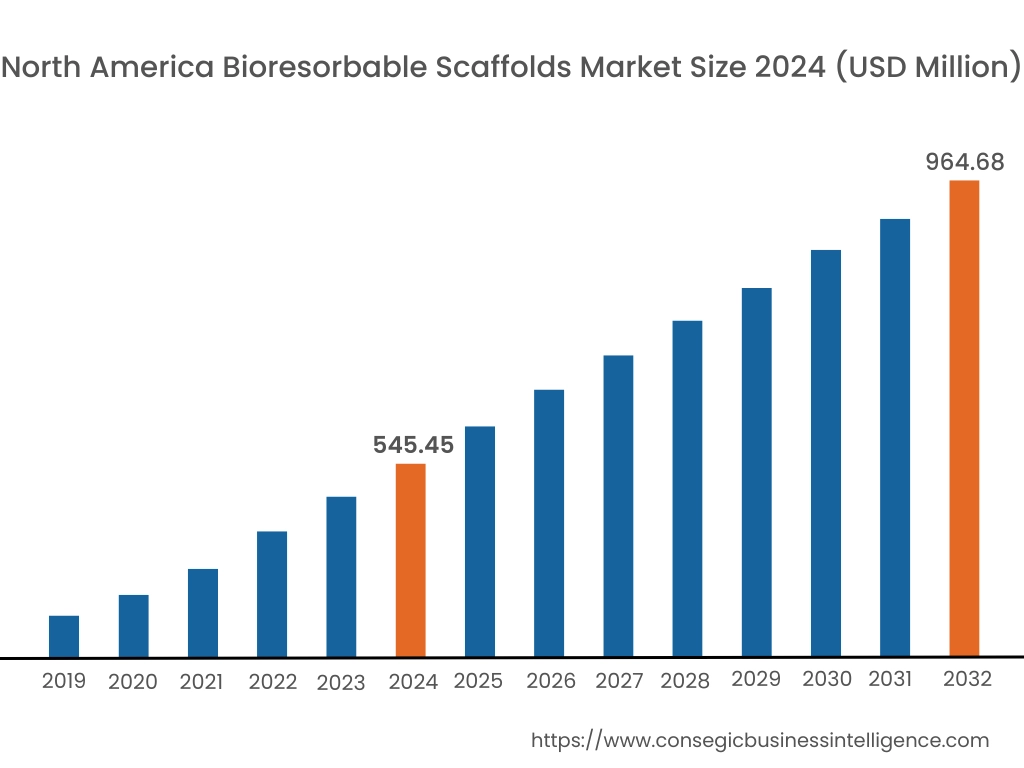
In 2024, North America was valued at USD 545.45 Million and is expected to reach USD 964.68 Million in 2032. In North America, the U.S. accounted for the highest share of 72.25% during the base year of 2024.
North America dominates the bioresorbable scaffolds market due to advanced healthcare infrastructure, high adoption of innovative medical technologies, and strong research and development investments. The United States is a key contributor, supported by its well-established medical device industry and growing trend for minimally invasive procedures. The presence of major players in the region further strengthens the market, while regulatory approvals for new bioresorbable products and reimbursement policies positively influence bioresorbable scaffolds market expansion. Additionally, increasing awareness of the benefits of bioresorbable scaffolds in treating coronary artery diseases and other cardiovascular conditions contributes to market momentum.

In Asia Pacific, the market is experiencing the fastest growth with a CAGR of 8.1% over the forecast period. The Asia-Pacific region is witnessing rapid adoption of bioresorbable scaffolds due to the increasing prevalence of cardiovascular diseases, urbanization, and rising healthcare expenditure. Countries like China, Japan, and India are key players in the market. Japan, in particular, has a well-established healthcare system that supports the adoption of advanced medical devices. However, challenges related to affordability and healthcare access in emerging markets like India and China may hinder market penetration. Nonetheless, growing healthcare investments and favorable government initiatives to improve medical technologies contribute to the region's potential.
Europe holds a significant share of the bioresorbable scaffolds market, driven by strong demand for innovative cardiovascular solutions and the presence of leading medical device manufacturers. Countries like Germany, the United Kingdom, and France are key markets, with healthcare systems that support the adoption of advanced medical technologies. The European market benefits from high research output, clinical trials, and government funding for healthcare innovations. However, variations in reimbursement policies and market access across countries may limit the market's full potential. Continued regulatory approvals and product innovation are expected to shape market dynamics in Europe.
The Middle East and Africa region presents a developing market for bioresorbable scaffolds, with countries like the United Arab Emirates and Saudi Arabia taking the lead in medical advancements. Healthcare infrastructure improvements and growing awareness of cardiovascular diseases contribute to increased demand for advanced medical devices. However, challenges related to healthcare accessibility, affordability, and limited adoption of advanced medical technologies in certain African nations present barriers. In the Middle East, higher disposable incomes and better healthcare access support the demand for bioresorbable scaffolds. Regional investments in healthcare infrastructure are likely to bolster market development.
Latin America is experiencing gradual expansion in the bioresorbable scaffolds market, supported by increasing healthcare investments and rising awareness of cardiovascular diseases. Brazil and Mexico are key players in the region, with improving healthcare infrastructure and rising demand for advanced medical solutions. However, market penetration is hindered by economic disparities and limited access to cutting-edge medical devices in rural areas. Government initiatives to improve healthcare access and ongoing efforts by medical device companies to introduce affordable solutions are expected to enhance market performance in the region.
Top Key Players & Market Share Insights:
The Global Bioresorbable Scaffolds Market is highly competitive with major players providing products and services to the national and international markets. Key players are adopting several strategies in research and development (R&D), product innovation, and end-user launches to hold a strong position in the Global Bioresorbable Scaffolds Market. Key players in the Bioresorbable Scaffolds industry include-
- Abbott Laboratories (United States)
- Boston Scientific Corporation (United States)
- Reva Medical, Inc. (Australia)
- Shanghai MicroPort Medical (Group) Co., Ltd. (China)
- S3V Vascular Technologies, LLC (United States)
- Medtronic PLC (Ireland)
- Biotronik (Germany)
- Terumo Corporation (Japan)
- Miv Therapeutics (United States)
- Biotronik SE & Co. KG (Germany)
Recent Industry Developments :
Product Launch:
- In May 2024, Abbott launched its XIENCE Sierra Everolimus Eluting Coronary Stent System for heart patients in India. This initiative reflects Medtronic's commitment to improving cardiovascular care in regions with high coronary artery disease prevalence, demonstrating the strategic alignment of technological advancements with the pressing healthcare needs of the population.
Bioresorbable Scaffolds Market Report Insights:
| Report Attributes | Report Details |
| Study Timeline | 2019-2032 |
| Market Size in 2032 | USD 2,976.49 Million |
| CAGR (2025-2032) | 7.7% |
| By Material |
|
| By Application |
|
| By End-User |
|
| By Region |
|
| Key Players |
|
| North America | U.S. Canada Mexico |
| Europe | U.K. Germany France Spain Italy Russia Benelux Rest of Europe |
| APAC | China South Korea Japan India Australia ASEAN Rest of Asia-Pacific |
| Middle East and Africa | GCC Turkey South Africa Rest of MEA |
| LATAM | Brazil Argentina Chile Rest of LATAM |
| Report Coverage |
|
Key Questions Answered in the Report
How big is the Bioresorbable Scaffolds Market? −
In 2024, the Bioresorbable Scaffolds Market was USD 1,644.35 million.
What will be the potential market valuation for the Bioresorbable Scaffolds Market by 2032? +
In 2032, the market size of Bioresorbable Scaffolds Market is expected to reach USD 2,976.49 million.
What are the segments covered in the Bioresorbable Scaffolds Market report? +
The material, application, and end-user are the segments covered in this report.
Who are the major players in the Bioresorbable Scaffolds Market? +
Abbott Laboratories (United States), Boston Scientific Corporation (United States), Medtronic PLC (Ireland), Biotronik (Germany), Terumo Corporation (Japan), Miv Therapeutics (United States), Biotronik SE & Co. KG (Germany), Reva Medical, Inc. (Australia), Shanghai MicroPort Medical (Group) Co., Ltd. (China), S3V Vascular Technologies, LLC (United States) are the major players in the Bioresorbable Scaffolds market.
Overview
Reputation & Certifications


Our Services
- Market Intelligence & Forecasting
- Custom Research Solutions
- Market Entry Strategy
- Competitive Intelligence
- Customer Insights
- Industry Innovation Analysis
- Investment Advisory