Jump to Content
Black Lung Disease Market - Size, Share, Industry Trends, and Forecasts (2025-2032)
Black Lung Disease Market Size:
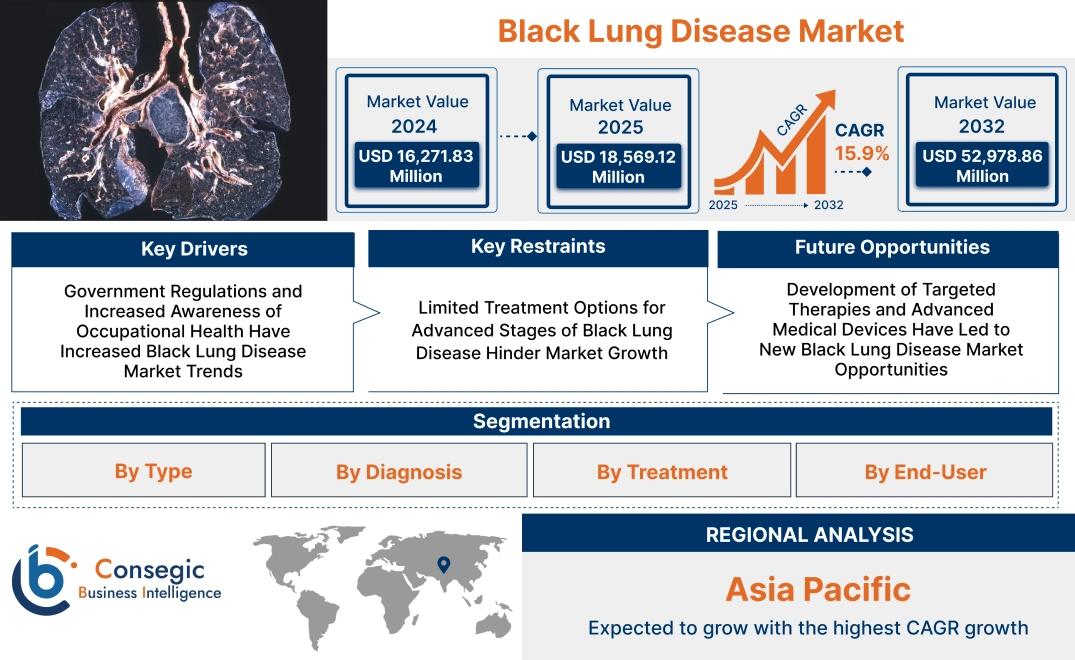
Black Lung Disease Market size is estimated to reach over USD 52,978.86 Million by 2032 from a value of USD 16,271.83 Million in 2024 and is projected to grow by USD 18,569.12 Million in 2025, growing at a CAGR of 15.9% from 2025 to 2032.
Black Lung Disease Market Scope & Overview:
Black lung disease, or pneumoconiosis, is a lung condition caused by long-term exposure to coal dust or other harmful particles. Treatment involves managing symptoms, preventing further damage, and improving patient quality of life. The disease is characterized by progressive lung damage, difficulty breathing, and chronic coughing. Treatments focus on symptom management, including respiratory therapy, medications, and in severe cases, lung transplantation.
Its treatments find application in hospitals, specialized healthcare centers, and rehabilitation facilities. Key end-use industries include healthcare, pharmaceuticals, and occupational safety sectors. These treatments aim to reduce the burden of the disease on affected individuals and society.
Black Lung Disease Market Dynamics - (DRO) :
Key Drivers:
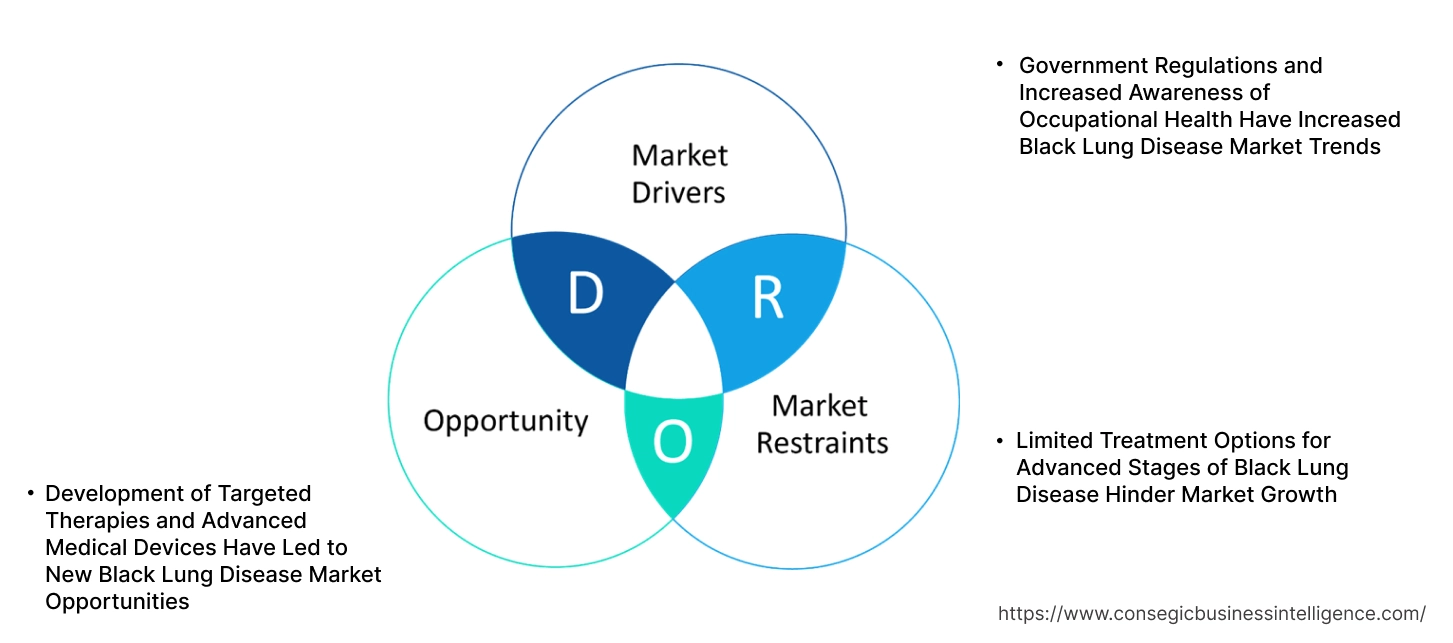
Government Regulations and Increased Awareness of Occupational Health Have Increased Black Lung Disease Market Trends
Black lung disease, or coal worker's pneumoconiosis, is caused by prolonged exposure to coal dust, particularly among workers in the mining industry. Governments have enacted stricter regulations aimed at reducing workers' exposure to harmful dust particles. These regulations have led to enhanced protective measures in mines and increased monitoring of air quality. As awareness of the severe health risks linked to the disease rises, both government and private organizations are investing in the development of treatments, early detection methods, and medical interventions for affected individuals. For example, newer diagnostic techniques, such as high-resolution CT scans, are helping to identify the disease earlier, allowing for better management and intervention.
Therefore, enhanced regulatory measures and increased public awareness of occupational health risks are driving the black lung disease market demand for treatment options.
Key Restraints:
Limited Treatment Options for Advanced Stages of Black Lung Disease Hinder Market Growth
One of the major challenges in the black lung disease market is the limited effectiveness of treatments, especially for individuals in the later stages of the disease. The disease is progressive, and once the condition has advanced, it becomes increasingly difficult to manage with current therapies. For example, while medications may alleviate symptoms, there is no definitive cure for the advanced stages, which often lead to respiratory failure and other complications. This lack of treatment options, particularly for severe cases, significantly limits market potential and creates a barrier to the widespread adoption of new therapies.
Thus, the limited treatment options for advanced-stage cases hinder the overall black lung disease market growth.
Future Opportunities:
Development of Targeted Therapies and Advanced Medical Devices Have Led to New Black Lung Disease Market Opportunities
Future research and technological advancements offer significant opportunities in the treatment of black lung disease. The development of targeted therapies, such as gene therapies or specialized drugs aimed at reducing fibrosis and inflammation, holds promise for better management and treatment outcomes. Additionally, advancements in medical devices, such as wearable respiratory monitoring systems, will enable real-time tracking of patients' lung health, facilitating early intervention. Companies investing in these innovations may unlock new treatment options and improve patient quality of life.
As research continues and technologies advance, the development of these targeted therapies and medical devices will open new black lung disease market opportunities.
Black Lung Disease Market Segmental Analysis :
By Type:
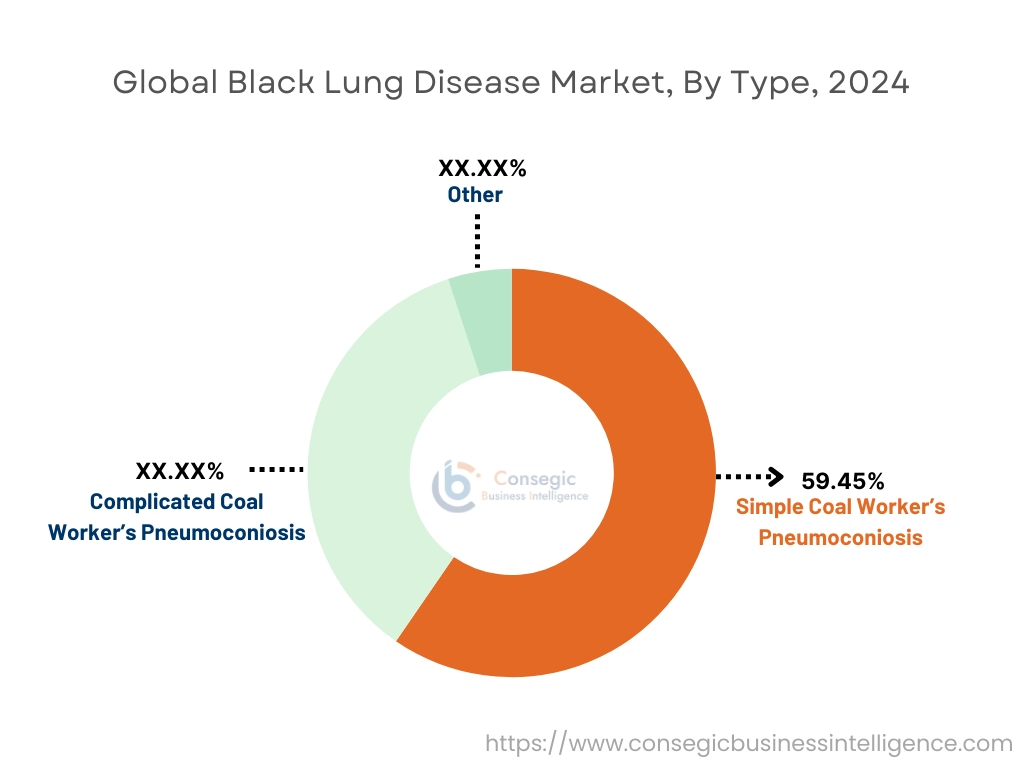
Based on type, the Black Lung Disease market is segmented into Simple Coal Worker’s Pneumoconiosis, Complicated Coal Worker’s Pneumoconiosis, and Other Types.
The simple coal worker’s pneumoconiosis sector accounted for the largest revenue in black lung disease market share by 59.45% in 2024.
- Simple coal worker’s pneumoconiosis, often referred to as “black lung,” is the most common form, caused by prolonged inhalation of coal dust in coal miners.
- This condition leads to the accumulation of coal dust particles in the lungs, resulting in fibrosis and impaired lung function.
- The disease is typically detected through chest X-rays and physical examinations.
- The increasing number of coal workers exposed to hazardous environments and the rising awareness of the disease are contributing factors to the significant share of this segment.
- Moreover, early diagnosis and treatment options, such as oxygen therapy and bronchodilators, help manage symptoms and prevent further complications.
- Therefore, according to black lung disease market analysis, the simple coal worker’s pneumoconiosis segment is expected to maintain a dominant position in the market due to its higher incidence rate among workers in the coal industry.
The complicated coal worker’s pneumoconiosis sector is anticipated to register the fastest CAGR during the forecast period.
- Complicated coal worker’s pneumoconiosis, also known as progressive massive fibrosis (PMF), is a more severe form of the disease that results in large masses of fibrotic tissue in the lungs, leading to respiratory failure.
- This condition is more commonly found in individuals with long-term exposure to coal dust and can cause significant breathing difficulties and impair lung capacity.
- As awareness grows and diagnostic methods improve, the detection of complicated cases is becoming more common.
- Furthermore, the development of specialized treatments, including lung transplantation, is anticipated to drive the segment’s rapid growth.
- Thus, according to black lung disease market analysis, the segment is expected to register the fastest CAGR as treatment options and detection methods evolve.
By Diagnosis:
Based on diagnosis, the Black Lung Disease market is segmented into Biopsy, Imaging (X-ray, CT Scan), Full Blood Count, Pulmonary/Lung Function Tests, Physical Examination, and Other Diagnostic Methods.
The imaging sector, particularly X-ray, accounted for the largest revenue in black lung disease market share in 2024.
- Imaging techniques, particularly chest X-rays, are the primary method for diagnosis. X-rays reveal the presence of coal dust-induced lung damage, helping physicians assess the severity of the disease.
- Given the widespread availability of X-ray equipment and its cost-effectiveness, it remains the go-to method for routine screening and diagnosis.
- This sector's dominance is also driven by the use of CT scans, which provide more detailed images, allowing for better detection of advanced cases.
- Therefore, according to market analysis, as a result, imaging methods continue to hold the largest market share and play a crucial role in the timely diagnosis and management of the disease.
The pulmonary/lung function tests sector is anticipated to register the fastest CAGR during the forecast period.
- Pulmonary function tests (PFTs) are used to measure lung capacity and airflow, offering essential insights into the extent of lung damage caused.
- These tests are invaluable in assessing the disease's progression and helping to tailor specific treatment plans.
- The increasing emphasis on preventive care and regular health checkups, combined with advancements in test technology, are contributing to the growing adoption of PFTs.
- Thus, according to market analysis, the pulmonary/lung function tests segment is expected to experience the fastest black lung disease market growth in the coming years as a tool for ongoing disease monitoring and assessment.
By Treatment:
Based on treatment, the Black Lung Disease market is segmented into Oxygen Therapy, Bronchodilators, Lung Transplant, Stem Cell Therapy, and Other Treatments.
Oxygen therapy accounted for the largest revenue share in 2024.
- Oxygen therapy is one of the primary treatments, especially for those suffering from severe lung impairment.
- It helps patients breathe more easily by supplying extra oxygen to the lungs, which reduces the strain on the heart and alleviates symptoms.
- The widespread use of oxygen therapy in clinical settings, particularly in advanced stages of the disease, makes it a significant contributor to the market.
- Therefore, according to market analysis, with advancements in home oxygen therapy equipment, more patients can receive care in the comfort of their homes, further boosting the segment’s revenue.
Lung transplant is anticipated to register the fastest CAGR during the forecast period.
- Lung transplantation is considered the most effective treatment option for patients with severe and advanced cases who have exhausted other therapeutic options.
- The growing success rates of lung transplants and the development of better post-transplant care protocols are driving the segment’s growth.
- Moreover, the increasing number of patients with complicated infections who are eligible for transplants is contributing to the expected black lung disease market expansion of this segment.
- Thus, according to market analysis, as a result, lung transplant procedures are poised to grow at the fastest rate in the treatment market.
By End-User:
Based on end-user, the Black Lung Disease market is segmented into Hospitals and Clinics, Research Organizations and Academic Institutes, Diagnostic Centers and Labs, and Other End Users.
The hospitals and clinics sector accounted for the largest revenue share in 2024.
- Hospitals and clinics are the primary treatment and diagnostic centers for patients suffering from Black Lung Disease, offering a range of services from diagnosis to advanced treatment options like lung transplants and oxygen therapy.
- The increasing number of cases and advancements in medical technologies available in these facilities are contributing to their dominant share in the market.
- Therefore, according to market analysis, furthermore, the development of specialized centers for respiratory diseases is also propelling the growth of this segment.
Research organizations and academic institutes are anticipated to register the fastest CAGR during the forecast period.
- Research organizations and academic institutes play a critical role in advancing its understanding, developing new treatment protocols, and improving diagnostic technologies.
- With rising investments in healthcare research, particularly in the areas of stem cell therapy and lung disease, this segment is expected to witness rapid growth.
- Thus, according to market analysis, the increasing focus on finding its long-term solutions, coupled with funding from both public and private sectors, is expected to fuel this sector’s expansion.
Regional Analysis:
The regional segment includes North America, Europe, Asia Pacific, Middle East and Africa, and Latin America.
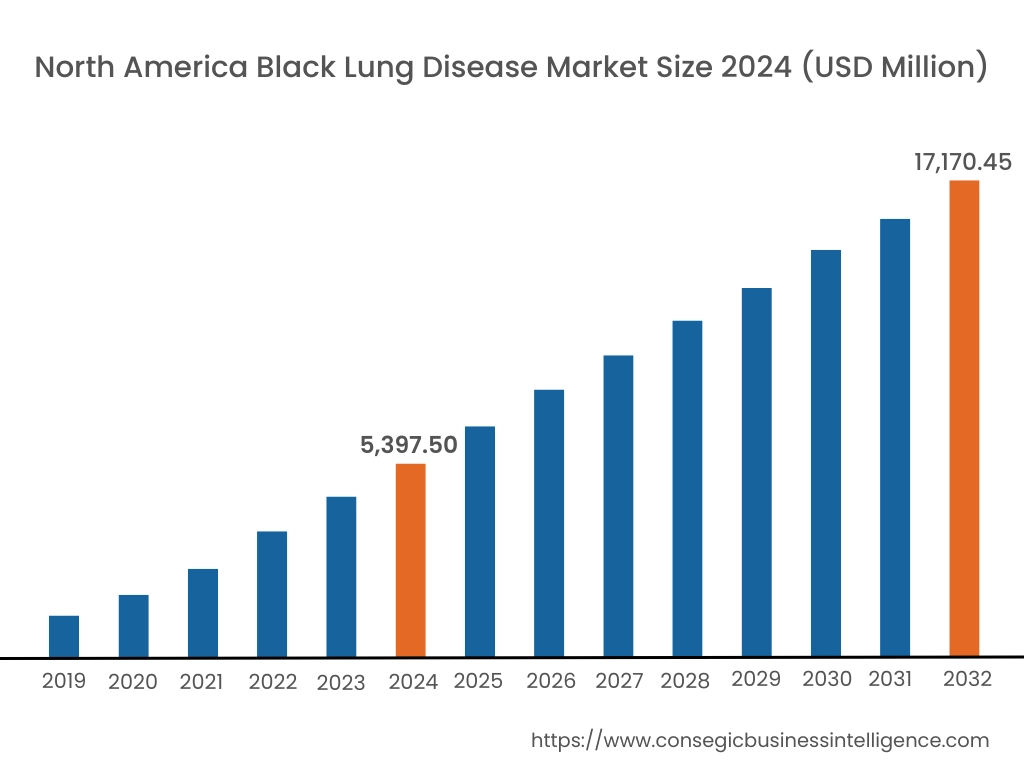
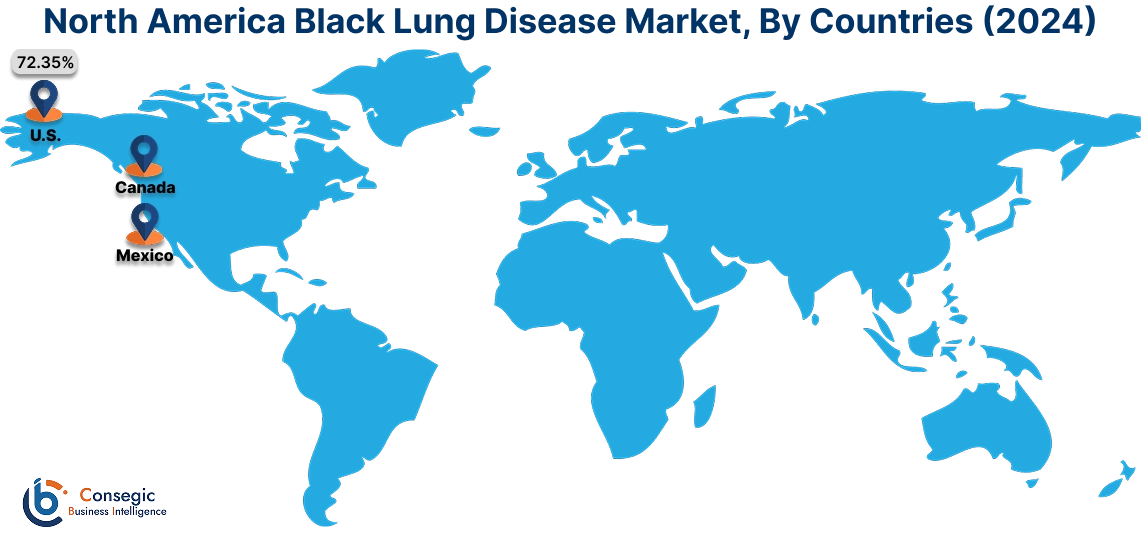
In 2024, North America was valued at USD 5,397.50 Million and is expected to reach USD 17,170.45 Million in 2032. In North America, the U.S. accounted for the highest share of 72.35% during the base year of 2024. North America leads the black lung disease market, particularly in the United States, where the prevalence of the disease is linked to historical coal mining activities. Strong government regulations and ongoing efforts to address occupational health risks contribute to market performance. The U.S. has implemented various policies to reduce coal dust exposure, resulting in a decrease in new cases. However, treatment options, research funding, and healthcare infrastructure for managing it remain strong, which sustains black lung disease market demand.
In Asia Pacific, the market is experiencing the fastest growth with a CAGR of 16.4% over the forecast period. In the Asia-Pacific region, the disease remains a significant concern due to widespread coal mining activities in countries like China, India, and Australia. High levels of exposure to coal dust, especially in rural areas, contribute to a higher prevalence of the disease. China is particularly affected, with stringent government regulations on air quality and occupational health gaining attention. However, limited healthcare infrastructure in rural regions hampers effective diagnosis and treatment. Efforts to modernize mining practices and improve worker safety protocols are expected to positively impact the market.
Europe has seen a steady decrease in black lung disease cases due to robust occupational safety laws and health standards in countries like the United Kingdom, Germany, and France. Strict regulations on coal dust exposure in mining industries have resulted in a lower incidence of the disease. Although cases are rare, specialized treatments and healthcare systems to manage the disease remain in place. Ongoing research into pulmonary diseases and government initiatives to monitor workers’ health ensure continued support for market stability in Europe.
The Middle East and Africa region faces challenges in managing the disease due to limited access to healthcare and lack of regulation in certain regions. However, countries with active mining industries, such as South Africa, continue to experience cases of the disease. Increased attention to worker safety in the mining sector, coupled with growing healthcare investments, is gradually improving diagnosis and treatment. Awareness programs in key countries are expected to enhance market development in the long term.
Latin America, particularly countries with substantial mining industries like Brazil and Colombia, has a moderate prevalence of black lung disease. Occupational health regulations are still evolving, and rural areas face difficulties in accessing specialized healthcare services. However, the region is seeing increasing awareness about the risks of coal dust exposure and improving healthcare infrastructure. Public health initiatives and government focus on enhancing the safety of mining workers are expected to support long-term market performance.
Top Key Players & Market Share Insights:
The Global Black Lung Disease Market is highly competitive with major players providing products and services to the national and international markets. Key players are adopting several strategies in research and development (R&D), product innovation, and end-user launches to hold a strong position in the Global Black Lung Disease Market. Key players in the Black Lung Disease industry include-
- GlaxoSmithKline Plc (United Kingdom)
- Novartis International AG (Switzerland)
- Teva Pharmaceutical Industries Ltd. (Israel)
- Merck & Co., Inc. (United States)
- Sanofi S.A. (France)
- Pfizer Inc. (United States)
- Boehringer Ingelheim International GmbH (Germany)
- Bristol-Myers Squibb Company (United States)
- Johnson & Johnson (United States)
- AstraZeneca PLC (United Kingdom)
Recent Industry Developments :
Product Launches:
- In July 2024, the European Union approved Sanofi's Dupixent injection for the treatment of chronic obstructive pulmonary disease (COPD) in patients unresponsive to standard inhaled drugs. COPD shares similarities with black lung disease, and treatments like Dupixent may offer benefits to patients with respiratory conditions.
Black Lung Disease Market Report Insights:
| Report Attributes | Report Details |
| Study Timeline | 2019-2032 |
| Market Size in 2032 | USD 52,978.86 Million |
| CAGR (2025-2032) | 15.9% |
| By Type |
|
| By Diagnosis |
|
| By Treatment |
|
| By End-User |
|
| By Region |
|
| Key Players |
|
| North America | U.S. Canada Mexico |
| Europe | U.K. Germany France Spain Italy Russia Benelux Rest of Europe |
| APAC | China South Korea Japan India Australia ASEAN Rest of Asia-Pacific |
| Middle East and Africa | GCC Turkey South Africa Rest of MEA |
| LATAM | Brazil Argentina Chile Rest of LATAM |
| Report Coverage |
|
Key Questions Answered in the Report
How big is the Black Lung Disease Market? −
In 2024, the Black Lung Disease Market was USD 16,271.83 million.
What will be the potential market valuation for the Black Lung Disease Market by 2032? +
In 2032, the market size of Black Lung Disease Market is expected to reach USD 52,978.86 million.
What are the segments covered in the Black Lung Disease Market report? +
The type, diagnosis, treatment and end-user are the segments covered in this report.
Who are the major players in the Black Lung Disease Market? +
GlaxoSmithKline Plc (United Kingdom), Novartis International AG (Switzerland), Pfizer Inc. (United States), Boehringer Ingelheim International GmbH (Germany), Bristol-Myers Squibb Company (United States), Johnson & Johnson (United States), AstraZeneca PLC (United Kingdom), Teva Pharmaceutical Industries Ltd. (Israel), Merck & Co., Inc. (United States), Sanofi S.A. (France) are the major players in the Black Lung Disease market.
Overview
Reputation & Certifications


Our Services
- Market Intelligence & Forecasting
- Custom Research Solutions
- Market Entry Strategy
- Competitive Intelligence
- Customer Insights
- Industry Innovation Analysis
- Investment Advisory