Jump to Content
Lidocaine Market - Size, Share, Industry Trends, and Forecasts (2025-2032)
Lidocaine Market Size:
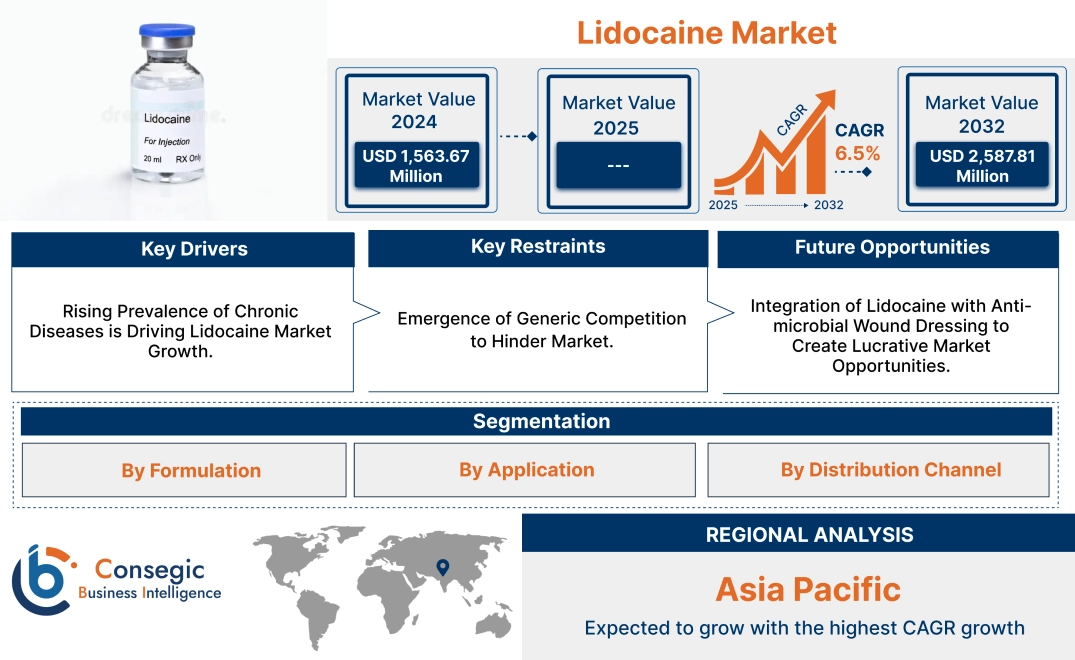
Lidocaine Market is growing with a CAGR of 6.5% during the forecast period (2025-2032), and the market is projected to be valued at USD 2,587.81 Million by 2032 from USD 1,563.67 Million in 2024.
Lidocaine Market Scope & Overview:
Lidocaine is a local anesthetic that plays a crucial role in various medical procedures, from minor surgeries and dental treatments to more complex procedures. Its applications extend beyond anesthesia, including the management of arrhythmias and the treatment of various skin conditions, including burns, itching, and insect bites. The global lidocaine market is driven by several factors, including increased incidence of chronic diseases, rising prevalence of chronic pain conditions, and advancements in minimally invasive surgical procedures. The requirement for lidocaine is further fueled by its effectiveness, safety profile, and affordability compared to other anesthetic options. However, the market also faces certain hurdles, such as the emergence of generic competition, and stringent regulatory requirements for new drug approvals, amongst others.
Lidocaine Market Dynamics - (DRO) :
Key Drivers:
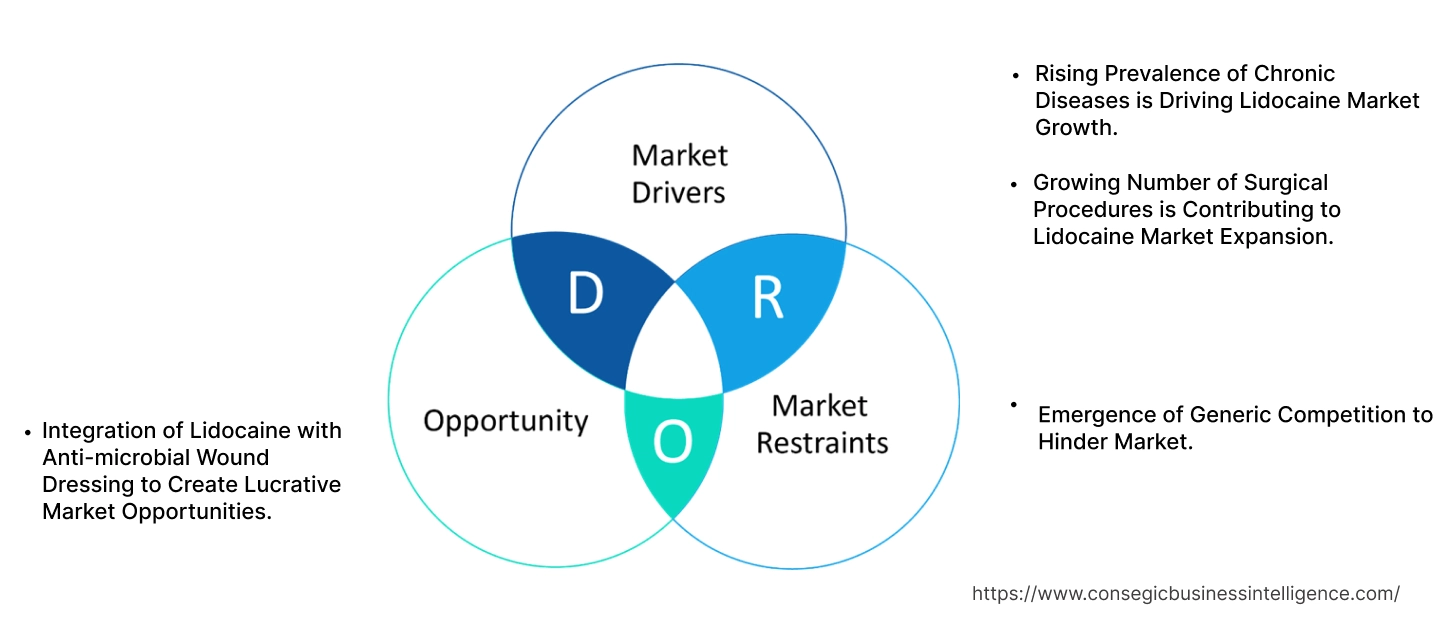
Rising Prevalence of Chronic Diseases is Driving Lidocaine Market Growth.
The rising prevalence of chronic diseases is a primary driver of the market. Conditions such as arthritis, diabetes, and cancer often lead to chronic pain, necessitating effective pain management strategies. Lidocaine, in various formulations like topical creams, patches, and injections, plays a crucial role in alleviating this pain. Furthermore, the increasing incidence of surgical procedures associated with the management of chronic diseases significantly boosts the adoption of this local anesthetic.
- For instance, according to the analysis provided by the World Health Organization in 2022, cancer is a leading cause of death worldwide, accounting for nearly 10 million deaths in 2020, or nearly one in six deaths. The most common cancers are breast, lung, colon, rectum, and prostate cancers. Cancer-causing infections, such as human papillomavirus (HPV) and hepatitis, are responsible for approximately 30% of cancer cases in low- and lower-middle-income countries.
Beyond pain management, it finds application in treating neuropathic pain, a common complication of chronic conditions like diabetes and shingles. Neuropathic pain, characterized by burning, tingling, or numbness, significantly impacts quality of life. Lidocaine-based therapies offer effective relief for these debilitating symptoms. As healthcare systems focus on improving pain management and enhancing patient outcomes, this local anesthetic is expected to remain a vital medication in the management of chronic pain and associated conditions.
Growing Number of Surgical Procedures is Contributing to Lidocaine Market Expansion.
The growing need for surgical procedures is one of the key drivers of the expanding lidocaine market expansion. This surge is fueled by several factors, including an aging population with an increased incidence of chronic diseases, advancements in medical technology, and a growing emphasis on improving patient outcomes. As life expectancy increases, the need for surgical procedures to address age-related conditions and manage chronic diseases escalates significantly.
- For instance, the World Health Organization (WHO) reports that over 313 million surgical procedures are performed globally each year to address a wide range of common health issues. These include conditions such as obstructed labor, birth defects, cataracts, cancer, cardiovascular diseases, diabetes, acute abdominal problems, burns, and injuries resulting from domestic, industrial, and traffic accidents.
Furthermore, the rise of minimally invasive surgical techniques, such as laparoscopic and endoscopic procedures, plays a crucial role in driving lidocaine demand. While less invasive than traditional open surgeries, these procedures still require the use of local anesthetics to ensure patient comfort and facilitate the surgical process.
In conclusion, as per analysis, the escalating need for surgical procedures, driven by the aforementioned factors is driving the demand for the lidocaine market growth.
Key Restraints:
Emergence of Generic Competition to Hinder Market.
The emergence of generic lidocaine poses a significant hurdle to the trajectory of the market. The entry of generic versions, which are typically manufactured and marketed at significantly lower prices than their brand-name counterparts, exerts considerable downward pressure on drug prices. This price directly impacts the profitability of manufacturers, as they are forced to compete in a highly price-sensitive market.
As generic lidocaine becomes more widely available and affordable, it is capturing a considerable portion of the market from brand-name products. This loss of market share translates to decreased sales volumes and revenue for brand-name manufacturers. While the availability of generic medications benefits patients by improving access to affordable healthcare, it presents a significant barrier to the continued trajectory and profitability of brand-name products further hindering the market.
Future Opportunities :
Integration of Lidocaine with Anti-microbial Wound Dressing to Create Lucrative Market Opportunities.
The integration of lidocaine with antimicrobial wound dressings presents significant lidocaine market opportunities. By incorporating the compound directly into the wound dressing, these products provide immediate pain relief at the site of injury. This not only enhances patient comfort during dressing changes but also significantly improves patient adherence to the prescribed treatment routine. Painful dressing changes often lead to poor patient compliance, hindering the healing process. By minimizing pain, these integrated dressings encourage patients to continue with the prescribed treatment plan, ultimately improving treatment efficacy and accelerating wound healing.
- For instance, in 2024, Imbed Biosciences received U.S. Food and Drug Administration 510(k) clearance to market Microlyte Ag/Lidocaine, marking a significant milestone. This innovative wound dressing is the first of its kind to integrate lidocaine, a local anesthetic, for the management of pain associated with various skin wounds.
Furthermore, the antimicrobial properties of the dressing play a crucial role in preventing infection, a major complication that significantly delays wound healing and increases the risk of systemic complications. By combining pain relief with infection prevention within a single dressing, these innovative products offer a comprehensive solution for wound care. This dual-action approach has the potential to significantly improve patient outcomes, reduce hospital stays, and enhance the overall quality of life for individuals with acute and chronic wounds creating lidocaine market opportunities.
Lidocaine Market Segmental Analysis :
By Formulation:
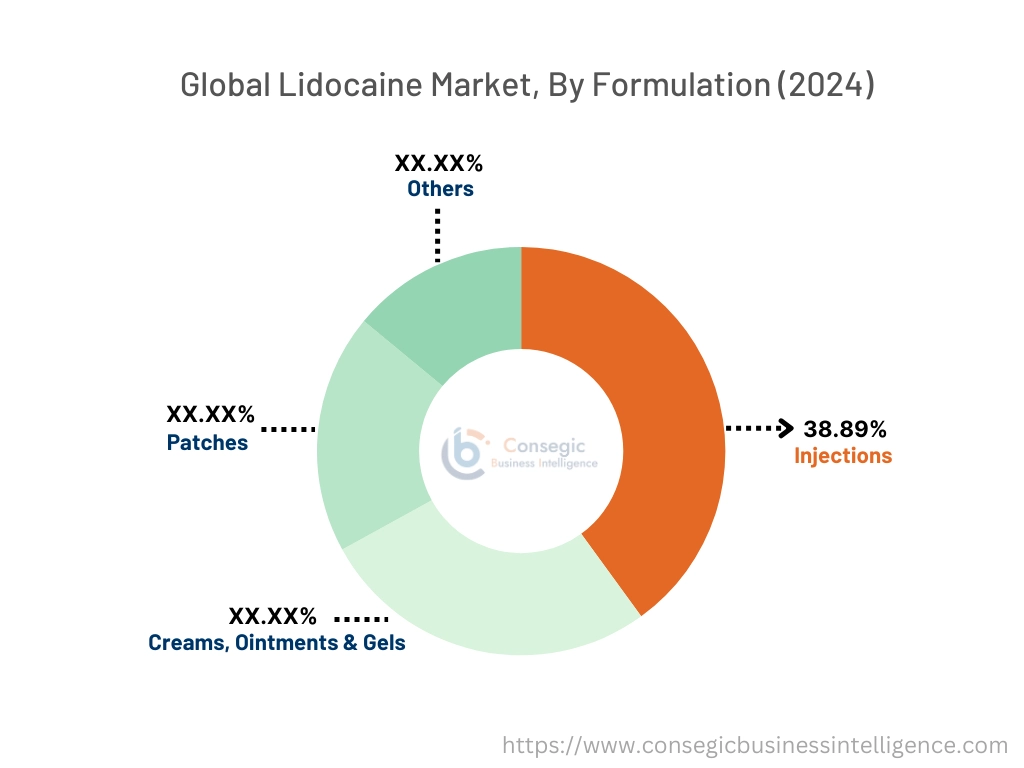
Based on formulation, the market is categorized into injections, creams, ointments & gels, patches, and others.
Trends in the Formulation:
- Focus on improving the safety profile and reducing the risk of systemic side effects is also an area of ongoing research and development.
- Topical formulations offer convenience and ease of use compared to injections, making them a preferred choice for many patients.
The injections segment accounted for the largest market share of 38.89% in 2024.
- The injections segment holds the dominant position in the market. This dominance stems from its extensive utilization across a broad variety of medical procedures.
- Lidocaine injections are vital to various surgical interventions, ranging from minor procedures to complex surgical operations, serving as a crucial component of local anesthesia.
- Moreover, they play a vital role in pain management techniques such as nerve blocks, spinal anesthesia, and epidural anesthesia.
- The escalating volume of surgical procedures worldwide, driven by factors such as an aging population and the increasing prevalence of chronic diseases, significantly fuels the demand for injectables, solidifying its trend as the leading segment within the market.
The creams, ointments & gels segment is expected to grow at the fastest CAGR over the forecast period.
- The growing prevalence of chronic pain conditions, such as arthritis, neuropathic pain, and musculoskeletal disorders, has created a substantial requirement for effective topical pain management solutions.
- Topical formulations offer several key advantages over injectable options, including ease of application, enhanced patient convenience, and a reduced risk of systemic side effects, making them a highly preferred choice for many patients seeking pain relief.
- Furthermore, continuous advancements in formulation technology are playing a pivotal role in driving segment trajectory. Ongoing research and development efforts are focused on optimizing topical lidocaine formulations by enhancing their bioavailability, developing sustained-release characteristics, and improving their overall efficacy. These advancements aim to provide patients with more effective and convenient pain relief options while minimizing potential side effects.
- For instance, in 2024, Zydus Lifesciences announced that it had received final approval from the U.S. Food and Drug Administration (USFDA) to manufacture and market Lidocaine and Prilocaine Cream USP, 2.5%/2.5%.
- Overall, as per analysis, the confluence of the above-mentioned factors, the creams, ointments & gels segment provide a lucrative trajectory within the global market.
By Application:
The application segment is categorized into local anesthesia, anti-arrhythmic agent, pain management, and others
Trends in the Application
- The increasing adoption of minimally invasive surgical techniques across various specialties is driving demand for the compound in the local anesthesia segment.
The local anesthesia segment accounted for the largest market share in 2024.
- Lidocaine is vital in various surgical interventions, ranging from minor procedures to complex surgical operations, providing essential local anesthesia during these procedures.
- Furthermore, its role extends to crucial pain management techniques such as nerve blocks, spinal anesthesia, and epidural anesthesia, further solidifying its significance.
- The escalating requirement for surgical interventions significantly fuels the trajectory of this segment. Factors such as an aging population, the rising prevalence of chronic diseases, and advancements in medical technology have led to a surge in the number of surgical procedures performed worldwide. This increased need for surgical care directly translates into a higher requirement for local anesthetics driving the segment trend.
- For instance, according to frontier, lidocaine stands as a prominent and extensively researched local anesthetic. Its applications include a wide range, including topical or surface anesthesia for numbing specific areas, as well as regional anesthesia administered via injection into the sub-arachnoid or epidural space to block local motor and sensory nerves. This showcases the higher prevalence of lidocaine for local anesthesia applications.
- Moreover, the increasing adoption of minimally invasive surgical techniques, such as laparoscopic and endoscopic procedures, further contributes to the segment's dominance. While these procedures are less invasive than traditional open surgeries, they still necessitate the use of local anesthetics for patient comfort and procedural success. Its rapid onset of action, short duration of effect, and overall efficacy make it an ideal choice for these procedures, further solidifying its position as the leading application area within the market.
The pain management segment is expected to grow at the fastest CAGR over the forecast period.
- The escalating global cases of chronic pain conditions, including a wide variety of disorders such as arthritis, neuropathic pain, and musculoskeletal disorders, have created a significant and ever-growing need for effective pain management solutions.
- Additionally, there is a shift towards non-opioid pain management strategies, driven by a growing awareness of the risks associated with opioid medications, including addiction and overdose. Lidocaine, as a safe and effective non-opioid analgesic, presents a compelling alternative for managing chronic pain.
- Furthermore, continuous advancements in pain management techniques are contributing to the segment's robust trajectory. Ongoing research and development efforts are focused on developing innovative approaches to pain management, including the exploration of novel drug delivery systems for topical application, such as microneedle patches and liposomal formulations, to enhance their efficacy and improve patient outcomes.
- In conclusion, as per analysis, driven by the factors mentioned above, the pain management segment is poised to experience the most rapid trajectory within the lidocaine market analysis.
By Distribution Channel:
Based on distribution channels, the market is categorized into hospital pharmacies, retail pharmacies, and online pharmacies.
Trends in the Distribution Channel:
- The increasing adoption of e-commerce and the growing preference for online shopping are driving significant trajectory in the online pharmacy segment.
- Pharmaceutical companies are focusing on optimizing their supply chains to ensure efficient and timely delivery of this local anesthetic to hospitals and pharmacies.
The hospital pharmacies segment accounted for the largest market share in 2024.
- The hospital pharmacies segment traditionally holds the dominant position within the market. This dominance is primarily attributed to the significant consumption of lidocaine within healthcare institutions.
- Hospitals, being major centers for surgical procedures, anesthesia, and pain management, necessitate substantial quantities of this local anesthetic.
- For instance, in 2024, North Mississippi Health Services (NMHS) partnered with On Demand Pharmaceuticals (ODP) to implement an innovative approach to medication production. This collaboration aims to enable the production of medicines, ensuring timely availability whenever and wherever they are needed. As part of this partnership, lidocaine was the first medication successfully compounded on-site at North Mississippi Medical Center-Tupelo by ODP and subsequently delivered to the hospital's pharmacies.
- Furthermore, the centralized procurement systems within hospitals, where pharmacy departments manage medication acquisition, contribute significantly to the high volume procured through this channel.
- Additionally, hospitals often procure this local anesthetic in bulk quantities, further solidifying the dominance of the hospital pharmacies segment within the overall market trend.
The online pharmacies segment is expected to grow at the fastest CAGR over the forecast period.
- The online pharmacies segment is expected to grow at the fastest CAGR due to a confluence of factors. Primary factors include the developing e-commerce industry and the increasing consumer preference for online shopping.
- The convenience and accessibility offered by online pharmacies enable patients to order medications from the comfort of their homes and receive them directly at their doorstep, significantly contributing to this segment's trajectory.
- Furthermore, the increasing product offerings of online pharmacies include a wider range of medications including over-the-counter lidocaine products, that further fuels market expansion.
- Additionally, technological advancements such as telemedicine and e-prescriptions are facilitating smooth online medication orders, further propelling the trajectory of the online pharmacies segment within the lidocaine market demand.
Regional Analysis:
The regional segment includes North America, Europe, Asia Pacific, the Middle East and Africa, and Latin America.
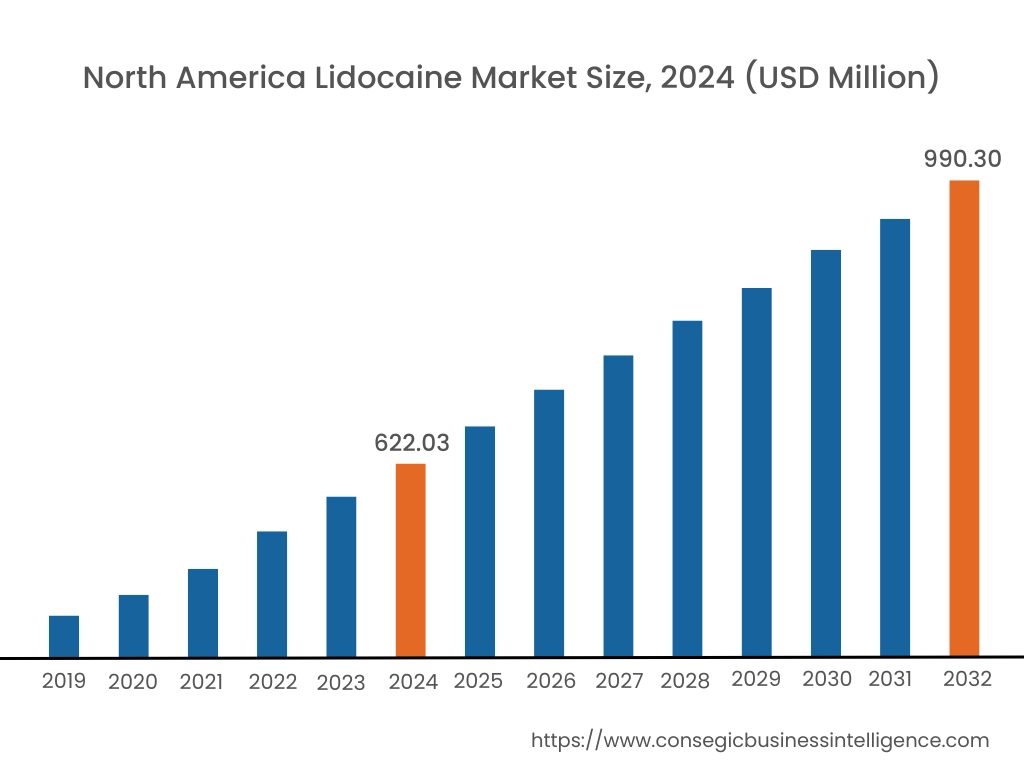
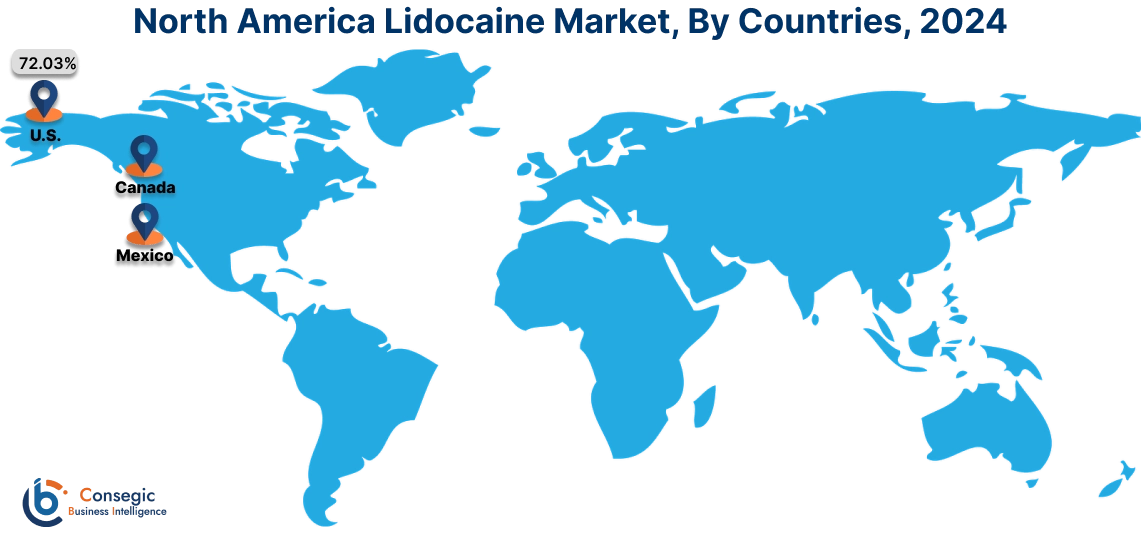
In 2024, North America accounted for the highest lidocaine market share at 39.78% and was valued at USD 622.03 Million and is expected to reach USD 990.30 Million in 2032. In North America, the U.S. accounted for the lidocaine market share of 72.03% during the base year of 2024. The North American region holds a significant position in the market, driven by several key factors. Lidocaine is widely utilized as a local anesthetic, commonly applied topically to alleviate pain and itching on the skin or administered via injection for dental procedures and minor surgeries. The US market along with the Canadian market witnesses substantial requirements due to the rising prevalence of pain-related illnesses, including chronic pain conditions, and the increasing volume of dental procedures.
- For instance, in 2023, Rapid Dose Therapeutics Corp. (RDT), a Canadian biotechnology company at the forefront of innovative drug delivery solutions, introduced two innovative QuickStrip dental products in the Canadian market. These include LQS, a Lidocaine thin film designed for professional use as a topical anesthetic to enhance patient comfort during dental procedures, particularly where injections are required. Additionally, XyliStrip, an oral dissolving thin film strip, is formulated to address the symptoms of dry mouth (xerostomia).
Furthermore, anesthetics requirement for cosmetic procedures, which often require the use of local anesthetics, contributes to the lidocaine market across the region. However, the market is impacted by occasional supply chain disruptions, leading to shortages in availability.
In Asia Pacific, the lidocaine industry is experiencing the fastest growth with a CAGR of 7.3% over the forecast period. This significant trajectory is primarily driven by several key factors. One of the key factors is the rapidly expanding population and an increasing middle class, in turn leading to increased healthcare expenditure and improved access to healthcare services. Additionally, the prevalence of chronic diseases, such as diabetes, cardiovascular diseases, and arthritis, is steadily rising across the region, driving the need for effective pain management solutions. Furthermore, the expanding healthcare infrastructure, including the development of modern hospitals and clinics, coupled with the increasing adoption of minimally invasive surgical techniques, is further fueling the lidocaine market trend in this region in the upcoming years.
The European region contributes significantly in terms of revenue in the lidocaine market analysis. It has a well-established pharmaceutical industry, and is poised for steady growth in the lidocaine market demand. This trajectory is supported by several key factors. The region experiences a significant increase in the elderly population, leading to a higher incidence of chronic pain conditions requiring effective pain management solutions. Moreover, advancements in pain management techniques, coupled with a strong emphasis on improving patient outcomes, are driving the requirement for safe and effective analgesics. Furthermore, the region witnesses a significant requirement for lidocaine in various surgical procedures and dental treatments, further contributing to the overall trajectory of the lidocaine market trend within Europe.
The Middle East and Africa region is expected to witness moderate growth in the market. This trajectory is driven by factors, including increasing healthcare infrastructure development, due to the construction of new hospitals and clinics across the region. Additionally, the growing incidence of chronic diseases such as diabetes and cardiovascular diseases is creating a growing need for pain management solutions. Moreover, the increasing awareness and need for effective pain management strategies are contributing to the trajectory of the lidocaine market size in this region. However, challenges such as limited healthcare access in certain regions, particularly in rural areas, and economic constraints within some countries may moderate market growth. For instance, a World Bank report from 2021 highlighted that while healthcare spending in the Middle East and Africa region is increasing but remains relatively low compared to other regions globally. These factors pose challenges to the widespread adoption and accessibility of this local anesthetic across the entire region.
Latin America is one of the emerging regions, experiencing moderate growth in the global market. The increasing prevalence of chronic pain conditions across the region requires the use of effective pain management solutions, with this local anesthetic playing a vital role. Additionally, the rising number of surgical procedures, fueled by growing healthcare infrastructure, further boosts the requirement for anesthetics like Lidocaine. While generic competition and regulatory hurdles pose challenges, opportunities in the form of innovative formulations are expanding market reach, and strategic partnerships with manufacturers. The market is projected to experience steady growth in the coming years, with key players including multinational pharmaceutical companies and regional players vying for market place. As the region's healthcare sector continues to evolve, the Latin American market is expected to play a vital role in improving patient outcomes and addressing the growing healthcare needs of the population.
Top Key Players and Market Share Insights:
The global Lidocaine Market is highly competitive with major players providing products to the national and international markets. Key players are adopting several strategies in research and development (R&D) and product innovation to hold a strong position in the global lidocaine market. Key players in the lidocaine industry include-
- Medline Industries, Inc. (U.S.)
- SCILEX Pharmaceuticals, Inc. (U.S.)
- Sparsha Pharma International Pvt Ltd (India)
- Yaral Pharma Inc. (U.S.)
- Amneal Pharmaceuticals LLC (U.S.)
- Teva Pharmaceuticals (U.S.)
- Hisamitsu Pharmaceutical Co., Inc. (Japan)
- Teikoku Pharma USA, Inc. (U.S.)
- Actavis Labs UT Inc. (U.S.)
- AdvaCare Pharma (U.S.)
- Strides Pharma Inc. (India)
Recent Industry Developments :
Product Approval:
- In 2024, Zydus Lifesciences announced that it had received final approval from the U.S. Food and Drug Administration (USFDA) to manufacture and market Lidocaine and Prilocaine Cream USP, 2.5%/2.5%.
Product Launch:
- In 2024, Imbed Biosciences received U.S. Food and Drug Administration 510(k) clearance to market Microlyte Ag/Lidocaine, marking a significant milestone. This innovative wound dressing is the first of its kind to integrate lidocaine, a local anesthetic, for the management of pain associated with various skin wounds.
- In 2023, Rapid Dose Therapeutics Corp. (RDT), a Canadian biotechnology company at the forefront of innovative drug delivery solutions, introduced two innovative QuickStrip dental products in the Canadian market. These include LQS, a Lidocaine thin film designed for professional use as a topical anesthetic to enhance patient comfort during dental procedures, particularly where injections are required. Additionally, XyliStrip, an oral dissolving thin film strip, is formulated to address the symptoms of dry mouth (xerostomia).
Lidocaine Market Report Insights :
| Report Attributes | Report Details |
| Study Timeline | 2019-2032 |
| Market Size in 2032 | USD 2,587.81 Million |
| CAGR (2025-2032) | 6.5% |
| By Formulation |
|
| By Application |
|
| By Distribution Channel |
|
| By Region |
|
| Key Players |
|
| North America | U.S. Canada Mexico |
| Europe | U.K. Germany France Spain Italy Russia Benelux Rest of Europe |
| APAC | China South Korea Japan India Australia ASEAN Rest of Asia-Pacific |
| Middle East and Africa | GCC Turkey South Africa Rest of MEA |
| LATAM | Brazil Argentina Chile Rest of LATAM |
| Report Coverage |
|
Key Questions Answered in the Report
How big is the Lidocaine Market? −
In 2024, the Lidocaine Market is USD 1,563.67 Million.
Which is the fastest-growing region in the Lidocaine Market? +
Asia Pacific is the fastest-growing region in the Lidocaine Market.
What specific segmentation details are covered in the Lidocaine Market? +
Formulation, Application and Distribution Channel segmentation details are covered in the Lidocaine Market
Who are the major players in the Lidocaine Market? +
Medline Industries, Inc. (U.S.), SCILEX Pharmaceuticals, Inc. (U.S.), Hisamitsu Pharmaceutical Co., Inc. (Japan), Teikoku Pharma USA, Inc. (U.S.) amongst others.
Overview
Reputation & Certifications


Our Services
- Market Intelligence & Forecasting
- Custom Research Solutions
- Market Entry Strategy
- Competitive Intelligence
- Customer Insights
- Industry Innovation Analysis
- Investment Advisory