Jump to Content
Oral Thrush Market - Size, Share, Industry Trends, and Forecasts (2025 - 2032)
Oral Thrush Market Size:
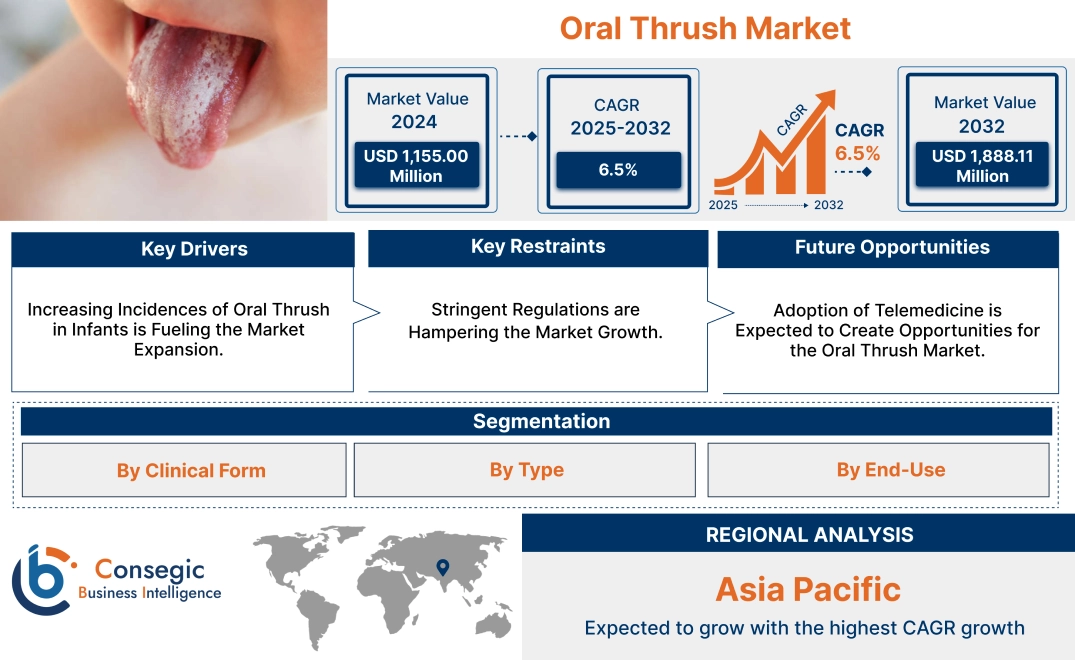
Oral Thrush Market size is growing with a CAGR of 6.5% during the forecast period (2025-2032), and the market is projected to be valued at USD 1,888.11 Million by 2032 from USD 1,155.00 Million in 2024.
Oral Thrush Market Scope & Overview:
Oral thrush, also known as oral candidiasis, is a fungal infection in the mouth caused by the yeast Candida. While Candida albicans is the most frequently identified pathogen, other species such as Nakaseomyces glabratus and Candida tropicalis, are also recognized as causative agents of this infection. The condition causes creamy white patches or spots, usually on the tongue and inner cheeks. In some instances, the infection spreads to other areas of the oral cavity, including the roof of the mouth, gums, tonsils, and even the back of the throat. Other symptoms include redness and soreness in the mouth, loss of taste, and a burning sensation. There are several clinical forms of oral candidiasis including pseudomembranous candidiasis, hyperplastic candidiasis, erythematous candidiasis, and others. Several treatment options including topical antifungal medications, systemic antifungal medications, and others help alleviate symptoms of this condition.
Oral Thrush Market Dynamics - (DRO) :
Key Drivers:
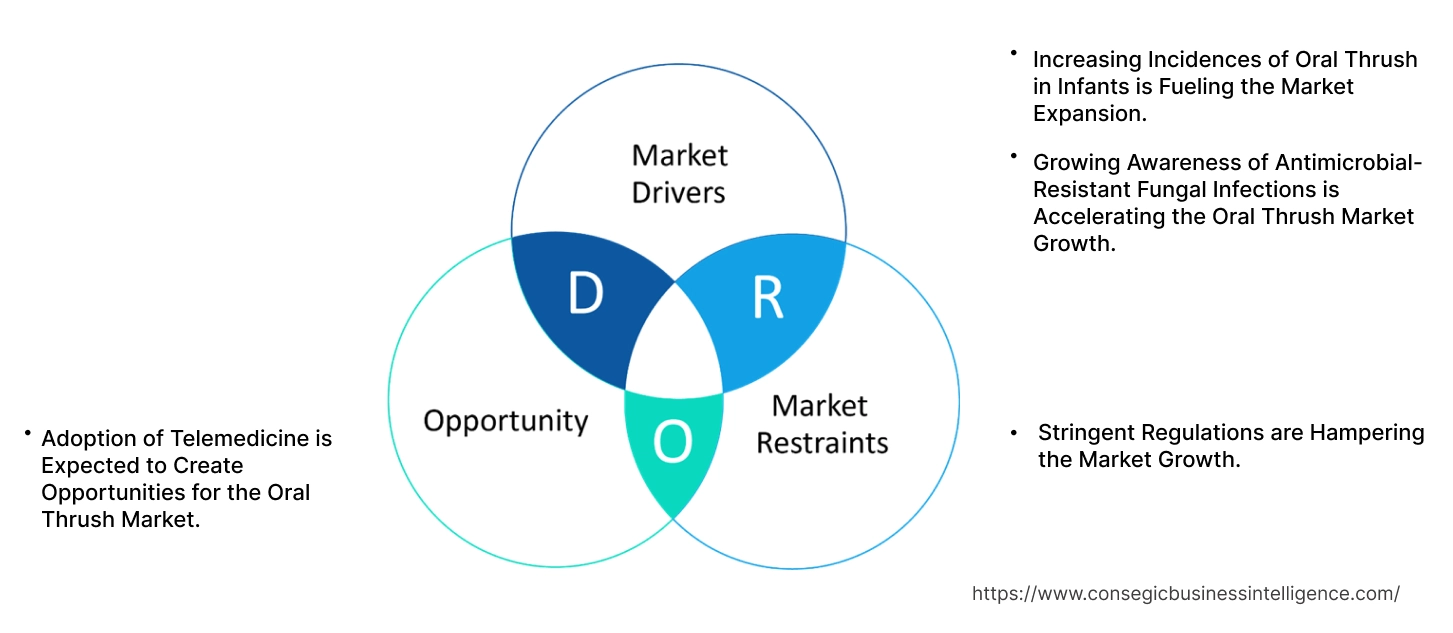
Increasing Incidences of Oral Thrush in Infants is Fueling the Market Expansion.
Oral thrush most commonly affects babies under 6 months old making infants the age group most susceptible to this infection. Infants have immature immune systems that are still developing their defenses against infections. This makes them particularly susceptible to fungal overgrowth, including Candida albicans, the most common cause of oral candidiasis. Additionally, the use of antibiotics in infants, often to treat bacterial infections, disrupt the natural balance of microorganisms in the mouth. This allows Candida to overgrow, leading to an increased risk of oral candidiasis. These factors make infants highly susceptible to oral candidiasis.
- For instance, according to the data published by the British Dental Journal in October 2023, it is stated that oral thrush affects 5% of newborns, increasing to 14% by the fourth week of life.
Overall, the high susceptibility of infants to oral candidiasis due to immature immune systems and antibiotic use is significantly driving oral thrush market expansion.
Growing Awareness of Antimicrobial-Resistant Fungal Infections is Accelerating the Oral Thrush Market Growth.
The growing awareness of antimicrobial-resistant fungal infections in healthcare facilities is a significant driver of the oral thrush market growth. The emergence of drug-resistant fungi like Candida auris has increased vigilance among healthcare providers. This heightened awareness leads to more proactive diagnosis and treatment of oral candidiasis, even in cases with milder symptoms, to prevent potential complications and the spread of resistant strains.
- For instance, according to the data published by the U.S. Department of Health & Human Services in March 2023, it is stated that in the U.S. clinical cases of Candida auris rose from 476 in 2019 to 1,471 in 2021. Screening cases tripled from 2020 to 2021, for a total of 4,041. Screening is important to prevent the spread by identifying patients carrying the fungus so that infection prevention controls are used.
Healthcare facilities are implementing stricter infection control measures to curb the spread of drug-resistant fungi. These measures contribute to a reduction in the incidence of oral candidiasis. Additionally, the need to combat drug-resistant fungi is driving research and development of new antifungal medications with novel mechanisms of action offering improved treatment options for oral candidiasis. Overall, the escalating awareness of antimicrobial-resistant fungal infections contributes to a significant oral thrush market expansion.
Key Restraints:
Stringent Regulations are Hampering the Market Growth.
The oral thrush market is subject to stringent regulations aimed at ensuring patient safety. The regulations present significant constraints for pharmaceutical companies. One major factor is the lengthy and complex drug development process. Clinical trials are rigorous and time-consuming, requiring substantial investment and resources. This, coupled with stringent regulatory hurdles, delays the approval process, hindering the timely introduction of new medications.
Furthermore, post-market survey and safety monitoring requirements add to the regulatory burden. Companies must continuously monitor the safety and efficacy of their products, which becomes costly and resource-intensive, especially for smaller players. Compliance with these regulations is particularly difficult for smaller companies and startups. The rigorous regulatory environment also hinders innovation within the industry, as companies are hesitant to invest in risky or unconventional approaches due to the high cost of failure. Overall, the regulations delay product approvals, increase costs, and limit profitability, especially for smaller companies further hampering the market growth.
Future Opportunities :
Adoption of Telemedicine is Expected to Create Opportunities for the Oral Thrush Market.
Telemedicine is the provision of health care services by all medical practitioners employing information and communications technology for the exchange of reliable information for the diagnosis, treatment, and prevention of diseases and injuries. It serves as the process of distributing medical care to patients across a long distance. The adoption of telemedicine offers several key advantages in the context of oral candidiasis diagnosis and treatment prescriptions.
Telemedicine improves access to healthcare, especially for individuals in remote areas or those with limited mobility. This increased access supports earlier diagnosis and treatment of oral candidiasis. Additionally, it allows healthcare providers to remotely assess patients, discuss symptoms, and provide initial treatment recommendations. This is particularly beneficial for conditions like oral candidiasis, which often require ongoing monitoring and management.
- For instance, in June 2024, Apollo Telehealth announced the launch of a telemedicine-driven primary health center in Borobeka, Manipur, India. This initiative aims to improve healthcare access for communities offering specialized teleconsultations for several fields including general medicine for oral candidiasis.
Overall, the burgeoning adoption of telemedicine is poised to create substantial oral thrush market opportunities by improving healthcare access and enhancing oral candidiasis management.
Oral Thrush Market Segmental Analysis :
By Clinical Form:
Based on clinical form, the market is categorized into pseudomembranous candidiasis, hyperplastic candidiasis, erythematous candidiasis, and others.
Trends in the Clinical Form:
- Increased focus on preventative measures in immunocompromised individuals, to reduce the incidence and severity of pseudomembranous candidiasis.
- Growing recognition of denture-related stomatitis as a significant form of erythematous candidiasis led to increased focus on denture hygiene and improved denture materials to reduce the risk of infection.
The pseudomembranous candidiasis segment accounted for the largest market share in 2024.
- Pseudomembranous candidiasis represents the most prevalent form of oral thrush. Characterized by the presence of white, curd-like patches resembling cottage cheese, these lesions adhere to the oral mucosa and are readily removed. Upon removal of these patches, the underlying mucosa typically exhibits redness and may display signs of inflammation or even minor bleeding.
- Common areas affected by pseudomembranous candidiasis include the tongue, buccal mucosa, hard & soft palate, and oropharynx. This form of oral candidiasis is frequently observed in immunocompromised individuals.
- The trajectory of the pseudomembranous candidiasis segment within the market is driven by several key factors. The increasing prevalence of chronic diseases such as diabetes, HIV/AIDS, and cancer, coupled with the widespread use of immunosuppressive medications, significantly increases the susceptibility of individuals to fungal infections like pseudomembranous candidiasis.
- For instance, according to the data published by the Journal BMC Infectious Diseases in May 2024, based on the analysis of oral candidiasis in patients with HIV infection, it is found that Pseudomembranous candidiasis was the most common clinical manifestation with 91.6% of cases.
- The widespread use of antibiotics disrupts the delicate balance of the oral microbiome, allowing Candida albicans, the fungus responsible for oral candidiasis, to overgrow.
- Overall, as per oral thrush market analysis, the aforementioned factors collectively contribute to the significant prevalence of pseudomembranous candidiasis.
The erythematous candidiasis segment is expected to grow at the fastest CAGR over the forecast period.
- Erythematous candidiasis is a type of oral candidiasis that causes red, raw-looking lesions in the mouth. It manifests in both acute and chronic forms.
- While often asymptomatic, some individuals experience burning sensations or discomfort within the affected areas.
- Erythematous candidiasis encompasses a spectrum of clinical presentations. Acute atrophic candidiasis presents as erythematous patches that arise spontaneously or after the resolution of pseudomembranous candidiasis.
- Chronic atrophic candidiasis, commonly associated with denture wear manifests as erythema and edema beneath dentures due to occlusion and reduced salivary flow.
- Median rhomboid glossitis, an uncommon presentation, appears as rhomboid-shaped red patches on the central tongue, often observed in smokers and those using inhaled corticosteroids.
- Angular cheilitis, characterized by erythema and fissures at the corner of the mouth, arises from various factors, including bacterial or fungal infections, nutritional deficiencies, denture wear, and others.
- Overall, erythematous candidiasis encompasses a diverse range of presentations, including acute and chronic forms, with varying clinical manifestations such as median rhomboid glossitis and angular cheilitis.
By Type:
Based on type, the market is categorized into diagnosis and treatment.
Trends in type:
- The trend of increasing utilization of molecular diagnostic techniques, such as polymerase chain reaction (PCR) and DNA probes, offers a more rapid and accurate diagnosis of oral thrush compared to traditional visual examinations.
- The development of rapid, point-of-care diagnostic tests for Candida species supports improvement in accessibility and timeliness of diagnosis, particularly in primary care settings.
The treatment segment accounted for the largest oral thrush market share in the year 2024 and is expected to grow at the fastest CAGR over the forecast period.
The segment is further categorized as topical antifungal medications, systemic antifungal medications, and others.
- Oral thrush is typically treated with antifungal medications. These medications are available in various forms, including topical and systemic options. Topical treatments include nystatin, often administered as an oral suspension swished and swirled in the mouth, clotrimazole available as lozenges or topical creams/gels, and miconazole, also available as oral gels or lozenges.
- Systemic medications, such as fluconazole and itraconazole, are oral antifungals used for more severe cases of oral candidiasis.
- In most cases, oral candidiasis is effectively managed with topical antifungal ointments. However, in patients with chronic mucocutaneous candidiasis and underlying immunosuppression, topical agents prove inadequate. In such instances, systemic administration of antifungal medications becomes necessary to effectively treat the infection.
- Additionally, the development of novel antifungal medications is expected to support the effective management of oral candidiasis. Moreover, the increasing risk of the spread of antimicrobial-resistant fungal infections creates the demand for highly effective treatment options.
- For instance, according to the data published by the S. Centers for Disease Control and Prevention in July 2024, it is stated that, in the U.S., more than 2.8 million antimicrobial-resistant infections occur each year including fungal infections. This highlights the growing concern of antimicrobial resistance, and fungal infections like oral thrush creating the demand for novel treatment solutions.
- Overall, the rise of antimicrobial resistance necessitates the development of effective treatment options for oral thrush market demand.
By End Use:
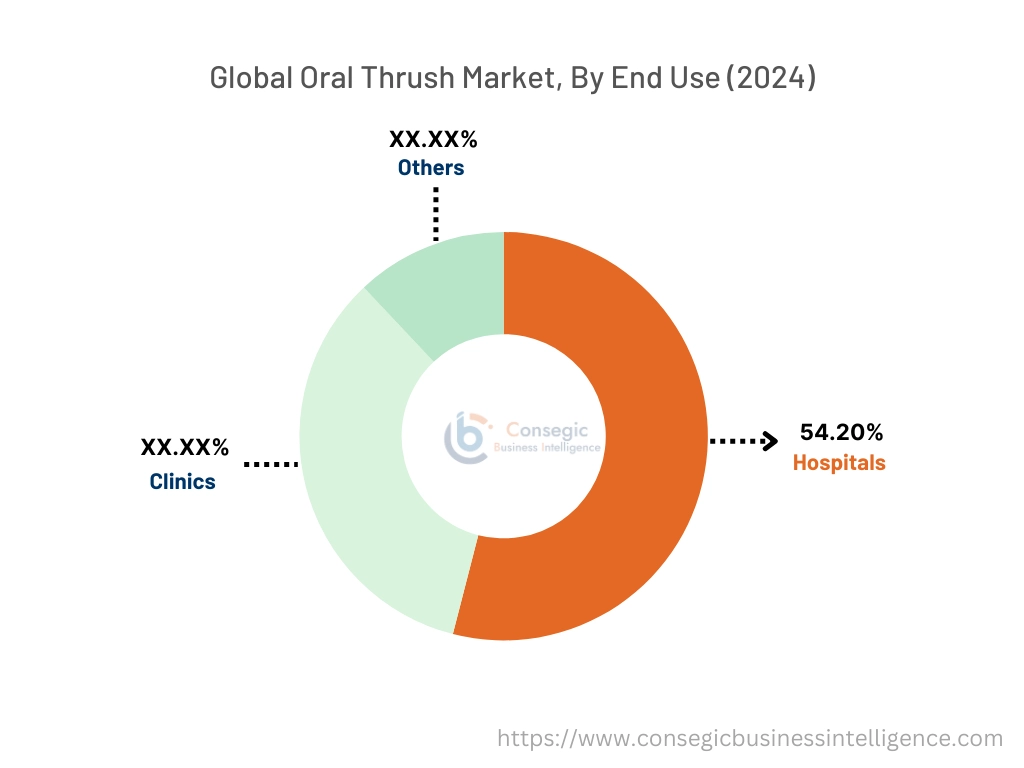
Based on end use, the market is categorized into hospitals, clinics, and others.
Trends in the End Use:
- Adoption of telemedicine services for remote diagnosis and management of the condition, especially in rural and underserved areas.
The hospitals segment accounted for the largest market share of 54.20% in the year 2024.
- Hospitals serve a crucial role as primary centers for the comprehensive treatment of oral thrush, offering a sophisticated ecosystem of medical expertise.
- They play a major and crucial role in helping patients by providing convenient, affordable, and easy access to treatment for this condition. Additionally, hospitals are equipped with state-of-the-art diagnostic techniques enabling precise diagnosis of the infection.
- Hospitals also offer the distribution of prescription medications to their patients. Additionally, growing healthcare spending is significantly contributing to the provision of effective care through hospital settings.
- Thus, hospitals are pivotal in providing comprehensive care for this condition, offering advanced diagnostics, multidisciplinary treatment, and medication distribution.
The clinics segment is expected to grow at the fastest CAGR over the forecast period.
- A clinic is a healthcare facility that primarily focuses on outpatient care. In such settings, patients receive medical treatment, consultation, or preventive care without being admitted for overnight stays.
- Clinics often specialize in particular areas and are generally more accessible than hospitals. Otolaryngology clinics offer a variety of treatments for conditions affecting the ears, nose, and throat including oral candidiasis.
- Additionally, clinics often offer a more personalized and patient-centered approach to care, with shorter waiting times and more one-on-one attention.
- Moreover, the government’s support for clinics is influencing the need for effective diagnostic and treatment solutions for oral candidiasis.
- For instance, in June 2024, Ramsay Santé a group of private clinics headquartered in Paris, announced an agreement with the government on funding of private clinics. It also specifies a multi-year agreement on tariffs for the period 2025-2027 as well as increased access for the private sector to regional funding.
- Thus, as per analysis, the significant role of clinics in healthcare delivery, coupled with government support, is driving the demand for effective solutions to manage this condition.
Regional Analysis:
The regional segment includes North America, Europe, Asia Pacific, the Middle East and Africa, and Latin America.
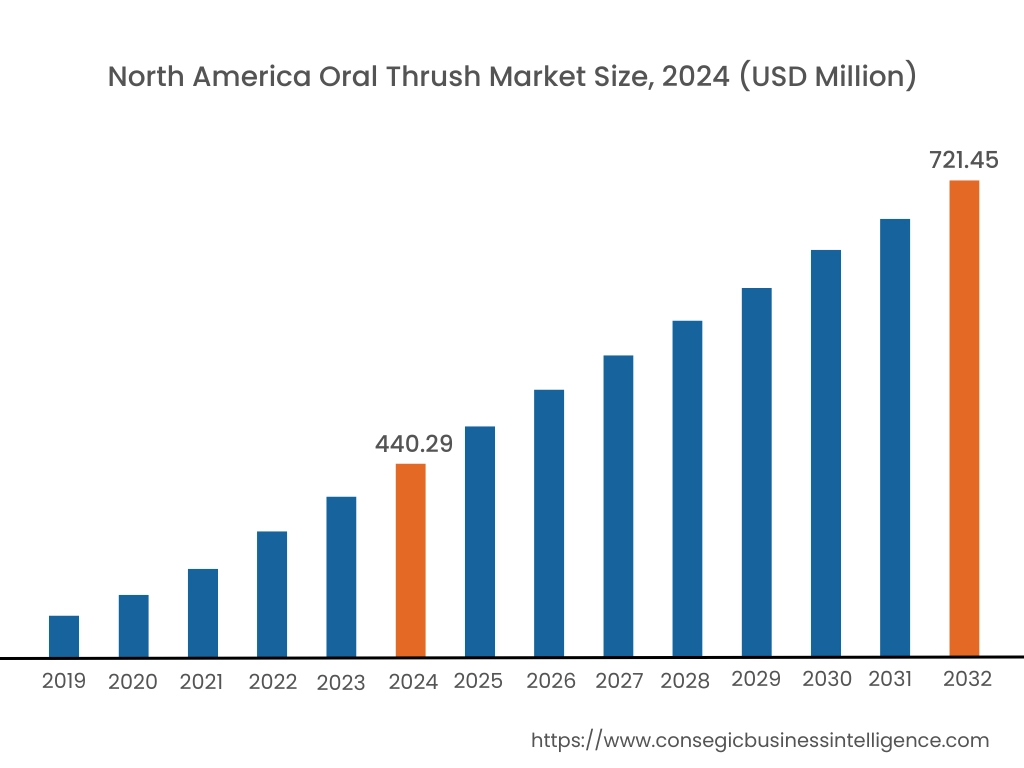
In 2024, North America accounted for the highest market share at 38.12% and was valued at USD 440.29 Million and is expected to reach USD 721.45 Million in 2032. In North America, the U.S. accounted for the highest market share of 70.13% during the base year of 2024.
North America dominates the global oral thrush market, owing to the confluence of multiple factors such as the advanced healthcare infrastructure, high prevalence of chronic diseases, and a well-established pharmaceutical industry. Additionally, North America boasts a robust healthcare infrastructure with advanced diagnostic and treatment facilities, leading to timely intervention and improved patient outcomes. Moreover, the region's favorable reimbursement policies and government initiatives such as Medicare and Medicaid provide financial support for oral candidiasis treatment, especially for vulnerable populations.
- For instance, based on the analysis published by the S. Centers for Medicare & Medicaid Services in December 2024, Medicare spending grew 8.1% to USD 1,029.8 billion in 2023 or 21% of total national healthcare (NHE) spending in the U.S. Medicaid spending grew 7.9% to USD 871.7 billion in 2023 or 18% of total NHE. Medicare provides health coverage for senior citizens, while Medicaid covers health care costs for people with low incomes.
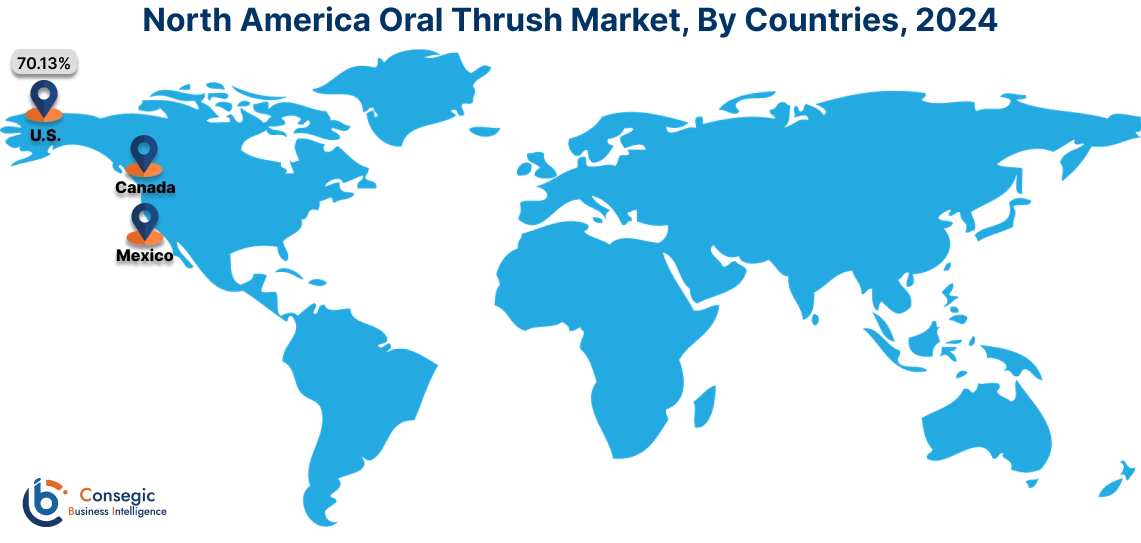
Furthermore, significant investments in research and development are fueling the development of novel treatment solutions and preventive strategies for oral thrush that aim to improve patient outcomes and reduce the burden of this condition. The combination of the aforementioned factors and trends is driving substantial growth in the North American market.
Asia Pacific is experiencing the fastest growth with a CAGR of 6.9% over the forecast period. The oral thrush market trend across the region is attributed to a rapidly growing population, creating a larger patient population susceptible to the infection. Furthermore, the increasing prevalence of chronic diseases such as diabetes, and cancer, coupled with a growing elderly population, significantly increases susceptibility to infections such as oral thrush. Ongoing advancements in healthcare infrastructure, including enhanced access to healthcare facilities and improved diagnostic capabilities, are contributing to better disease detection and management across the region. Rising disposable incomes and increased healthcare expenditure are enabling greater access to healthcare services, including antifungal medications and diagnostic tests. Furthermore, increasing awareness of oral health and hygiene practices is facilitating earlier diagnosis and treatment of oral candidiasis further boosting the Asia Pacific market.
Europe presents a significant contribution to the oral thrush market analysis. Europe boasts a robust healthcare system with advanced infrastructure, including well-equipped hospitals and clinics, ensuring timely diagnosis and treatment of oral candidiasis. Additionally, many European countries have strong public healthcare systems that provide access to quality healthcare services, including those for oral candidiasis further propelling the market. Moreover, strong public health initiatives and high awareness among the population regarding oral health contribute to early detection and prompt treatment of oral candidiasis. Moreover, Europe presents a strong pharmaceutical industry with a robust research and development pipeline, leading to advancements in antifungal medications and diagnostic tools. Overall, as per analysis, the combination of accessible primary care, strong public healthcare systems, and advanced diagnostic facilities contributes to the effective management of this condition in Europe, ultimately driving the market trend.
The Middle East and Africa (MEA) region is witnessing notable oral thrush market trends. The growing healthcare sector in the Middle East is playing a pivotal role in demand. Many countries in the MEA region are investing in developing their healthcare infrastructure with advanced diagnostic and treatment facilities. This includes building hospitals, and clinics, and improving access to diagnostic tools which are essential for detecting this infection. The combined impact of these factors is creating a favorable environment for the trajectory of the oral thrush market opportunities in the MEA region.
Latin America is an emerging region in the oral thrush market share, with significant potential for innovation. The combination of the increasing prevalence of chronic disorders, government support, and rising disposable income is driving the significant growth of the oral thrush market demand in Latin America. The region encompasses a mix of public and private healthcare systems, with varying levels of access and affordability. This diversity impacts the availability and utilization of diagnostic and treatment options. The growing middle class in several Latin American countries has led to increased healthcare spending and demand for quality treatments, including those for oral candidiasis. These factors collectively present a promising factor for healthcare providers and pharmaceutical companies’ manufacturers to develop and deliver innovative solutions to address the needs of individuals with this condition in Latin America.
Top Key Players and Market Share Insights:
The Oral Thrush market is highly competitive with major players providing precise products to the national and international markets. Key players are adopting several strategies in research and development (R&D) and product innovation to hold a strong position in the global Oral Thrush market. Key players in the Oral Thrush industry include-
- Teva Pharmaceuticals (Israel)
- Galt Pharmaceuticals, LLC (U.S.)
- SiNi Pharma Pvt Ltd (India)
- Janssen Pharmaceuticals Pvt Ltd. (U.S.)
- ICPA Health Products Limited (India)
- AdvaCare Pharma (U.S.)
- Centurion Healthcare (India)
- Pfizer (U.S.)
- Bristol Laboratories Ltd (UK)
- Glenmark Pharmaceuticals Inc. (India)
Oral Thrush Market Report Insights :
| Report Attributes | Report Details |
| Study Timeline | 2019-2032 |
| Market Size in 2032 | USD 1,888.11 Million |
| CAGR (2025-2032) | 6.5% |
| By Clinical Form |
|
| By Type |
|
| By End User |
|
| By Region |
|
| Key Players |
|
| North America | U.S. Canada Mexico |
| Europe | U.K. Germany France Spain Italy Russia Benelux Rest of Europe |
| APAC | China South Korea Japan India Australia ASEAN Rest of Asia-Pacific |
| Middle East and Africa | GCC Turkey South Africa Rest of MEA |
| LATAM | Brazil Argentina Chile Rest of LATAM |
| Report Coverage |
|
Key Questions Answered in the Report
How big is the Oral Thrush market? −
In 2024, the Oral Thrush market is USD 1,155.00 Million.
Which is the fastest-growing region in the Oral Thrush market? +
Asia Pacific is the fastest-growing region in the Oral Thrush market.
What specific segmentation details are covered in the Oral Thrush market? +
Clinical Form, Type, and End Use segmentation details are covered in the Oral Thrush market.
Who are the major players in the Oral Thrush market? +
Teva Pharmaceuticals (Israel), Galt Pharmaceuticals, LLC (U.S.), and AdvaCare Pharma (U.S.) are some of the major players in the market.
Overview
Reputation & Certifications


Our Services
- Market Intelligence & Forecasting
- Custom Research Solutions
- Market Entry Strategy
- Competitive Intelligence
- Customer Insights
- Industry Innovation Analysis
- Investment Advisory