Jump to Content
Patellar Tendinitis Market - Size, Share, Industry Trends, and Forecasts (2025-2032)
Patellar Tendinitis Market Size:
Patellar Tendinitis Market size is growing with a CAGR of 9.5% during the forecast period (2025-2032), and the market is projected to be valued at USD 152,007.35 Million by 2032 from USD 74,053.60 Million in 2024.
Patellar Tendinitis Market Scope & Overview:
Patellar tendinitis, also known as jumper's knee, is an overuse injury that affects the tendon. This tendon, crucial for extending the knee, becomes inflamed due to repetitive stress, often from activities involving jumping, running, or changing directions. This repetitive stress leads to tiny tears within the tendon, causing pain, tenderness, and sometimes even stiffness. Athletes involved in sports like basketball, volleyball, and track and field are particularly susceptible to this condition.
The market encompasses various diagnostic approaches, including X-rays, ultrasounds, MRIs, and other techniques. Treatment modalities span a wide range, from medications like non-steroidal anti-inflammatory drugs (NSAIDs) and corticosteroids among others to physical therapy, surgical procedures, support devices, and emerging regenerative therapies among others. End-users of these products and services include hospitals, specialized clinics, rehabilitation centers, and homecare settings among others.
How is AI impacting the Patellar Tendinitis Market?:
AI algorithms have the ability to analyze medical images (such as MRIs) to detect and classify cartilage lesions, meniscal tears, and even assess tendon healing. Additionally, AI analyzes movement patterns, strength, and other relevant data to create customized rehabilitation programs for patellar tendinitis. Further, AI helps to provide personalized and effective rehabilitation strategies for athletes and individuals with patellar tendinitis.

Patellar Tendinitis Market Dynamics - (DRO) :
Key Drivers:
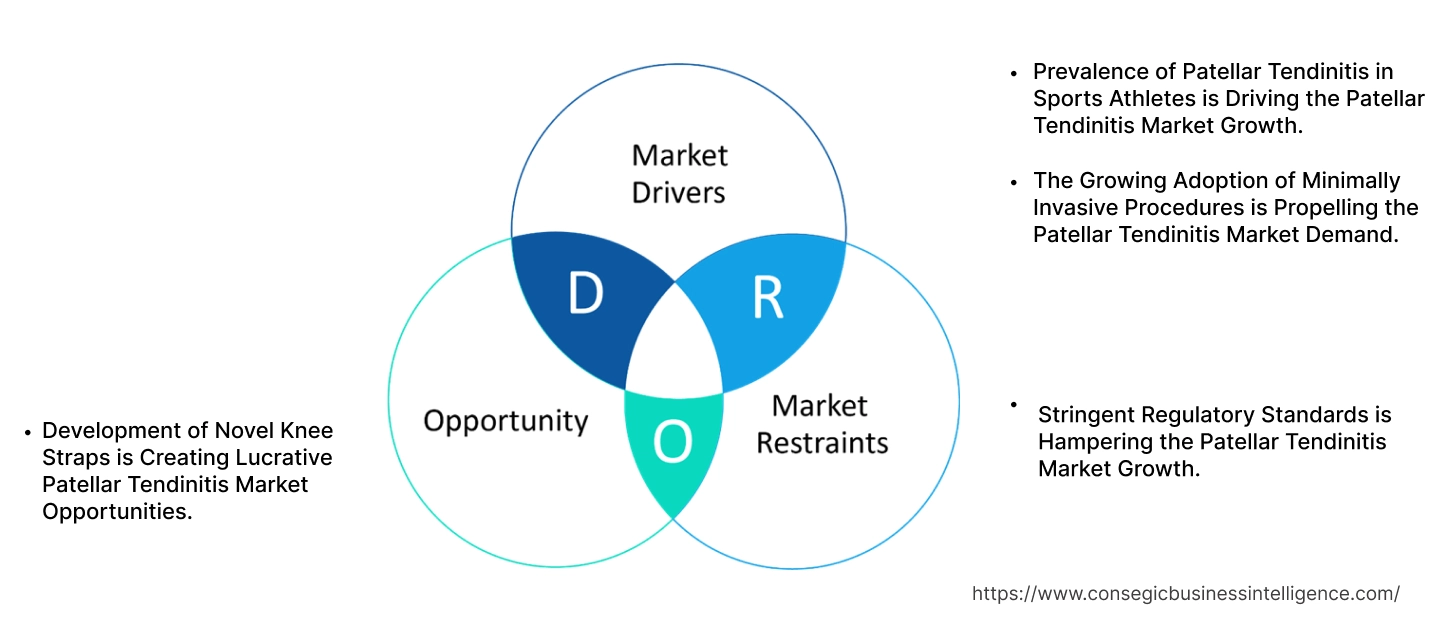
Prevalence of Patellar Tendinitis in Sports Athletes is Driving the Patellar Tendinitis Market Growth.
The high prevalence of patellar tendinitis among athletes plays a crucial role in driving market development within sports medicine and related products. This injury, often referred to as a jumper's knee, is particularly common in athletes participating in activities that require repetitive jumping and running. Sports such as basketball, volleyball, and track and field have a significant number of athletes affected by this condition due to the high impact and stress these activities place on the knee joint.
- According to the article published in the Archives of Orthopedic and Trauma Surgery Journal, states that the prevalence of jumper’s knee in professional volleyball and basketball players are 45% and 32%, whereas the prevalence of this this condition in other players in 14.2%.
The continual strain on the patellar tendon during these dynamic movements that lead to inflammation, pain, and in severe cases, reduced athletic performance. Overall, this high prevalence of patellar tendinitis among athletes in these sports creates a significant demand for effective diagnosis, treatment, and rehabilitation strategies, thereby driving significant development within the market.
The Growing Adoption of Minimally Invasive Procedures is Propelling the Patellar Tendinitis Market Demand.
The growing adoption of minimally invasive procedures is significantly propelling the market. Advancements in surgical techniques and technologies have led to a shift towards less invasive approaches for the treatment of various orthopedic conditions, including jumper’s knee. Minimally invasive procedures, such as arthroscopy, offer numerous advantages over traditional open surgeries, including reduced pain, faster recovery times, and improved cosmetic outcomes. Additionally, the adoption of arthroscopy has shown a positive success rate.
- According to the article published by the National Library of Medicine, in August 2023, studies have shown that arthroscopic surgery which is a minimally invasive procedure demonstrates a high success rate in the treatment of jumper's knee, with reports indicating success rates of approximately 91% in achieving pain relief and improved function.
Overall, this shift towards minimally invasive techniques is driving the requirement for specialized surgical instruments, advanced imaging technologies, and rehabilitation services, thereby contributing to substantial patellar tendinitis market expansion.
Key Restraints:
Stringent Regulatory Standards is Hampering the Patellar Tendinitis Market Growth.
Stringent regulatory standards imposed by government bodies worldwide pose significant constraints in the Patellar Tendinitis market. These regulations, designed to protect the environment and public health, increase production costs and slow down product development. The development and approval of new medical devices, such as advanced implants or regenerative therapies, often require rigorous testing and extensive clinical trials to demonstrate safety and efficacy. These regulatory hurdles are time-consuming and expensive, delaying market entry and potentially hindering the availability of innovative treatments to patients. Furthermore, variations in regulatory requirements across different regions create hurdles for companies seeking global market access, further complicating the regulatory landscape.
These regulations also result in significant disruptions to traditional industry supply chains and loss of current raw materials uses. Moreover, evolving federal regulations accelerate annual compliance and operating costs throughout medical device industry supply chains. Thus, these stringent standards, while crucial for patient safety, significantly impact the speed of innovation and the overall patellar tendinitis market expansion.
Future Opportunities :
Development of Novel Knee Straps is Creating Lucrative Patellar Tendinitis Market Opportunities.
The development of novel knee straps is creating lucrative opportunities within the market. Traditional knee braces often provide limited support and are uncomfortable during athletic activity. However, advancements in materials science and biomechanics have led to the development of innovative knee straps with enhanced features. Advanced straps allow for increased comfort and reduced skin irritation during prolonged wear. They provide targeted support to the patellar tendon and surrounding structures, reducing stress and improving stability. Manufacturers are developing novel knee straps that offer maximum comfort.
- In 2024, Longym introduced Patella Tendon Knee Strap, that is designed to provide targeted support and relief for individuals experiencing jumper's knee. The strap utilizes innovative design elements, such as a bionic principal double-layer silicone spacer, to mimic a shiatsu massage effect. This gentle massage-like action helps to reduce joint strain, enhance stability, and alleviate pain associated with patellar tendinitis.
Overall, these innovative knee straps offer significant advantages over traditional braces, improving patient comfort, enhancing treatment efficacy, and potentially reducing the risk of re-injury. This surge in innovation within knee strap technology is expected to create significant global patellar tendinitis market opportunities.
Patellar Tendinitis Market Segmental Analysis :
By Type:
Based on type, the market is categorized into diagnosis and treatment.
Trends in the Type:
- Rising trends of NSAIDs for pain management.
- The rise in regenerative therapies to promote tendon healing
The treatment segment accounted for the largest market share in 2024 and is expected to grow at the fastest CAGR over the forecast period.
The treatment segment is further classified into medications, physical therapy, surgical procedures, support devices, regenerative therapies and others.
- Treatment for jumper's knee primarily focuses on alleviating pain, reducing inflammation, and facilitating tissue healing.
- Physical therapy plays a pivotal role, incorporating exercises designed to strengthen the quadriceps and hamstring muscles, enhance flexibility, and improve overall knee stability.
- Non-steroidal anti-inflammatory drugs (NSAIDs) are utilized to mitigate pain and inflammation.
- Support devices, such as knee braces and straps, can provide valuable support during physical activity, reducing stress on the patellar tendon and enhancing stability.
- Regenerative therapies, such as platelet-rich plasma (PRP) injections or stem cell therapy, are emerging treatment options that aim to stimulate the body's natural healing processes.
- These therapies involve injecting concentrated growth factors or stem cells into the injured area to promote tissue repair and regeneration. Various clinics offer novel solutions for pain relief.
- For instance, in October 2024, Pain Free Lives, a leading provider of innovative pain relief therapies, opened a specialized clinic in Brooklyn. This clinic has significant implications for individuals suffering from conditions like jumper's knee, offering them convenient access to novel pain management techniques, including advanced physical therapy modalities, regenerative medicine options, and expert guidance from experienced pain specialists.
- Thus, based on the market analysis, the aforementioned factors are influencing the patellar tendinitis market trends in the coming years.
By End User:
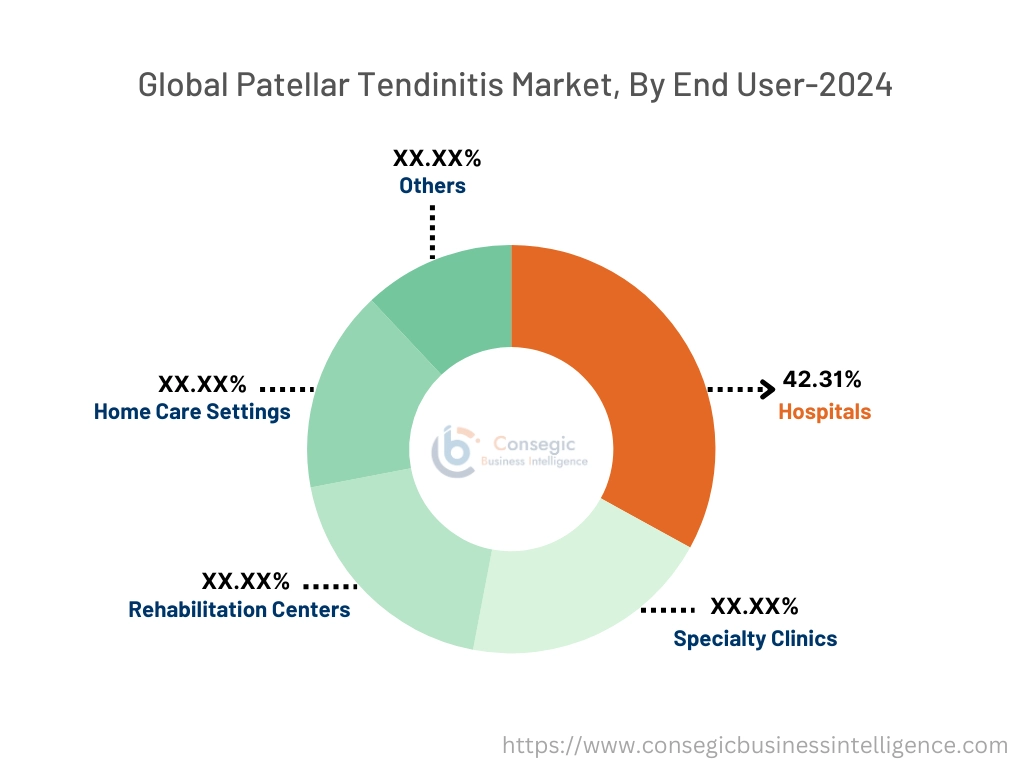
Based on end-users, the market is categorized into hospitals, specialty clinics, rehabilitation centers, home care settings, and others.
Trends in the End User:
- Increasing availability of multidisciplinary approaches combined physical therapy and pharmacological solutions.
- High focus on athletes and physically active individuals with customized rehabilitation programs.
The hospital segment accounted for the largest market share of 42.31% in the year 2024.
- In hospitals, doctors start diagnosing patellar tendinitis by looking closely at the patient's condition. They take a detailed medical history and perform a physical exam to check the patient's movement, tenderness, and swelling. Imaging tests are often part of this process.
- Patients work with skilled therapists on a customized exercise program that includes strength training, flexibility, and balance exercises.
- Procedures like ultrasound-guided corticosteroid injections or platelet-rich plasma (PRP) injections are done in the hospital.
- In severe cases, doctors perform arthroscopic surgery to clean up the injured tendon or fix other related problems.
- New orthopedic hospitals and facilities are introduced to offer advanced diagnosis and treatment for conditions such as jumper’s knee.
- For instance, in 2024, West Virginia achieved a significant milestone in healthcare with the official opening of its first dedicated orthopedic hospital in Charleston. It represents a significant advancement in healthcare access for residents suffering from conditions like jumper's knee. This new facility will provide enhanced access to specialized orthopedic surgeons, state-of-the-art diagnostic equipment (like MRI and ultrasound), and advanced treatment options, including minimally invasive surgeries, physical therapy, and access to cutting-edge rehabilitation programs.
- Thus, based on the market analysis, the rise in the diagnosis and treatment solutions offered by hospitals is influencing the patellar tendinitis market trends.
The home care settings segment is expected to grow at the fastest CAGR over the forecast period.
- Homecare settings play a crucial role in the management of a jumper’s knee.
- This involves a significant emphasis on self-care and adherence to a home exercise program.
- Physical therapy exercises, such as eccentric loading exercises (like lowering from a jump), hamstring strengthening, and flexibility exercises, are typically prescribed by healthcare professionals and performed at home.
- Patients are instructed on proper exercise techniques and encouraged to maintain regular activity.
- Homecare also involves the application of cold therapy (ice packs) to reduce inflammation and pain.
- Over-the-counter pain relievers, such as non-steroidal anti-inflammatory drugs (NSAIDs), are taken as directed by a healthcare professional.
- Support devices, such as knee braces or straps, are worn at home and during physical activity to provide support and reduce stress on the tendon.
- Overall, homecare settings also emphasize patient education on the importance of rest, activity modification, and proper self-care to facilitate optimal recovery and prevent re-injury.
Regional Analysis:
The regional segment includes North America, Europe, Asia Pacific, the Middle East and Africa, and Latin America.
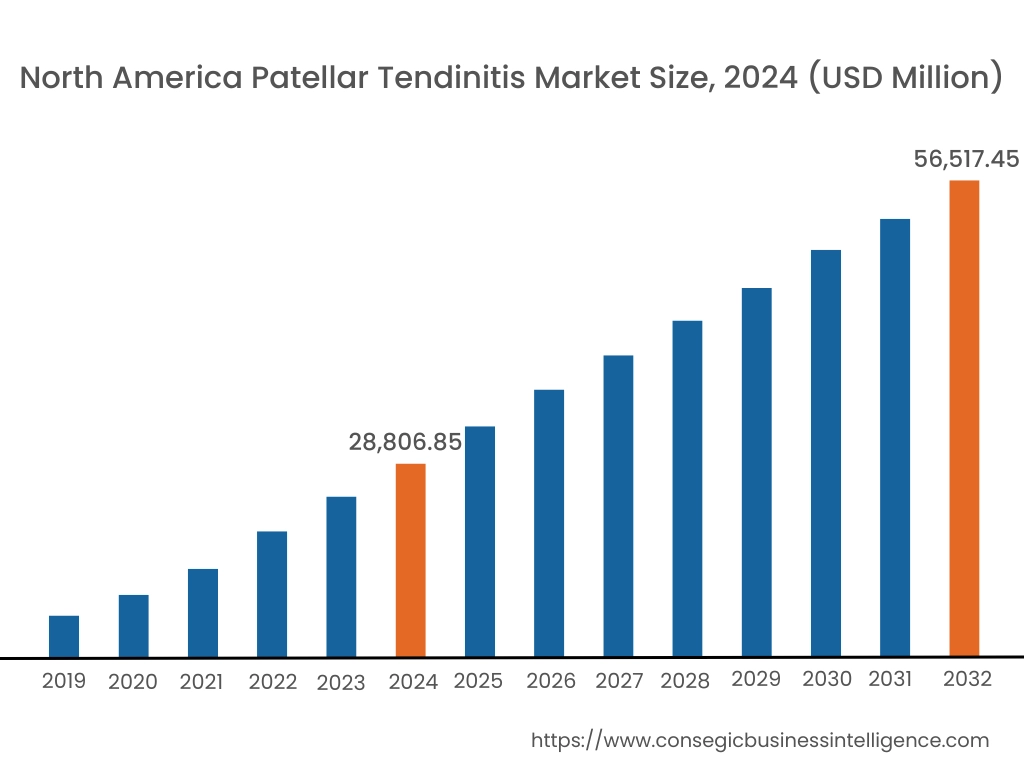
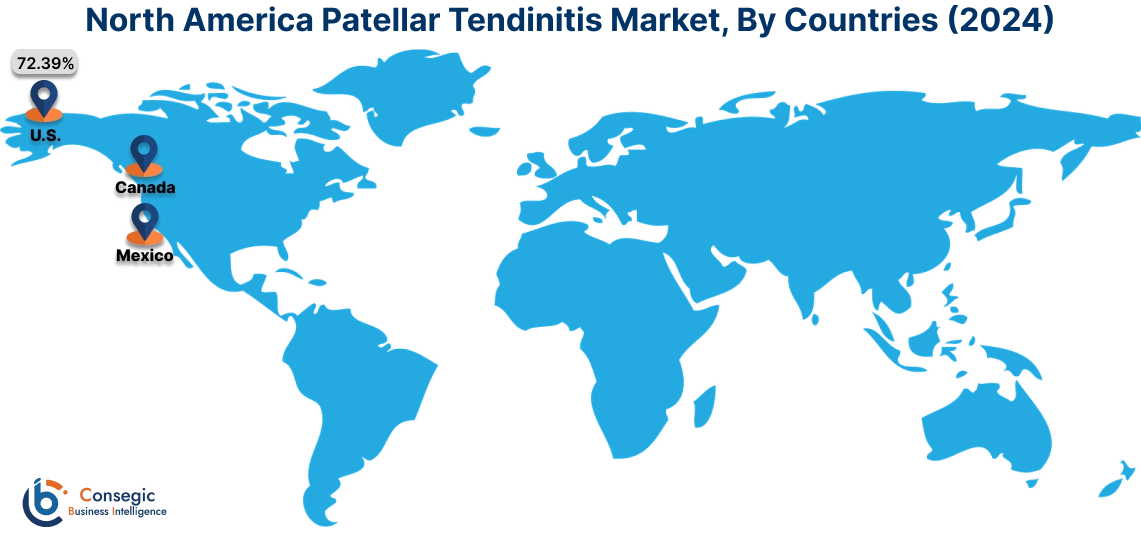
In 2024, North America accounted for the highest patellar tendinitis market share at 38.9% and was valued at USD 28,806.85 Million and is expected to reach USD 56,517.45 Million in 2032. In North America, U.S. accounted for the highest market share of 72.39% during the base year of 2024. Patellar tendinitis is a common overuse injury that primarily affects athletes in North America. This condition is particularly prevalent among individuals engaged in sports that involve repetitive jumping and running, such as basketball, volleyball, and track and field.
Several factors contribute to the high incidence of this condition, including the increasing participation rates in sports across a wide range of age groups, from youth athletes to older recreational players. In North America, the diagnosis and treatment of a jumper's knee are typically managed within a well-established healthcare system. Hospitals and clinics in this region offer comprehensive care, often utilizing advanced diagnostic tools like ultrasound and MRI to assess the extent of tendon damage. The introduction of new hospitals in the region provides an effective diagnosis for these conditions.
- In September 2024, HSS Orthopedics with Stamford Health expanded its reach with the opening of a new outpatient center in Westport. This collaboration between the renowned Hospital for Special Surgery and Stamford Health brings world-class orthopedic care closer to the Westport community. The new center will offer a range of services, including consultations, diagnostic procedures, and physical therapy, providing convenient access to expert care for patients suffering from a jumper’s knee and other conditions.
Thus, as per the patellar tendinitis market analysis, the aforementioned factors are driving the trends of the market in this region.
Asia Pacific is experiencing the fastest growth with a CAGR of 10.7% over the forecast period. Diagnosis and treatment of patellar tendinitis in the Asia Pacific region reflect a growing emphasis on both conservative and surgical approaches. The availability of specialized sports medicine clinics and access to qualified orthopedic surgeons and physical therapists is crucial in ensuring effective management of patellar tendinitis across the diverse healthcare systems within the Asia Pacific region. Additionally, the growing prevalence of tendon-related injuries, including jumper's knee, attributed to several factors within the Asia Pacific region. These include changing lifestyles with increased sedentary behavior followed by sudden bursts of physical activity, increased participation in sports at all levels, and occupational factors that involve repetitive strain on the knees. This rising incidence of tendon injuries is driving the demand for effective diagnosis and treatment options for conditions like jumper's knee, including advanced imaging techniques, innovative surgical procedures, and comprehensive rehabilitation programs. Based on the market analysis, these factors specific to the Asia Pacific region, such as the growing emphasis on minimally invasive procedures and the importance of access to qualified healthcare professionals, are influencing the market demand and trends.
Europe presents a significant contribution to the Patellar Tendinitis market analysis. Within the European region, jumper's knees are a significant concern, particularly among athletes involved in sports that involve repetitive jumping and running. Treatment approaches in Europe often emphasize conservative management, including rest, ice, compression, and elevation (RICE), alongside a comprehensive physical therapy program focusing on eccentric exercises, strength training, and flexibility improvements. Medications like NSAIDs are used to manage pain and inflammation. Minimally invasive procedures, such as arthroscopy, are considered when conservative measures fail to provide adequate relief. The availability of high-quality healthcare systems and access to specialized orthopedic care across many European countries ensures that patients have access to effective diagnosis and treatment options for this condition.
The Middle East and Africa (MEA) region is witnessing notable Patellar Tendinitis market demand characterized by significant potential. The tendonitis treatment market in the Middle East and Africa (MEA), specifically focusing on jumper's knee, is poised for gradual development. This development is driven by several factors, including rising healthcare awareness, an increase in sports-related injuries due to growing participation in sports and fitness activities among the region's young and active population, and the expanding healthcare infrastructure. Based on the market analysis, as healthcare systems improve and disposable incomes rise, particularly in the Middle East, the demand for effective jumper's knee treatment options, such as advanced diagnostic techniques, minimally invasive surgeries, and specialized rehabilitation programs, is expected to increase steadily.
Latin America is an emerging region in the Patellar Tendinitis market share, with significant potential for innovation. Latin America is witnessing steady growth in the tendonitis treatment market, particularly for conditions like jumper's knee. This growth is fueled by several factors, including an increasing prevalence of musculoskeletal disorders, greater awareness of sports-related injuries among athletes of all ages, and improvements in healthcare infrastructure across the region. The market is benefiting from the expansion of both conservative therapies, such as physical therapy with a focus on eccentric exercises and the use of anti-inflammatory medications, as well as advanced options such as biologics, cortisone injections, and minimally invasive surgeries like arthroscopy. Additionally, rising disposable incomes, along with the strengthening of healthcare access and insurance coverage in key markets, are contributing to the market's growth and trends by enabling increased access to these treatment options.
Top Key Players and Market Share Insights:
The Patellar Tendinitis market is highly competitive with major players providing precise products to the national and international markets. Key players are adopting several strategies in research and development (R&D) and product innovation to hold a strong position in the global Patellar Tendinitis market. Key players in the market include-
- Arthrex, Inc (United States)
- Smith+Nephew (United Kingdom)
- DeRoyal Industries (United States)
- BORT GmbH (Germany)
- Stryker (United States)
- Flamingo Health (India)
- 3M (United States)
- Performance Health (United States)
Patellar Tendinitis Market Report Insights :
| Report Attributes | Report Details |
| Study Timeline | 2019-2032 |
| Market Size in 2032 | USD 152,007.35 Million |
| CAGR (2025-2032) | 9.5% |
| By Type |
|
| By End User |
|
| By Region |
|
| Key Players |
|
| North America | U.S. Canada Mexico |
| Europe | U.K. Germany France Spain Italy Russia Benelux Rest of Europe |
| APAC | China South Korea Japan India Australia ASEAN Rest of Asia-Pacific |
| Middle East and Africa | GCC Turkey South Africa Rest of MEA |
| LATAM | Brazil Argentina Chile Rest of LATAM |
| Report Coverage |
|
Key Questions Answered in the Report
How big is the Patellar Tendinitis market? −
In 2024, the Patellar Tendinitis market is USD 74,053.60 Million.
Which is the fastest-growing region in the Patellar Tendinitis market? +
Asia Pacific is the fastest-growing region in the Patellar Tendinitis market.
What specific segmentation details are covered in the Patellar Tendinitis market? +
Type, and End User segmentation details are covered in the Patellar Tendinitis market.
Who are the major players in the Patellar Tendinitis market? +
Arthrex, Inc (United States), Smith+Nephew (United Kingdom), and Stryker (United States) are some of the major players in the market.
Overview
Reputation & Certifications


Our Services
- Market Intelligence & Forecasting
- Custom Research Solutions
- Market Entry Strategy
- Competitive Intelligence
- Customer Insights
- Industry Innovation Analysis
- Investment Advisory