Jump to Content
Dysfunctional Uterine Bleeding Market - Size, Share, Industry Trends, and Forecasts (2025-2032)
Dysfunctional Uterine Bleeding Market Size:
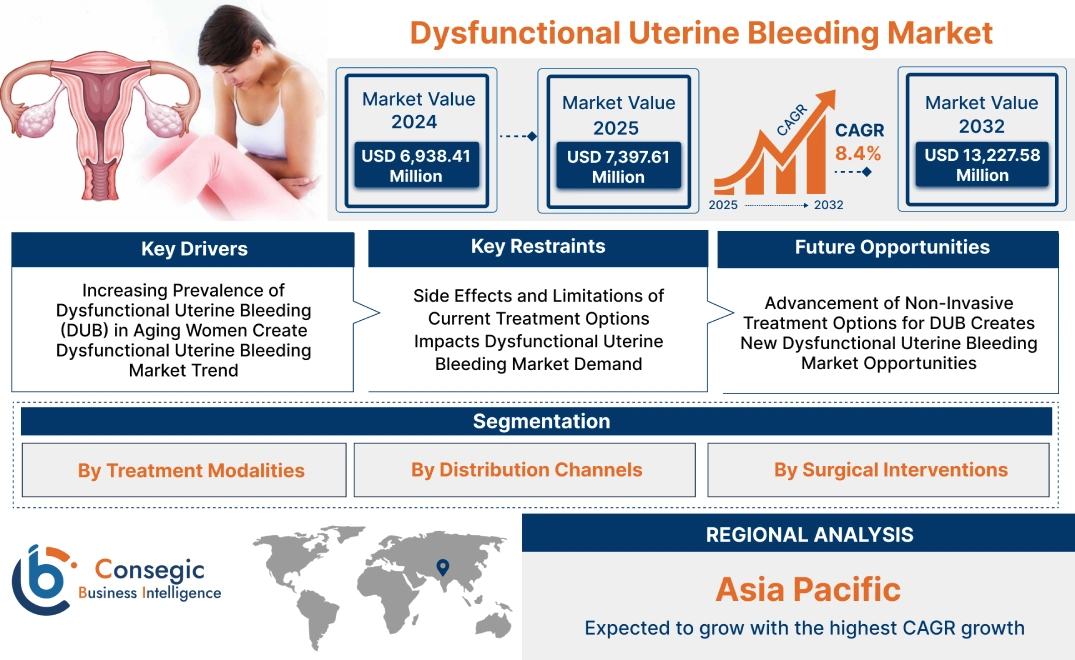
Dysfunctional Uterine Bleeding Market size is estimated to reach over USD 13,227.58 Million by 2032 from a value of USD 6,938.41 Million in 2024 and is projected to grow by USD 7,397.61 Million in 2025, growing at a CAGR of 8.4% from 2025 to 2032.
Dysfunctional Uterine Bleeding Market Scope & Overview:
Dysfunctional uterine bleeding treatment focuses on addressing abnormal uterine bleeding unrelated to identifiable medical conditions. It encompasses hormonal therapies, surgical interventions, and endometrial ablation techniques. These solutions aim to regulate menstrual cycles, reduce excessive bleeding, and enhance patient comfort. The treatments are characterized by their effectiveness in controlling bleeding, minimal invasiveness, and ability to improve overall reproductive health. They are designed for accurate targeting, quick results, and long-term symptom management.
Applications include outpatient clinics, hospitals, and specialized gynecology centers. End-use industries involve healthcare systems focused on reproductive health and women's wellness. These solutions are essential for addressing menstrual irregularities and improving quality of life.
How is AI Impacting the Dysfunctional Uterine Bleeding Market?
AI is transforming the dysfunctional uterine bleeding market by enhancing diagnosis, treatment, and patient management. AI-powered tools are improving the accuracy of identifying women at risk of endometrial issues, including cancer, and are streamlining care pathways for DUB. AI is also facilitating personalized treatment approaches and improving the overall patient experience. Also, AI help create efficient care pathways for dysfunctional uterine bleeding, ensuring women receive necessary tests (like iron studies, ultrasounds) and appropriate treatment options in a timely manner.
Dysfunctional Uterine Bleeding Market Dynamics - (DRO):
Key Drivers:
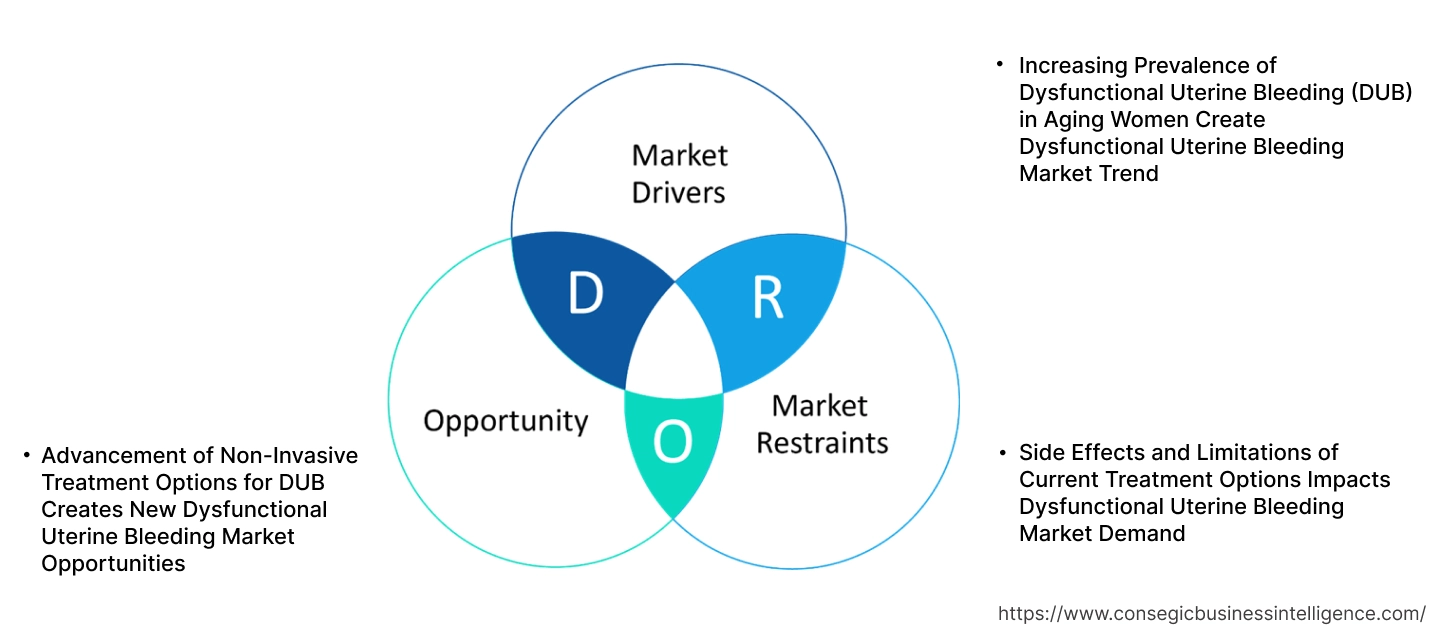
Increasing Prevalence of Dysfunctional Uterine Bleeding (DUB) in Aging Women Create Dysfunctional Uterine Bleeding Market Trend
Dysfunctional uterine bleeding (DUB) is a common condition in women approaching menopause, often linked to hormonal imbalances. As the global population of women over 40 continues to rise, the prevalence of DUB increases, leading to a higher trend for effective treatment options. DUB often manifests as irregular, heavy, or prolonged menstrual bleeding, causing significant discomfort and affecting quality of life. Treatment typically involves medications like hormonal therapies or non-hormonal options, depending on the severity and cause of the bleeding.
With the growing aging female population, there is an escalating need for targeted treatments to manage DUB effectively, propelling dysfunctional uterine bleeding market demand for therapeutic solutions.
Key Restraints:
Side Effects and Limitations of Current Treatment Options Impacts Dysfunctional Uterine Bleeding Market Demand
Many treatments for dysfunctional uterine bleeding involve hormonal therapies, such as birth control pills or intrauterine devices (IUDs), which may cause undesirable side effects such as weight gain, mood changes, and headaches. These side effects can discourage patient adherence to treatment regimens, limiting the dysfunctional uterine bleeding market growth potential. Moreover, some non-hormonal treatments, while effective, may not address the underlying hormonal imbalance, requiring long-term management strategies. These limitations prevent optimal treatment for some women, making it harder to manage the condition effectively in the long term.
Therefore, the side effects and limitations of current treatment options act as a significant barrier to the market, preventing broader patient acceptance and restricting dysfunctional uterine bleeding market expansion.
Future Opportunities:
Advancement of Non-Invasive Treatment Options for DUB Creates New Dysfunctional Uterine Bleeding Market Opportunities
The future of dysfunctional uterine bleeding treatment lies in the development of non-invasive, personalized therapies. Innovations in biotechnology, such as the use of targeted therapies or advanced medical devices, are being explored to provide effective solutions without the need for hormonal interventions. These treatments aim to address the underlying causes of DUB, such as abnormal endometrial growth or uterine fibroids, using less invasive methods. Additionally, emerging alternatives like endometrial ablation and radiofrequency treatments offer promising results without the long recovery times of traditional surgery. These advancements in non-invasive treatments are expected to offer new avenues for managing DUB, creating a significant dysfunctional uterine bleeding market opportunity for growth in the market as these methods gain acceptance.
Dysfunctional Uterine Bleeding Market Segmental Analysis :
By Treatment Modalities:
Based on treatment modalities, the market is segmented into pharmacological therapies and surgical interventions.
The pharmacological therapies sector accounted for the largest revenue in dysfunctional uterine bleeding market share in 2024 and is anticipated to register the fastest CAGR during the forecast period.
- Pharmacological therapies are the most commonly utilized treatment options for Dysfunctional Uterine Bleeding (DUB) due to their non-invasive nature and effectiveness in managing symptoms.
- Hormonal therapies, including oral contraceptives, progestins, and intrauterine devices (IUDs), are frequently prescribed for regulating menstrual cycles and controlling bleeding.
- Non-hormonal therapies, such as antifibrinolytic agents, NSAIDs, and tranexamic acid, are used as alternatives or in conjunction with hormonal treatments, especially for patients who cannot tolerate hormones.
- These therapies offer several benefits, including a lower risk of complications compared to surgical options and a relatively quick recovery period.
- Continuous advancements in drug formulations and treatment protocols are further driving the trend for pharmacological therapies in managing DUB.
- Therefore, according to dysfunctional uterine bleeding market analysis, the pharmacological therapies sector remains the largest contributor to the DUB market, driven by the preference for non-invasive, easily accessible treatment options that offer effective symptom management.
By Distribution Channels:
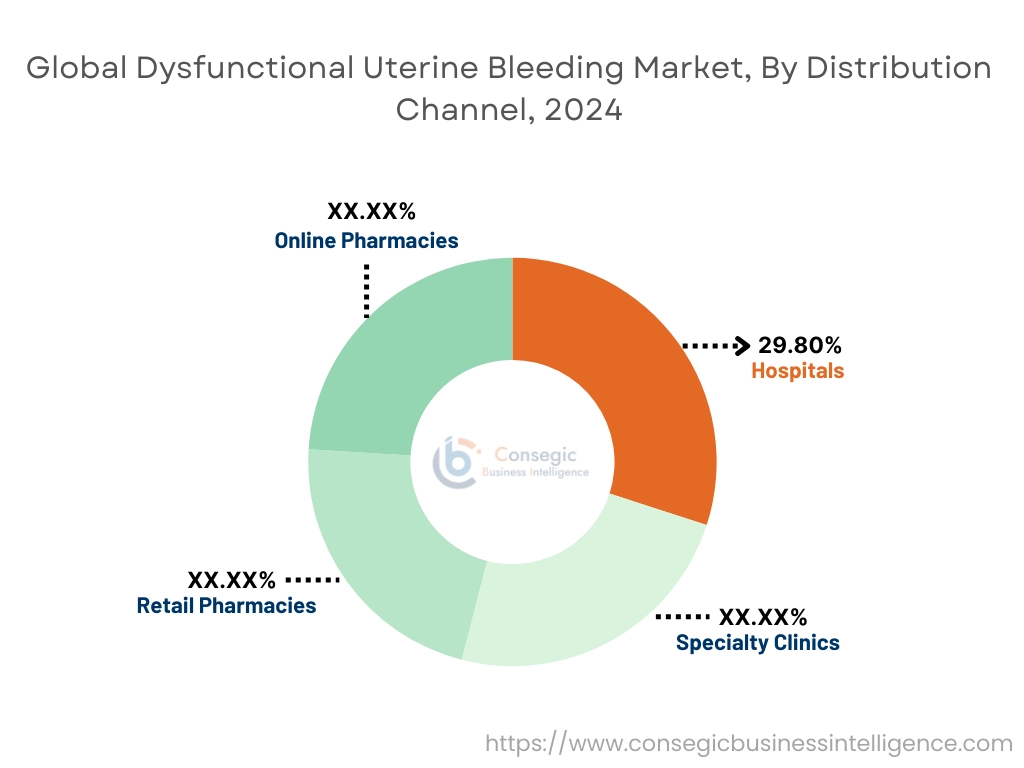
Based on distribution channels, the market is segmented into hospitals, specialty clinics, retail pharmacies, and online pharmacies.
The hospital sector accounted for the largest revenue in dysfunctional uterine bleeding market share by 29.80% in 2024.
- Hospitals remain the primary setting for DUB treatment, as they offer both inpatient and outpatient services, equipped with specialized medical teams for diagnosis and treatment.
- The availability of advanced diagnostic tools, surgical intervention options, and continuous monitoring in hospitals makes them the preferred choice for complex or severe cases of DUB.
- Moreover, hospitals provide a centralized location for both pharmacological and surgical treatments, ensuring comprehensive care for patients.
- Public and private healthcare policies encouraging the use of hospitals for specialized treatments further contribute to their dominance in the market.
- Therefore, according to market analysis, hospitals dominate the DUB treatment market, with their ability to provide specialized care, advanced treatment options, and all-encompassing patient support making them the preferred choice for both routine and complex DUB cases.
Online pharmacies are expected to register the fastest CAGR during the forecast period.
- The growing trend of e-commerce and telemedicine services has spurred the adoption of online pharmacies, offering patients the convenience of home delivery and virtual consultations.
- Online pharmacies provide easier access to both over-the-counter and prescription medications, including hormonal and non-hormonal treatments for DUB, particularly for individuals in remote areas or with mobility issues.
- The ability to order medications discreetly and securely has further fueled the demand for online pharmacies, especially among patients seeking privacy in managing sensitive health issues like DUB.
- Thus, according to market analysis, online pharmacies are anticipated to witness significant dysfunctional uterine bleeding market trend due to the increased preference for convenience, discreetness, and accessibility, particularly in a post-pandemic world that emphasizes remote healthcare options.
By Surgical Interventions:
Based on surgical interventions, the market is segmented into endometrial ablation and hysterectomy.
The endometrial ablation sector accounted for the largest revenue share in 2024.
- Endometrial ablation is a less invasive alternative to hysterectomy, providing effective relief for patients suffering from severe bleeding due to DUB.
- Procedures such as thermal balloon ablation, cryoablation, and microwave endometrial ablation have gained popularity due to their ability to preserve the uterus and reduce recovery times.
- The increasing preference for minimally invasive treatments, along with the growing success rates of endometrial ablation, has bolstered its position as the most commonly performed surgical option for DUB.
- Additionally, the reduced risk of complications and the ability to return to normal activities quickly further contribute to the popularity of endometrial ablation.
- Therefore, according to market analysis, endometrial ablation remains the most sought-after surgical intervention for DUB, driven by its minimally invasive nature, reduced recovery times, and high patient satisfaction.
The hysterectomy subsegment is expected to register the fastest CAGR during the forecast period.
- Although more invasive, hysterectomy remains a treatment option for patients with persistent or severe DUB who do not respond to other treatments.
- The rise in awareness about DUB and advancements in surgical techniques, such as laparoscopic and robotic-assisted hysterectomy, have made the procedure safer and less traumatic for patients.
- With an increasing number of women opting for hysterectomy due to its definitive nature in treating DUB, this procedure is poised to grow rapidly in the coming years.
- Thus, according to market analysis, hysterectomy, despite being invasive, is anticipated to experience the fastest trend due to the rising demand for permanent solutions to persistent DUB, along with improvements in surgical procedures and patient recovery outcomes.
Regional Analysis:
The regional segment includes North America, Europe, Asia Pacific, Middle East and Africa, and Latin America.
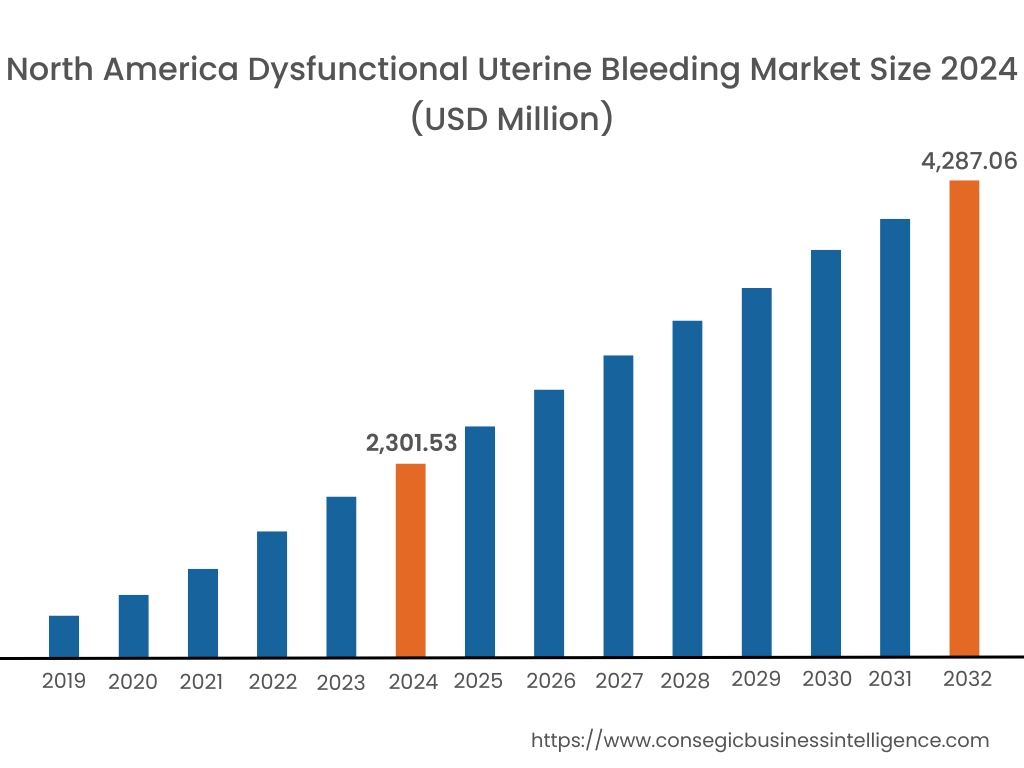
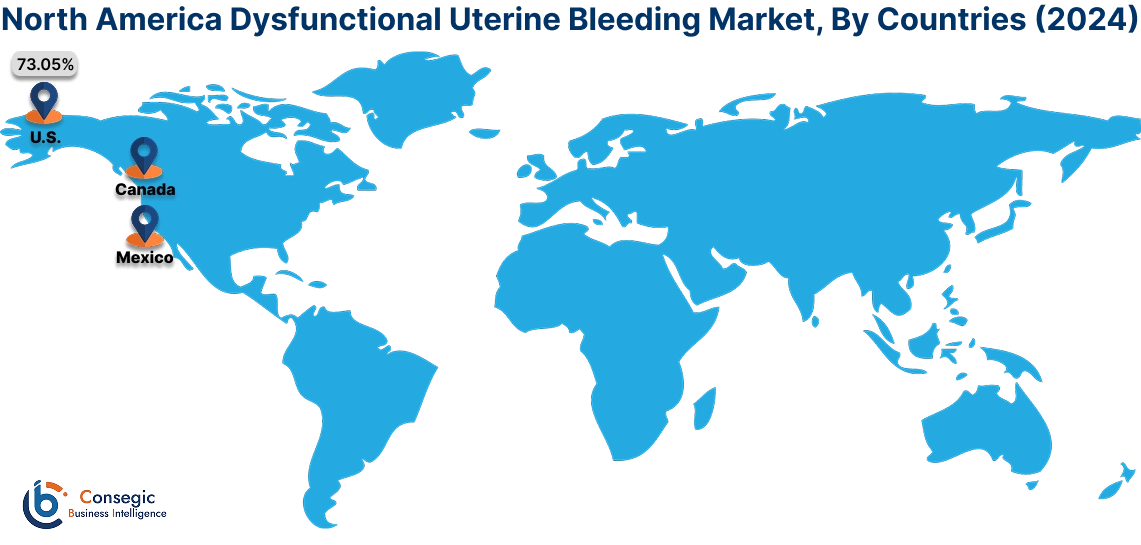
In 2024, North America was valued at USD 2,301.53 Million and is expected to reach USD 4,287.06 Million in 2032. In North America, the U.S. accounted for the highest share of 73.05% during the base year of 2024. The Dysfunctional Uterine Bleeding (DUB) market in North America shows steady demand, influenced by increasing awareness and healthcare accessibility. The United States remains the largest market, driven by advanced medical infrastructure, government health programs, and high healthcare expenditure. The rising prevalence of DUB, combined with a growing number of treatments, fuels dysfunctional uterine bleeding market expansion in the region.
In Asia Pacific, the market is experiencing the fastest growth with a CAGR of 8.9% over the forecast period. Asia-Pacific demonstrates substantial growth potential in the DUB market, driven by the expanding healthcare sector and increasing awareness of women's health issues. Countries like China and India see a rising number of cases due to changing lifestyles and reproductive health challenges. A large patient pool and growing medical tourism also impact market development in this region.
Europe holds a significant share in the DUB market, with well-established healthcare systems and a high focus on women's health. Countries like Germany, the UK, and France lead in adopting advanced diagnostic and therapeutic techniques. The increasing demand for minimally invasive procedures, alongside awareness initiatives, strengthens market performance.
The Middle East and Africa region exhibits growing interest in DUB treatments. However, limited healthcare infrastructure and awareness in some regions affect market penetration. Urbanization, changing lifestyles, and improved access to healthcare are gradually expanding treatment options. Countries like Saudi Arabia and the UAE are key contributors to market growth.
Latin America shows steady growth in the DUB market due to improved healthcare accessibility and a rising awareness of women's health. Countries like Brazil and Mexico are at the forefront, with healthcare reforms helping improve the availability of DUB treatments. However, market challenges include uneven healthcare distribution and regional disparities in treatment access.
Top Key Players & Market Share Insights:
The global dysfunctional uterine bleeding market is highly competitive with major players providing products and services to the national and international markets. Key players are adopting several strategies in research and development (R&D), product innovation, and end-user launches to hold a strong position in the global dysfunctional uterine bleeding market. Key players in the dysfunctional uterine bleeding industry include-
- AbbVie Inc. (United States)
- Bayer AG (Germany)
- Hologic, Inc. (United States)
- Zydus Cadila (India)
- Amgen Inc. (United States)
- Pfizer Inc. (United States)
- Ferring Pharmaceuticals (Switzerland)
- Johnson & Johnson (United States)
- Merck & Co., Inc. (United States)
- Mylan N.V. (United States)
Recent Industry Developments :
Mergers and Acquisitions:
- In October 2024, Hologic, a prominent women's health medtech company, acquired Gynesonics, a medical device firm specializing in treatments for uterine fibroids and abnormal uterine bleeding. The acquisition, valued at approximately $350 million, includes Gynesonics' Sonata System—a device that combines real-time intrauterine ultrasound guidance with targeted radiofrequency ablation to treat uterine fibroids non-invasively. This strategic move aims to expand Hologic's portfolio in the women's health sector.
Dysfunctional Uterine Bleeding Market Report Insights:
| Report Attributes | Report Details |
| Study Timeline | 2019-2032 |
| Market Size in 2032 | USD 13,227.58 Million |
| CAGR (2025-2032) | 8.4% |
| By Treatment Modalities |
|
| By Distribution Channels |
|
| By Surgical Interventions |
|
| By Region |
|
| Key Players |
|
| North America | U.S. Canada Mexico |
| Europe | U.K. Germany France Spain Italy Russia Benelux Rest of Europe |
| APAC | China South Korea Japan India Australia ASEAN Rest of Asia-Pacific |
| Middle East and Africa | GCC Turkey South Africa Rest of MEA |
| LATAM | Brazil Argentina Chile Rest of LATAM |
| Report Coverage |
|
Key Questions Answered in the Report
How big is the Dysfunctional Uterine Bleeding Market? −
In 2024, the Dysfunctional Uterine Bleeding Market was USD 6,938.41 million.
What will be the potential market valuation for the Dysfunctional Uterine Bleeding Market by 2032? +
In 2032, the market size of Dysfunctional Uterine Bleeding Market is expected to reach USD 13,227.58 million.
What are the segments covered in the Dysfunctional Uterine Bleeding Market report? +
The treatment modalities, distribution channels, and surgical interventions are the segments covered in this report.
Who are the major players in the Dysfunctional Uterine Bleeding Market? +
AbbVie Inc. (United States), Bayer AG (Germany), Pfizer Inc. (United States), Ferring Pharmaceuticals (Switzerland), Johnson & Johnson (United States), Merck & Co., Inc. (United States), Mylan N.V. (United States), Hologic, Inc. (United States), Zydus Cadila (India), Amgen Inc. (United States) are the major players in the Dysfunctional Uterine Bleeding market.
Overview
Reputation & Certifications


Our Services
- Market Intelligence & Forecasting
- Custom Research Solutions
- Market Entry Strategy
- Competitive Intelligence
- Customer Insights
- Industry Innovation Analysis
- Investment Advisory