Jump to Content
Critical Illness Insurance Market - Size, Share, Industry Trends, and Forecasts (2025-2032)
Critical Illness Insurance Market Size:
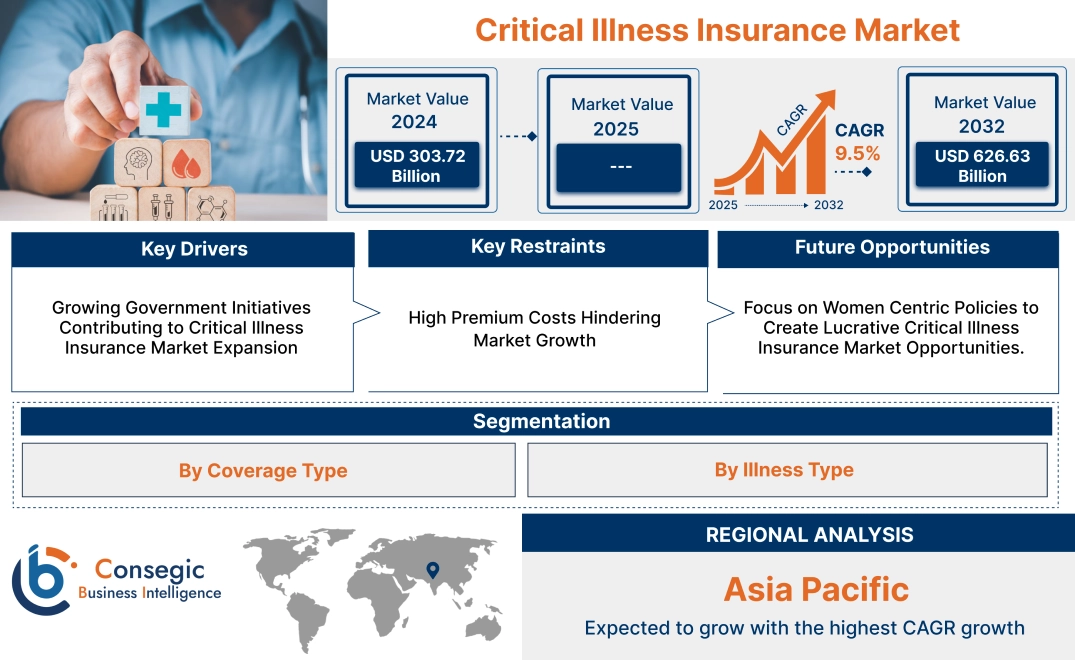
Critical Illness Insurance Market size is growing with a CAGR of 9.5% during the forecast period (2025-2032), and the market is projected to be valued at USD 626.63 Billion by 2032 from USD 303.72 Billion in 2024.
Critical Illness Insurance Market Scope & Overview:
Critical Illness Insurance is a type of insurance policy designed to provide significant financial safety in the event of a serious, critical diagnosis. Unlike traditional health insurance, which primarily covers medical expenses, this policy offers a substantial lump-sum payment directly to the insured individual or family. This payout is substantial when facing debilitating illnesses such as cancer, heart attack, stroke, major organ failure amongst others. The flexibility of this benefit allows policyholders to utilize the funds for a wide range of expenses beyond medical costs, such as lost income, home modifications, childcare, or even alternative treatments. The global market is experiencing development, driven by factors like the rising prevalence of chronic diseases, increasing consumer awareness, amongst others
Critical Illness Insurance Market Dynamics - (DRO) :
Key Drivers:
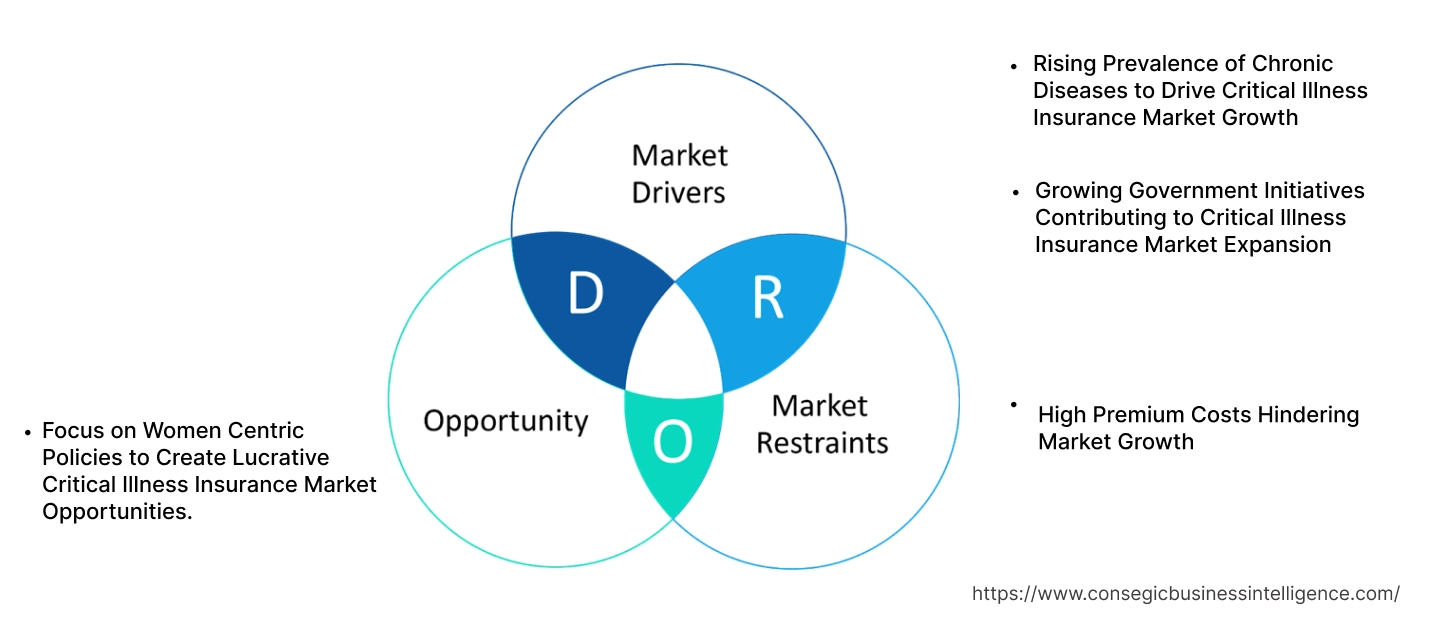
Rising Prevalence of Chronic Diseases to Drive Critical Illness Insurance Market Growth
The escalating prevalence of chronic diseases, such as cancer, heart disease, and stroke, is a significant driver for the global critical illness insurance market growth. As medical advancements improve survival rates for these conditions, the financial burden associated with treatment and recovery has substantially increased. This includes the cost of specialized treatments, long-term care, and potential loss of income.
- For instance, according to the analysis provided by the World Health Organization in 2022, cancer is a leading cause of death worldwide, accounting for nearly 10 million deaths in 2020, or nearly one in six deaths. The most common cancers are breast, lung, colon, rectum, and prostate cancers. Cancer-causing infections, such as human papillomavirus (HPV) and hepatitis, are responsible for approximately 30% of cancer cases in low- and lower-middle-income countries.
Therefore, individuals and families are increasingly seeking financial protection against the financial consequences of critical illnesses. The insurance provides a crucial safety net by offering a lump-sum payout upon diagnosis of a covered condition. This payout is used to cover a wide range of expenses, including medical bills, living expenses, and rehabilitation costs, thereby reducing the financial strain.
Growing Government Initiatives Contributing to Critical Illness Insurance Market Expansion
Government initiatives are significantly contributing to the global critical illness insurance market expansion. One key factor is the increased focus on public awareness. Governments are actively conducting campaigns to educate the public about the financial risks associated with critical illnesses and the importance of having adequate insurance coverage. This heightened awareness is driving the requirement for insurance as individuals become more informed about the potential financial consequences of serious health conditions.
In addition to this, some governments are directly involved in providing subsidized insurance through government-sponsored programs. These programs target low-income individuals and families who are not able to afford private insurance. By providing access to affordable coverage, these programs are expanding the reach of critical illness insurance and ensuring that a larger segment of the population is protected against the financial impact of critical illnesses.
- For instance, in 2023, in India, Bhamashah Swasthya Bima Yojana a health insurance scheme aims to provide access to affordable and quality healthcare services to the residents. The Bhamashah Swasthya Bima Yojana provides coverage of up to USD 350 for common ailments and up to USD 3,500 for critical illnesses.
In conclusion, the growing involvement of governments through awareness campaigns, subsidized programs, amongst others are driving significant the global market demand. These initiatives are making insurance more accessible and affordable, ultimately benefiting individuals and families by providing them with much-needed financial protection during times of medical crisis.
Key Restraints:
High Premium Costs Hindering Market Growth
One of the primary hurdles facing the widespread adoption of critical illness insurance is the cost. Premiums are substantial, particularly for individuals with higher risk factors or those seeking extensive coverage. This financial burden is significant, especially for younger individuals or families with limited disposable income. The cost of this insurance is influenced by various factors, including the age of the insured, the specific illnesses covered, the sum insured, and the policy term. As individuals age, their risk of developing critical illnesses increases, leading to higher premiums. Moreover, policies covering a wider range of illnesses or offering higher payouts naturally come with a higher price. These premium costs strain household budgets, forcing individuals to make difficult choices between essential expenses and necessary insurance coverage. This financial pressure limit accessibility to this crucial form of financial protection for many, leaving them vulnerable to the financial consequences of a critical illness.
Future Opportunities :
Focus on Women Centric Policies to Create Lucrative Critical Illness Insurance Market Opportunities.
The market is expected to grow by developing policies specifically tailored to women's unique health needs and financial circumstances. This involves comprehensive coverage for women-specific conditions like breast, ovarian, and cervical cancers, reproductive health issues, and mental health concerns. Offering flexible premium options, customizable coverage levels, and riders for specific life stages like maternity or childcare enhance policy appeal.
- For instance, in 2024, Women's Health Insurance Trends FY'23 Vs FY'24" highlights a substantial 43% increase in the number of women purchasing independent health insurance policies, including critical illness coverage, for their own protection.
Additionally, providing access to wellness programs, support services, and financial literacy resources improve women's health outcomes and empower them to navigate the hurdles of critical illness. By focusing on these aspects and utilizing targeted marketing and distribution channels, insurance companies can create more inclusive and relevant products that not only benefit women but also drive substantial growth and critical illness insurance market opportunities.
Critical Illness Insurance Market Segmental Analysis :
By Coverage Type:
Based on coverage type, the market is categorized into individual insurance and group insurance.
Trends in the Coverage Type:
- With increasing financial independence and changing family structures, there is a rising trend for individual critical illness insurance policies.
- As awareness about the importance of financial security for families grows, the trend for comprehensive group insurance plans that include critical illness coverage is increasing.
The Individual Insurance segment accounted for the largest market share in 2024.
- Individual insurance coverage dominates the global critical illness insurance market demand. This dominance is attributed to several key factors, such as individual policies offer greater flexibility and customization compared to group plans. Individuals have the freedom to select coverage options, premium levels, and benefit amounts that align with their specific needs and risk assessments.
- Additionally, portability is a significant advantage of individual insurance. Policyholders maintain their coverage even if they change jobs or relocate, ensuring uninterrupted protection.
- Furthermore, direct access to insurers allows individuals to purchase policies without intermediaries, potentially leading to lower costs.
- Moreover, the growing awareness of the substantial financial burdens associated with critical illnesses is driving an increased trend for individual insurance coverage.
- While group insurance plans offer coverage to a larger segment of the population, they often have limitations in terms of customization and flexibility. Furthermore, based on the critical illness insurance market analysis, group plans are typically subject to the employer's eligibility criteria and benefit restrictions.
The Group Insurance segment is expected to grow at the fastest CAGR over the forecast period.
- The Group Insurance segment within the global critical illness insurance market demand is projected to exhibit the most rapid growth during the forecast period. This is due to the increasing prevalence of employer-sponsored benefit packages that incorporate critical illness coverage.
- Group policies often provide cost-effectiveness due to economies of scale, making them an attractive option for both employers and employees.
- Furthermore, heightened awareness of critical illnesses and their associated financial burdens is motivating employers to include this vital coverage within their employee benefit plans.
- For instance, in 2024, Razorpay, a leading Indian payments solutions provider, has introduced a significantly enhanced health insurance policy that surpasses traditional offerings. This innovative plan expands coverage to include siblings, adopted children, and critical illnesses such as HIV/AIDS and PCOS, demonstrating a commitment to employee well-being beyond traditional family structures.
- Additionally, as per the market analysis, government initiatives in certain regions are encouraging employers to offer critical illness coverage as part of their employee benefits, further bolstering the share of this segment.
By Illness Type:
The Illness Type segment is categorized into cancer, cardiovascular disease, neurological disorders, respiratory disorders, organ failure and others
Trends in the Illness Type
- Increasing incidence of conditions like stroke, Alzheimer's, and Parkinson's is driving demand for coverage in this segment.
- Chronic obstructive pulmonary disease (COPD) and other respiratory illnesses are contributing to a rising need for this insurance.
- Coverage for organ failure, including kidney and liver failure, is becoming increasingly important due to rising rates of chronic diseases.
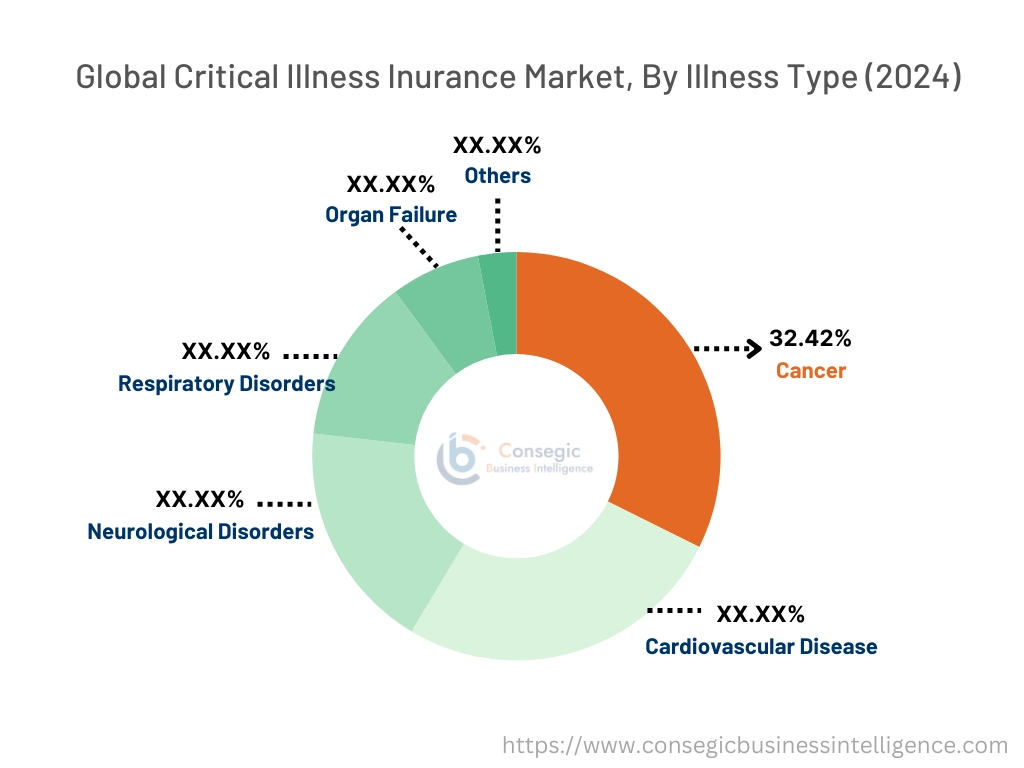
The Cancer segment accounted for the largest market share of 32.42% in 2024 and is also expected to be the fastest growing segment over the forecast period.
- The Cancer segment dominates the global insurance market due to its high prevalence, significant financial burden, and increasing public awareness.
- Cancer remains a leading cause of death worldwide, and its treatment often incurs substantial costs exceeding the financial capacity of many individuals and families. This significant financial burden drives a strong demand for critical illness insurance that specifically covers cancer.
- For instance, in 2024, the World Health Organization's latest report predicts a significant 77% increase in new cancer cases by 2050, compared to the estimated 20 million cases in 2022.
- Furthermore, based on the market analysis, growing public awareness of cancer and its financial implications has significantly increased the demand for such insurance coverage. While advancements in cancer treatment have improved survival rates, they have also increased treatment costs, further emphasizing the need for robust financial protection against this critical illness.
Regional Analysis:
The regional segment includes North America, Europe, Asia Pacific, the Middle East and Africa, and Latin America.
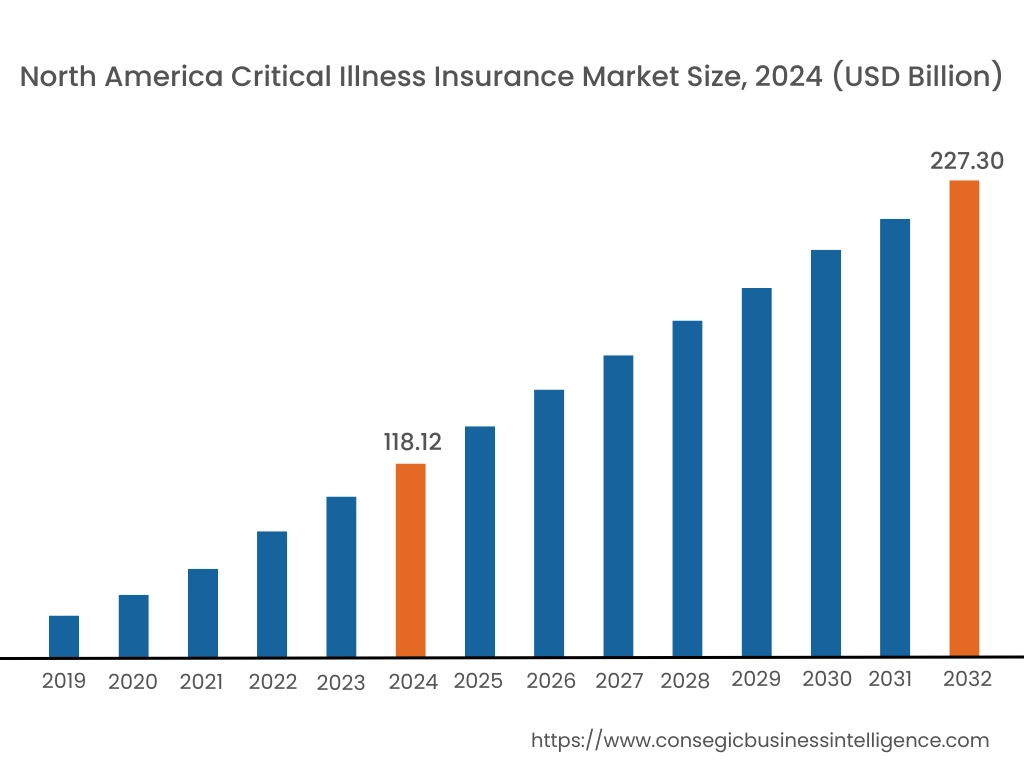
In 2024, North America accounted for the highest critical illness insurance market share at 38.89% and was valued at USD 118.12 Billion and is expected to reach USD 227.30 Billion in 2032. In North America, U.S. accounted for the critical illness insurance market share of 72.37% during the base year of 2024.
North America dominates the global insurance market primarily due to its high healthcare costs, particularly in the United States. This, coupled with a healthcare system offering advanced but expensive treatments, creates a significant requirement for financial protection against critical illnesses. Furthermore, based on the critical illness insurance market analysis, the region experiences a high prevalence of chronic diseases, such as cancer, heart disease, and stroke, increasing the vulnerability of individuals and families to substantial medical expenses.
- For instance, the S. Census Bureau reported that health insurance coverage including critical illness insurance coverage in the United States increased in 2022. In that year, 92.1% of the population, or approximately 304 million people, had health insurance at some point, compared to 91.7% or 300.9 million in 2021.
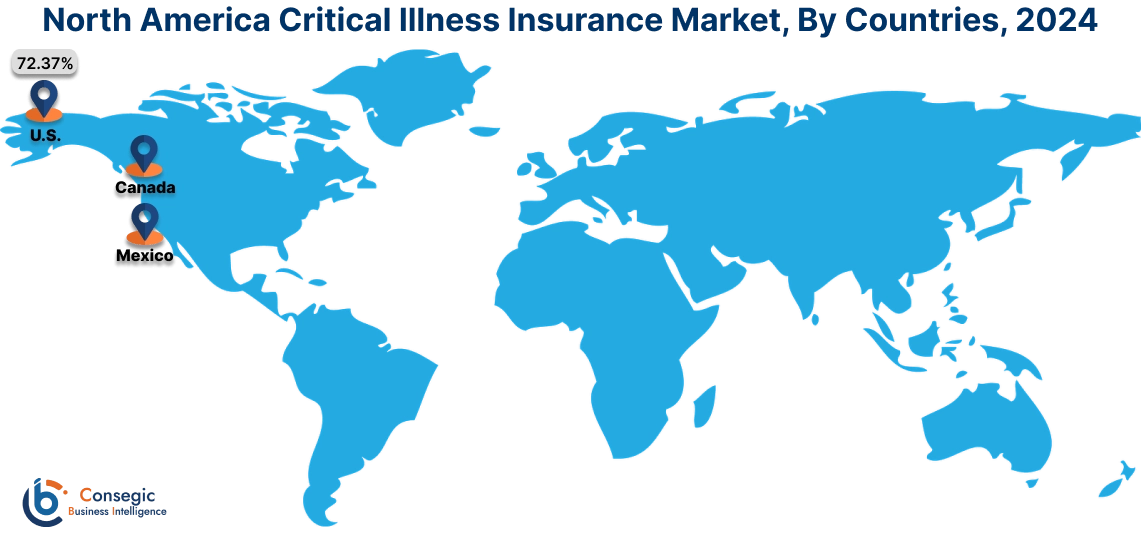
The well-developed insurance market in North America offers a wide array of critical illness insurance products with diverse coverage options, further contributing to its market dominance. Finally, strong public awareness of critical illnesses and their financial impact drives significant requirement for insurance coverage within the region.
In Asia Pacific, the critical illness insurance industry is experiencing the fastest growth with a CAGR of 11.3% over the forecast period. The Asia-Pacific region is experiencing the fastest growth in the global market, driven by several key factors. Rapid economic development across many countries in the region has led to a middle class with increased disposable incomes, enabling them to afford insurance products like critical illness coverage. Concurrently, rising awareness among the population regarding critical illnesses and their significant financial impact is fueling the requirement for such insurance. Furthermore, as per the market analysis, the region's rapidly aging population is experiencing a higher incidence of chronic diseases, increasing the likelihood of critical illnesses and the need for financial protection. Moreover, government initiatives in many countries are actively promoting the importance of health insurance and encouraging the development of the insurance industry, further accelerating the market.
The European critical illness insurance market has a strong presence of established insurers and a diverse range of product offerings. This market fosters innovation, with insurers actively incorporating cutting-edge technologies like telemedicine, wearable technology, and personalized risk assessment into their insurance plans. This focus on innovation aims to enhance customer experience, improve risk assessment accuracy, and potentially offer more tailored and cost-effective coverage options. Furthermore, the European market operates within a robust regulatory framework that prioritizes consumer protection and market stability, ensuring fair practices for both insurers and consumers. Key drivers within this market include the aging population, rising healthcare costs, and increasing public awareness of critical illnesses and their significant financial implications.
The Middle East and Africa region exhibits significant potential for the critical illness insurance market trends, driven by factors such as a rapidly expanding population, increasing urbanization, and rising disposable incomes. These factors contribute to a growing middle class with greater financial capacity to afford insurance products. However, market penetration remains relatively low due to challenges such as low overall insurance penetration rates, limited awareness of this insurance among the population, and economic instability in certain countries within the region. Despite these challenges, the market is poised for development. Growing awareness campaigns aimed at educating the public about the benefits of critical illness insurance, government initiatives to promote insurance penetration, and the entry of new players into the market are expected to drive significant critical illness insurance market trend in the coming years.
The Latin American region represents an emerging market for critical illness insurance, characterized by significant potential. This development is fueled by several factors, including rising income levels within the region, improvements in healthcare infrastructure, and increasing public awareness of critical illnesses and their potential financial consequences. However, the market faces challenges such as economic volatility, high inflation rates, and an uneven distribution of wealth across the population, which hinder market development. Despite these challenges, the Latin American region presents a significant opportunity for insurance companies to expand their reach and offer innovative insurance products specifically tailored to the unique needs and circumstances of the Latin American population.
Top Key Players and Market Share Insights:
The global Critical Illness Insurance Market is highly competitive with major players providing insurance to the national and international markets. Key players are adopting several strategies in research and development (R&D) and product innovation to hold a strong position in the global critical illness insurance market. Key players in the critical illness insurance industry include-
- Allianz Care (Canada)
- China Life Insurance Company (China)
- Aviva (UK)
- United HealthCare Services, Inc. (U.S.)
- Desjardins Group (Canada)
- AFLAC INCORPORATED (U.S.)
- Aegon (Netherlands)
- ICICI Prudential Life Insurance Co. Ltd. (India)
- TATA AIG General Insurance Company (India)
- American Fidelity (U.S.)
Critical Illness Insurance Market Report Insights :
| Report Attributes | Report Details |
| Study Timeline | 2019-2032 |
| Market Size in 2032 | USD 626.63 Billion |
| CAGR (2025-2032) | 9.5% |
| By Coverage Type |
|
| By Illness Type |
|
| By Region |
|
| Key Players |
|
| North America | U.S. Canada Mexico |
| Europe | U.K. Germany France Spain Italy Russia Benelux Rest of Europe |
| APAC | China South Korea Japan India Australia ASEAN Rest of Asia-Pacific |
| Middle East and Africa | GCC Turkey South Africa Rest of MEA |
| LATAM | Brazil Argentina Chile Rest of LATAM |
| Report Coverage |
|
Key Questions Answered in the Report
How big is the Critical Illness Insurance Market? −
In 2024, the Critical Illness Insurance Market is USD 303.72 Billion.
Which is the fastest-growing region in the Critical Illness Insurance Market? +
Asia Pacific is the fastest-growing region in the Critical Illness Insurance Market.
What specific segmentation details are covered in the Critical Illness Insurance Market? +
Coverage Type and Illness Type segmentation details are covered in the Critical Illness Insurance Market
Who are the major players in the Critical Illness Insurance Market?q +
Allianz Care (Canada), China Life Insurance Company (China), AFLAC INCORPORATED (U.S.), Aegon (Netherlands) amongst others.
Overview
Reputation & Certifications


Our Services
- Market Intelligence & Forecasting
- Custom Research Solutions
- Market Entry Strategy
- Competitive Intelligence
- Customer Insights
- Industry Innovation Analysis
- Investment Advisory