Jump to Content
Cystinuria Treatment Market Size & Industry Share, Growth Trends & Forecasts (2024 - 2031)
Cystinuria Treatment Market Introduction :
Consegic Business Intelligence analyzes that the cystinuria treatment market size is growing with a CAGR of 3.8% during the forecast period (2023-2031). The market accounted for USD 116.71 million in 2023, and the market is projected to be valued at USD 157.22 million by 2031.
Cystinuria Treatment Market Definition & Overview :
Cystinuria is a genetic disorder characterized by excessive cysteine excretion in urine. The excess cysteine leads to the formation of stones in the kidney, uterus, or bladder. The treatment for cystinuria generally consists of dietary modifications, increased fluid intake, and various medications. In severe cases, patients suffering from cystinuria may require surgery.
Alkalizing agents such as potassium citrate are used as they help increase the pH of urine, making cystine less likely to crystallize and form stones. Moreover, as per the analysis, thiol-binding medications such as penicillamine, tiopronin, captopril, and bucillamine are prescribed to reduce the cystine level. Thiol-binding medications contain a sulfhydryl group which reduces the disulfide bond that binds two molecules of cysteine, leading to the breakage of stones. The treatment of cystinuria is beneficial for the management of cystinuria symptoms prevents the formation of stones, prevents health outcomes, and provide psychological relief. The growing awareness about cystinuria in healthcare professionals and patients is influencing the cystinuria market.
Cystinuria Treatment Market Insights :

Cystinuria Treatment Market Dynamics - (DRO) :
Key Drivers :
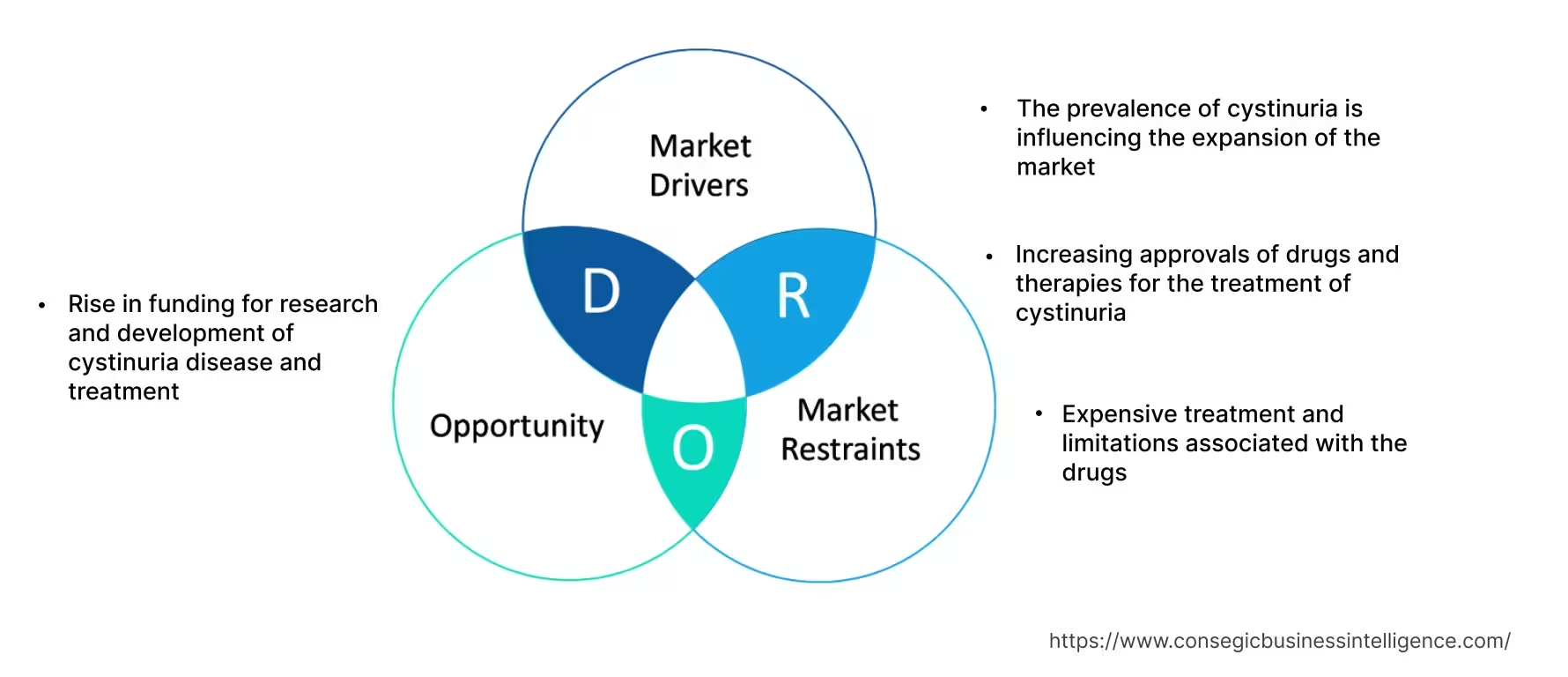
The prevalence of cystinuria is influencing the expansion of the market
The cystinuria treatment market is driven worldwide by expansion in the prevalence of cystinuria. Cystinuria is a genetic disorder caused by the excessive release of amino acid cystine in the urine. The release leads to the formation of stones in the kidney, bladder, and uterus. Several factors including genetic predisposition, lack of awareness of symptoms, and high population growth have been related to the high prevalence of cystinuria. As cystinuria is a genetic disorder, individuals with a family history of cystinuria are likely to inherit cystinuria.
As cystinuria is generally nonsymptomatic or exhibits non-specific symptoms the diagnosis is difficult which results in underdiagnosis. The improved diagnosis methods such as advanced imaging tests and laboratory tests have made the detection of cystinuria easier. As per the analysis, the advancements in the testing for cystinuria have led to the prevalence of cystinuria.
For instance,
- According to the National Library of Medicine, in July 2022, reported that the prevalence of cystinuria accounted for 1% to 2% in adults and 6% to 8% in children.
Therefore, the prevalence of cystinuria is an important driving trend for the cystinuria market.
Increasing approvals of drugs and therapies for the treatment of cystinuria
The prevalence of cystinuria is enhancing the research and development activities for the development of cystinuria. Cystinuria is a condition caused by excess excretion of the amino acid cysteine, which leads to the formation of stones in the kidney, bladder, and uterus. The drugs usually approved for the treatment of cystinuria include alkalizing agents such as potassium citrate and sodium bicarbonate for increasing the pH of the urine to dissolve the stones present in the bladder.
Additionally, Thiol-containing agents such as penicillamine, and tiopronin are used used to solubilize the disulfide bonds that join the cysteine molecule. The approval of new targeted drugs and therapies is influencing the treatment of cystinuria.
For instance,
- In July 2019, the Food and Drug Administration (FDA) approved the Travere Therapeutics drug tiopronin (Thiola EC, Retrophin) for the treatment of cystinuria. The drug is approved in 100mg and 300 mg tablets.
Thus, the approval of drugs for the treatment of cystinuria is propelling the expansion of the market.
Key Restraints :
Expensive treatment and limitations associated with the drugs
The high cost of drug development and treatment along with the adverse side effects of therapies is the substantial factor that confines the growth of the cystinuria treatment market.
The cost of drugs for the treatment of cystinuria is constantly rising. Multiple factors contribute to the high cost of drug development and the cost of cystinuria treatment.
For instance,
- According to data published by the Congressional Budget Office (CBO) in April 2021, the average R&D cost per new drug ranges from less than USD 1 billion to more than USD 2 billion.
Furthermore, drugs for the treatment of cystinuria have to undergo various research and clinical trials before public launches, this process is time-consuming and often requires a large amount of investment. Also, the limitations associated with cystinuria drugs hamper the cystinuria treatment market growth.
Thus, as a result despite the growing number of fundamental investigations into cystinuria above mentioned reasons are restraining the cystinuria treatment market.
Future Opportunities :
Rise in funding for research and development of cystinuria disease and treatment
The increase in funding for research and development of cystinuria presents significant opportunities for understanding and managing the condition. Cystinuria is a chronic condition that involves the formation of stones that are caused because of the amino acid cysteine. It is a genetic disorder caused because of a mutation in the gene that encodes for the protein that allows the reabsorption of cysteine. The proper research and knowledge of mutations in the genes causing cystinuria allows for the appropriate prescription of the medication and treatment for the disease.
More in-depth studies into the genetic, molecular, and physiological processes behind cystinuria are made possible by increased financial support, and this research results in the discovery of model therapeutic targets. Improved funding also makes it possible to carry out extensive clinical trials to assess the efficacy and safety of treatments.
For instance,
- In October 2023, Kiriwina Investment Company donated an amount of USD 120,000 over five years to Dr. Malcolm Starkey from Monash University for research and treatment in rare kidney disease.
- Additionally, in October 2023, Travere Therapeutics provided USD 373,000 in funding for Dr. Malcolm Starkey to evaluate novel compounds for treating cystinuria.
Thus, the rise in funding for the advanced development and treatment of cystinuria is boosting the trends and cystinuria treatment market demand.
Cystinuria Treatment Market Report Insights :
| Report Attributes | Report Details |
| Study Timeline | 2018-2031 |
| Market Size in 2031 | USD 157.22 Million |
| CAGR (2024-2031) | 3.8% |
| By Treatment Type | Drugs (Penicillamine, Tiopronin, Captopril, and Others), and Surgery (Extracorporeal shock wave lithotripsy, Flexible Ureteroscopy (Retrograde Intrarenal Surgery)), and Others |
| By Route of Administration | Oral and Injectable |
| By Distribution Channel | Hospital pharmacies, Specialty pharmacies, Retail pharmacies, Online pharmacies and Others |
| By Region | North America, Asia-Pacific, Latin America, Europe, Middle East & Africa |
| Key Players | Taj Pharma Group, Par Pharmaceutical, Inc, Apotex Inc, Dr. Reddy's, Granules India Limited, NAVINTA LLC, Teva Pharmaceuticals USA, Inc, Travere Therapeutics, Inc, Enomark, ANI Pharmaceuticals |
| Geographies Covered | |
| North America | U.S. Canada Mexico |
| Europe | U.K. Germany France Spain Italy Russia Benelux Rest of Europe |
| APAC | China South Korea Japan India Australia ASEAN Rest of Asia-Pacific |
| Middle East and Africa | GCC Turkey South Africa Rest of MEA |
| LATAM | Brazil Argentina Chile Rest of LATAM |
| Report Coverage | Revenue Forecast, Competitive Landscape, Growth Factors, Restraint or Challenges, Opportunities, Environment & Regulatory Landscape, PESTLE Analysis, PORTER Analysis, Key Technology Landscape, Value Chain Analysis, Cost Analysis, and Regional Trends & Forecast |
Cystinuria Treatment Market Segmental Analysis :
Based on the Treatment Type :
The drug type is categorized into drugs and surgery. The drug segment is further bifurcated into penicillamine, tiopronin, captopril, and others. In 2023, the drug segment accounted for the highest cystinuria treatment market share and is expected to hold the highest CAGR over the forecast period. Cystinuria is a condition that leads to the formation of stones in the bladder, and kidney. The stones are formed because of the excess excretion of the amino acid cysteine. The advised treatment for the cystinuria condition is the consumption of drugs to reduce and dissolve the stone or the removal of the stone completely through surgery. The drugs prescribed are usually alkalizing agents or thiol-based drugs. Alkalizing agents such as sodium bicarbonate are used to prevent cystine precipitation or the formation of stones and also help in dissolving the already formed stone. Thiol-based drugs are used to break the disulfide bond present between two cysteine molecules.
The thiol-based drugs prescribed for the treatment of cystinuria generally include penicillamine, captopril, and tiopronin. Penicillamine is a penicillin derivative drug that is used for the treatment of cystinuria, by dissolving the disulfide bond present between cystine. The penicillamine-cysteine disulfide is 50 times more soluble in urine compared to cysteine, which solubilizes the stones a lot faster. Moreover, as per the analysis, companies are developing and launching new penicillamine drugs for the treatment of cystinuria.
For instance,
- In August 2020, the FDA approved the launch of Dr.Reddy's new penicillamine drug in the US for the treatment of cystinuria.
Thus, the use of drugs for the treatment of cystinuria is boosting the demand and trends of the market.
Based on the Route of Administration :
By route of administration cystinuria treatment market is categorized into oral drugs and injectable drugs. In 2023, the oral segment accounted for the highest market share in the cystinuria treatment market and is expected to grow with the CAGR in the forecast period. The consumption of drugs orally is one of the most common methods for the treatment of cystinuria. Oral medications such as penicillamine, tiopronin, captopril, and bucillamine are commonly prescribed to manage cystine levels in the urine and prevent the formation of stones. The oral route of administration is used in this method where the medications are taken orally, usually as tablets, capsules, or liquids. This allows the drugs to easily pass through the digestive system and enter the bloodstream, where they subsequently find their way to specific organs or tissues to start working as therapeutics.
The oral route is preferred for its convenience and ease of use for patients, enabling them to take their medication at home without the need for medical supervision. Additionally, oral medications are typically well tolerated, and the doses are generally adjusted based on individual patient needs and response to treatment. Based on the analysis, various oral drugs are launched for the treatment of cystinuria.
For instance,
- In March 2021, Lupin announced the launch of penicillamine tablets in 250 mg for the treatment of cystinuria.
Thus, the consumption of drugs for the treatment of cystinuria through the oral route of administration is boosting the demand and trends of the market.
Based on the Distribution Channel :
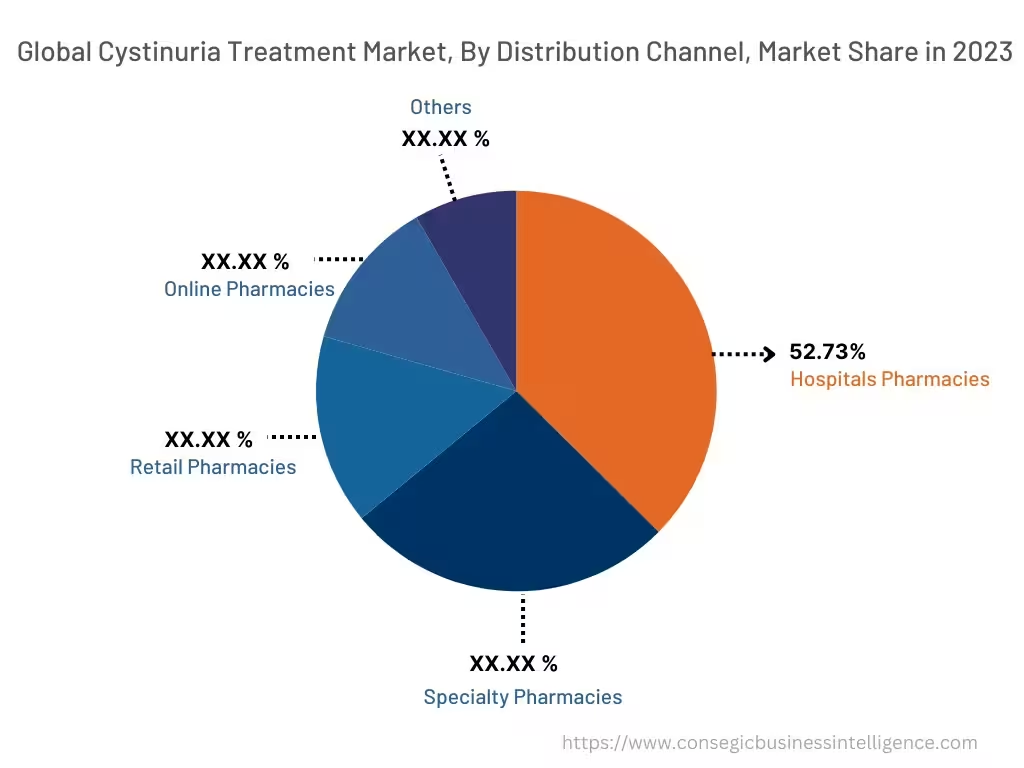
By distribution channel cystinuria treatment market is categorized into hospital pharmacies, specialty pharmacies, retail pharmacies, online pharmacies, and others. In 2023, the hospital pharmacies segment accounted for the highest market share of 36.55% in the cystinuria treatment market. Cystinuria drugs are easily available in hospital pharmacies because they need to be stored and sold under special conditions. These drugs are generally stocked in hospital pharmacies to ensure the constant availability of medications to inpatients as well as outpatients. Moreover, these drugs are not allowed to be sold without a prescription and they need to be administered by specialists in particular doses. The hospital pharmacies may distribute this medication upon discharge, ensuring the continuity of care to patients upon discharge for the hospitals. Moreover, the increasing number of hospitals in developing countries is driving the segment.
For instance,
- According to the report by Investment Information and Credit Rating Agency, in August 2023, the hospital sector is driving a robust revenue of 8-10% in FY24, with an operating profit margin of 22-23%.
Thus, the availability of cystinuria drugs in hospital pharmacies is boosting the trends of the segment.
The online pharmacies segment is expected to grow with the CAGR over the forecast period. Online pharmacies such as e-commerce websites and company websites provide a platform for customers to purchase medicines and personal care products online, allowing the customer to get cystinuria drugs in the comfort of their homes within a short time. The increasing adoption of e-services is expected to propel the demand for segments in the upcoming years. Additionally, based on the analysis, the rising e-commerce sector is expected to contribute to this growth trajectory.
For instance,
- According to the data published by the National Investment Promotion and Facilitation Agency in 2023, the e-commerce market in India is expected to touch USD 350 billion in gross merchandise value by 2030 and online shoppers in India are expected to reach 500 million in 2030 from 150 million 2020.
Thus, the rise in the online sector is boosting the trends of the segment.
Based on the Region :
The regional segment includes North America, Europe, Asia Pacific, the Middle East and Africa, and Latin America.
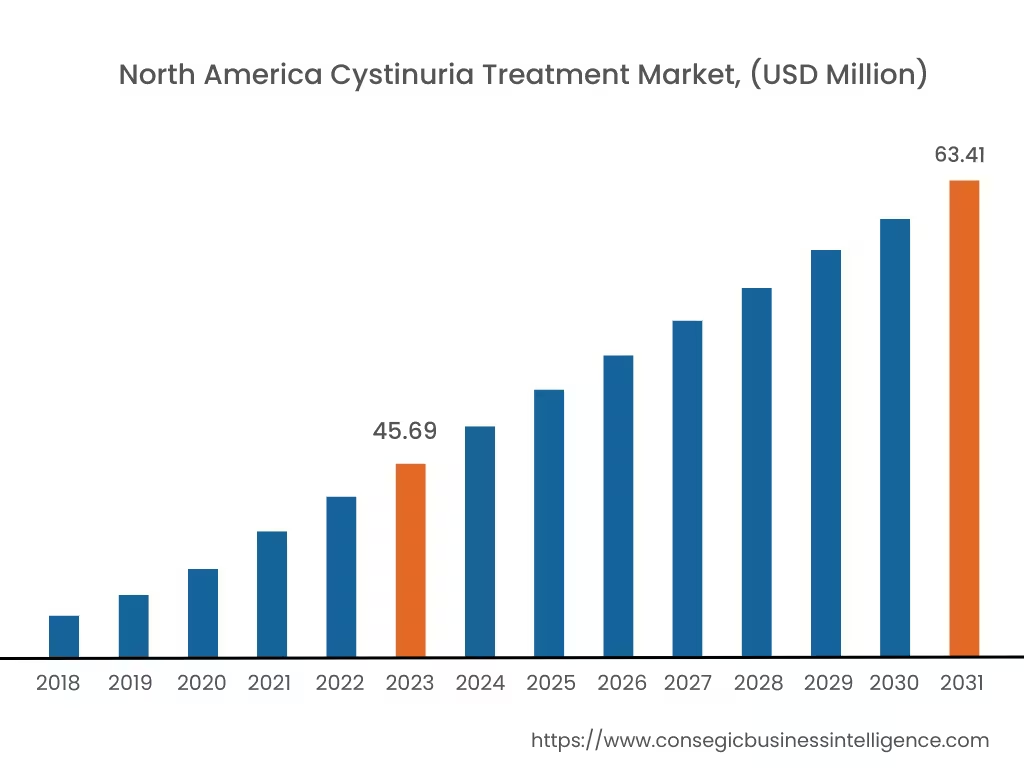
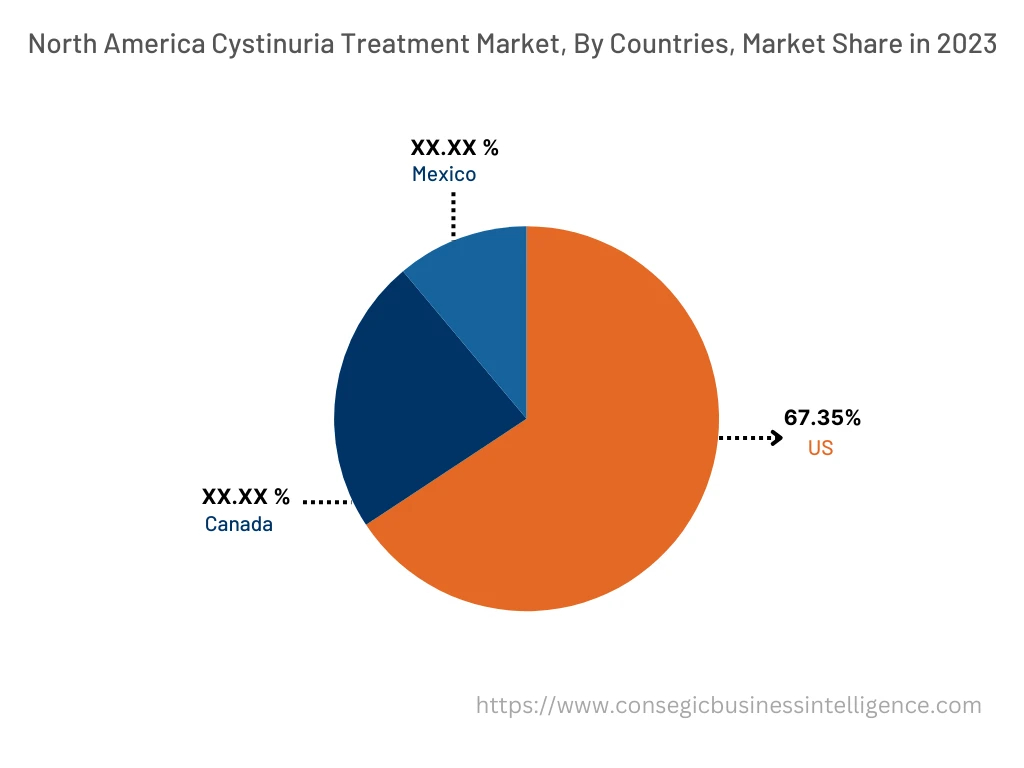
In 2023, North America accounted for the highest market share at 39.15% valued at USD 45.69 million in 2023, it is expected to reach USD 63.41 million in 2031. In the North America region, the U.S. accounted for the dominant market share of 67.35% in the year 2023. Based on the cystinuria treatment market analysis, North America has a well-established medical infrastructure with skilled medical professionals. Moreover, new product launches and the increase in research and development activities by leading companies are influencing the growth of the segment.
For instance,
- In May 2021, Teva Pharmaceutical Industries announced the launch of its first generic version of thiol tablets which are thiopronin tablets used for the treatment of cystinuria.
Thus, the above-mentioned factors are boosting the cystinuria treatment market trends.
Furthermore, the Asia Pacific region is expected to witness significant growth over the forecast period, growing at a CAGR during 2024-2031. There is a growing awareness of cystinuria treatment management in the Asia Pacific region. This is leading to an increase in the demand for cystinuria diagnostics and treatment. Furthermore, Governments in the Asia Pacific region are increasing their support for cystinuria treatment management. This is leading to increased access to cystinuria treatment drug treatment and other essential cystinuria treatment supplies, which is expected to create lucrative cystinuria treatment market opportunities and trends across the region over the forecast period. All these above-mentioned factors are collectively boosting the market for cystinuria treatment across the Asia Pacific region and creating lucrative growth opportunities for the cystinuria treatment market in the Asia Pacific region.
Top Key Players & Market Share Insights :
The global cystinuria treatment market is highly competitive, with several large players and numerous small and medium-sized enterprises. These companies have strong research and development capabilities and a strong presence in the market through their extensive product portfolios and distribution networks. The cystinuria treatment industry is characterized by intense competition, with companies focusing on expanding their product offerings and increasing their market through mergers, acquisitions, and partnerships. The key players in the market include-
The key players in the market include-
- Taj Pharma Group
- Par Pharmaceutical, Inc.
- Apotex Inc
- Dr. Reddy's
- Granules India Limited
- NAVINTA LLC
- Teva Pharmaceuticals USA, Inc.
- Travere Therapeutics, Inc.
- Enomark
- ANI Pharmaceuticals
Recent Industry Developments :
- In November 2022, Lupin Limited announced the signing of a binding contract between MedQumica Indstria Farmacêutica, that is Lupins fully owned Brazilian subsidiary, and BL Indstria tica Ltd to buy all of the rights to nine drugs.
Key Questions Answered in the Report
What is the market size of the cystinuria treatment industry in 2023? −
In 2023, the market size of gastric cancer drugs is USD 116.71 million.
What will be the potential market valuation for the cystinuria treatment market by 2031? +
In 2031, the market size of cystinuria treatment market will be expected to reach USD 157.22 million.
What are the key factors driving the growth of the cystinuria treatment market? +
The prevalence of cystinuria is influencing the growth of the market.
What is the dominating segment in the cystinuria treatment market by distribution channel? +
In 2023, the hospital pharmacies segment accounted for the highest market share of002036.55% in the overall cystinuria treatment market.
Based on current market trends and future predictions, which geographical region is growing at the fastest CAGR over the forecast period in the cystinuria treatment market? +
Asia Pacific region accounted for the highest CAGR in the overall cystinuria treatment market.
Overview
Reputation & Certifications


Our Services
- Market Intelligence & Forecasting
- Custom Research Solutions
- Market Entry Strategy
- Competitive Intelligence
- Customer Insights
- Industry Innovation Analysis
- Investment Advisory