Jump to Content
Oncology Active Pharmaceutical Ingredients (API) Market - Size, Share, Industry Trends, and Forecasts (2025-2032)
Oncology Active Pharmaceutical Ingredients (API) Market Size:
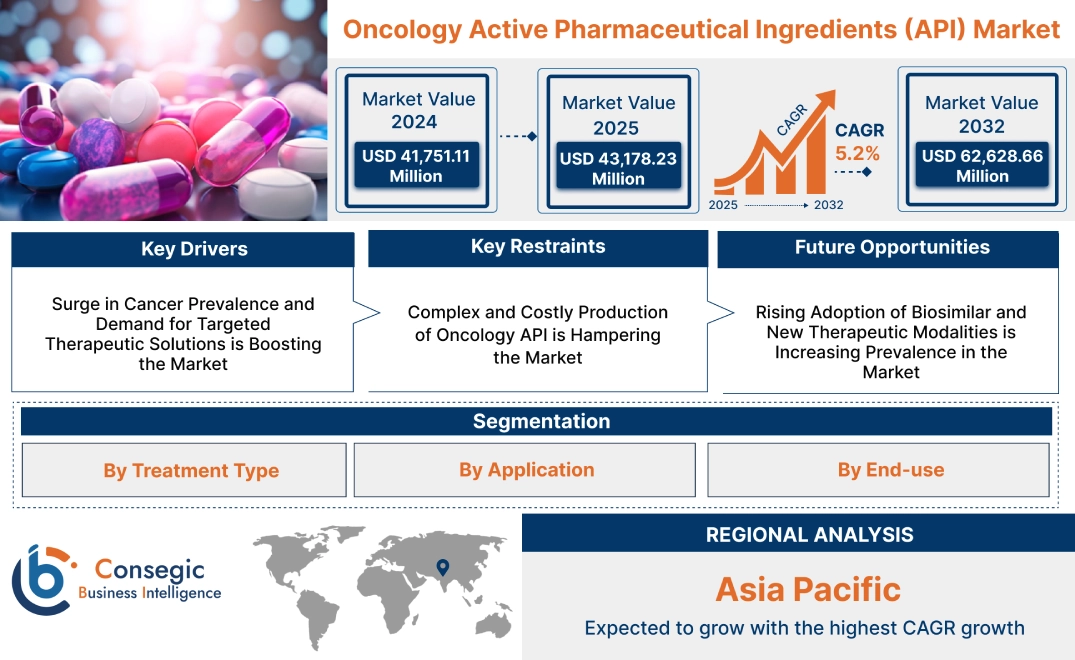
The Oncology Active Pharmaceutical Ingredients Market size is estimated to reach over USD 62,628.66 Million by 2032 from a value of USD 41,751.11 Million in 2024 and is projected to grow by USD 43,178.23 Million in 2025, growing at a CAGR of 5.2% from 2025 to 2032.
Oncology Active Pharmaceutical Ingredients (API) Market Scope & Overview:
The Oncology Active Pharmaceutical Ingredients (API) work on the development and manufacturing of API specifically used in cancer treatment drugs. The demand for these API is driven by the rising global cancer incidence and the continuous evolution of targeted therapies and personalized medicine. This market covers a wide range of API, including small molecules, biologics, and cytotoxic agents that form the active components of chemotherapy and other cancer treatments. Factors such as advancements in biopharmaceutical technology, increasing investments in cancer research, and supportive government initiatives are fueling market growth. Additionally, collaborations between pharmaceutical companies and contract manufacturing organizations (CMOs) are expanding production capabilities and accelerating the commercialization of innovative therapies. As oncology treatments become more sophisticated, the market is expected to see significant advancements and expansion.
Oncology Active Pharmaceutical Ingredients (API) Market Dynamics - (DRO) :
Key Drivers:
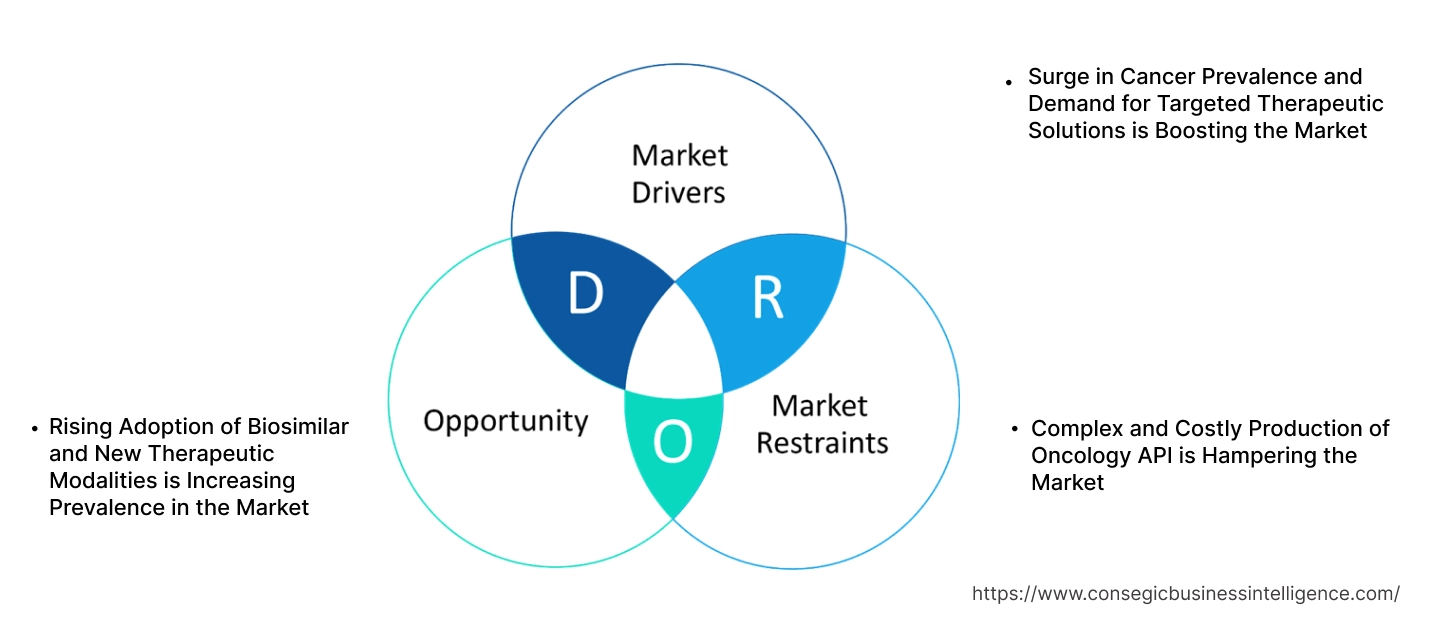
Surge in Cancer Prevalence and Demand for Targeted Therapeutic Solutions is Boosting the Market
The increasing prevalence of cancer globally is one of the primary drivers fueling the Oncology API market. Cancer cases are rising due to factors such as aging populations, lifestyle changes, and environmental factors, which are resulting in greater demand for advanced cancer treatments. The need for targeted therapies that provide more effective and less toxic treatment options compared to traditional chemotherapy is particularly accelerating the demand for oncology API. Key API used in biologics, immunotherapies, and targeted therapies such as monoclonal antibodies, small molecules, and cell and gene therapies are driving innovations within the oncology space. API such as trastuzumab (Herceptin), rituximab, and nivolumab are among the key drugs involved in revolutionizing cancer treatment, especially for hard-to-treat cancers like breast, colorectal, and lung cancers. This increasing demand for specific, effective, and personalized drugs is pushing the oncology API market to expand, as pharmaceutical companies focus on producing API that enable the production of these advanced therapeutics.
Key Restraints:
Complex and Costly Production of Oncology API is Hampering the Market
The production of oncology API involves complex manufacturing processes that require stringent regulatory compliance and specialized facilities, which presents a significant restraint to the market's growth. Oncology drugs, particularly biologics, require advanced biotechnological processes such as recombinant DNA technology, fermentation, and monoclonal antibody production. These processes are capital-intensive and require high precision and quality control to ensure safety and efficacy. The manufacturing costs for oncology API are significantly higher compared to conventional drugs, due to the need for cleanroom environments, high-tech equipment, and extensive testing for purity and potency. The long development timelines and the need for large-scale production capacity further drive up costs, which can impact the affordability and accessibility of these drugs, especially in emerging Oncology Active Pharmaceutical ingredients markets analysis. Additionally, the patent expirations of certain blockbuster oncology drugs and the slow introduction of generics in oncology therapies contribute to the financial challenges associated with oncology API production. Henceforth, the rising complex and costly Production is hindering the oncology Active Pharmaceutical Ingredients (API) market analysis results.
Future Opportunities :
Rising Adoption of Biosimilar and New Therapeutic Modalities is Increasing Prevalence in the Market
The increasing shift towards biosimilar offers a significant opportunity for the oncology API market expansion. As patents of biologic drugs such as Herceptin and Avastin expire, pharmaceutical companies are developing biosimilar—biologically identical drugs that are typically sold at a lower price. The approval and commercialization of biosimilar is expected to drive increased competition, lowering the cost of oncology treatments and expanding access to life-saving therapies. Additionally, biosimilar offer pharmaceutical companies the opportunity to produce oncology API that target similar molecular structures to the innovator drugs, but at a reduced cost of production. This shift is particularly important in emerging markets, where the high cost of original biological therapies has previously been a barrier to treatment. In conclusion, the rising adoption of Biosimilar and New Therapeutic Modalities is providing and opening new opportunities for Oncology Active Pharmaceutical Ingredients (API) market share.
Oncology Active Pharmaceutical Ingredients (API) Market Segmental Analysis :
By Type:
Based on type segmentation the categorization is into Innovative Oncology API, Generic Oncology API, Small Molecules API, and Large Molecules API.
Small Molecules API accounted for the largest revenue in the Oncology Active Pharmaceutical ingredients market share in 2024.
- Small molecule API have the largest market share in the oncology API sector due to their long-established role in cancer treatment, particularly in chemotherapy.
- These APIs are chemically synthesized and are widely used in treating a variety of cancers, such as breast, lung, and prostate cancer.
- Their proven effectiveness, lower production costs, and availability in oral formulations contribute to their broad adoption.
- Additionally, the extensive pipeline of small molecule drugs continues to expand, with ongoing research focused on improving their potency and reducing side effects, ensuring they remain a cornerstone of oncology treatment globally.
- In conclusion, small molecule API dominate the oncology sector due to their established efficacy, cost-effectiveness, and versatility in treatment.
- Their widespread use across various cancer types, coupled with ongoing research to enhance their therapeutic potential, ensures their continued relevance in the fight against cancer.
- The sustained development of these drugs and their availability in oral forms further solidifies their pivotal role in modern cancer therapies.
Large Molecules API is expected to have the fastest CAGR during the forecast period.
- Large molecule API, particularly biologics like monoclonal antibodies and immunotherapies, are the fastest growing segment in the oncology API market due to their high efficacy and targeted action against cancer cells.
- Unlike traditional chemotherapy, biologics offer more personalized treatment with fewer side effects, making them highly attractive for treating various cancers, including difficult-to-treat types.
- The rapid advancements in biotechnology, including innovations in gene therapies and CAR-T cell treatments, are driving their growth.
- Additionally, regulatory approvals and increasing healthcare investments in personalized medicine are accelerating the development and adoption of biologic drugs, expanding the market for large molecule API.
By Application:
The application segment is based on Targeted Therapies, Hormone Therapies, Chemotherapy, and Immunotherapy.
The targeted therapies segment accounted for the largest revenue share in 2024.
- Targeted therapies use oncology APIs designed to attack specific molecular pathways involved in cancer progression, offering greater efficacy and fewer side effects.
- Increasing development of kinase inhibitors, monoclonal antibodies, and precision medicine drugs supports demand for targeted oncology APIs.
- Rising regulatory approvals for personalized cancer treatments contribute to the expansion of this segment.
- Ongoing advancements in biomarker-driven therapies enhance API innovation and market dominance.
The immunotherapy segment is anticipated to register the fastest CAGR during the forecast period.
- Immunotherapy APIs, including checkpoint inhibitors, CAR-T cell therapy components, and cytokines, are transforming cancer treatment approaches.
- Growing clinical success of immunotherapies, such as PD-1/PD-L1 inhibitors and CTLA-4 inhibitors, fuels demand for oncology APIs in this segment.
- Expanding research into novel immunomodulators and combination therapies accelerates API production.
- Increasing investments in immune-oncology R&D and pipeline expansion contribute to segment growth.
By End-Use:
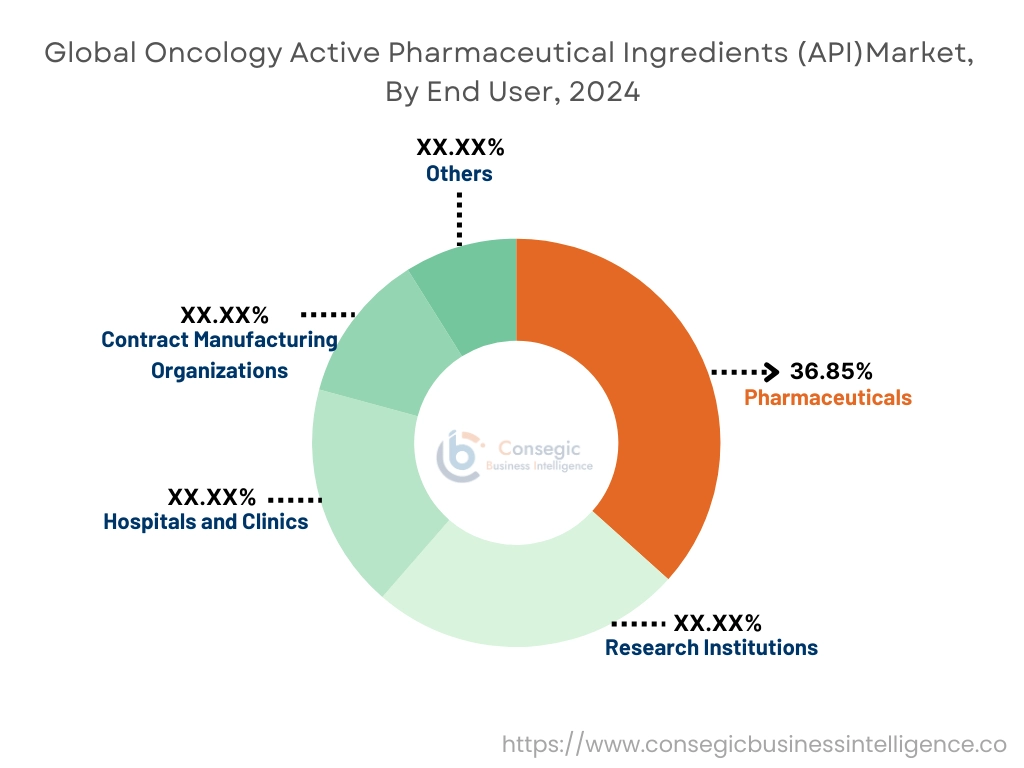
Based on segmentation categorization by end users, the market is divided into Research Institutions, Hospitals and Clinics, Pharmaceuticals, Contract Manufacturing Organizations, and Others.
The pharmaceuticals segment accounted for the largest revenue share of 36.85% in 2024.
- Pharmaceutical companies play a key role in the development and commercialization of oncology APIs for targeted cancer therapies.
- Increasing investments in oncology drug development and biologics drive demand for high-quality APIs.
- Rising focus on innovative formulations, such as antibody-drug conjugates and small molecule inhibitors, enhances API production.
- Expanding pipeline of oncology drugs and regulatory approvals for novel cancer treatments further support the segment’s dominance.
Contract Manufacturing Organizations (CMOs) are expected to have the fastest CAGR during the forecasted period.
- Contract Manufacturing Organizations (CMOs) represent the fastest-growing segment in the oncology API market due to the increasing trend of outsourcing drug production by pharmaceutical companies.
- As the demand for oncology treatments grows, pharmaceutical companies seek to optimize resources by partnering with CMOs to handle the complex and costly manufacturing processes involved in producing API.
- CMOs offer specialized expertise, flexibility, and cost-effective solutions, enabling drug developers to scale production without the need for large in-house manufacturing facilities.
- This outsourcing trend is particularly evident in biologics and large molecule API, where complex production requirements drive pharmaceutical companies to rely on CMOs for efficient, high-quality manufacturing.
Regional Analysis:
The regions covered are North America, Europe, Asia Pacific, the Middle East and Africa, and Latin America.
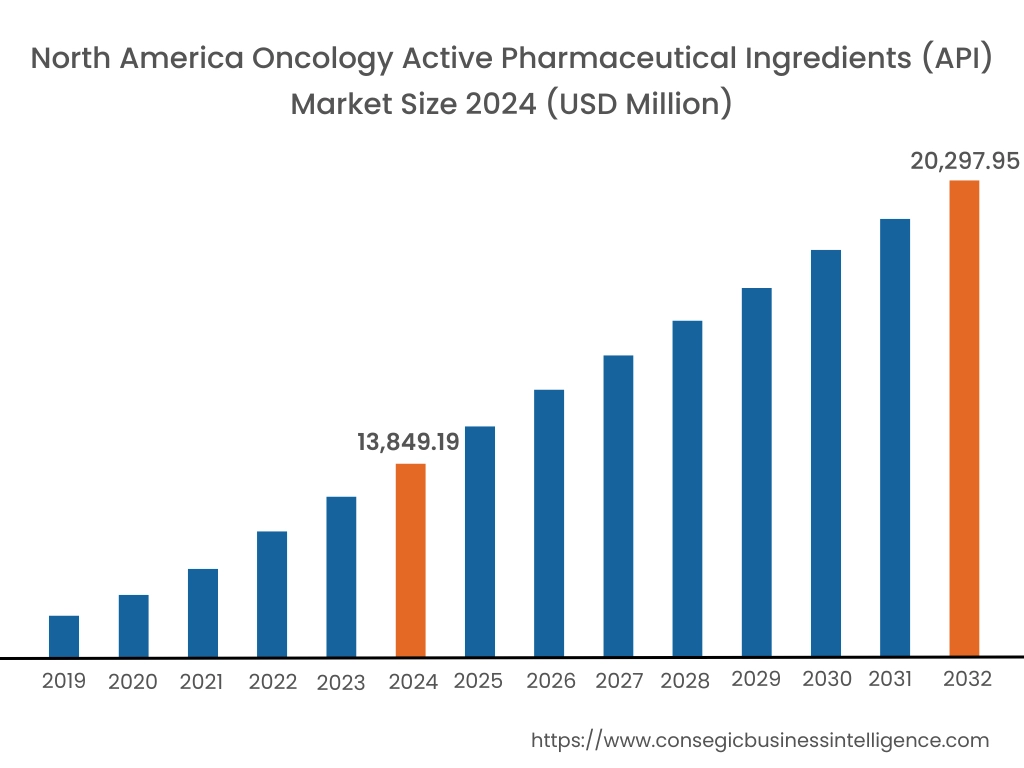
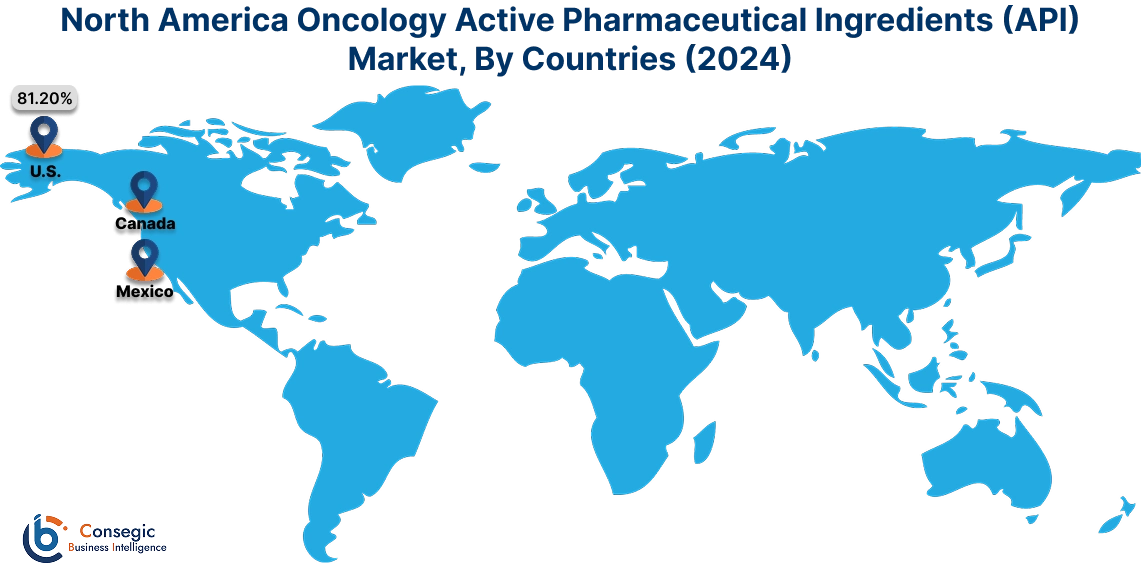
In 2024, North America was valued at USD 13,849.19 Million and is expected to reach USD 20,297.95 Million in 2032. In North America, the U.S. accounted for the highest share of 81.20% during the base year of 2024. The North American region holds a dominant position in the Oncology Active Pharmaceutical Ingredients (API) Market, driven by advanced healthcare infrastructure, high cancer prevalence, and substantial investments in pharmaceutical research and development. The United States, in particular, is the largest contributor to the market due to its leadership in oncology drug innovation, with numerous pharmaceutical companies. The region's robust healthcare system and access to cutting-edge treatments, including biologics and immunotherapies, further bolster market growth. North America also benefits from a well-established regulatory framework that supports the approval and commercialization of cancer therapies.
In Asia Pacific, the market is experiencing the fastest growth with a CAGR of 5.6% over the forecast period. The Asia Pacific (APAC) region is witnessing significant growth in the Oncology Active Pharmaceutical Ingredients (API) Market, driven by a combination of factors including rising cancer incidences, improving healthcare infrastructure, and increasing investments in biotechnology and pharmaceutical sectors. Countries like China, India, Japan, and South Korea are major contributors to this growth. China and India, with their large populations and increasing prevalence of cancer, are seeing a surge in demand for both small molecule and biologic oncology API. Additionally, Japan and South Korea are emerging as hubs for advanced cancer treatments due to their strong healthcare systems and technological advancements in biotechnology.
In Africa, cancer rates are also increasing, influenced by lifestyle changes, inadequate preventive care, and limited access to treatment. With oncology services concentrated in urban centers, there is a strong demand for digital solutions that help bridge access gaps. Consequently, API adoption in Africa may necessitate partnerships with governments and NGOs to expand access, subsidize costs, and provide essential infrastructure. The Middle East is experiencing rising cancer rates due to urbanization, lifestyle changes, and environmental factors. Wealthier nations like Saudi Arabia and the UAE are heavily investing in healthcare advancements. Oncology API are in high demand to support precision medicine, medical imaging, and data-driven patient care, aligning with the Middle East’s healthcare modernization efforts. However, varying data privacy laws and regulatory frameworks across the region complicate API adoption, particularly in rural or politically unstable areas where healthcare access remains limited.
The oncology market in Latin America is experiencing rapid growth due to a combination of rising cancer rates, evolving healthcare policies, and an increasing focus on digital health. Several factors are driving this market expansion, which also contributes to the increasing demand for innovative healthcare technologies, such as oncology API. Economic and healthcare reforms across several Latin American countries are also playing a significant role in boosting the oncology market. Countries like Brazil, Mexico, and Argentina are investing in healthcare modernization to improve access to essential treatments, including cancer therapies. This trend is further supported by government-led initiatives aiming to expand health coverage, increase funding for public healthcare, and promote partnerships with private healthcare providers. Such efforts are increasing the need for digital solutions, including oncology API that streamline data sharing, patient monitoring, and diagnostic support within these growing healthcare systems. Increased demand for personalized care and treatment precision also fuels this market. As Latin American patients become more aware of advanced treatment options, there is a growing demand for personalized oncology treatments and precision medicine.
In Europe, there is also a strong focus on early cancer detection and personalized medicine, backed by substantial government and healthcare organization investments in technologies that facilitate these approaches. Early diagnosis and individualized treatments have become critical goals, as they are shown to improve survival rates and patient outcomes. Oncology API are integral in enabling healthcare providers to access and integrate vast amounts of data, allowing for more personalized treatment plans tailored to each patient’s needs. API is also key to integrating advanced genomics, where genetic data is used to customize therapies, creating highly personalized and targeted approaches to cancer care. Europe’s commitment to healthcare innovation extends to investments In cancer research and treatment are particularly valuable for predicting patient outcomes, optimizing treatment options, and analyzing large datasets for research purposes. Oncology API facilitates these developments by providing access to diverse data sources, supporting AI algorithms and analytics applications that benefit healthcare providers and researchers alike. The rise in AI-driven tools has therefore created parallel growth in API, as API is critical in feeding these applications the comprehensive data they require to be effective.
Top Key Players & Market Share Insights:
The global oncology active pharmaceutical ingredients market is highly competitive with major players providing products and solutions to the national and international markets. Key players are adopting several strategies in research and development (R&D), product innovation, and end-user launches to hold a strong position in the market. Key players in the oncology active pharmaceutical ingredients industry include-
- Aspen Pharmacare (South Africa)
- Pfizer Inc. (USA)
- Takeda Pharmaceutical Company (Japan)
- Grupo Biotoscana (Brazil)
- Libbs Farmacêutica (Brazil)
- Julphar (UAE)
- Merck & Co. (USA)
- Novartis AG (Switzerland)
- Sanofi S.A. (France)
- GSK plc (United Kingdom)
- Sun Pharmaceutical Industries Ltd. (India)
Recent Industry Developments :
Research and Development:
- In December 2024, AbbVie announced the findings from its Emotional Impact Report, shedding light on the mental health challenges experienced by underrepresented chronic lymphocytic leukemia (CLL) patients. The report reveals that patients from Black, Hispanic, and Asian communities face significant emotional distress during their CLL diagnosis and treatment. These patients often experience higher levels of financial stress and underutilize available mental health support services. AbbVie emphasizes the need for culturally sensitive educational resources and emotional support tailored to these demographics. This development underscores the importance of integrating emotional well-being into cancer care, particularly for underrepresented patient groups, while also highlighting the potential for enhanced oncology therapies and support systems to improve patient outcomes in diverse populations.
Oncology Active Pharmaceutical Ingredients (API) Market Report Insights :
| Report Attributes | Report Details |
| Study Timeline | 2019-2032 |
| Market Size in 2032 | USD 62,628.66 Million |
| CAGR (2025-2032) | 5.2% |
| By Treatment Type |
|
| By Application |
|
| By End-User |
|
| By Region |
|
| Key Players |
|
| North America | U.S. Canada Mexico |
| Europe | U.K. Germany France Spain Italy Russia Benelux Rest of Europe |
| APAC | China South Korea Japan India Australia ASEAN Rest of Asia-Pacific |
| Middle East and Africa | GCC Turkey South Africa Rest of MEA |
| LATAM | Brazil Argentina Chile Rest of LATAM |
| Report Coverage |
|
Key Questions Answered in the Report
What is the current and projected size of the Oncology Active Pharmaceutical Ingredients (API) Market? −
The Oncology Active Pharmaceutical Ingredients (API) Market is projected to reach USD 62,628.66 Million by 2032, growing from USD 41,751.11 Million in 2024, at a CAGR of 5.2% from 2025 to 2032.
What are the key types of oncology API used in the market? +
The market is segmented into Innovative Oncology API, Generic Oncology API, Small Molecule API, and Large Molecule API. Small Molecule API held the largest market share in 2024 due to their established efficacy and cost-effectiveness.
Which treatment type dominates the Oncology API Market? +
Chemotherapy accounted for the largest revenue share in 2024, as it remains a widely used cancer treatment. However, immunotherapy is the fastest-growing segment due to advancements in targeted cancer treatments and monoclonal antibodies.
What factors are driving the growth of the Oncology API Market? +
Growth is driven by increasing global cancer prevalence, rising demand for targeted therapies, advancements in biopharmaceutical technologies, and strong investments in oncology research and drug development.
Which region holds the largest share in the Oncology API Market? +
North America leads the market, with the U.S. dominating due to high healthcare spending, advanced oncology research, and strong pharmaceutical industry presence. The region benefits from regulatory support for innovative cancer treatments.
Overview
Reputation & Certifications


Our Services
- Market Intelligence & Forecasting
- Custom Research Solutions
- Market Entry Strategy
- Competitive Intelligence
- Customer Insights
- Industry Innovation Analysis
- Investment Advisory