The Growing Influence of AI-Powered Equipment Across Industries
Artificial Intelligence is changing the way companies operate things, and one big change is that more and more equipment is being powered by Artificial Intelligence. This equipment is different from the machines that just followed predefined instructions. AI-Powered Equipment can look at data find patterns and make decisions in real time. This smart equipment is integrated in places like factories, warehouses, hospitals and construction sites.
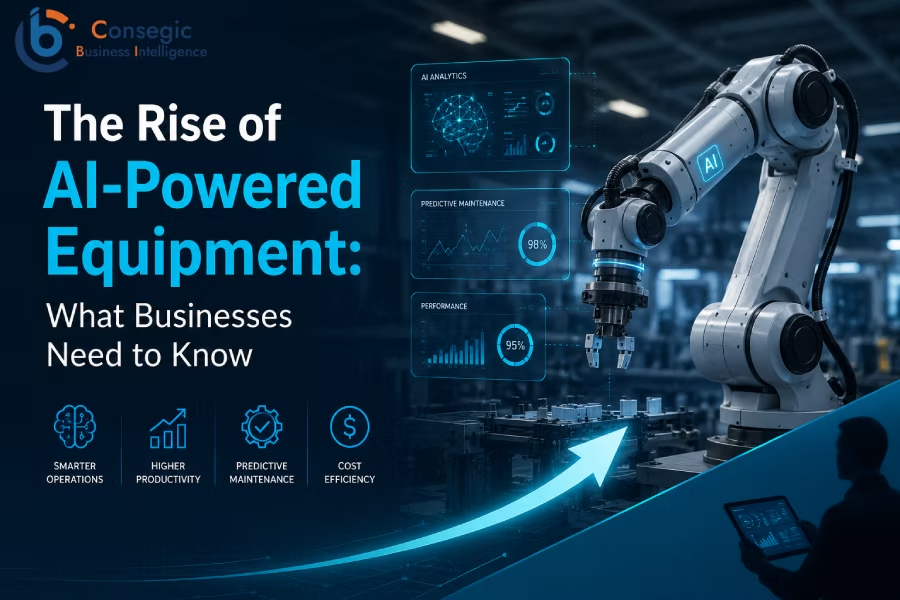
Moreover, the move to AI tech fits into Industry 4.0, where connected devices, sensors, and fancy analytics team up for super-efficient systems. Today’s AI gear watches its own performance, figures out when it needs fixing, and optimize workflows without constant human intervention. This is really helpful in industries where industries are facing labour shortages, rising operational costs, and increasing customer expectations.
In 2026 companies are moving beyond experimental Artificial Intelligence and investing in practical AI-driven solutions. Companies that understand and embrace this transformation are likely to gain a significant competitive advantage in the years ahead.
How AI-Powered Equipment Is Transforming Business Operations
Businesses are becoming smarter, more efficient and quicker through AI-powered machines. A major way this has happened is through predictive maintenance, which enables business to reduce the amount of "unplanned" downtime and save a significant amount of money on maintenance.
Automation driven by AI is changing the way warehousing and logistics operate as well. Through intelligent robotics, companies can better manage inventories, move products, and rearrange their warehouses to maximize efficiency. In addition to these benefits, the latest developments have provided robots with the ability to understand commands given in natural language, allowing for much smoother collaboration between humans and machines than has ever been achieved before.
Since all companies have to deal with greater volumes of operational data than ever before, machines with AI-enabled capabilities will allow them to provide the necessary intelligence that will help convert that data into actionable insights. The final result is increased productivity, improved workflow processes, and increased operational resiliency (ability to withstand external shocks). In fact, for many firms, AI-based equipment is now seen as critical to maintaining their competitiveness in an ever-changing and more dynamic marketplace.
Key Benefits of Adopting AI-Enabled Equipment
In today’s business world companies want to work be more efficient and stay ahead. AI machines are helping them do that by automating hard tasks giving real-time insights and improving how things run. From saving money to making workplaces safer AI machines are becoming very valuable.
Using AI-enabled equipment to quickly and accurately perform repetitive, time-consuming tasks can help businesses increase their total volume of output. This enables staff to spend more time on higher level strategic issues.
Smart machines can monitor themselves to find out how efficiently they are working and to identify problems before they become bigger problems. This reduces the probability of unexpected equipment failure and expensive downtime.
AI-enabled devices improve employee productivity, require less equipment maintenance, reduce wastage of materials, and overall reduce business expenses.
The deployment of AI systems decreases the number of jobs that are dangerous and/or physically taxing to employees. This results in a safer work environment and decreased chance of injury to employees.
Managers can leverage real-time data and predictive analytics to improve business performance, make better and faster business decisions. AI enables organizations to optimize use of raw materials, energy and equipment for more sustainable and lower overall long-term cost.
Industry Applications: Where AI-Powered Equipment Is Making the Biggest Impact
AI has impacted not only the manufacturing industry but many more, providing businesses with improvements in all aspects of efficiency, accuracy, and operational performance. In manufacturing, intelligent robots and smart production systems help to finish the assembly automatically, monitor the equipment and improve the quality control through computer vision technologies. This extra help for manufacturers enables them to reduce waste and increase productivity while still maintaining high product quality.
Innovative technologies are transforming the logistics warehousing industry. Autonomous mobile robots can automate inventory management, order fulfilment and material handling, and thus increase efficiencies. There is also an increasing trend of deploying AI powered warehouse systems to improve the optimization of storage patterns, monitor inventory real-time and improve delivery efficiency.
New capabilities for healthcare professionals have also been enabled through AI. Today, medical professionals use a wide variety of diagnostic equipment, robotic surgical systems, and automated laboratory instruments that use AI to improve the accuracy and reliability of their diagnosis and treatment. Similarly, farmers are availing smart tractors and AI-enabled drones and precision farming technologies that allow them to get more crop yield with less use of resources.
Due to the rapid progress and evolution of AI, its applications are growing exponentially in a wide variety of sectors. Organizations that successfully integrate AI powered equipment will continue to drive operational efficiencies, reduce overall operating costs, and position themselves for long-term success in a technology driven business environment.
Challenges, Future Trends, and Strategies for Successful AI Adoption
While AI-enhanced equipment offers many benefits, there are also a number of challenges for companies to implement these technologies. One of the biggest hurdles could be funding the initial investment in advanced hardware, software integration and training your workforce. Apart from this issue, there are also issues regarding the security of connected AI systems against cyber threats. Cybercriminals can also target connected AI systems if they are not properly protected against cyber threats. Another challenge is the struggle of many organizations to integrate legacy systems with newly created/imported AI systems.
The future of AI-enhanced equipment looks bright. Trends include humanoid robots (robots that look human), collaborative robots (robots that work together with humans), and autonomous systems (systems that can automate complex operational decisions with little to no input from humans). Many of the large technology firms and industrial companies are putting a lot of money into Physical AI (Machines that have the ability to think and act based on their understanding of real-world environments). All of these advancements will help to accelerate the use of robotics and automation in manufacturing, logistics, healthcare, and smart city application areas.
Conclusion
Artificial Intelligence (AI) driven devices have moved from the realm of science fiction to becoming an integral part of all forms of existing business operations globally. In addition to improving productivity, lowering operating costs, as well as increasing safety and helping organizations make smarter, faster decisions, AI-based devices are changing the way industries do business worldwide. Although high implementation costs, cyber security risks and workforce training remain challenges; the long-term benefits of adopting technology usually outweigh these barriers. While advances in robotics, automation and Physical AI are developing rapidly, organizations that strategically integrate these technologies will be best positioned for future innovation, maintaining competitiveness, and achieving sustainable growth. Organizations can build a more efficient, resilient and future-ready business by adopting AI driven devices today.