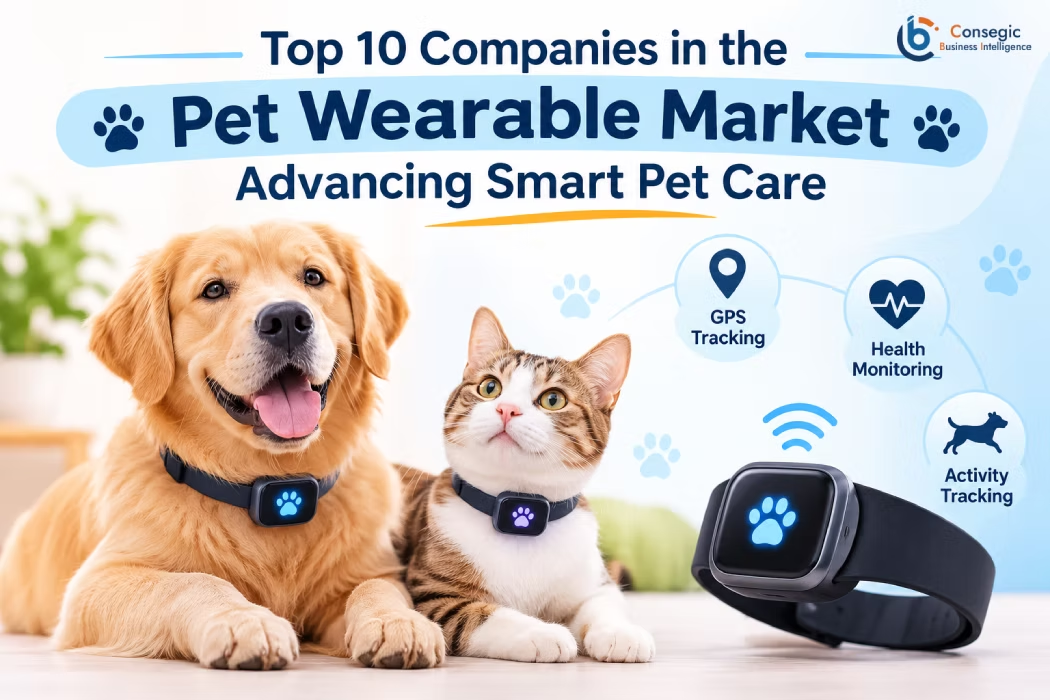
Smart collars and tags have grown from simple GPS gadgets into everyday pet-care tools. Owners now expect more than a dot on a map: they want sleep and activity scores, virtual fences, escape alerts and early warnings of illness, all delivered to a phone. Rising pet ownership, the habit of treating pets as family members and cheaper sensors are pushing the market along a strong growth path.
The top 10 pet wearable companies below are not ranked by revenue. They were chosen for how far they have advanced smart pet care through location tracking, health monitoring or behaviour management.
1. Tractive
Tractive, an Austrian company, is arguably the best-known name in pet tracking. Its GPS trackers clip onto a dog's or cat's collar and show live location, movement history and escape alerts through an app. Newer features add activity, sleep and wellness tracking, plus alerts that nudge owners when a pet's behaviour changes. A subscription funds the cellular connection and keeps the hardware price low. With a presence across Europe and North America, and former Whistle users now arriving, Tractive shows how a focused, affordable tracker can reach mass-market owners.

2. Fi
Fi, based in the United States, built its reputation on design and endurance. The Fi smart collar combines GPS, cellular and Bluetooth location with a battery that lasts weeks rather than days, a real relief for owners who dislike nightly charging. Escape alerts, safe zones and activity tracking sit inside a clean app. By concentrating on one well-built collar instead of a crowded product range, Fi has become a favourite among dog owners who want reliable tracking without fuss.

3. Garmin
Garmin brings decades of GPS experience to animals. Its dog devices pair handheld receivers with rugged collar units, tracking hunting and working dogs over long distances, often beyond cellular coverage. Training collars add remote tone and stimulation options for handlers in the field. For rural owners, hunters and trial competitors, Garmin's durability, mapping tools and brand trust make it the benchmark for serious outdoor use rather than casual neighbourhood tracking.

4. Halo Collar
Halo Collar targets behaviour as much as location. Owners draw virtual fences in an app, and the collar guides the dog with sound and vibration cues when it nears a boundary, with no buried wire required. Built-in training tools support recall and boundary learning. By turning a GPS collar into a coaching device, Halo has helped shift the category from "find my pet" toward "shape good habits", winning loyal customers among suburban and rural households alike.

5. PetSafe
PetSafe, a brand of Radio Systems Corporation, is one of the most widely distributed names in pet technology. Long established in electronic containment, training collars, automatic feeders and smart doors, it uses its retail reach to bring connected products to mainstream pet owners. Its strength is breadth: a single household can use PetSafe for fencing, training and feeding, which makes smart pet care feel familiar rather than experimental.

6. FitBark
FitBark treats the dog as a patient to be understood over time. Its lightweight activity monitor attaches to any collar and records movement, rest and sleep quality, summarised as a daily health score. The data can be shared with veterinarians, and the company positions its dataset as a resource for animal-health research. FitBark shows that a wearable does not need a screen or a cellular plan to be useful: consistent, comparable data is often enough to reveal a change worth checking.
7. PetPace
PetPace pushes wearables toward clinical-grade monitoring. Its smart collar tracks signals such as temperature, pulse, respiration and activity, and flags abnormal patterns to owners and clinics. That makes it especially useful for older pets, animals recovering from surgery and those living with chronic conditions. By working closely with veterinary practices, PetPace points to where the market is heading: wearables as the link between home life and the vet's office.

8. Invoxia
Invoxia, a French connected-device company, applies its sensor expertise to pets through tracking and health-focused collars. Its products have aimed at measuring heart rate, breathing and activity, with an emphasis on spotting early signs of trouble. Invoxia's work reflects a European push for data-driven, preventive pet care and shows how sensor miniaturisation is making once-clinical measurements possible on an everyday collar.

9. SpotOn
SpotOn offers a GPS fence collar designed to replace physical fencing. Owners set boundaries on a map, the collar learns and reinforces them, and an alert arrives if a dog leaves the area. The product appeals to people with large properties, rentals or rough terrain where traditional fences are costly or impractical. SpotOn is a clear example of location technology that solves a practical problem instead of merely reporting one.

10. Dogtra
Dogtra, a long-time maker of dog training equipment, extends its expertise into GPS tracking with collars that combine location data and remote training. Working-dog owners and professional trainers value its rugged build and its focus on dependable communication at a distance. As smart features spread across the industry, Dogtra shows that established training brands can adapt and compete rather than be displaced by newcomers.
Conclusion
The pet wearable market is moving from finding lost animals to understanding living ones. Tractive and Fi make location tracking simple and affordable, Garmin and Dogtra serve working dogs in the field, Halo and SpotOn replace fences with software, and FitBark, PetPace and Invoxia turn collars into health monitors. PetSafe shows how scale can carry the technology into ordinary homes.
Three trends stand out. First, health data is becoming as important as GPS, helping owners and veterinarians act earlier. Second, subscriptions fund constant connectivity, so owners should weigh long-term costs, and Whistle's exit is a reminder to consider a company's stability and what happens to a device if service ends. Third, accuracy, battery life and data privacy will separate lasting brands from short-lived ones.
Buyers can use a simple checklist: how accurate is the location in a crowded neighbourhood, how often will the battery need charging, what does the monthly plan cost over two or three years, and can the health data be shared easily with a vet? Brands that answer these questions clearly are the ones most likely to earn long-term trust.
For pet owners, the best choice starts with a need: tracking, training or health. For companies, the opportunity lies in joining these threads into trustworthy, easy-to-use care that supports pets and the people who love them.