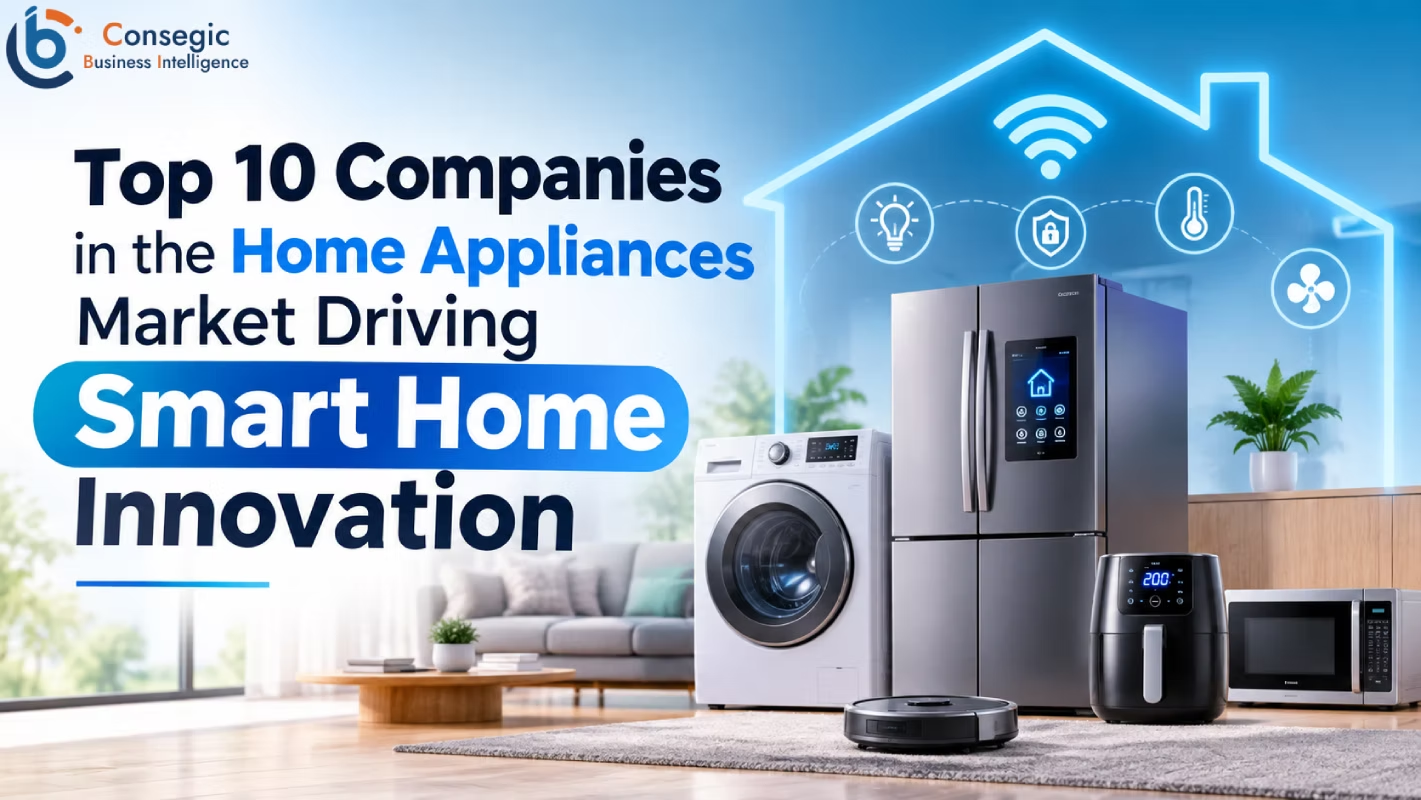
The home appliance market is no longer defined by drum size or compressor efficiency alone. Buyers now ask how well a refrigerator talks to a phone, whether an oven works with a voice assistant, and if a washing machine can learn household routines. Behind this shift stand manufacturers investing heavily in connectivity, artificial intelligence, energy management and open standards such as Matter.
The top 10 home appliances market companies below are not an official ranking. They were chosen for their scale, platform strength and the practical ways they push smart home innovation forward. Together they show where the industry is heading: appliances that behave less like isolated machines and more like coordinated members of one connected household.
- Samsung Electronics
Samsung treats the home as a single ecosystem. Its SmartThings platform links refrigerators, washers, ovens, air conditioners and televisions, and it can also manage devices from other brands. The Bespoke range adds customizable design and AI features, such as refrigerators that recognise stored food and washers that adjust cycles to the load. Samsung has also backed Matter, which helps its appliances cooperate with rival products. Its scale in televisions and mobile devices gives SmartThings a large installed base that smaller rivals struggle to match. Its main advantage is breadth: few companies can tie a phone, a television and a complete kitchen together inside one app.
- LG Electronics
LG built its smart strategy around the ThinQ app and the idea of applying artificial intelligence to everyday chores. Its washers, dryers and air conditioners use sensors to tune performance, while ThinQ lets owners track energy use and receive maintenance alerts. LG has also moved toward coordinated control, aiming to make several appliances work together instead of merely offering remote buttons for each one. Its air-care and laundry products, in particular, show how machine learning can quietly improve results without demanding attention from owners. Reliable motors and a strong reputation in laundry and cooling give its software ambitions a solid hardware base.
- Whirlpool Corporation
Whirlpool, with its range of brands such as Maytag, KitchenAid, and JennAir, offers extensive reach throughout North America and other parts of the world. The smart appliances by Whirlpool are based on actual needs: remote cycle start/stop, diagnostics, cooking assistance, and replenishment reminders. In addition to an extensive after-sales support system, the company uses the concept of connected diagnostics for technicians to identify the problem even before arriving at a customer’s residence. Instead of being preoccupied with innovation for innovation’s sake, Whirlpool focuses on functions that are used in households.

- Haier Group
Haier has risen to become a global powerhouse through the acquisition and nurturing of established brands such as GE Appliances, Fisher & Paykel and Candy. Connected platforms like hOn in Europe and SmartHQ at GE Appliances put remote monitoring into their products. Haier also allows users to customize and their opinions feed into new models. Its focus on food preservation, laundry care and water-saving designs reflects an eye on genuine household problems. This blend of local brands and shared technology allows it to adapt smart features to very different markets without losing economies of scale.
- Midea Group
Midea combines enormous manufacturing capability with a growing software layer. Its Midea Home app and M-Smart platform connect air conditioners, kitchen appliances and cleaning products, while acquisitions such as Toshiba's home appliance business and the robotics firm KUKA widened its technical reach. Its expanding presence in commercial building technology also hints at future links between household systems and wider energy networks. Midea's vertical integration, from motors to compressors, lets it embed intelligence at competitive prices, essential to bring smart features to budget-conscious homes.
- BSH Hausgeräte (Bosch and Siemens)
BSH, the appliance arm of the Bosch Group, owns Bosch, Siemens, Gaggenau, Neff and Thermador. Its Home Connect platform is notable because one app works across all of those brands, so a household can mix products without juggling interfaces. Frequent software updates add recipes and settings after purchase, extending the useful life of the product. BSH pairs precise German engineering with remote diagnostics, recipe assistance and energy-saving features. For buyers wanting premium quality and an integrated experience, it remains a benchmark.

- Electrolux Group
Electrolux, also home to AEG and Frigidaire, blends smart features with a strong sustainability message. Connected ovens, washers and refrigerators allow remote control and tailored care programmes for food and fabrics, while design priorities include lower energy and water consumption. Food-care features that slow spoilage in refrigerators illustrate how smart design can cut household waste as well as save time. It’s Scandinavian roots give it a philosophy that technology should cut waste and effort, a philosophy that appeals to environmentally conscious customers.
- Panasonic
Panasonic extends smart thinking beyond single appliances into whole-home systems. Its portfolio spans air conditioners, kitchen products, lighting, ventilation and energy storage, allowing coordinated comfort and efficiency. In India, its MirAIe platform connects air conditioners and other products through one interface. Such integration matters as electricity prices, solar panels and electric vehicles make household energy management a central concern. Panasonic, which has a wealth of experience in electronics and batteries, is well positioned as homes increasingly generate, store and manage their own power.
- Xiaomi
Xiaomi approaches the smart home from the ecosystem side. Its Xiaomi Home app supports an immense range of affordable connected devices, from robot vacuums and air purifiers to air conditioners and washing machines. By pricing smart products near the level of ordinary ones, Xiaomi has helped democratize connected living. Rapid product launches and a huge user base give it valuable data on how people actually use connected devices. Its challenge is to keep deepening quality and interoperability, yet its influence on price expectations is undeniable.
- Dyson
Dyson is smaller than the giants above, yet its engineering-first approach has changed expectations in cleaning and air care. The MyDyson app pairs purifiers, fans and vacuums with real-time air-quality data, turning invisible pollution into something households can see and act on. Its heavy research spending on motors, filtration and batteries feeds directly into the intelligence built into each product. Dyson shows that smart innovation need not mean covering every appliance; solving a few problems exceptionally well can be just as influential.
Conclusion
The companies profiled here reveal three clear trends. First, competition is shifting from individual products to ecosystems, where a coherent app and platform matter as much as hardware. Second, interoperability is becoming essential; standards such as Matter reduce the frustration of mixing brands and encourage healthier competition. Third, artificial intelligence, energy awareness and sustainability are moving from marketing language to everyday features that save time, power and water.
Challenges remain, including data privacy, cybersecurity, software support over a product's lifetime and the risk of complexity overwhelming ordinary users. The most successful manufacturers will be those that keep smart features useful, secure and simple. For consumers, the advice is straightforward: choose appliances backed by a platform with a record of long-term updates and open standards. If these 10 companies continue to fight and work together, the smart home will become less of a stage for gadgets and more of an invisible, dependable basis for modern life.