Personalized Medicine 2.0: How AI Is Tailoring Treatments to Patients
Medicine is changing fast. For many years, most treatments were designed based on broad groups of patients rather than on the individual sitting in front of a doctor. Today, a new wave of medical innovation is underway. This evolution often called as personalized medicine 2.0 uses artificial intelligence to tailor diagnosis, treatments, and care plans specifically to each patient. In 2026, AI-enabled personalized medicine is no longer just a concept. It is reshaping how healthcare providers understand disease, how treatments are designed, and how patients experience care.
From One-Size-Fits-All to Personalized Care
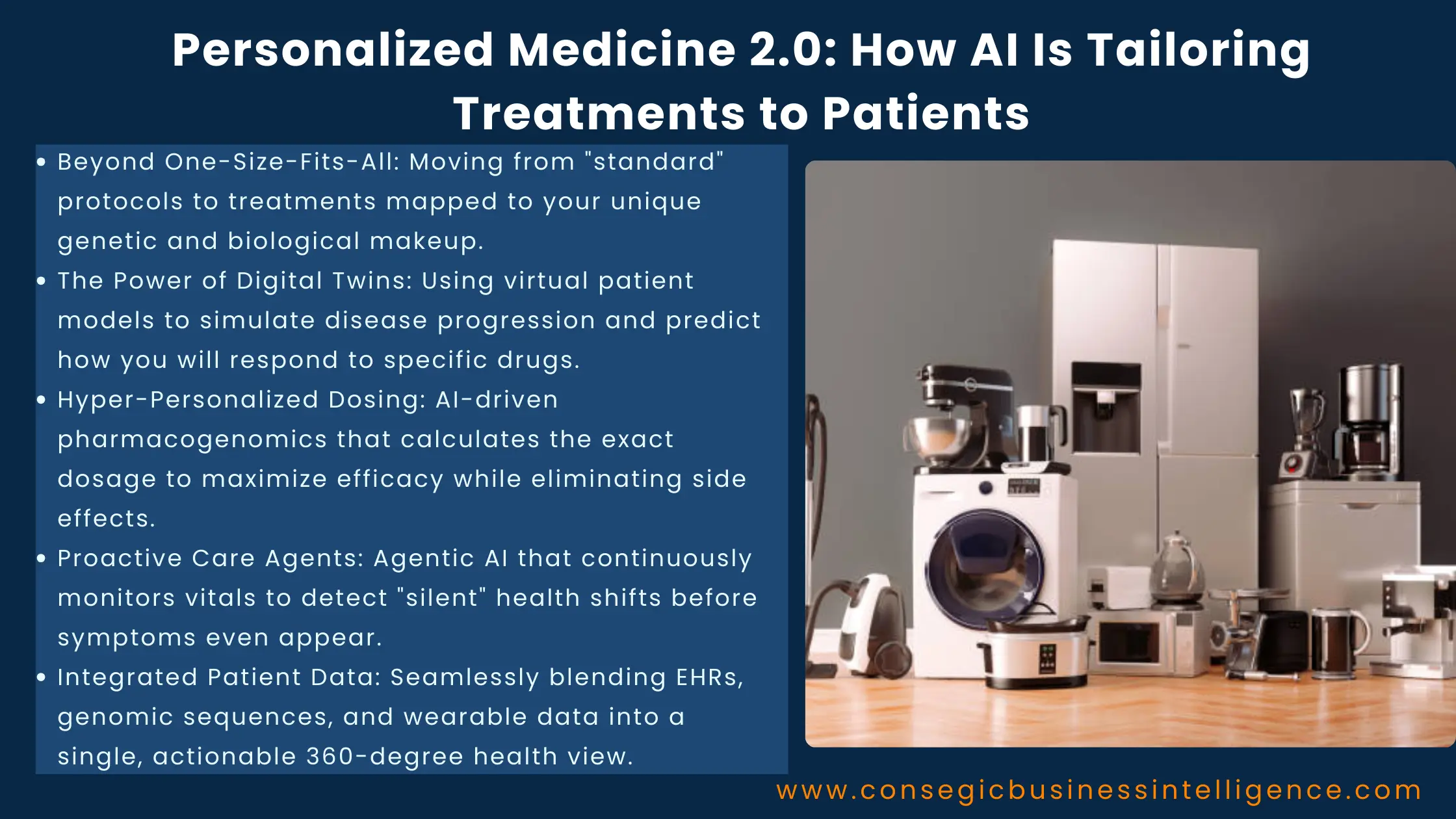
Traditionally, doctors have used standard treatment guidelines that work well for many patients, but not for everyone. Two people with the same diagnosis may respond very differently to the same treatment. Personalized medicine seeks to change that by taking into account a person’s unique genetics, lifestyle, environment, and health history. This approach allows clinicians to identify the most effective therapy for an individual patient rather than relying solely on broad averages.
Artificial intelligence plays a crucial role in this transformation. AI algorithms can analyze vast amounts of medical data, including genomic profiles, lab results, imaging scans, and electronic health records. By uncovering patterns not visible to the human eye, AI can help tailor treatments that are safer, more effective, and better suited to individual needs. This shift toward customization is sometimes called precision medicine or personalized medicine, and it is at the forefront of healthcare innovation in 2026.
How AI Learns From Data
One of the strengths of AI is its ability to work with big data. Healthcare generates enormous amounts of information every day. Genomic sequencing, wearable health devices, and continuous monitoring technologies produce volumes of patient data far beyond what humans can interpret manually. AI systems use machine learning to ingest and interpret these data points rapidly.
For example, AI can identify subtle patterns in a patient’s genomic information that indicate how they might respond to a specific drug. Instead of guessing which treatment has the highest chance of success, clinicians can use AI-supported predictions to select therapies that are more likely to work with fewer side effects. These insights improve clinical decision-making and help shift medicine from reactive care toward proactive and predictive health management.
Tailoring Treatments With Genetic Insights
Genetics plays a fundamental role in how individuals respond to medications and interventions. This is where AI and machine learning bring powerful advantages. Algorithms can compare a patient’s genetic profile with vast populations of genetic and clinical data to identify the best treatments and dosages for that person.
Pharmacogenomics, the study of how genes influence drug response, is now being supported by AI tools that help doctors understand which medications will work best for individual patients. In fields such as oncology, where cancer types vary widely even among tumors of the same organ, AI-enabled personalized medicine is allowing clinicians to match targeted therapies to specific genetic mutations. These tailored approaches improve effectiveness and reduce unnecessary side effects common in standard treatment protocols.
Improving Risk Prediction and Early Detection
Personalized medicine is not just about treatment. It also plays a major role in early detection and prevention. AI can assess a patient’s risk of developing a disease by analyzing genetic data, past health records, lifestyle factors, and environmental exposures. Patients identified as high risk can receive earlier screenings, lifestyle guidance, and preventive care plans designed specifically for their health profile.
Early detection is particularly valuable in diseases like cancer and heart disease, where outcomes improve significantly with timely intervention. AI models trained on diverse datasets can identify early warning signs and flag them for clinicians long before symptoms become apparent. In doing so, personalized medicine becomes a tool not merely for treating illness, but for preventing it.
Data Integration: The Heart of Personalized Care
One challenge in personalized medicine is bringing together different types of data in a meaningful way. Patient records, lab results, genomics, imaging data, and real-time monitoring from wearables all represent pieces of a health puzzle. AI excels at integrating these diverse sources to construct a comprehensive picture of a patient’s health.
This unified approach allows healthcare providers to see how multiple factors interact in an individual’s health profile. AI-driven systems can then help design optimized care pathways that consider both short-term treatment goals and long-term health outcomes. By bridging data silos, AI makes personalized medicine far more actionable and effective.
Ethics, Privacy, and Responsible Use of AI
While personalized medicine powered by AI offers great promise, it also raises important questions about data privacy, bias, and ethical use. Healthcare providers and technology developers must ensure that patient data are protected and used responsibly. Transparency in how AI models make decisions and how patient consent is managed are important aspects of building trust in personalized medicine.
Addressing these concerns requires collaboration among clinicians, data scientists, ethicists, patients, and regulators. Done correctly, AI can enhance care without compromising privacy or fairness. The ethical use of AI in personalized medicine will be a defining issue as the field continues to grow.
The Future: Smarter, More Human-Centered Medicine
The evolution of personalized medicine into an AI-powered system marks a significant shift in how healthcare is delivered. It is not replacing human clinicians, but empowering them with tools that enable better decisions, greater precision, and more meaningful patient engagement. As AI becomes more integrated into clinical workflows, personalized treatment plans will continue to improve outcomes and reduce costs by moving away from trial-and-error approaches.
In 2026, personalized medicine powered by AI stands at the intersection of advanced technology and compassionate care. By treating each patient as a unique individual with unique needs, the medical community is moving toward a future where treatments are tailor-made, outcomes are improved, and healthcare becomes more human-centered. The journey toward fully realizing this vision is ongoing, but the progress so far shows that personalized medicine 2.0 has the potential to transform lives one patient at a time.