Introduction: The Changing Landscape of the Global Chemical Industry
By 2026, the global chemical manufacturing industry will be facing a number of changes in manufacturing operations, technology, sustainability and consumer demands. Chemistry will continue to play an indispensable part in various industries such as medicines, agriculture, building, automotive, electronics, packaging, and energy. Nevertheless, the chemical manufacturers will be under immense pressure to increase efficiency in their operations while minimizing the environmental effects of the chemicals and adjusting to changes in regulations. Increased demand for specialized chemicals and materials as well as sustainable products will motivate the companies to innovate and think outside the box when it comes to traditional manufacturing processes. Furthermore, technologies like artificial intelligence, automation, predictive analytics, and manufacturing systems integration will become even more relevant for improving manufacturing performances. In the past few years, supply chain disruptions have motivated manufacturers to optimize their sourcing operations. The chemical industry in 2026 will be striving to strike a balance between economic growth, environmental protection and technological innovations. Those organizations that are ready to put their money into sustainability, new technologies, digitalization, and strong production systems will be able to cater to the needs of the market.
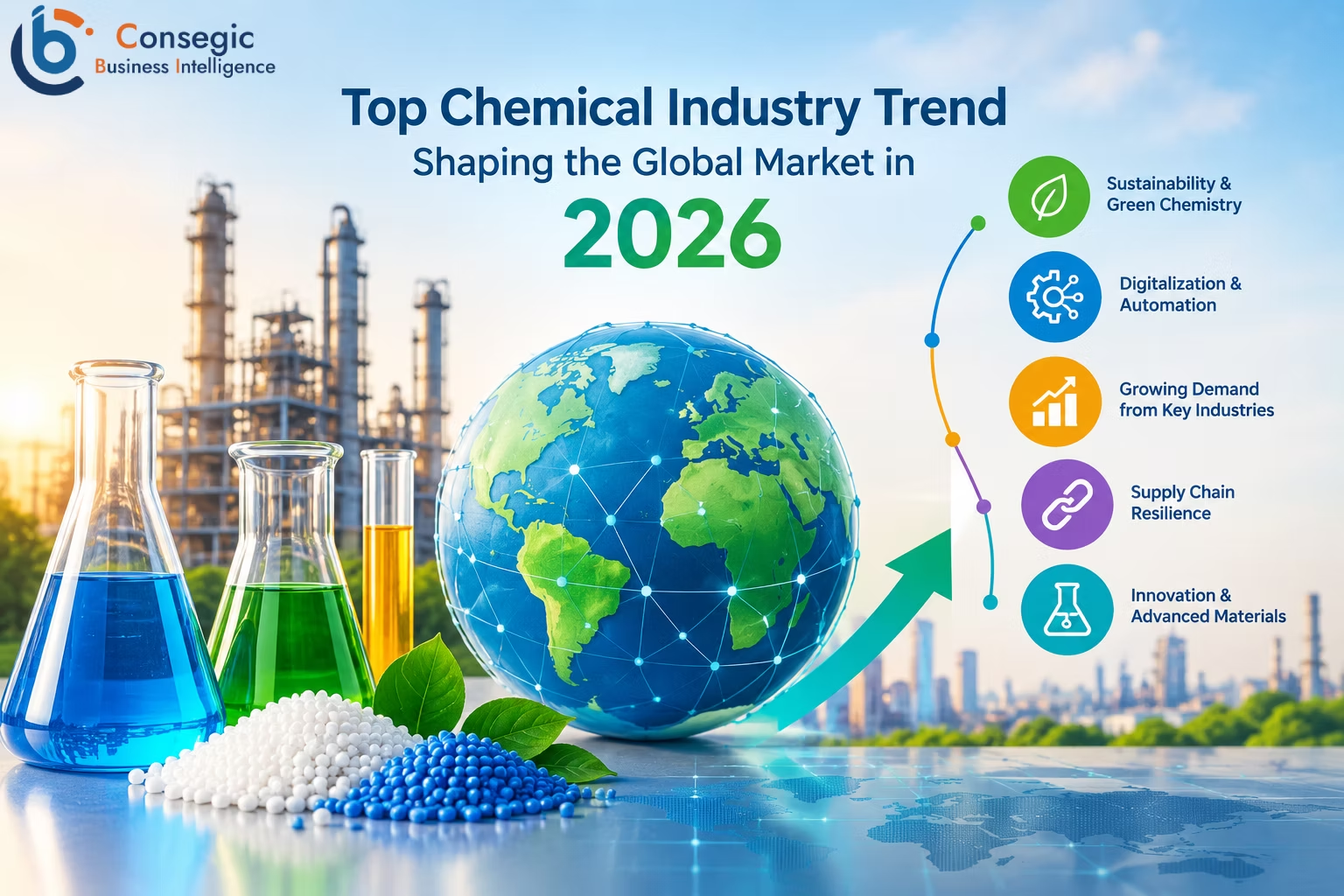
Sustainable Chemistry and the Shift Toward Greener Manufacturing
Sustainability is turning into one of the most prominent trends that will impact the chemical industry in 2026. Producers are becoming more interested in reducing greenhouse gas emissions, waste, energy use and resource use in general. Sustainable chemistry is concerned with the design of chemical products and processes that reduce or eliminate the use and generation of hazardous substances throughout the life cycle. In this context, companies are working on the development of renewable feedstocks, biologically based chemicals, recyclable materials, and low-carbon chemical processes to replace traditional ones. The concepts of circular economy also acquire relevance, especially in plastic production and packaging, as chemical recycling and material recovery could allow manufacturers to cut their dependence on virgin raw materials. Energy efficiency is also one of the most significant trends in the industry as chemical manufacturing can be quite energy-consuming. Using renewables, electrification, carbon capture, and efficient processes could help in lowering the negative impact of companies. Moreover, governments and customers demand more information about the environmental impact of their production, waste management, and material procurement. With the continuing role of sustainability in investment and purchasing decisions, green manufacturing becomes relevant for competitiveness worldwide.
Digitalization and AI Transforming Chemical Production
The digitalization of manufacturing is transforming the processes associated with production operations management, maintenance, quality control, and decision-making in the chemical industry. Artificial intelligence, machine learning, industrial Internet of Things systems, cloud services, and analytics become more relevant in 2026 in chemical plants. The sensors that are connected can measure the temperature, pressure, flow rate, and other factors concerning the condition of equipment. Such information may be used to detect any deviations and prevent them from affecting the efficiency of the production process. Predictive maintenance can predict when the equipment needs servicing using the history and current data about its performance. Artificial intelligence can facilitate the process optimization by detecting the connection between production conditions and quality of products. Digital twins can be helpful for manufacturers in simulating processes and assessing the impact of operational changes on equipment. Automation can also help to increase consistency and decrease the necessity to perform manual actions related to routine and dangerous operations. But successful digitalization requires some investment in security, staff training, data storage and integration.
Advanced Materials and High-Performance Chemicals Driving Innovation
With the rising demands by the electronics industry, electric vehicle industry, renewable energy industry, aerospace industry, healthcare industry, and telecommunications industry, the significance of advanced materials and high-performance chemicals in 2026 is increasing. The commodity chemicals have their own advantages but the specialty chemicals provide special characteristics such as thermal stability, conductivity, strength, light weight and chemical resistance. Demand for battery materials, electrolytes, specialty polymers, coatings and other chemicals used in the manufacture of batteries has increased. Specialized chemicals with high standards of purity and performance requirements are required for the manufacturing of semiconductors and electronics. Renewable energy industries on the other hand, have opened up new opportunities for the utilization of materials used in solar panels, wind turbines, energy storage systems, and hydrogen technologies. In an effort to produce materials meeting high levels of performance and sustainability requirements, chemical firms are investing heavily in research and development of nanomaterials, functional polymers, composites, and specialty coatings among others. This will not only aid in increasing value but also help the manufacturers to diversify from commodity products.
Supply Chain Resilience and Regionalization Reshaping Global Chemical Markets
The topic of supply chain resilience is now one of the most relevant issues among chemical manufacturers as a consequence of disruptions with regard to transport, raw materials, energy resources, and geopolitics. In 2026, chemical manufacturers will look into opportunities to increase their flexibility regarding supply chain and dependence on one supplier or region. The chemical industry is usually based on a combination of complex global supply chains with feedstock, intermediaries, catalysts, equipment, and energy. Any disruption in the supply chain process might affect the schedule of production and costs. Therefore, manufacturers are going to search for several suppliers, keep strategic inventories, find local suppliers, and use digital technologies to increase the visibility of the supply chain. Moreover, regionalization is another issue that will be taken into account while making investments and planning the production of particular chemicals close to the consumers of these chemicals. This practice could potentially eliminate risks in transportation and increase adaptability towards regional demand. Nonetheless, companies will have to balance between resilience and cost-effectiveness because duplicating suppliers and production capabilities might raise the level of expenses.
Conclusion
The chemical industry on a global scale in 2026 is being influenced by the sustainability concept, digitalization, advanced materials, and enhanced supply chain strategies. Sustainability is becoming an ever-growing trend among manufacturers due to their need to introduce more eco-friendly manufacturing processes. Moreover, the application of artificial intelligence, automation, and connected technologies allows for increasing productivity and making maintenance decisions in chemical plants. The growing demand for the products of the chemical industry coming from different sectors, such as electric vehicles, electronics, health care, renewable energy, and others is providing additional business opportunities in terms of specialty and performance-oriented chemicals.