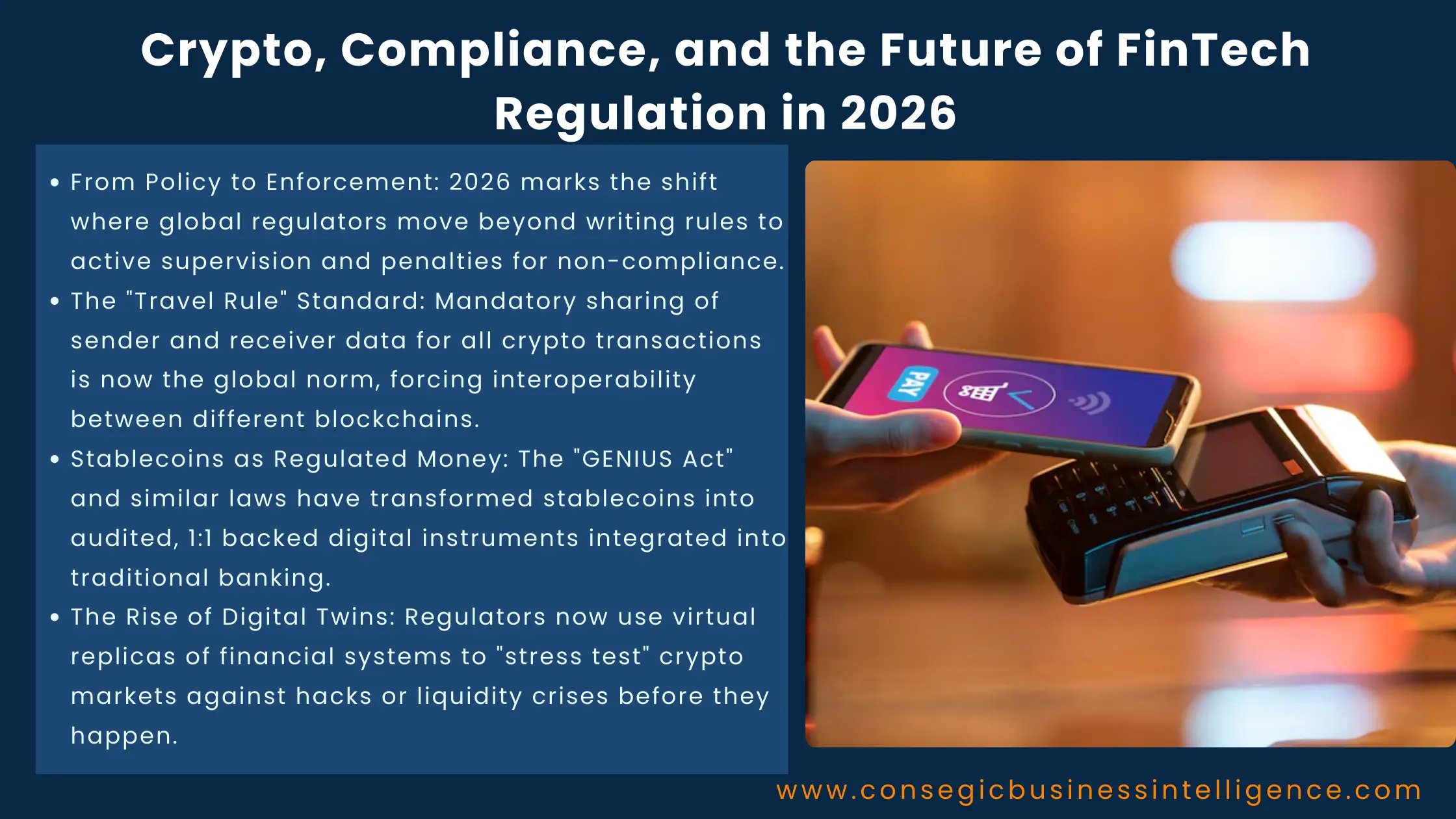
Crypto, Compliance, and the Future of FinTech Regulation in 2026
The world of finance is transforming faster than ever. Digital currencies, blockchain innovations, and decentralized finance are redefining how money moves around the globe. Yet, as innovation accelerates, so does the need for rules that keep pace. The year 2026 is shaping up to be a turning point for the relationship between technology and regulation, especially as governments, banks, and startups work to balance innovation with accountability.
The Rapid Evolution of the FinTech Landscape
FinTech has evolved from a niche disruptor to a central part of the global financial system. Digital wallets, mobile banking, and AI-driven lending have made financial services more accessible than ever. Now, with the rise of cryptocurrencies and blockchain-based applications, the financial world is entering its next phase, one that challenges traditional systems and calls for smarter, more adaptive regulation.
Crypto assets, digital payment networks, and tokenized financial products are blurring the lines between technology and traditional banking. As a result, governments worldwide are realizing that financial innovation cannot thrive without strong frameworks for compliance, security, and consumer protection.
Crypto Goes Mainstream
Cryptocurrencies, once seen as speculative assets, have moved into the mainstream economy. Major financial institutions now offer crypto investment products, and several countries have launched or tested central bank digital currencies (CBDCs). Businesses are increasingly accepting digital currencies for payments, while blockchain networks are being used for supply chain tracking, digital identity, and cross-border transactions.
However, this growth has also exposed vulnerabilities. Issues like market volatility, fraud, and lack of investor protection have prompted regulators to step in. By 2026, most major economies are implementing or refining comprehensive crypto regulations that define what digital assets are, how they can be traded, and who is responsible for their oversight. These efforts are shaping the foundation of a safer and more transparent global crypto market.
The Rise of Global Compliance Standards
A key trend in 2026 is the push toward international consistency in crypto regulation. Previously, fragmented rules made it difficult for global FinTech companies to operate across borders. Today, organizations like the Financial Stability Board (FSB) and the International Monetary Fund (IMF) are working closely with national regulators to create harmonized frameworks.
These frameworks aim to establish clear rules for licensing, anti-money laundering (AML) compliance, and know-your-customer (KYC) procedures. They also address taxation, reporting, and consumer rights related to crypto and digital assets.
This shift toward unified standards reflects a growing recognition that crypto markets are inherently global. What happens in one region can ripple across the entire financial ecosystem. By creating aligned regulatory structures, authorities hope to reduce risks while promoting innovation that benefits everyone from startups to large financial institutions.
Balancing Innovation and Consumer Protection
One of the biggest challenges regulators face is how to encourage innovation without stifling it. FinTech thrives on experimentation and disruption, but that same agility can create vulnerabilities if left unchecked. Striking the right balance requires flexible, risk-based regulation that adapts as technology evolves.
Regulators in 2026 are taking a more collaborative approach. Many are launching regulatory sandboxes, allowing FinTech and crypto startups to test products under supervision before full-scale rollout. This helps innovators experiment while ensuring compliance from the start.
Consumer protection is another top priority. Governments are requiring greater transparency in how digital assets are marketed and traded. This includes clear disclosures about risk, improved cybersecurity standards, and stronger mechanisms for dispute resolution. Such measures help build public trust in digital finance while maintaining the momentum of innovation.
AI, Data, and the New Face of Compliance
Artificial intelligence and automation are transforming compliance in the financial world. Traditional manual processes are being replaced by RegTech solutions, technologies designed to make compliance faster, smarter, and more accurate.
AI systems now analyze transactions in real time to detect suspicious activity, prevent fraud, and flag potential violations. Predictive analytics tools help financial institutions anticipate compliance risks before they occur. Machine learning models are even being used to automate regulatory reporting, saving time and reducing human error.
These technologies are also supporting regulators themselves. Supervisory agencies are using AI to monitor markets, track systemic risks, and ensure that FinTech firms follow best practices. In many ways, technology is not just a subject of regulation but it is becoming a powerful tool for enforcing it.
Decentralized Finance and the Regulation Dilemma
One of the most complex challenges in 2026 is regulating decentralized finance (DeFi). Unlike traditional financial systems, DeFi platforms run on blockchain networks without intermediaries. They allow users to lend, borrow, and trade directly through smart contracts.
While DeFi promises greater financial inclusion and efficiency, it also creates unique regulatory questions. Who is accountable when something goes wrong? How can authorities enforce rules in a system without a central entity?
Regulators are experimenting with new approaches, such as requiring decentralized platforms to register under specific categories or ensuring that developers integrate compliance mechanisms into smart contracts. The goal is to bring transparency to DeFi without undermining its core principle of decentralization.
The Future of FinTech Regulation
Looking ahead, the regulatory environment in 2026 and beyond is expected to become more data-driven, collaborative, and globally aligned. The focus will be on creating frameworks that are not only secure but also adaptable to rapid technological change.
Central bank digital currencies will likely become a bigger part of national economies, influencing how payments, lending, and savings work. Meanwhile, crypto assets will continue to evolve, with stablecoins and tokenized securities playing an increasingly prominent role.
For FinTech companies, staying compliant will no longer be just about meeting legal obligations but will be a competitive advantage. Firms that embrace compliance as part of their culture and design products around transparency will be better positioned to earn consumer trust and regulatory approval.
Conclusion
The intersection of crypto, compliance, and FinTech is defining the next chapter of global finance. As digital currencies gain legitimacy and new technologies reshape traditional systems, regulation is evolving to protect consumers while enabling progress.
In 2026, the challenge for governments and innovators alike is not about choosing between innovation and oversight, but about ensuring both work hand in hand. The future of FinTech regulation will depend on cooperation, adaptability, and trust, building a financial ecosystem that is as transparent as it is transformative.