The delirium market is witnessing significant growth, fueled by rising awareness of mental health disorders, an aging global population, and improvements in hospital-based care. Delirium is an acute neuropsychiatric syndrome characterized by sudden confusion, disorientation, and cognitive impairment, often triggered by infection, surgery, medication, or underlying illness. It is most commonly observed among elderly patients, intensive care unit (ICU) patients, and individuals undergoing major surgical procedures.
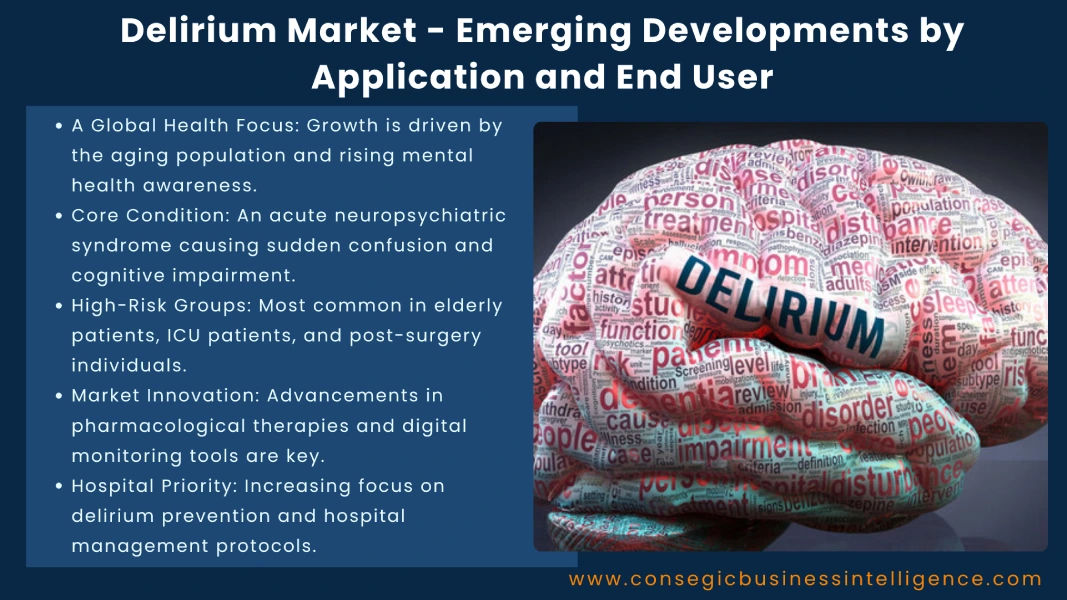
As healthcare systems worldwide advance in diagnostic capabilities and patient management, the focus on delirium prevention and treatment has intensified. With ongoing developments in pharmacological therapies, digital monitoring tools, and hospital management protocols, the market is evolving rapidly. In this Blog, we will explore the emerging developments in the delirium market, categorized by key applications and end users that are shaping its global growth trajectory.
Emerging Developments by Application:
- Surgical and Postoperative Delirium Management
Postoperative delirium remains one of the most common complications in older adults undergoing major surgeries, particularly cardiac, orthopedic, and abdominal procedures. Recent developments include multimodal care pathways that combine early mobility, optimized anesthesia, and non-pharmacological interventions. Hospitals are increasingly using perioperative cognitive screening tools to identify at-risk patients before surgery.
Pharmaceutical research is also progressing, with clinical trials exploring the efficacy of dexmedetomidine and melatonin analogs for reducing postoperative delirium incidence. The integration of digital cognitive monitoring systems in recovery units ensures continuous assessment and timely intervention, minimizing hospital stays and improving patient outcomes.
- ICU Delirium Detection and Prevention
Intensive care units are among the most critical areas for delirium management. Studies indicate that nearly 30–80% of ICU patients experience delirium at some stage of treatment. To address this, healthcare facilities are adopting the ABCDE bundle approach, which includes Awakening, Breathing coordination, Choice of sedation, Delirium monitoring, and Early mobility.
Technological innovations such as EEG-based brain monitoring devices and AI-driven delirium detection algorithms are becoming essential tools for early diagnosis. The use of light therapy, noise reduction, and sleep optimization techniques are also emerging as non-pharmacological methods for prevention. These developments reflect a shift toward comprehensive ICU delirium care focused on both detection and prevention.
- Oncology and Palliative Care Applications
Delirium is highly prevalent among patients in oncology and palliative care settings, often as a result of advanced disease, metabolic imbalance, or medication side effects. The market has seen significant progress in the use of psychostimulants and antipsychotics, such as haloperidol and quetiapine, for symptom management.
Beyond medication, healthcare providers are prioritizing multidisciplinary care models, involving psychologists, palliative physicians, and family support systems. Digital patient monitoring tools are increasingly integrated into home-based palliative care setups to ensure continuous assessment and timely management of delirium episodes. This holistic approach enhances patient comfort and care quality in terminal and chronic conditions.
- Delirium Associated with Neurological Disorders
Neurological disorders such as Alzheimer’s disease, Parkinson’s disease, and stroke often heighten delirium susceptibility. Emerging therapies focus on targeting neurotransmitter imbalances and improving brain resilience. Recent developments include research into neuroprotective drugs and cognitive enhancers, such as cholinesterase inhibitors, to stabilize cognitive function.
Additionally, the integration of wearable neurological monitoring devices and tele-neuropsychiatry platforms is enabling continuous tracking of brain activity and early detection of delirium symptoms. As neurological health becomes a central focus in preventive medicine, this application area is expected to contribute significantly to the growth of the delirium treatment market.
- Geriatric Delirium Prevention Programs
With the global elderly population increasing rapidly, geriatric care centers are becoming primary hubs for delirium management. Preventive programs are now focusing on early risk assessment, hydration monitoring, medication optimization, and cognitive engagement activities.
Hospitals and senior living centers are adopting AI-based screening tools to detect early signs of confusion or agitation. Furthermore, healthcare providers are emphasizing non-pharmacological care, such as structured sleep schedules, daylight exposure, and social interaction, to reduce delirium incidence. These proactive initiatives highlight the market’s shift toward preventive rather than reactive care in elderly populations.
Emerging Developments by End User:
- Hospitals and Specialty Clinics
Hospitals remain the largest end-user segment in the delirium market, accounting for a majority of diagnostic and treatment activities. Recent innovations include standardized delirium assessment protocols, such as the Confusion Assessment Method for the ICU (CAM-ICU) and digital documentation systems that streamline patient monitoring.
Specialty clinics focusing on neuropsychiatric and geriatric care are also expanding their roles by integrating data-driven delirium management programs. The increased use of telemedicine platforms allows specialists to monitor patients remotely, improving accessibility and continuity of care.
- Ambulatory and Surgical Centers
Ambulatory surgical centers (ASCs) are rapidly incorporating delirium risk assessment protocols into pre- and post-operative workflows. As more procedures shift to outpatient settings, ensuring cognitive safety during recovery has become a top priority.
Technological solutions such as wearable patient monitoring systems and digital anesthesia records help anesthesiologists tailor medication and sedation levels to individual needs. This proactive approach minimizes postoperative cognitive dysfunction and supports faster discharge without compromising patient safety.
- Long-Term Care Facilities and Nursing Homes
Long-term care facilities play a critical role in managing chronic or recurring delirium among elderly residents. The adoption of electronic health records (EHRs) integrated with cognitive monitoring tools has enhanced early identification and intervention.
Care providers are increasingly collaborating with mental health professionals and neurologists to deliver multi-disciplinary treatment strategies. In addition, training programs for nursing staff on recognizing early delirium symptoms are helping to reduce hospitalization rates and improve resident well-being.
- Academic and Research Institutions
Academic institutions and research hospitals are leading innovation in delirium management through clinical trials and drug development programs. Several ongoing studies are exploring the role of neuroinflammation and oxidative stress in delirium pathogenesis, paving the way for novel therapeutic targets.
Moreover, academic centers are partnering with technology companies to develop AI-driven delirium prediction models, which can analyze patient data and provide real-time alerts to clinicians. This intersection of research and digital innovation is accelerating the discovery of effective interventions and expanding the understanding of delirium as a global health challenge.
Conclusion
The delirium market is transitioning toward a more proactive, technology-driven approach that emphasizes early detection, prevention, and personalized care. Emerging developments across applications from ICU and surgical management to oncology and geriatric care are improving clinical outcomes and reducing healthcare burdens.
Hospitals, research institutions, and long-term care facilities are at the forefront of integrating digital monitoring, AI-assisted diagnosis, and multidisciplinary treatment models, ensuring patients receive timely and effective interventions. As awareness grows and healthcare systems prioritize mental and neurological health, the delirium treatment market is set to expand steadily, paving the way for safer, smarter, and more patient-centered care globally.