Is Mobile Entertainment Replacing Traditional Viewing Methods?
The entertainment industry has seen significant changes in the consumption pattern of consumers. Previously, consumers used to watch movies in theatres, watch their favourite channel on television, even listen to the radio or enjoy DVDs in the comfort of their homes. Currently, smartphone users have replaced the previous mode of entertainment. This change has come about due to the availability of broadband internet and the affordability of technology gadgets like smartphones and laptops.
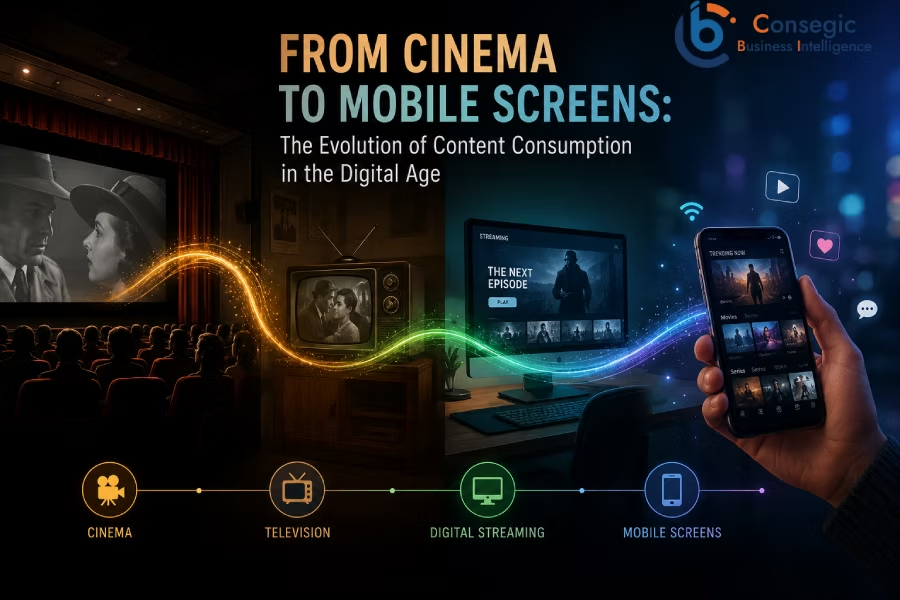
Moreover, this change in the pattern of consumption has made people watch what they want at any time. Entertainment has become very personal, instant, and convenient for the modern consumer. People can watch their favourite movie or show online whenever they wish to do so. In this evolving digital age, people spend several hours every day watching videos or reels on the social media platform of choice and interacting with different influencers daily.
This trend has influenced various other industries. For instance, the film industry has moved away from traditional cinemas, and is steadily shifting towards OTT (Over-The-Top) more and more in the coming years.
The Golden Era of Cinema and Traditional Media
Entertainment was largely provided by cinemas and other forms of traditional media before the advent of digital technology. Movie nights in theatres were major social events that brought together members of the family and their friends to watch movies on large screens. As cinemas allowed people to enjoy the art of storytelling, music and stunning visuals. Moreover, the television also fulfilled an equally important purpose - to bring families together to watch programs together at certain times.
Other than television, radios, newspapers, CDs, DVDs, and cable networks were popular forms of information and entertainment among people. Nevertheless, accessing content was restricted since people did not have many options and were subjected to scheduled programming. Missed TV episodes had to be waited until they got rerun at other times. Additionally, traditional media operated within one-way communication where people did not interact but merely consumed content.
Despite this, traditional media had profound cultural influences on people. Influence on language usage, dressing style, and other social characteristics of people through films and television programs.
Rise of Television, Internet, and Streaming Platforms
Introduction of the internet and digital technologies transformed the entertainment sector. With faster internet speeds at affordable costs, audiences were granted the liberty of enjoying their shows at any time and from anywhere they wished to. With the emergence of Netflix, Amazon Prime Video, and Disney+ among others marked the new era in the entertainment business, whereby there is no more waiting for weekly episodes. These online streaming platforms offer on-demand entertainment services, hence enabling consumers to binge-watch their favourite TV series.
Additionally, AI-based suggestions and recommendations have changed the entire experience of discovering movies, online series, and documentaries in the entertainment world. Furthermore, the availability of affordable 5G internet connections and the advent of smart TV sets have further boosted digital streaming.
Lastly, the COVID-19 pandemic is another major factor that contributed to the subscription increase for various streaming services due to the closure of movie theatres. Some of the films were even released online. In fact, OTT streaming platforms are now competing with theatres to become part of modern-day entertainment.
Mobile Screens and On-the-Go Digital Content Consumption
In today's digital world, smartphones are the top entertainment devices that are being widely used. Today, individuals can view videos, movies, listen to music, and surf through social media apps on their smartphones. Short form content has completely transformed the way people consume media especially the gen Z, as they prefer mobile content since it can be accessed easily and conveniently at any time.
YouTube, Instagram, and Tik Tok have brought about immense popularity in short videos, reels, and live streaming all around the world. People consume this content while traveling, working, or even doing other tasks while moving around. This has led producers to focus on making mobile-friendly content that is engaging enough within a shorter period.
Vertical video production is now quite common when it comes to digital marketing and digital entertainment in general. In addition, digital influencers are quite popular in recent times and have managed to influence more people compared to conventional celebrities.
Impact of Social Media and Short-Form Content on Audience Behaviour
Short-term media and digital platforms have made drastic changes in the consumption habits of the audience today. Modern audiences are looking for fast, entertaining and attractive content that can be easily viewed in a couple of minutes. Apps like Instagram, TikTok, and YouTube have taken reels, short form content, memes and other trending forms into account, and have changed the way of consuming content forever. Instead of the conventional approach where viewers watch content, in social media apps, users can not only view but also create content.
Moreover, algorithms are playing an important part in the viewing patterns of people by making recommendations according to their liking. As a result, people spend time viewing endless posts filled with entertainment content they like. Moreover, user-generated content is highly influential in social media; regular people can become highly popular on these platforms even if they do not belong to the mainstream entertainment industry. Nowadays, brands work with digital creators in order to attract young audiences.
Nonetheless, many challenges exist with regards to shortened content, such as a decline in attention span, addiction, and other problems related to mental health and misinformation. However, there is no doubt that social media has taken entertainment to a completely new level.
Conclusion
Evolution in content consumption from theatres to the use of smartphones is a result of the fast-growing nature of digital technology and the change in consumer behaviour. The traditional forms of entertainment such as theatre plays, television shows, and radio had cultural impact but the digital platforms that exist nowadays provide much more benefits for the users. Moreover, modern entertainment has taken completely new shapes by the means of streaming services, smartphones, and social media. Even though shorter videos and social media present some difficulties to both consumers and producers such as shortened attention span and digital addiction, there are still new perspectives available due to this technology development.