Introduction: The Rise of the Frictionless Supermarket
The experience of shopping in the supermarket is transforming since there is the introduction of new technology which minimizes the need for scanning and traditional checkout methods and payments. Barcode has long been an essential element of retail as it helps in identifying items at the point of checkout. The traditional barcode systems still require scanning of each item by a customer or an employee. The development of computer vision and Radio Frequency Identification technology is introducing new opportunities for efficient shopping experience. Computer vision uses cameras as well as artificial intelligence to recognize products, to analyze the interactions of customers with products and activities in store environments. On the other hand, RFID technology uses radio signals to recognize and track products with RFID labels. It does not require the process of direct scanning since it identifies objects by using radio signals. Together with digital payment methods and intelligent store software, computer vision and RFID can be used in checkout which requires much fewer efforts. The use of these technologies also brings many benefits for supermarkets such as inventory visibility and understanding how products move.
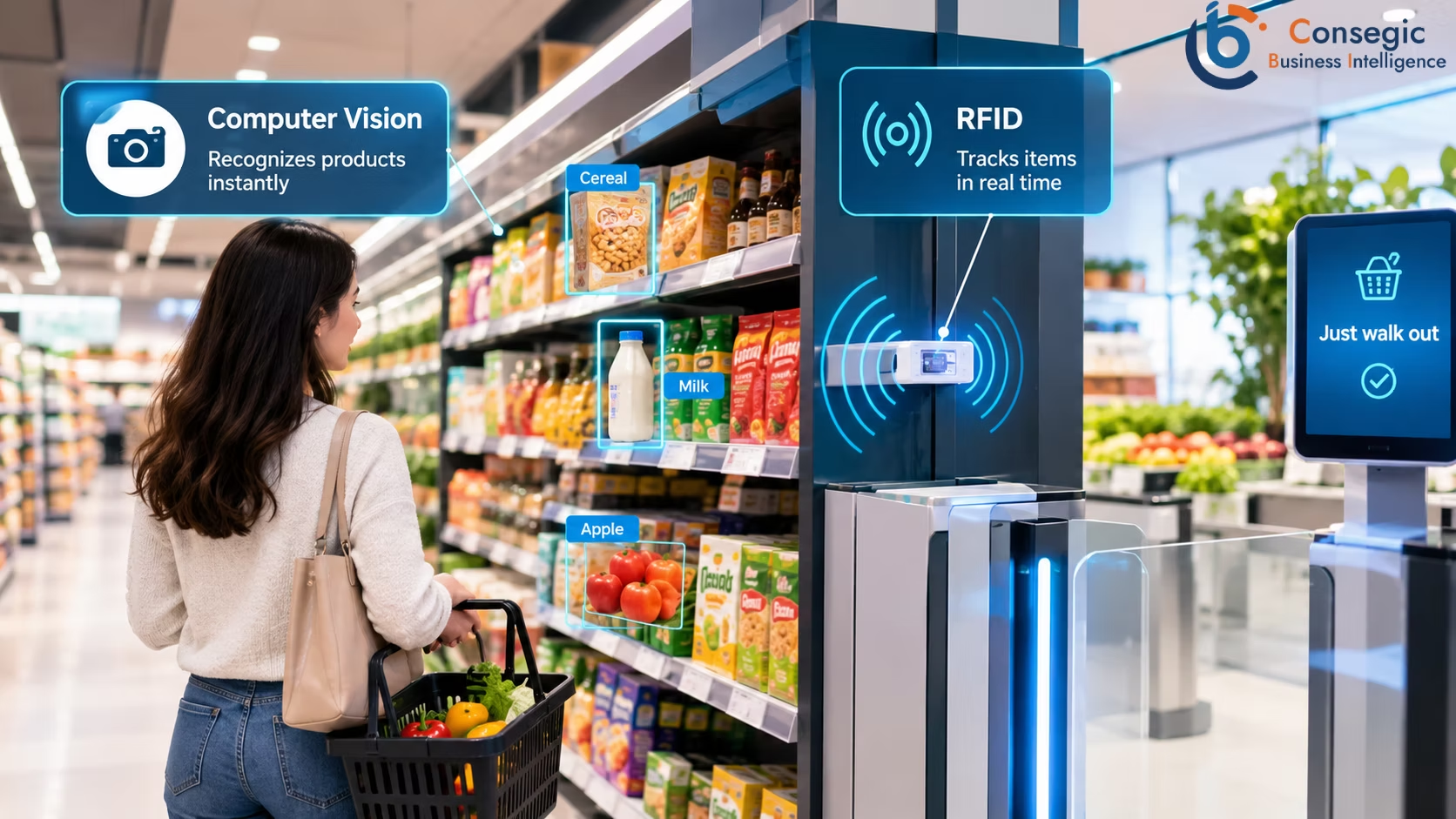
Computer Vision: Turning Cameras into Intelligent Shopping Assistants
Computer vision is now one of the technologies which can be applied by supermarkets to automatize shopping and checkout processes. With the use of cameras located in specific spots around the supermarket, it will be possible to obtain visual data about products, shelves, carts, customers, etc. Using artificial intelligence models, it will be possible to interpret this data and recognize objects and actions performed within the shop. Computer vision can recognize when a customer takes something off the shelf and connect this action with a specific product. Similarly, it can detect whether products are put back on the shelves or put into a cart. During the checkout, computer vision will also be able to recognize several products at once, without the necessity of scanning every product separately. Moreover, computer vision can assist in other tasks, such as recognizing empty shelves, improperly positioned products, and other events which require an intervention of staff members. Successful application of computer vision will be based on the use of correct recognition models, proper positioning of cameras, powerful computing infrastructure, and security measures. As artificial intelligence advances, computer vision will help supermarkets transition from reactive to intelligent environments.
RFID Technology: Tracking Things Beyond Barcodes
RFID technology is another tool that can help to identify and track products in a retail setting. It should be noted that unlike standard barcodes that have to be read, RFID technology uses radio waves for communication between RFID reader and electronic tags attached to the product. An RFID reader is able to read a tagged item without positioning the tag in front of the scanner. RFID can be useful for inventory control since a retailer can know what products are available, their location, and when restocking is required. In a supermarket, RFID enables automation of the inventory count process and helps store workers to find products more quickly. At the same time, a reader can identify several tagged products at once during a customer’s passage through a checkout area. RFID can be helpful in the process of monitoring products on receiving and storing areas, on shelves, and at checkout counters. Still, RFID technology has costs for tags, readers, software, and infrastructure. Additionally, tagging all the products may be difficult for certain low-value products. However, RFID improves supermarkets’ knowledge of product flow and builds a technological foundation for automated operations in the store.
How Computer Vision and RFID Work Together to Transform Checkout?
Computer vision and RFID could enhance one another in their ability to combine visual awareness with automatic product recognition. Computer vision would be able to know what customers are up to in a store, while RFID would supply digital data on products being tagged and transported throughout the retail space. In such a way, it would be possible to lessen the need for traditional item-by-item bar code scanning. In other words, cameras would be able to notice when a customer picks up certain products and puts them into his or her cart, while an RFID reader would separately detect products being transported. The store software could then compare these two data sets in order to generate a list of products chosen by the customer. As a result, at the checkout point, the total amount of purchase could be calculated and linked with the chosen payment method. Such combination would not only save time but also eliminate waiting queues. Apart from that, it could give the retailer information regarding inventory movements and availability of the products. Of course, this kind of system would require reliable hardware, precise product recognition, secure processing of data, and proper exception handling in case of inconsistencies.
The Future of Retail: Smarter Stores, Faster Shopping, and New Challenges
The introduction of frictionless supermarkets would go further than eliminating the queues at the checkout counter. With computer vision, RFID, artificial intelligence, sensors, and a retail cloud platform becoming more connected, frictionless supermarkets can operate much smarter and data-driven. Intelligent systems will be able to give the real-time data of products, detect items that require replenishing, and enable the employees to act according to the customers' needs. Customers can also get the personalized digital services, automated receipts, and fast payment options. Nonetheless, technology development raises problems that retailers have to consider. For instance, computer vision technologies use visual data, RFID and cloud platforms collect information on product movements, so retailers need to ensure good cybersecurity, clear data practices, system performance, and proper data privacy policies. The cost is also an issue for small supermarkets that are unable to spend lots of money on technology. Furthermore, the training of employees and maintenance of the technology will be needed since automated processes can malfunction sometimes. In conclusion, the frictionless supermarket requires not only high technology but also its reasonable use.
Final Thoughts
Transition from traditional barcodes is transforming the management of goods in supermarkets. Computer vision will enable the retailers to have insight into the activities of customers and facilitate automation of product identification. On the other hand, RFID will allow for improved accuracy and efficiency in product tracking in the stores. Together, the two technologies can promote quick checkouts, improve inventory management, and enhance retail business processes. Nevertheless, the incorporation of these technologies will call for the retailer to solve the challenges that come from high costs of implementation, system reliability, cybersecurity, and customer privacy. As these technologies develop, the frictionless supermarket will consist of a combination of technology and human factors.