How Has Logistics Evolved in the Digital Era?
Logistics is an integral part of global trade that ensures effective delivery of products from producers to consumers. Earlier, many aspects of logistics were manual, and information and communication technology was not advanced enough. But the recent developments in international business such as e-commerce and globalization have changed the face of logistics. Logistics management now involves the use of technological advancements in improving efficiency and communication between organizations and other stakeholders in the process of transporting products from one place to another.
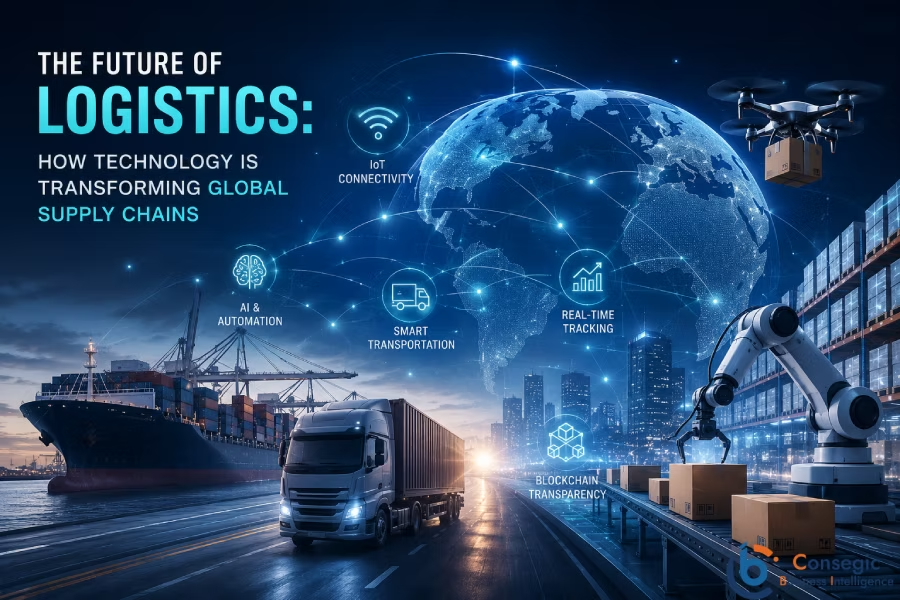
Modern businesses are capable of managing their operations in real-time due to the use of different technologies in the field of logistics. Digital technologies have enabled decision-makers to take appropriate decisions about their operations. Moreover, warehouses are automated, while companies involved in the process of transporting goods utilize better technology in the form of GPS and tracking services. Additionally, businesses can also understand consumer trends and market trends due to technological advancements in logistics. Thus, logistics management has transformed the way in which supply chain activities are carried out.
The Role of Artificial Intelligence and Automation in Logistics
Artificial intelligence and automation have been revolutionizing the logistics sector through their efficiency and effectiveness. For instance, artificial intelligence has been applied in demand forecasting, vehicle routing, and inventory planning among others. Through the analysis of vast amounts of data, AI is able to forecast customer needs and cut down on shipping costs and shortage of supplies. It is further utilized in supporting the efficient decision-making process in logistic businesses.
Additionally, AI and automation have transformed logistics operations using robots, conveyor belts, and automated systems of storage. The smart warehouses are capable of sorting, packing, and delivering the products with minimal human intervention. In addition, there are chatbots and virtual assistants that rely on artificial intelligence technology, used for improving the quality of service provided to customers by providing instant information about the status of shipments and solving their issues quickly. Predictive maintenance is another application of artificial intelligence, which means monitoring of machines and automobiles to detect any problems that can cause a breakdown in the future.
Overall, Artificial intelligence and automation are essential factors that help increase efficiency and customer satisfaction within the logistics industry. In view of the advancements in technology, it can be said that these technologies will be even more important in the future.
Impact of IoT and Real-Time Tracking on Supply Chain Management
Internet of Things is one of the most important technologies that are applied in supply chain management due to their capability to link devices, vehicles, and other relevant systems using the internet. The implementation of such IoT devices as smart sensors, RFID (Radio Frequency Identification) tags, and GPS trackers allows for monitoring shipment status and transportation systems in real time. This represents a significant improvement in terms of transparency in this domain.
In addition to that, real-time tracking systems make it possible to track shipments' current location, shipment status, and condition in which the products are delivered to customers. It is extremely beneficial especially for industries that deliver temperature-sensitive products including medicines, food, or chemical products. IoT sensors help monitor temperatures, humidity levels, and other factors affecting product quality. Moreover, this technology significantly helps manage inventories in an appropriate manner and avoid the risks of having either too many products or lacking products in stock.
Moreover, the customers also benefit from the real-time tracking of the delivery process, which offers precise updates about the status of deliveries along with expected time of delivery. This helps increase satisfaction and trust among the customers. In addition, logistics firms are also able to benefit from such real-time data by optimizing their delivery routes, minimizing fuel usage, and managing problems rapidly.
Blockchain, Cybersecurity, and Transparency in Global Trade
The emerging use of the blockchain technology makes trading between countries more transparent, safe, and trustworthy. A blockchain can be defined as a decentralized digital ledger system designed to record transactions securely and permanently. Moreover, it provides an opportunity for business entities, suppliers, and logistics providers to exchange relevant data without being concerned about any possible manipulations or fraudulent activity. Thus, the process becomes more transparent and reliable.
Increased traceability is one of the biggest advantages of the blockchain technology. The companies can monitor the whole chain of actions in order to make sure that their products do not undergo any alterations during the transfer and maintain their quality. It is extremely useful for the sectors where counterfeited can be made like the pharmaceutical industry, luxury goods, and food industry.
Meanwhile, cybersecurity plays a significant role in logistics as the companies use a large number of digital technologies in order to manage their operations. For example, the companies use a lot of paperless documents, electronic money transfer, online tracking systems, and other services provided by the internet.
Future Trends and Challenges in Technology-Driven Logistics
Logistics in the future will rely on technology with drone delivery, autonomous transportation vehicles, and robotic solutions changing the landscape of global supply chains in terms of speed, efficiency, and costs. Moreover, green logistics approaches, aimed at minimizing the carbon footprint of the process and employing sustainable transportation methods, become increasingly popular.
With the emergence of innovative technologies such as cloud computing, artificial intelligence, and big data analytics, it is possible to have an efficient supply chain. It is also possible for organizations to predict future demand from the market through predictive analysis, which will help them with their inventory management.
However, despite all advantages, there are still a number of problems to overcome, including high investments needed to implement new technologies. In addition, many businesses struggle with cybersecurity, data security, and integration of new systems within an existing framework. Finally, governments need to create appropriate regulation concerning autonomous transportation and digital trade activities. Despite all possible difficulties, the future of logistics is expected to become much more sophisticated.
Conclusion
Technology is becoming one of the key factors changing the logistics industry through increased efficiency and effectiveness of global supply chains. Technologies that include artificial intelligence, automation, IoT, blockchain, and real-time tracking that help make processes more effective. Moreover, they allow for cutting down costs related to logistics operations, increasing transportation efficiency, proper inventory management, and security measures. In addition to these developments, upcoming trends such as autonomous vehicles, drones, and sustainable logistics will become even more impactful. On the other hand, there are various threats such as cybersecurity problems, high costs, and regulations. Nevertheless, despite all challenges, logistics will be significantly affected by technology.