The current world is increasingly going digital, where customers are asking for quicker, tailored, and more cohesive services. Clients require instantly provided solutions to problems. The businesses are at the same time challenged by rapid technological changes, increasing rivalry, and the vagaries of customer expectations.
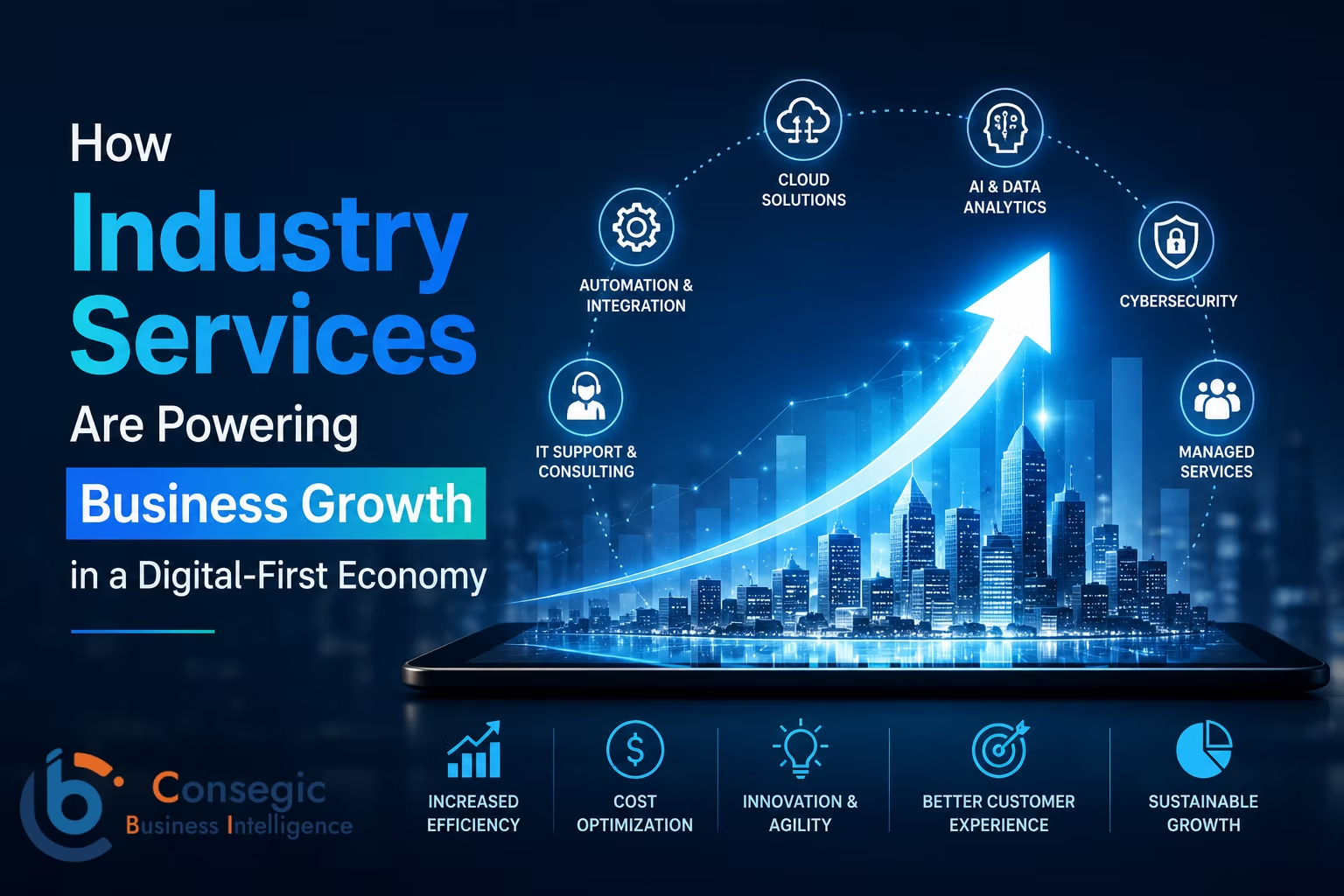
To remain afloat and become competitive, industry services are helping companies facilitate their digital transformation, boost performance of operational tasks, and drive long-term growth. Industry services include everything from consulting, cloud solutions, IT support, automation, data analysis, cyber security, digital marketing, to outsourced business functions.
In 2026, industry services are seen as vital resources which help companies tackle complexity, speed up their innovation processes and thrive in a digitally focused market.
What are Industry Services?
Industry services are specialized offerings tailored for business to improve overall performance, enhance operational processes, and achieve digital expansion. Typically, they are tailored according to the various industry needs including manufacturing, healthcare, retail, logistics, financial and media industries. Instead of trying to accomplish all operations within the company itself, businesses partner with external experts for service delivery, who have extensive experience of providing technological support, guidance on strategic operations, and general support on a wide range of functions.
Such a partnership helps organizations focus more on their core activities while benefiting from superior performance and better scalability.
Driving Digital Transformation
It is a primary goal of industry services to promote digital transformation of the businesses. The operations of many companies are currently impaired due to old systems which lower their efficiency and limit innovation. Industry services allow these companies to modernize their system through a wide range of technological solutions like cloud computing, software integration, automation and digital workflows.
For example, businesses converting their conventional, paper-based files to digital format often request the support of industry services to install the system and provide technical assistance. These changes accelerate operational procedures, improve system flexibility and offer better service to customers.
Enhancing Operational Efficiency
In the current hyper-competitive business environment, efficiency is one of the key performance indicators businesses strive for, aiming at reducing delays and increasing workflow through optimal usage of resources.
Industry services enhance business efficiency through a variety of means, including automation of business processes, efficient analysis of operations, and process optimization. Many day-to-day operational tasks that previously required manual effort can now be performed accurately and promptly using automated systems. This allows businesses to save precious time, improve business outcomes and reduce operational costs. Even the minor improvements of performance in multiple processes can lead to large benefits over a prolonged business timeline.
The Power of Data and Analytics
In today's economy, the most important business asset is its data. Companies collect substantial quantities of information on client activities, work processes, sales trends, and market behaviour. These data allow businesses to achieve optimal performance and improve client services by predicting client actions, enhancing market forecast, identifying key business trends and facilitating strategic planning.
Companies with effective use of data management have better ability to respond to changing market needs. In simple terms, businesses guided by data make faster, better decisions.
Better Customer Experience
In the current competitive business world, client experience is crucial for the survival of the business. Clients desire swift customer services that are customer-friendly and provide tailored solutions. Industry services offer help in enhancing client services through a variety of tools including digital communication applications, CRM (Customer Relationship Management) software, advanced artificial intelligence and online service delivery platforms. Businesses are thus able to reduce customer response times or make their online services more streamlined for better client relations. A satisfied client leads to loyalty and positive references.
Cybersecurity and Business Protection
As more of their operations are taken online, companies become increasingly vulnerable to the threats of cyber-attack. A lost dataset or a ransomed business could result in large financial losses and severe damage to the business's reputation. Industry services are key resources that can protect businesses from such threats through their use of threat detection, vulnerability assessments, cloud security management, and risk management solutions. Most companies partner with external service providers specializing in the area of cyber security because the nature of threat is often complex and difficult for in-house staff to manage effectively. Reliable cyber security is therefore a necessary component for customer satisfaction and business operations.
Increased Scalability and Flexibility
In a dynamic business world with changing trends in customer demand and market behaviour, business must be adaptable. With industry services such as cloud-based applications, managed IT operations and digital solutions, businesses can enhance their service offerings without incurring significant additional costs associated with further infrastructure investment. Scalable services are also a viable solution for startups and growing businesses that are seeking to increase service offerings efficiently. Importance of Human Expertise, although technological innovations continue to shape the digital economy, human intelligence remains equally crucial. Industry services combine technology with professional judgment and the capability to solve complex problems. Specialists like engineers, cyber security professionals and consultants play a vital role in helping businesses solve their specific challenges; pure technology alone will not solve business problems-human ingenuity, which directs the effective use of technology for real-world application, is paramount.
Challenges that businesses might encounter
Businesses face a range of challenges as they adopt new digital transformations including system integration challenges, employee training, data security and privacy concerns, and the associated costs of implementation. Many businesses struggle to adapt to the new digital working patterns and operating models. Nevertheless, organizations with meticulous planning and clear long-term objectives will find these transformations more beneficial and rewarding in the long run.
Future Outlook
Industry services will continue to grow in importance, playing an even more significant role in enhancing digital transformations worldwide. Innovative future trends like advanced artificial intelligence, cloud computing, complex automation processes, and advanced analytical tools will influence the future of business operations. Businesses will therefore depend more and more on specialized service providers who are capable of improving their agility and providing a competitive edge. The companies that successfully integrate customer focus, innovative solutions, and efficient operational processes will truly excel.
Conclusion
Industry services are indispensable for the businesses operating in the digital-first economy and will help grow their businesses by enhancing client experience, operational effectiveness, business security, and digitally accelerating transformation. Organizations that make optimum use of today’s industry services will be highly placed to grow their respective businesses, remain competitive in their markets, and acquire an enduring market advantage.