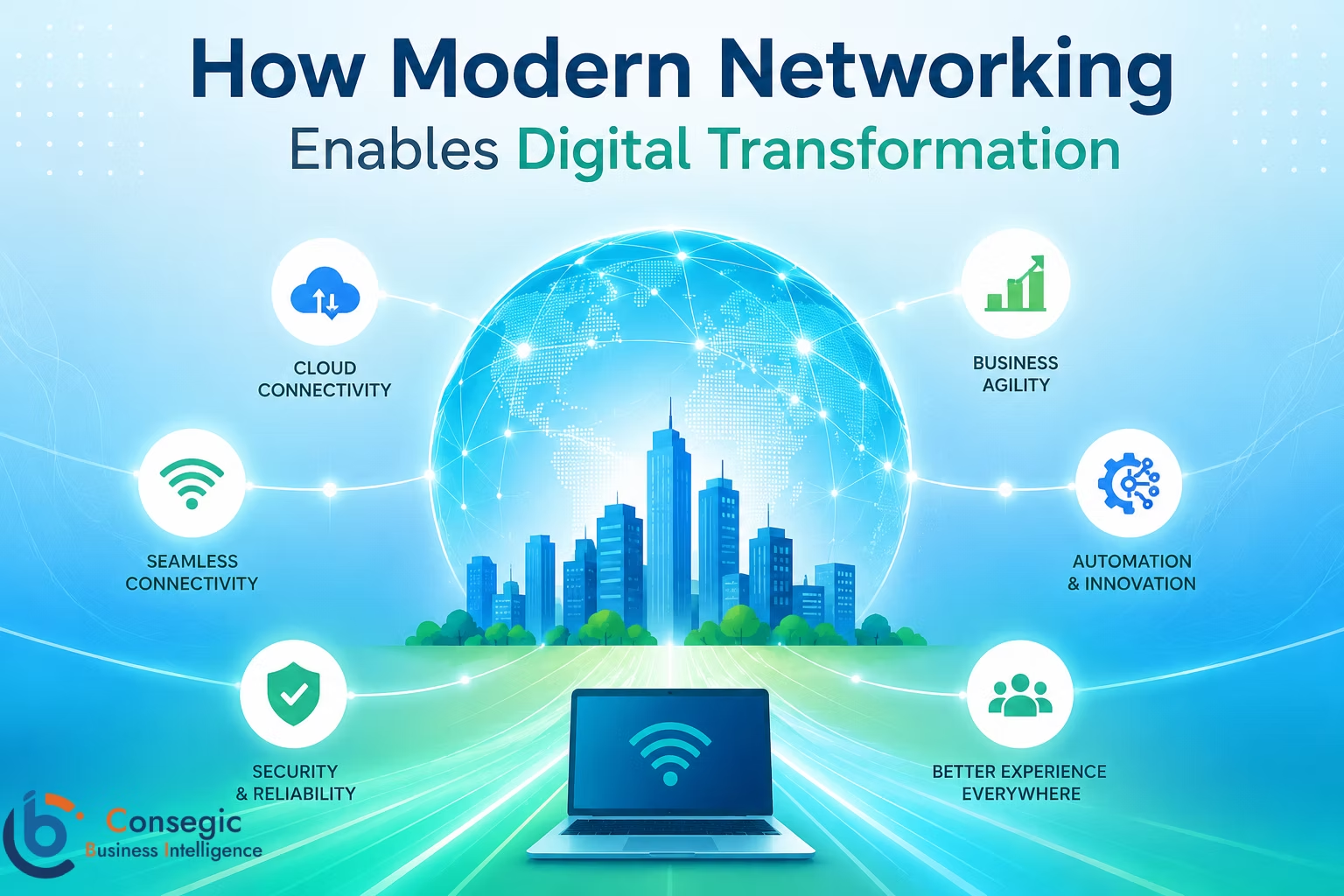
Networking technology has become one of the most critical foundations for digital transformation. With the adoption of cloud computing, artificial intelligence, Internet of Things (IoT), automation, and digital platforms by businesses, there is a need to have networks which connect people, devices, applications, and data in an effective manner. Modern networking is quite different from traditional networking. The former delivers high-speeds, low-latency, high-scalability, and reliability to organizations compared to the latter. There are various technologies such as 5G, fibre optic connectivity, Software Defined Networking (SDN), edge computing, and cloud networks which are being used to develop flexible digital infrastructure. Such technologies enable organizations to gain access to information anytime and anywhere. In addition, modern networking helps organizations implement remote work, digital customer services, interconnected devices, and automated business processes. Therefore, networking has changed into a strategic business resource rather than a means of connection between computers. Through modern networking, businesses are able to introduce new digital services, make quick decisions, reduce costs, improve operational efficiency, and respond to market dynamics.
The Role of Broadband Connectivity in Digital Transformation
Fast connectivity is an important element in helping companies to carry out digital transformation successfully. In today’s world, companies produce and analyze vast volumes of data using their websites, mobile applications, cloud computing platforms, internet of things, and other forms of digital operations. Current networks offer the necessary speed and capability for delivering this data at rapid speeds. Technologies like fibre optics, 5G networks, and advanced broadband networks provide increased speed and efficiency with reduced delays in communications. It becomes especially important in the case of applications that require real-time interaction such as video conferencing, collaboration, monitoring, transaction processing, and automation in industry. The use of high-speed connectivity also makes it possible for employees to use cloud computing applications and business systems without performance problems. Moreover, reliable connectivity can be used for connecting devices and making decisions in real time in such industries as manufacturing, healthcare, transportation, and retail trade. Furthermore, faster connectivity enhances customers’ experience by making websites, applications, and digital services work faster.
Cloud Computing and Modern Network Infrastructure
The use of modern networking has been crucial in the fast embrace of cloud computing. Cloud-based platforms enable organizations to store data, deploy applications, and gain access to computing resources without being totally dependent on physical infrastructure at their workplaces. However, efficient cloud adoption requires networks which are highly dependable, secure and have performance. Through modern networking, organizations get the capability to access cloud services from offices, residences, mobile phones, and various geographic locations. The use of SDN and network virtualization may increase flexibility in the networks since organizations will be able to manage resources using software and increase capacity automatically in relation to dynamic requirements. This means that businesses will be able to expand their digital business without having to invest in costly hardware. In addition, cloud networks make it possible for remote working where employees are allowed to access applications and files from different locations in a secure way. Finally, modern networks may interconnect cloud and data centers, allowing organizations to optimize workload distribution. Therefore, the integration of networking and cloud computing enables businesses to cut cost in terms of infrastructure, increases flexibility, accelerate the deployment of applications, and develop scalable digital services.
Networking, IoT, and Real-Time Data Management
The Internet of Things relies significantly on modern networking since there is a need for ongoing communication for information exchange between devices. Sensors, machines, cars, cameras, smart appliances, and industrial machines can accumulate and transfer huge amounts of data through the networks. Modern solutions like 5G, Wi-Fi, and edge computing make it possible to connect numerous devices and minimize communication delays. In manufacturing, for instance, connected machines can monitor the process conditions and transmit the information to the management systems, which will be useful in recognizing the equipment issues prior to its serious damage. Connected cars can communicate with the systems analyzing traffic, their location and performance. In healthcare, connected medical devices can transmit patient information to healthcare workers, thus allowing faster monitoring and action. Edge computing enhances IoT applications as some part of the data will be processed closer to where it is produced instead of transferring all data to the remote data centre. In conclusion, modern networking allows better utilization of real-time data and automation and minimizes downtime.
Enhancing Business Agility, Security, and Innovation
Advanced networking enables organizations to improve their agility and enhance their capabilities to secure their digital operations. With organizations relying more on applications, cloud computing, Internet-of-Things and remote workforce, the network security has become an indispensable element of digital transformation. Advanced networks can be equipped with technologies like encryption, firewalls, network segmentation, access control based on identities, as well as network monitoring in order to ensure data and system protection. Meanwhile, advanced network infrastructure allows enterprises to deploy innovative applications, services, and digital processes faster. Companies can scale up their network capacity when needed and tailor network resources depending on business needs. Such agility proves to be very important in competitive markets where fast-paced technology changes take place. In addition, advanced networking fosters collaboration among employees, suppliers, customers, and business partners, which creates space for innovation and development of new digital business models. Thus, advanced networking enables organizations to react to market changes quicker by maintaining their productivity at a high level. Overall, advanced networking is the technological basis for sustainable digital transformation and development of any organization.
Conclusion
The development of the modern network has become one of the key factors that help companies to go through the process of digital transformation and ensure efficient connection of people, devices, applications, and data. The technologies like 5G, fibre optics, cloud networks, Software-Defined Networking, and edge computing allow companies to have the speed, flexibility, scalability, and reliability of the network necessary for the effective operation in the digital era. The above-listed technologies facilitate the use of cloud-based solutions, remote work, Internet-of-things, real-time processing of data, automation processes, and better customer experience. Moreover, sophisticated security features ensure the protection of digital assets and sensitive data from new risks. Today, with modern networking, companies can respond more quickly to changes in the market, save money, increase productivity and develop innovative services thru efficient and intelligent connectivity.