Introduction: The Role of Welding Equipment in Manufacturing Costs
Equipment that is used for welding operations is one of the factors that influence the cost of production as a whole, because it directly affects productivity, number of workers involved, energy costs, amount of materials used, as well as the costs of equipment maintenance. Although the purchase cost of equipment is an issue of importance for manufacturers, the actual financial consequences appear during the whole lifespan of the equipment. In cases where the equipment is chosen exclusively based on its initial cost, it can cause increased costs over time due to inefficiency, breakdowns, and the necessity for maintenance.
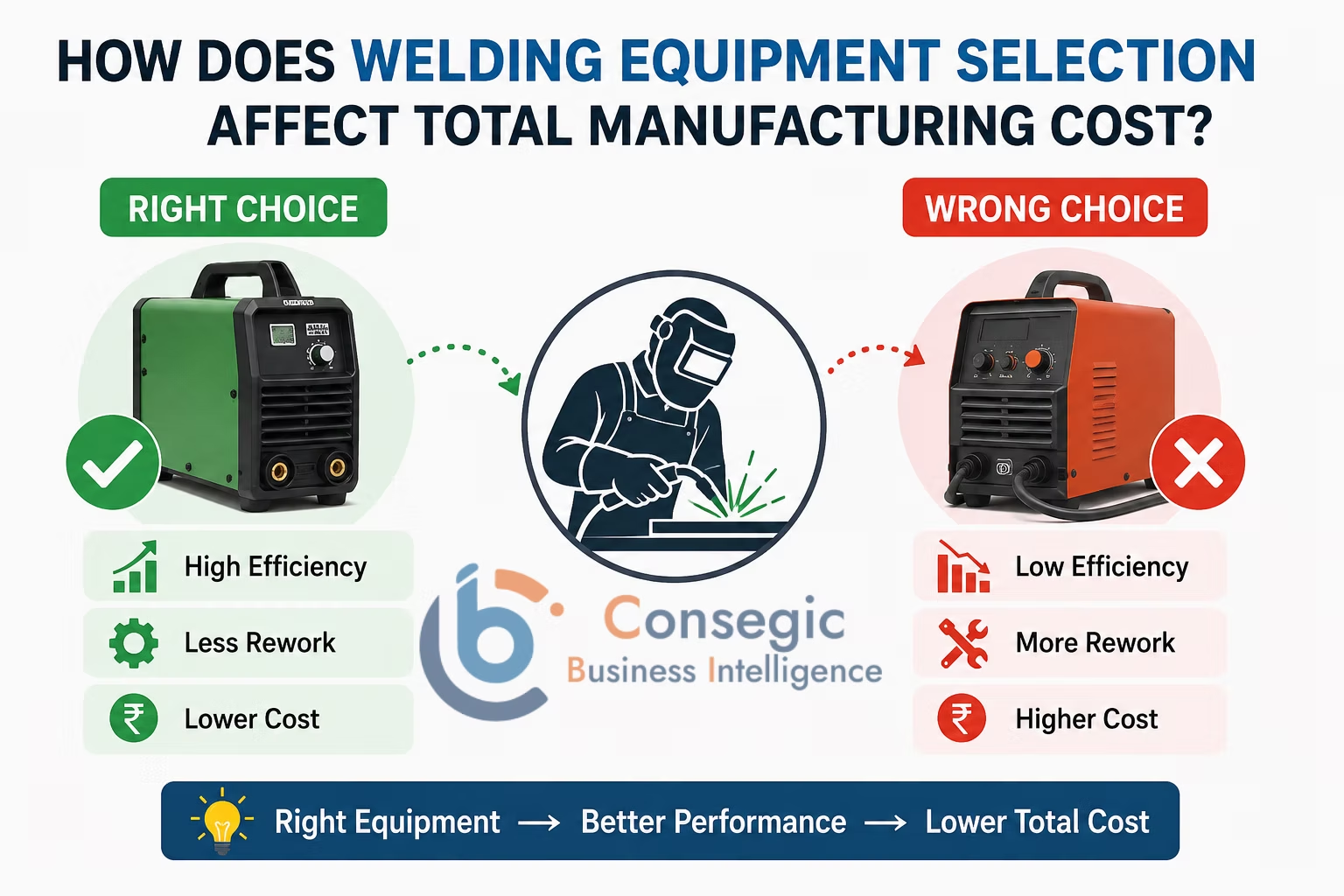
Proper equipment choice will lead to faster production, maintenance of the same quality standards in each weld made, decrease in material waste and decrease in the need for redoing the work. Such equipment as automated welding equipment and robotic welding equipment, which requires additional costs for purchase at first, can actually lower the cost of operation in the future. Otherwise, inappropriate equipment will cause increased labor costs, increased consumables costs, increased energy costs, and delayed production. Thus, it is necessary for manufacturers to consider both direct and indirect costs associated with equipment selection.
Initial Investment and Equipment Operating Costs
The initial cost of purchasing welding machinery is among the first considerations that manufacturers need to make when determining their manufacturing costs. Nonetheless, the cheapest machine does not necessarily translate to economic equipment. When selecting the right equipment, the costs involved in installation, accessories, power consumption, consumables, software, and other implementation costs should be considered. Machines with high prices might be efficient and reliable enough to offer some savings in the long run.
Operating costs are also significant contributors to the overall manufacturing cost. The use of electricity, shielding gases, electrodes, wires, and other consumables is done during the manufacturing process. More efficient machines or those with control of the welding parameter can lower the unnecessary costs incurred. Similarly, machines that deposit materials accurately will reduce the consumption of wire, electrode, and shielding gas.
Manufacturers should, therefore, determine the total cost of ownership instead of considering only the purchase cost. Comparison of operating costs, the useful life of the machine, productivity, and maintenance needs can assist in identifying better equipment.
How Welding Equipment Impacts Labor and Productivity?
Welding machine selection can play an important role in determining labor costs and manufacturing productivity in general. Traditional welding operations may involve using highly qualified personnel to control such variables as welding speed, temperature, and position, among others. Even though traditional machines may involve smaller investment in capital equipment, the necessity to use more labor increases the cost of manufacture, especially in case of producing large quantities of parts.
Automation and robotics of welding operations can allow decreasing the number of manual procedures necessary to repeat. Automated welding machines can perform welds consistently at controlled speeds, which allows increasing the output of production while being less dependent on labor force. Using advanced equipment can help operators perform their work faster and avoid fatigue due to repetitive work.
Increasing productivity can help manufacturers reduce their expenses related to manufacture since higher production allows allocating fixed expenses on the greater number of units produced. Consistent automatic welding can help reduce such issues as defects and interruptions of production. However, automated welding equipment still requires the involvement of a skilled technician for programming and controlling of operation and maintenance.
Maintenance, Energy Consumption, and Material Costs
Maintenance, energy consumption, and materials consumption are significant elements that make up the total cost of the welding machine. Machines that are prone to frequent repairs or have replaceable parts can add cost and downtime in production. The process of regular maintenance is vital for welding equipment to work properly and safely, however, machines that use reliable parts and have an easy maintenance system can minimize service costs.
Energy consumption is an additional part that affects operating expenses. Energy consumption of machines depends on their efficiency and ability to control and convert energy. Thus, the machines which can use energy efficiently and control its consumption will consume less electricity, especially during high production rate.
Material consumption is a factor that should also be taken into account. For example, if the machine is not calibrated correctly, it may cause additional spatter, poor penetration and excessive consumption of the welding wire, electrodes, shielding gases and base material. Therefore, modern machines with parameter controls can increase deposition efficiency. Decrease of material losses not only reduces purchasing cost but also provides more sustainable production. Accordingly, it is necessary for manufacturers to consider these factors together with the cost of machines.
Choosing the Right Welding Equipment for Long-Term Cost Efficiency
Choosing welding equipment for effective long-term cost efficiency requires manufacturers to take into account the needs of their production, working environment, product specifications, and equipment utilization. The right piece of equipment should offer an optimum combination of acquisition cost, performance, quality, maintenance, energy consumption, and life span. Equipment that would be best for high volume production might not be needed for small and customized manufacturing operations.
Also, manufacturers have to consider the ability of the welding equipment to be scalable when purchasing the machinery. Scalability implies the ability of the equipment to change according to various production needs in terms of output volumes, working materials, and product designs. Being compatible with various automation and digital manufacturing platforms could also improve the efficiency of the process.
Using total cost of ownership method could enable businesses to evaluate their various welding equipment options through calculating all costs including the cost of acquisition, installation, training, energy, consumables, maintenance, downtime and replacement. In spite of the fact that more expensive equipment requires additional acquisition cost, the productivity and quality benefits would help manufacturers overcome it.
Final Thoughts
Welding equipment choice makes a great and long-lasting effect on the manufacturing cost structure. While taking into consideration the purchasing cost of equipment is quite essential, one should pay attention to labor, energy use, material wastage, maintenance, downtime, efficiency of work and service life of equipment as well. The choice of efficient equipment will help to improve weld performance, minimize reworking operations, raise the volume of production and save money. The implementation of automation and high-technology welding requires a larger financial input but will result in substantial savings. That is why businesses should consider the whole cost of the equipment and not just its purchasing cost.