Inside the Landmark India–EU Trade Deal: What It Means for Global Trade in 2026
In January 2026, India and the European Union announced a historic free trade agreement after nearly two decades of negotiations. Leaders from both sides called it the “mother of all deals”, reflecting its scale and potential impact. When fully implemented, this agreement will cover nearly two billion people and a significant portion of the global economy. Experts say this development is not just a milestone for India and Europe but also a defining moment for global trade in a rapidly changing world.
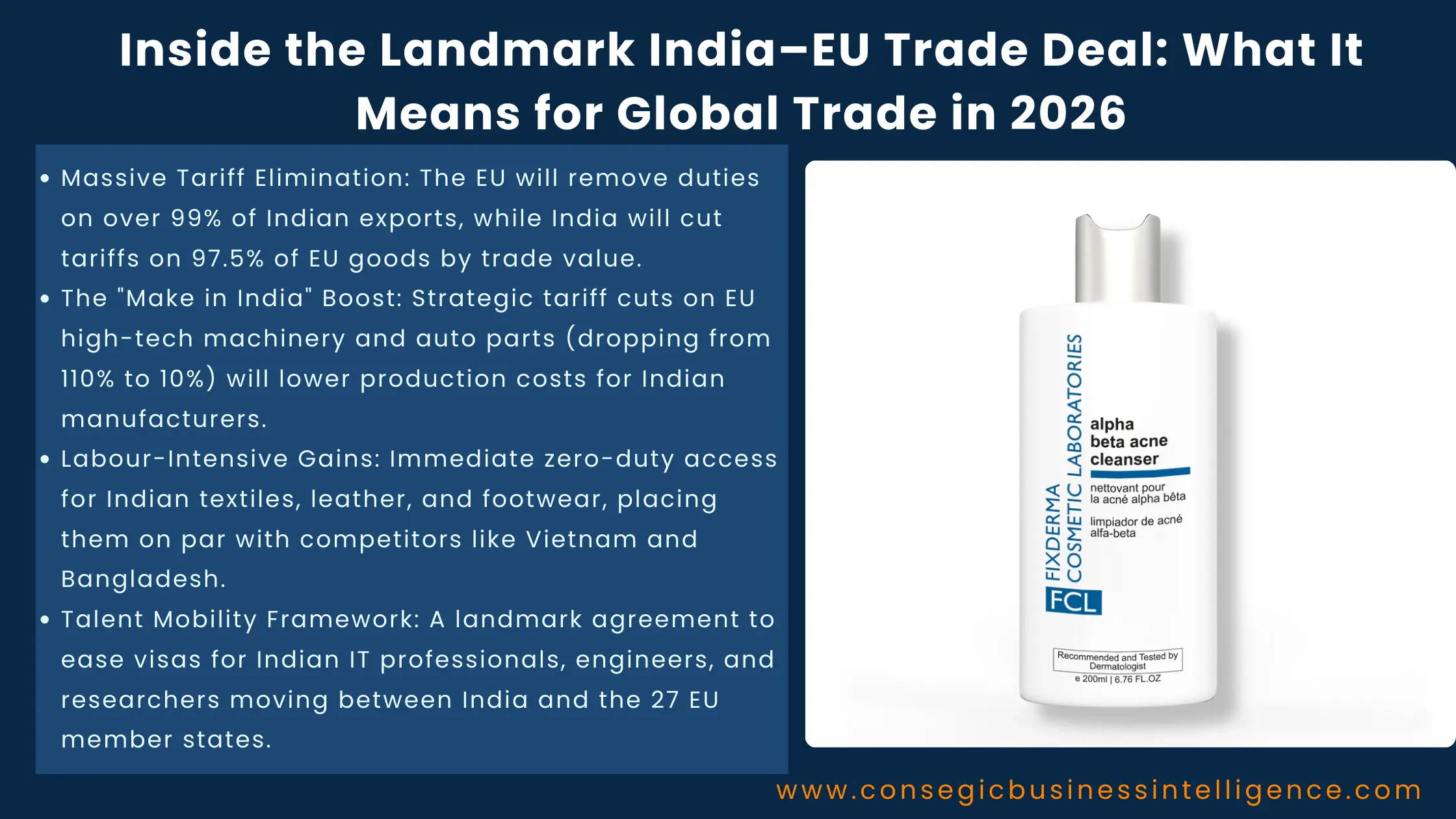
A Historic Agreement After Years of Talks
The India–EU trade deal was concluded on January 27, 2026, following many rounds of discussions and careful negotiation. The aim was to eliminate or reduce trade barriers between two of the world’s largest economic areas. Once in force, the agreement will significantly lower tariffs on a wide range of goods and services traded between India and the European Union. Together, the two economies represent a notable share of global economic output and trade, making this pact one of the most important trade developments of the early 2020s.
This deal is expected to open up markets for manufactured goods, services, and investment, benefiting businesses and consumers on both sides. While the agreement still needs legal approval by the European Parliament, national legislatures in EU member states, and India’s cabinet, most analysts believe it will be implemented by early 2027.
What the Deal Covers and Immediate Impacts
The trade agreement is comprehensive in scope. It covers goods, services, and broader economic cooperation. One of its most visible effects will be the reduction or elimination of tariffs on most products moving between India and the EU. On the European side, tariffs on machinery, chemicals, pharmaceuticals, and various industrial products are set to come down. India, in turn, will open its markets to EU exports in sectors such as automobiles, processed foods, wines, and luxury items.
For businesses and consumers, this means several key changes. European cars and lifestyle goods like wines and chocolates are expected to become more affordable for Indian consumers. Indian exports of textiles, gems and jewellery, marine products, and other labour-intensive goods will enjoy easier access to European markets. The reduction of tariffs on services such as finance, telecommunications, and transportation is also expected to boost cross-border activity.
While many sectors will benefit, some sensitive areas such as agriculture and dairy have been treated with caution to protect domestic industries. Overall, though, the deal marks a major shift toward freer trade between two global economic powers.
Boosting Trade and Economic Growth
One of the most significant outcomes of the deal will be the projected increase in trade. Before the agreement, bilateral trade between India and the EU already exceeded $190 billion in 2024-25, making the EU one of India’s largest trading partners. Reducing trade barriers is expected to deepen this relationship further.
Many industry groups anticipate that exports from India to the EU could grow rapidly, particularly in labour-intensive sectors such as textiles and gems and jewellery. Some estimates suggest that agreements like this could potentially double trade in certain key segments over the next decade.
On the EU side, easier access to India’s large and growing consumer market offers the potential for stronger exports of machinery, automobiles, and high-value manufactured goods. This could support job creation and investment on both sides.
Implications for Global Supply Chains
The India–EU trade deal also comes at a time when global trade patterns are shifting. Supply chains that were once heavily dependent on a few major economies are becoming more diversified. The new deal reflects a broader global trend toward strengthening regional and bilateral economic ties as countries seek greater resilience in production and trade.
For global businesses, the pact offers more options for sourcing, manufacturing, and selling products. Companies can now increasingly balance their operations between Europe and India rather than depending solely on traditional hubs. This could make supply chains more flexible and less vulnerable to disruptions.
It also has political implications. In an era marked by trade tensions and geopolitical competition, deeper economic cooperation between India and the EU is seen as a way to counterbalance other global powers and assert influence in shaping the global trade system.
Opportunities for Investment and Services
The trade deal is not only about reducing tariffs on goods. It also includes provisions to support foreign direct investment, technology transfer, and cooperation in sectors like digital trade and sustainability. By creating clearer rules and mutual recognition standards, the agreement encourages companies to invest across borders with greater confidence.
Service industries such as financial services, legal consulting, and maritime transport are expected to benefit significantly. Indian companies could find easier entry into European markets, while European firms could expand their presence in India’s rapidly growing economy.
Beyond direct economic gains, the pact also encourages collaboration on issues like environmental standards, digital trade rules, and dispute resolution processes, areas that are increasingly important in the modern global economy.
Challenges and What Comes Next
It is important to recognize that while the deal is ambitious, its effects will unfold gradually. Tariff reductions will be phased in over several years, and some sensitive sectors may continue to face restrictions. Implementation requires legal ratification in multiple jurisdictions, which can take time.
Critics also note that the deal, while substantial, is unlikely to transform global trade overnight. Some experts argue that broader negotiations on agricultural policies and regulatory alignment are still needed to unlock deeper economic integration. However, even with these limitations, the agreement represents a major step forward.
Conclusion
The India–EU trade deal concluded in early 2026 is a landmark development in global trade. By reducing barriers and opening markets between two major economies, it creates a new framework for economic cooperation that could shift trade dynamics in the years ahead. For businesses, workers, and consumers, the agreement brings opportunities for growth, investment, and more affordable goods. For global trade systems, it represents a move toward diversified partnerships and more resilient supply chains.
While it will take time for the full benefits to materialise, the deal marks a significant achievement in international economic diplomacy. As the world’s trade architecture continues to evolve in 2026 and beyond, the India–EU partnership is poised to be a defining element of that transformation.