Iran Protests 2026: What Sparked the Nationwide Uprising and Why It Matters
In late December 2025 and early 2026, Iran experienced one of the most widespread waves of protests in decades. What began as demonstrations against economic hardship quickly grew into a nationwide uprising with broad demands for political change. The scale and intensity of the unrest have made headlines around the world, not only because of the number of people taking to the streets but also because of the deep social and political implications for the country and the wider region.
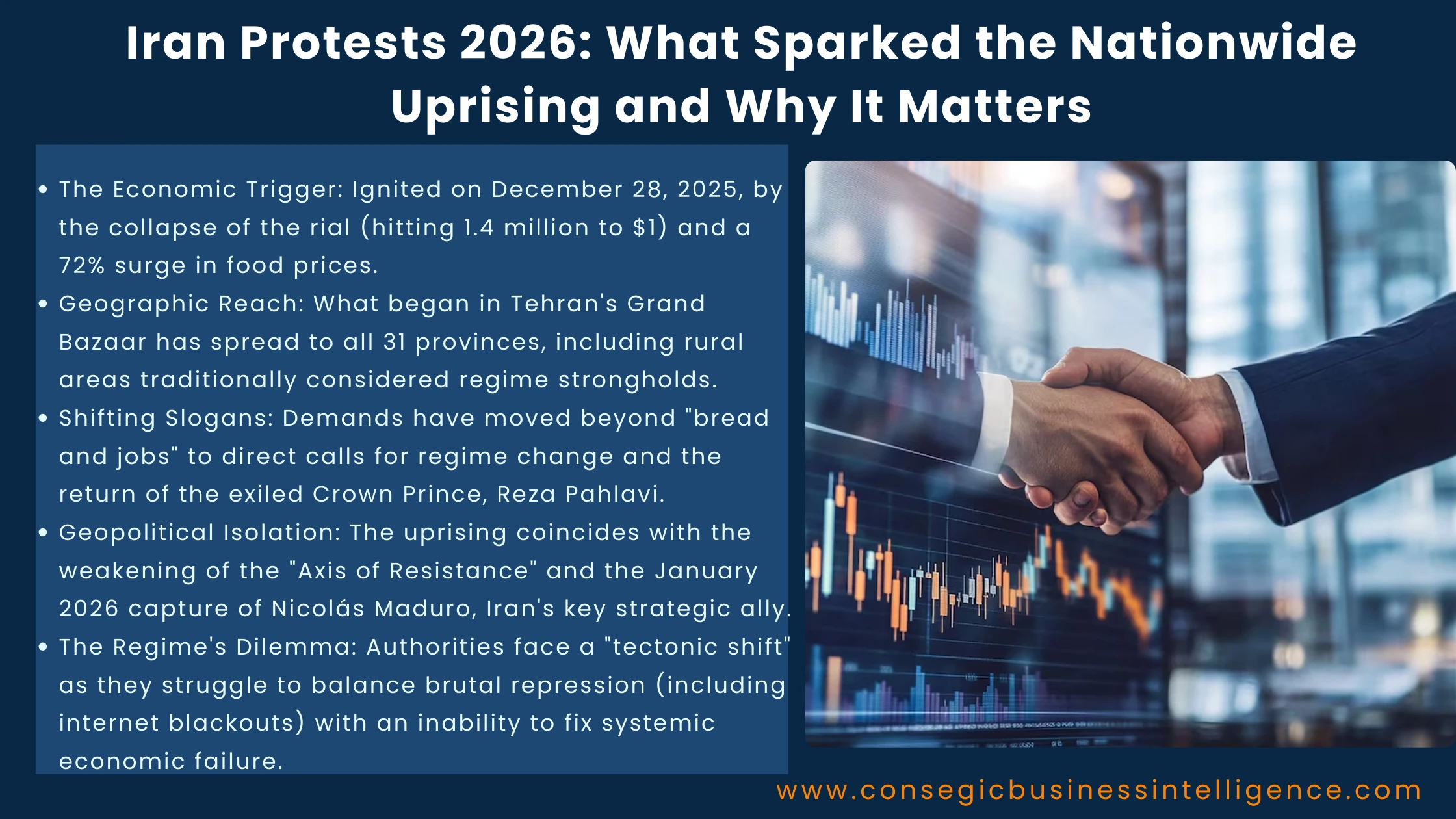
Iran Protests 2026: What Sparked the Nationwide Uprising and Why It Matters
Root Causes: Economic Crisis and Social Frustration
At the heart of the 2026 protests are deep and long-standing economic problems. Iran has struggled with high inflation, a sharp decline in the value of its currency, rising food and essential goods prices, and shrinking household purchasing power. In late 2025, inflation reached very high levels, and the Iranian rial lost significant value against the U.S. dollar, intensifying financial pressure on ordinary families and businesses. This collapse in the currency’s value made everyday items increasingly unaffordable for many households.
The situation was compounded by years of structural economic mismanagement, international sanctions, and reduced oil revenues. Many Iranians found it difficult to make ends meet as prices for basic goods climbed rapidly. Bazaar merchants, who once represented a strong component of Iran’s economy and social support for the state, began to express their frustration openly. When a proposed change to the national budget and foreign exchange policies threatened to remove a preferential exchange rate, it further heightened fears of even higher prices, prompting strikes and protests among shopkeepers and traders in Tehran’s historic Grand Bazaar.
For many, the protests were about more than inflation or unemployment. They reflected a deep sense of dissatisfaction with long-term economic decline and a lack of prospects for the future. This frustration was felt not only by low-income families, but also by the middle class and youth, who saw their hopes for stability and opportunity diminish over time. Many protesters described the economy as unresponsive to their needs, blaming corrupt networks and ineffective government policies for the declining living standards.
From Economic Grievances to Political Dissent
Although economic suffering was the spark, the protests quickly evolved into broader anti-government dissent. What began as demonstrations focused on price hikes and currency collapse soon expanded to include calls for political accountability, civil liberties, and systemic change. Protesters in multiple cities began chanting slogans that went beyond economic demands, with some calling for an end to the leadership of Iran’s theocratic system and the resignation of key officials.
The movement drew participants from diverse segments of Iranian society. Students, bazaar merchants, workers, and ordinary citizens across cities such as Tehran, Isfahan, Shiraz, Mashhad, and others joined the demonstrations. University campuses reported strikes and rallies, and protests occurred in regions that had previously been less vocal about political dissent. This broad participation reflected the depth of popular frustration and a shared desire for meaningful change.
The protests intensified as people began criticizing not only economic mismanagement but also corruption, lack of accountability, and perceived injustices within the political system. Where earlier demonstrations in recent years centered on specific issues, such as women’s rights, the 2026 uprising broadened in scope and draw, uniting diverse grievances against the core of the political establishment.
Government Response and Escalation
The Iranian government responded forcefully to the unrest. Authorities imposed a near-total internet blackout and communication restrictions in an effort to limit coordination and control information flow. These measures made it harder for protesters to organize and for the outside world to witness events as they unfolded.
Security forces used tear gas, live ammunition, and other tactics to disperse crowds, leading to significant casualties and arrests among demonstrators. Human rights groups reported that hundreds of people were killed and many more were injured or detained as the crackdown escalated. Reports indicated that even children were caught up in the violence, highlighting the severe impact of the conflict on ordinary families.
The government accused foreign powers of inciting unrest and labelled protesters as “enemies,” framing the protests as part of broader geopolitical tensions. Meanwhile, international responses varied, with calls for restraint and protections for human rights alongside warnings against external military intervention.
Why the Uprising Matters Beyond Iran
The 2026 protests in Iran have significance far beyond the country’s borders. Firstly, Iran is a major player in regional politics. Its policies and alliances influence dynamics throughout the Middle East, including relationships with neighboring countries and with global powers. Widespread unrest within Iran could alter these interactions and shift regional balances of influence.
Secondly, the protests underscore the impact of economic conditions on political stability. Iran’s crisis shows how prolonged economic hardship can feed broader demands for systemic change. This pattern resonates in other countries where economic grievances intersect with political frustration, highlighting a global connection between economic well-being and governance legitimacy.
Finally, the uprising highlights the role of communication technology and social media in modern protest movements. Even as authorities attempted to cut off internet access, citizens used alternative channels and networks to share information and coordinate actions, illustrating the complex relationship between technology, dissent, and state power.
Looking Ahead: Uncertain Future
The future of Iran remains uncertain. The 2026 protests represent a major moment in the country’s recent history, but it is unclear how or when they will lead to lasting political change. Much depends on whether the government can address core economic issues and restore public trust, and whether protest movements can sustain unity and momentum over time.
What is clear is that the 2026 uprising is not just about short-term economic distress. It reflects deeper social and political desires for justice, accountability, and a voice in the future of Iran. How these demands are met will shape not only Iran’s path forward but also influence broader geopolitical and regional developments in the years to come.