5 Key Factors Influencing Silver Prices in 2026
Silver has captured a lot of attention in financial markets in recent years. In early 2026, silver reached record prices in many markets, including breaking local benchmarks in India and global exchanges. These movements reflect broader shifts in how silver is viewed by investors, industries, and financial markets. Understanding what drives the price of silver helps traders, investors, and industry participants make better decisions. In this blog we explore five key factors shaping silver prices in 2026, explaining them in simple, easy-to-understand terms.
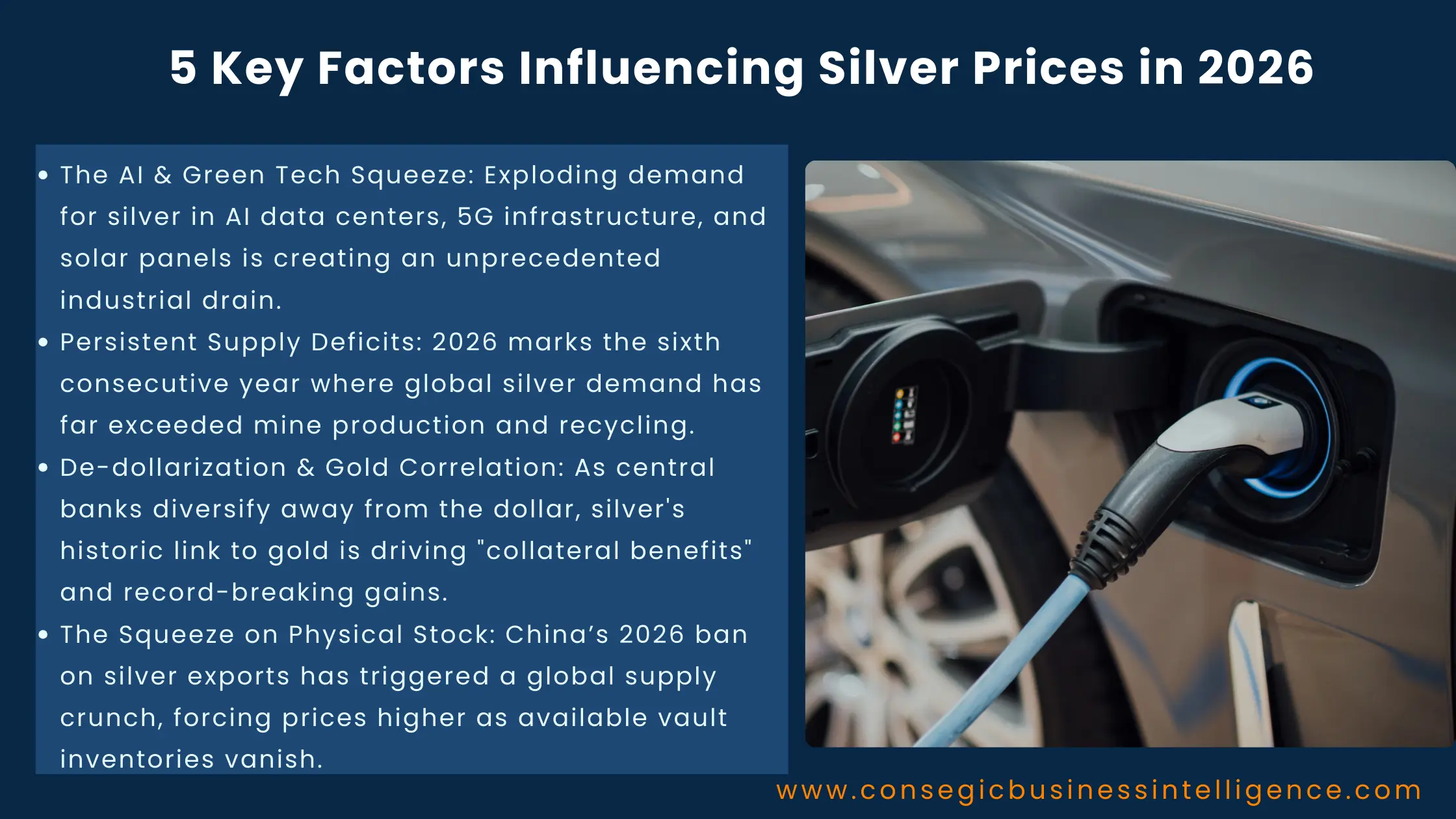
- Industrial Demand and Technological Use
One of the most important factors affecting silver prices is industrial demand. Silver is not just a precious metal; it is also a critical industrial material used in solar panels, electronics, medical devices, and renewable energy technologies. Its high electrical conductivity and durability make it essential in these applications.
In recent years, demand from green energy sectors such as solar photovoltaics and electric vehicles has increased sharply. This trend continues into 2026 and is expected to remain a major driver of silver consumption. Because industrial usage accounts for a majority of total silver demand globally, any increase in industrial output tends to support higher prices. Conversely, if industrial growth slows or manufacturers find cheaper alternatives, demand pressure on silver prices can ease. This dual role of silver as both industrial input and financial asset makes its price especially responsive to changes in industrial trends.
- Investment Demand and Safe-Haven Appeal
Silver also plays a role as a store of value in investment portfolios. Like gold, it is seen as a hedge against inflation, currency weakness, and economic uncertainty. When markets are volatile, or when investors expect inflation to rise, demand for silver bars, coins, and exchange-traded products often increases, pushing up prices.
In early 2026, silver’s price surge was partly driven by strong investor interest, including significant inflows into silver-linked exchange-traded funds. This reflects growing confidence in precious metals as alternatives to traditional financial assets during periods of macroeconomic stress. Retail entrants and institutional investors alike have been channeling capital into silver, further tightening supply in trading hubs. Investor sentiment, therefore, plays a major role in price direction, especially in times of financial uncertainty or when safe-haven demand is strong.
- Supply Dynamics and Mining Constraints
Another important influence on silver prices is supply conditions. Silver is often produced as a byproduct of mining for other metals such as copper, lead, and zinc. This means the metal’s supply is not easy to increase quickly even when prices rise. Mining output tends to follow investment and infrastructure timelines that can stretch over many years.
Recent analysis suggests a continuing supply deficit, where demand for silver outpaces the amount being mined. Structural deficits can create tight markets and upward pressure on prices, especially when combined with strong demand. Additionally, disruptions in major mining regions or logistical challenges can reduce available supply and push prices higher.
- Macroeconomic Trends and Monetary Policy
Silver prices are also sensitive to broader economic conditions and monetary policy decisions. Central bank actions on interest rates, inflation data, and currency fluctuations all influence investor behaviour in precious metals markets. Lower interest rates, for example, tend to make non-yielding assets like silver more attractive because the opportunity cost of holding them falls relative to savings or bonds.
In early 2026, expectations of moderate rate cuts in major economies contributed to positive sentiment in metals markets. At the same time, a weakening U.S. dollar, common during periods of monetary easing can push silver prices higher, since a weaker dollar makes dollar-priced commodities cheaper for holders of other currencies. These macro trends, including inflation expectations and global economic growth forecasts, are among the main forces that shift silver prices over time.
- Geopolitical and Market Sentiment Factors
Geopolitical events and market psychology play a large role in precious metal pricing. Heightened tensions between nations, trade disputes, and political uncertainty often lead investors to seek safer assets, including silver. In early 2026, increased geopolitical concerns contributed to a strong silver rally as investors looked for refuge amid uncertainty in global markets.
Market sentiment is not only driven by events but also by perceptions and expectations. For example, speculation on future price movements can create momentum buying, which further accelerates price increases. At the same time, any news that weakens confidence such as changes in trade policy or unexpected economic data can prompt rapid price corrections due to silver’s relatively high volatility compared with other commodities.
Putting It All Together
The price of silver in 2026 reflects a combination of industrial usage, investment demand, supply constraints, macroeconomic trends, and geopolitical influences. These factors do not operate in isolation. Instead, they interact in ways that can amplify price movements during times of strong demand or market stress.
For example, strong industrial demand for renewable energy components can tighten supply at the same time that economic uncertainty pushes investors toward precious metals. Likewise, policy changes affecting interest rates or currency values can shift market sentiment in ways that either bolster or weaken silver’s appeal. Because silver serves both industrial and financial roles, its price can be especially sensitive to shifts in global economic dynamics.
Understanding this interplay can help investors and industry observers anticipate trends in silver pricing and navigate the complex market environment of 2026.
Conclusion
Silver’s price in 2026 is being shaped by a mix of demand patterns, supply limitations, global economic factors, and investor behaviour. Industrial consumption, particularly from green energy and technology sectors, continues to be a powerful force driving long-term demand. At the same time, investment interest and safe-haven buying can cause rapid price shifts when economic or geopolitical uncertainty rises.
Supply constraints and mining challenges further support price strength, especially when demand outpaces available output. Macroeconomic conditions, including interest rate expectations and currency movements, add another layer of influence, while geopolitical events and sentiment trends can trigger short-term volatility.
Taken together, these five key factors help explain why silver prices have risen sharply and why markets remain attentive to the forces shaping price direction in 2026. For anyone tracking precious metals or planning investment strategies, a clear understanding of these drivers is essential to making informed decisions in a rapidly evolving marketplace.