The global lentil market is witnessing significant growth, driven by rising consumer awareness of plant-based proteins, expanding food industry applications, and evolving agricultural practices. Lentils, one of the oldest cultivated pulses are recognized for their high nutritional value, sustainable cultivation, and versatility in food processing. As populations shift toward healthier and more sustainable diets, the lentil market has emerged as a critical segment in the global agri-food ecosystem.
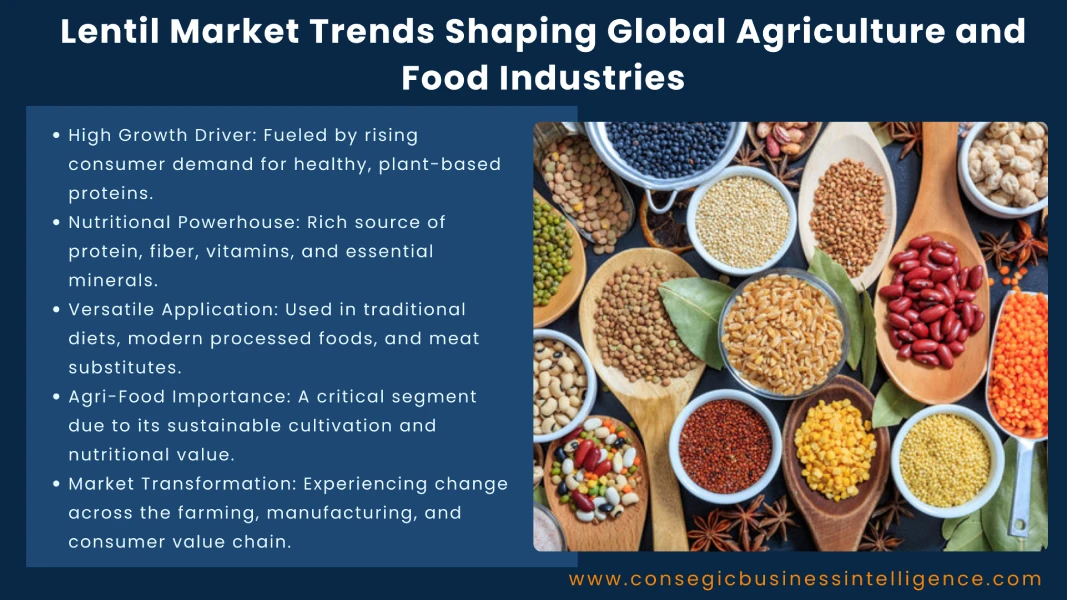
Rich in protein, fiber, vitamins, and essential minerals, lentils are increasingly being used not just in traditional diets but also in modern processed foods, meat substitutes, and fortified ingredients. From farmers and food manufacturers to retailers and consumers, every link in the lentil value chain is experiencing transformation. Below, we explore the key trends shaping the global lentil market and their impact on agriculture and the food industry worldwide.
- Rising Demand for Plant-Based Proteins
One of the most powerful trends driving the lentil market is the global surge in demand for plant-based protein sources. As consumers reduce meat consumption for health, ethical, and environmental reasons, lentils have become a popular alternative due to their rich amino acid profile and digestibility.
Food manufacturers are incorporating lentil proteins into meat analogs, snacks, and dairy substitutes to cater to vegan and flexitarian consumers. The growing market for plant-based ready meals and protein-enriched products is creating sustained demand for lentil-derived ingredients such as protein isolates, flours, and textured proteins.
This shift toward plant-based diets is particularly strong in regions like North America and Europe, where awareness of sustainable nutrition continues to rise. As the global population moves toward protein diversification, lentils are poised to play a leading role in the future of food innovation.
- Expansion of Functional and Nutritional Food Applications
The food and beverage industry is leveraging the nutritional benefits of lentils to create functional foods and fortified products. Lentils are naturally high in iron, potassium, folate, and dietary fiber, making them ideal for health-focused formulations.
Manufacturers are introducing lentil-based flours, pastas, and baked goods that cater to gluten-free and high-protein diets. Additionally, lentil ingredients are increasingly used in sports nutrition, baby food, and meal replacements, where clean-label formulations are in high demand.
This trend aligns with the growing consumer preference for natural, minimally processed foods. Lentils’ versatility allows them to enhance the texture, flavor, and nutritional profile of a wide range of products, supporting innovation in both traditional and modern food segments.
- Growth in Sustainable and Climate-Resilient Farming Practices
Lentils are not only nutritionally beneficial but also environmentally sustainable. As global agriculture faces challenges from climate change, soil degradation, and resource scarcity, lentils are gaining attention as a resilient and eco-friendly crop.
Being nitrogen-fixing legumes, lentils naturally enrich soil fertility, reducing the need for synthetic fertilizers and promoting sustainable crop rotation. They also require less water and lower inputs compared to other protein crops, making them well-suited for arid and semi-arid regions.
Governments and agricultural organizations are promoting lentil cultivation as part of sustainable farming programs. In countries such as Canada, India, and Australia, lentils are being integrated into regenerative farming systems that improve soil health and boost long-term productivity.
As the world prioritizes climate-smart agriculture, lentils are becoming a cornerstone of environmentally conscious food production.
- Technological Advancements in Crop Breeding and Processing
Technological innovation is transforming the lentil supply chain, from cultivation to processing. Advances in genetic research, breeding programs, and precision agriculture are improving lentil yield, disease resistance, and adaptability to diverse climatic conditions.
Researchers are developing biofortified lentil varieties with enhanced iron and zinc content to combat micronutrient deficiencies in developing regions. Similarly, modern processing technologies such as dehulling, micronization, and extrusion are improving product quality and expanding industrial applications.
Automation and smart farming tools including satellite imaging, drone monitoring, and soil analytics are also enhancing productivity and resource management. These innovations are helping farmers achieve better yields while maintaining sustainability, thereby strengthening the global lentil supply chain.
- Expanding Role of Major Producing Regions
The global lentil market is heavily influenced by major producing regions such as Canada, India, Australia, Turkey, and the United States. Canada remains the largest exporter, contributing significantly to global supply through high-quality red and green lentil varieties.
India, on the other hand, is one of the world’s leading consumers and importers of lentils, driven by its protein-rich vegetarian diet and growing food processing industry. Meanwhile, Australia and Turkey are expanding their export capacities with improved varieties suited for international markets.
The establishment of strategic trade partnerships and improved logistics networks is enhancing global lentil availability and reducing price volatility. As global demand continues to rise, these key producing nations are expected to strengthen their roles in shaping international supply chains.
- Increasing Demand from Processed Food and Snack Industries
The global shift toward convenience and health-conscious snacking is fueling new opportunities for lentil-based food products. Lentil chips, puffs, and baked snacks are gaining popularity as consumers seek alternatives to traditional potato-based or fried snacks.
Food companies are investing in value-added processing to create innovative, high-protein products with low fat and sodium content. Additionally, lentil flours are being used as functional ingredients in baked goods and extruded snacks, offering better texture and nutritional balance.
This trend is particularly strong in urban markets across North America, Europe, and Asia, where consumers are willing to pay a premium for healthier snack options. As demand for clean-label and protein-enriched snacks grows, lentils are becoming a preferred ingredient in the processed food segment.
- Government Support and Trade Policy Developments
Policy support and international trade agreements are playing a vital role in shaping the lentil market’s growth trajectory. Many governments are introducing incentives for pulse cultivation, export facilitation, and food security programs to promote lentil production and trade.
For example, Canada’s agricultural policy framework supports research and infrastructure for pulse processing, while India’s government initiatives encourage self-sufficiency in pulse production. Trade agreements between major producers and importers have further improved market access and stabilized supply chains.
Additionally, the inclusion of lentils in United Nations Sustainable Development Goals (SDGs) related to zero hunger and sustainable agriculture highlights their importance in global food policy. The synergy between government initiatives and private-sector investment continues to foster long-term market expansion.
- Growing Focus on Food Security and Nutritional Sustainability
As global food demand rises, lentils are increasingly recognized as a critical component of food security strategies. Their long shelf life, low production costs, and high nutrient density make them ideal for addressing protein gaps in developing regions.
Organizations such as the FAO and World Food Programme (WFP) are promoting lentil-based food aid initiatives to combat malnutrition. Lentils’ ability to contribute to both human health and environmental resilience positions them as a strategic crop for future food systems.
The focus on sustainability, combined with the global movement toward balanced, plant-based diets, ensures that lentils will remain central to the evolution of agriculture and food industries.
Conclusion
The global lentil market is evolving into a dynamic intersection of agriculture, technology, and nutrition. With rising demand for plant-based proteins, growing emphasis on sustainable farming, and continuous innovation in food processing and crop development, lentils are shaping the future of both global agriculture and the food industry.
From farmers adopting precision agriculture to manufacturers innovating plant-based food products, lentils have become more than just a dietary staple, they represent a path toward healthier people and a healthier planet.
As global consumers embrace sustainability and nutrition, the lentil market’s growth trajectory underscores its pivotal role in the transition toward a resilient, sustainable, and protein-rich global food economy.