The global ornamental fish market is witnessing remarkable growth, driven by the increasing popularity of aquarium keeping as both a hobby and a lifestyle trend. Ornamental fish valued for their vibrant colors, unique patterns, and tranquil movement have become an integral part of modern home decor, wellness, and commercial aesthetics. Supported by advancements in aquaculture, digital retailing, and sustainable breeding practices, the market continues to evolve across residential and commercial domains.
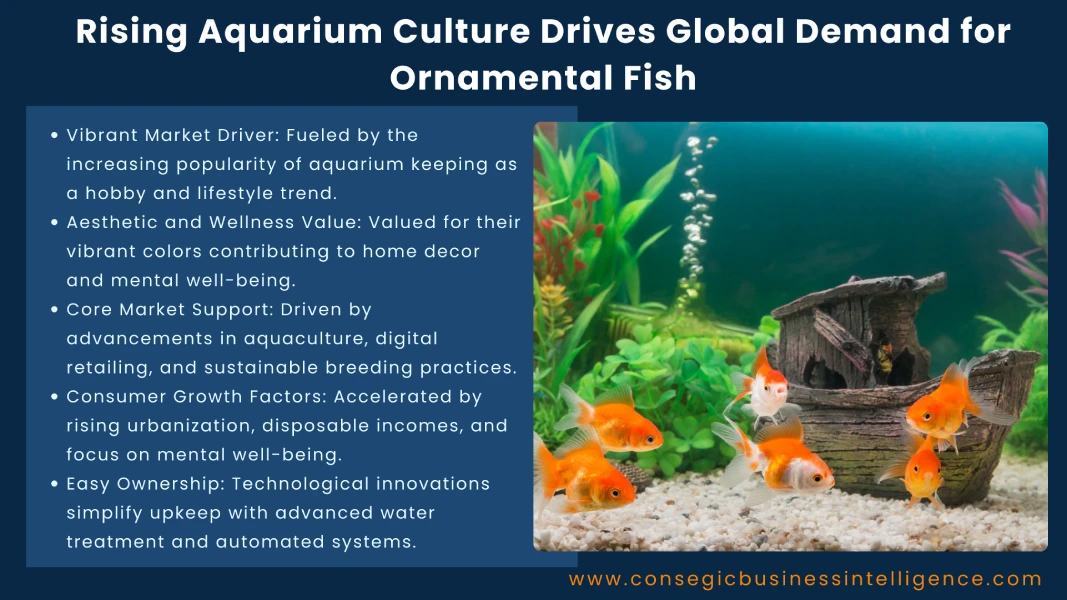
Rising urbanization, increasing disposable incomes, and a growing emphasis on mental well-being have fueled consumer interest in aquariums and aquatic pets. At the same time, technological innovations in water treatment, lighting, and automated feeding systems are making aquarium ownership easier and more accessible to first-time enthusiasts. This comprehensive analysis explores the current dynamics, emerging trends, and future opportunities shaping the ornamental fish market worldwide.
- Expanding Consumer Base and Lifestyle Influence
The ornamental fish market’s steady expansion is closely linked to shifting lifestyle preferences and the growing human-animal bond. With people living in compact urban environments, ornamental fish have emerged as an ideal pet choice due to its low maintenance, space-efficient, and aesthetically pleasing.
Aquariums are now perceived not only as decorative additions but also as symbols of tranquility and sophistication. The incorporation of aquariums into modern interior design, especially under the biophilic design movement, is driving demand among urban consumers. Watching fish swim has been shown to reduce stress and anxiety, leading to their use in homes, offices, and healthcare facilities for therapeutic benefits.
The post-pandemic focus on mental health and home improvement has further boosted aquarium adoption. As pet ownership becomes a lifestyle statement, ornamental fish continue to gain popularity as elegant, wellness-oriented companions.
- Rising Demand for Exotic and Freshwater Species
A key factor influencing market growth is the rising consumer preference for exotic and colorful fish species. Among these, freshwater ornamental fish dominate global trade due to their affordability, adaptability, and ease of maintenance. Popular species such as goldfish, guppies, angelfish, barbs, and tetras are widely available and suitable for beginner hobbyists.
However, the market for marine and tropical fish is also gaining traction, driven by consumers seeking premium and rare species like clownfish, butterflyfish, and tangs. The surge in customized aquascaping, where fishkeeping combines art and nature has encouraged demand for diverse species and vibrant aquatic plants.
Advancements in selective breeding and aquaculture technology are supporting this growth by improving fish coloration, health, and survival rates. These developments are helping breeders meet global demand while maintaining quality and ethical sourcing standards.
- Technological Advancements Revolutionizing the Market
Innovation continues to transform the ornamental fish industry, making aquarium maintenance more efficient and user-friendly. The advent of smart aquariums featuring automated feeding systems, temperature sensors, and digital water-quality monitoring has revolutionized fishkeeping.
LED lighting technology has not only enhanced visual aesthetics but also improved energy efficiency and plant growth within aquariums. Similarly, advanced filtration systems and biological additives are ensuring healthier aquatic environments, reducing manual intervention and fish mortality rates.
Moreover, IoT-enabled aquarium devices are gaining traction among tech-savvy consumers, allowing remote monitoring through smartphone applications. These innovations have lowered entry barriers for new hobbyists, expanded the customer base, and significantly increased product sales within the ornamental fish ecosystem.
- Growth of E-Commerce and Global Trade Networks
The rapid expansion of online retail platforms has reshaped the ornamental fish market, enhancing accessibility and convenience for buyers and sellers alike. Consumers can now purchase live fish, aquascaping materials, aquarium kits, and accessories from digital marketplaces with doorstep delivery and real-time health guarantees.
E-commerce has particularly benefited small-scale breeders and exporters in developing countries, enabling them to reach international customers directly. Temperature-controlled logistics and specialized packaging innovations have made it feasible to transport live fish safely over long distances.
Countries such as Singapore, Thailand, India, and Indonesia have emerged as major exporters, while North America and Europe remain key import markets. The digital transformation of the supply chain, coupled with growing cross-border trade, continues to expand the market’s global footprint.
- Sustainability and Ethical Breeding Practices
As environmental awareness grows, sustainability has become a defining factor in ornamental fish production. Consumers are increasingly conscious of ethical sourcing and eco-friendly breeding, leading to the decline of wild-caught species trade.
Modern breeding facilities now prioritize closed-loop aquaculture systems that recycle water and reduce waste discharge. Certification programs promoting sustainable aquaculture practices ensure compliance with animal welfare and biodiversity standards.
Efforts are also being made to preserve native fish species and regulate trade under frameworks such as CITES (Convention on International Trade in Endangered Species). With governments and breeders focusing on responsible aquaculture, sustainability is emerging as a key differentiator in the global ornamental fish market.
- Regional Insights: Asia-Pacific Dominance and Global Growth
The Asia-Pacific region remains the backbone of the ornamental fish industry, both as a leading producer and exporter. Countries like Singapore, India, Malaysia, and Thailand are recognized for their well-established breeding infrastructure, favorable climate, and competitive pricing.
Singapore, often referred to as the “ornamental fish capital of the world,” exports to over 80 countries and serves as a hub for innovation and logistics in the sector. Meanwhile, India’s expanding aquaculture network and government initiatives in ornamental fish farming are boosting domestic and export potential.
In contrast, Europe and North America represent major consumption markets, driven by high pet ownership rates and a mature retail ecosystem. The Middle East and Latin America are also witnessing steady growth, supported by increasing urbanization and rising disposable incomes.
This geographical diversification highlights a balanced global supply chain, with Asia-Pacific leading production and Western markets driving consumption and premium demand.
- Role of Public Aquariums and Educational Institutions
Public aquariums and educational institutions play a significant role in promoting awareness, conservation, and research within the ornamental fish market. These establishments showcase diverse species, educate the public about marine ecosystems, and support captive breeding initiatives.
Collaborations between aquariums, universities, and government agencies have led to research in fish genetics, disease control, and environmental sustainability. Public aquariums also stimulate local tourism, contributing economically while inspiring new hobbyists to explore aquarium keeping.
As educational institutions emphasize marine biology and aquaculture studies, the next generation of breeders, conservationists, and entrepreneurs is being trained to ensure the industry’s sustainable future.
- Future Scope: Innovation, Wellness, and Sustainable Growth
The future of the ornamental fish market is shaped by three powerful forces including innovation, wellness, and sustainability. Technological advancements will continue to make aquariums smarter and more interactive, attracting both young consumers and tech enthusiasts.
The integration of AI-based feeding systems, water purification sensors, and automated habitat customization will redefine convenience and precision in aquarium management. Meanwhile, the growing emphasis on mental well-being and environmental harmony will keep ornamental fish relevant in homes, offices, and therapeutic spaces.
Sustainability will remain a cornerstone of future growth. Breeders, exporters, and retailers will increasingly adopt eco-certified processes and expand responsible trade networks to align with global conservation goals. As consumer preferences evolve toward ethical, digital, and health-oriented living, the ornamental fish market is poised for continued expansion in both value and volume.
Conclusion
The ornamental fish market stands at the intersection of art, nature, and technology. With increasing demand for aquatic pets, evolving consumer lifestyles, and sustainable aquaculture practices, the market continues to thrive across global regions.
From innovative breeding and digital retail channels to eco-conscious farming and smart aquarium technologies, every element of the value chain is contributing to a vibrant, future-ready industry. As ornamental fishkeeping continues to blend aesthetics with emotional and environmental value, the market’s future scope looks bright and resilient, promising sustained growth for both consumers and producers in the years ahead.