The Hybrid Shopper: How AI and Personalization Are Changing Retail Forever
The Hybrid Shopper: How AI and Personalization Are Changing Retail Forever
Retail is undergoing a dramatic transformation. Gone are the days when consumers shopped strictly online or only stepped into physical stores. Today’s shoppers move seamlessly between digital platforms, mobile apps, and brick-and-mortar locations. This shift has given rise to a new type of consumer known as the hybrid shopper, someone who blends different channels and expects personalized, convenient experiences. At the heart of this change is artificial intelligence, which is redefining how retailers connect with customers and deliver tailored experiences across all touchpoints.
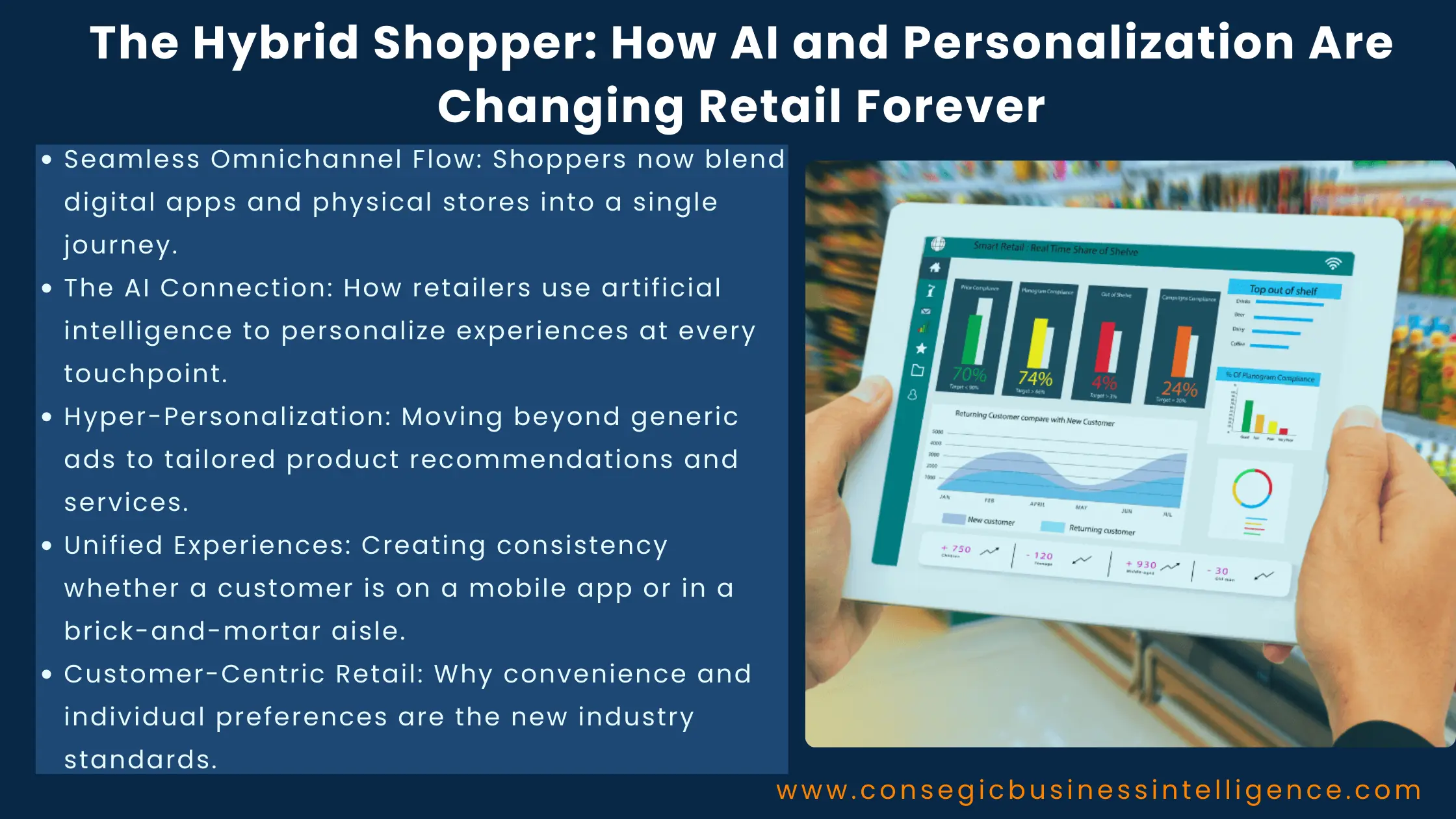
Who Is the Hybrid Shopper
The hybrid shopper does not see online and physical shopping as separate experiences but as different parts of a continuous journey. They might discover a product on social media, research it on a retailer’s website, try it in store, and then complete the purchase through a mobile app. This fluid movement between channels reflects changing consumer expectations around convenience, speed, and personalization. Retailers that fail to meet these evolving habits risk losing relevance as hybrid shoppers seek brands that make shopping effortless and rewarding.
AI and Personalization: The Retail Game Changers
Artificial intelligence plays a central role in defining hybrid shopping experiences. AI is not just a back-end technology but it is actively shaping interactions between shoppers and brands. Through deep analysis of customer data such as past purchases, browsing patterns, and engagement history, AI systems can deliver highly personalized recommendations, tailor messaging, and predict future shopper preferences. The result is a retail journey that feels intuitive and uniquely tailored to each individual shopper’s tastes and needs.
Personalization powered by AI is no longer an optional feature but a core retail expectation. A substantial portion of consumers now prefer personalized experiences and are more likely to engage with brands that reflect their preferences across channels. This means that whether a customer is browsing on a website, app, or in store, the experience should adapt to their interests and behavior.
Bridging Online and In-Store Experiences
Hybrid shopping is not just about personalization but also about integration. A seamless shopping experience begins with consistent product information across online and physical environments. Shoppers expect that a product they see online will be available in store with the same specifications, pricing, and inventory visibility. AI helps retailers achieve this by synchronizing data in real time and predicting inventory needs based on demand patterns, reducing the chances of stockouts or mismatches.
For example, a shopper might use a mobile app to check if a product is available in a nearby store before heading there to try it out. At the same time, AI systems can update inventory and pricing instantly so that the customer sees the most accurate information wherever they shop. This level of omnichannel integration boosts customer confidence and strengthens brand loyalty.
Smart Recommendations and Tailored Suggestions
One of the most visible ways AI influences the hybrid shopper is through personalized product recommendations. When hybrid shoppers interact with a retail platform, whether online or in person, AI can suggest products based on their unique behavior. This might include related products, complementary items, or promotions that match their interests. Smart recommendation systems not only make shopping more engaging but can also increase conversion rates and average order value for retailers.
AI personalization tools can also tailor experiences on different devices. For example, a customer browsing products on a smartphone might see different suggestions than someone using a laptop, reflecting the way people interact differently with each device. By understanding these patterns, retailers can optimize content and offers to meet the needs of hybrid shoppers at each stage of their journey.
AI-Driven Checkout and Convenience
Hybrid shoppers value convenience, and AI is helping make checkout as smooth as possible. New AI tools allow customers to complete purchases directly through voice assistants, chat platforms, or integrated shopping bots without navigating multiple screens or apps. Some retailers are also experimenting with conversational AI that can complete entire purchases on behalf of users, reducing friction and saving time.
This emerging form of “agentic commerce” is expected to shape how consumers shop in 2026 and beyond. Instead of manually searching for products, hybrid shoppers may increasingly rely on AI assistants that understand their preferences and handle tasks like finding the best price, locating stock, or placing an order.
The Human Touch in an AI World
While AI is a powerful force in retail transformation, human interaction still matters. For many shoppers, especially in physical stores, human assistance provides reassurance, advice, and a personal connection that digital interfaces alone cannot replicate. Smart retail strategies combine AI efficiency with human service, such as equipping store associates with AI-powered apps that provide real-time insights into customer preferences or offer tailored assistance based on previous shopping behavior.
This blend of digital intelligence and human support helps retailers create richer experiences that resonate emotionally while satisfying practical needs. It is a key factor in building trust and loyalty in a complex hybrid shopping environment.
Challenges and Ethical Considerations
Despite clear benefits, AI-driven personalization also raises important questions about data privacy and fairness. Retailers must ensure they use customer information responsibly, protect privacy, and avoid bias in AI algorithms. Transparency and ethical practices will be crucial for building long-term consumer trust. Retailers that prioritize data protection and clear communication will likely perform better in the hybrid shopping landscape.
A New Era of Retail
The rise of the hybrid shopper marks a turning point in retail. Rather than separating online and in-store experiences, shoppers now expect a unified, personalized journey that reflects their individual preferences. Artificial intelligence is the engine powering this shift, enabling retailers to deliver tailored recommendations, seamless omnichannel interactions, and frictionless checkout experiences.
As hybrid shopping continues to evolve, the future of retail will be defined by how well brands can blend digital intelligence with human creativity to meet the expectations of modern consumers. The retailers that succeed in this environment will be the ones that embrace AI not just as a technology, but as a way to connect more deeply with shoppers and create compelling, personalized experiences that make every purchase feel relevant and satisfying.