The Rise of Physical AI in Modern Industrial Operations
The next generation of artificial intelligence technology will be physical AI which is a combination of smart software and hardware including robots, autonomous cars, and manufacturing equipment. Unlike typical AI, which is aimed at data analysis or automation of digital processes, Physical AI empowers machines with perception, decision making and action in the physical world. Rapid developments and innovations in machine learning, computer vision, advanced sensors, edge computing, and IoT are leading to the growing popularity of physical AI in warehouses, factories, and logistics facilities. More and more companies are implementing these innovations due to the lack of staff, growing operational costs, and higher customers' expectations regarding the delivery time and accuracy. Moreover, systems based on Physical AI can provide monitoring of operations, detection of problems, and optimization of processes with almost no human interaction needed. Thus, by increasing productivity, improving safety, reducing mistakes, and making better decisions, Physical AI is one of the main drivers of digitalization and innovation in industry.
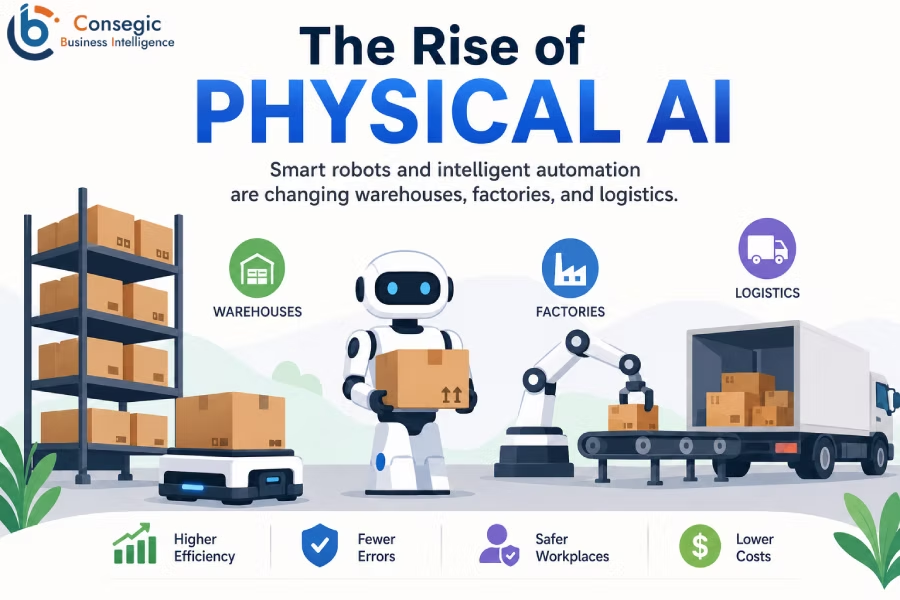
How Physical AI Combines Smart Robotics and Intelligent Automation
Combination of sophisticated robots and artificial intelligence makes physical AI an advanced solution for creating machines that understand and react to their surroundings in order to perform certain tasks. Such machines use various technologies like AI algorithms, machine learning, computer vision, IoT, digital twins, and real-time sensor data to carry out manufacturing tasks independently. Moreover, physical AI differs from conventional automation in the sense that it constantly learns from its actions and makes decisions based on data analysis. Smart robots with the help of cameras, LIDAR, and proximity sensors can move freely through warehouses, identify obstacles and objects, and work with people without danger to them. Furthermore, collaborative robots or co-bots have become popular as they help people to perform routine tasks as well as those that require great physical strength while letting them concentrate on other important things. Also, digital twins help to conduct tests of different situations in virtual environments.
Transforming Warehouse Management Through AI-Powered Robots and Automation
AI-based robots and automation are revolutionizing the way warehouses are being managed with a focus on becoming efficient, precise and scalable. As the global supply chain becomes increasingly complex, companies have been leveraging modern warehouse automation systems to manage their inventories better in order to meet rising customer demands. Autonomous Mobile Robots (AMRs) and Automated Guided Vehicles (AGVs) are important components of the process of cargo transportations as well as restocking and enhancement of material handling process without any human involvement. These smart robots use artificial intelligence, machine vision, and real-time sensors to move safely around within the warehouse area.
Moreover, Automated Storage and Retrieval Systems (AS/RS) increase the capacity of storing products and accelerate the process of their retrieval, which considerably reduces order fulfillment time. Inventory management systems that employ artificial intelligence track inventory levels in real time, make forecasts about the demand and prevent overstocks or out-of-stock situations. Furthermore, the computer vision technology is employed for optimization of warehouse operations such as barcodes scanning, product recognition, quality control, etc., thus reducing manual mistakes in picking and packing. Automating repetitive operations allows warehouse staff members to pay attention to more valuable tasks such as process optimization and customer service. Due to the growth of e-commerce and omnichannel retail, AI-powered warehouse automation rapidly becomes a key element of success for those who need to be more productive, reduce costs, ensure workplace safety, and provide fast and reliable order fulfillment.
The Impact of Physical AI on Smart Manufacturing and Factory Operations
Physical AI is reshaping smart manufacturing and factory operations by integrating artificial intelligence, robotics, computer vision and Industrial Internet of Things (IIoT) technologies to create more intelligent and connected production environments. Unlike traditional automation systems based on static programming, Physical AI enables machines to analyse data and make independent decisions to increase efficiency and accuracy of their actions. The use of robots powered by AI becomes popular on the assembly line to weld, pack materials and assemble components with incredible speed and accuracy. Moreover, co-bots are also used to collaborate with people without causing any harm, thus minimizing the physical load of workers and increasing the efficiency of the process.
Another significant application of physical AI is related to predictive maintenance when algorithms of AI collect the data about the performance of machines and equipment, using sensors to prevent expensive breakdowns of the machinery. Another area where physical AI can improve quality control is computer vision, which inspects the products for defects. Additionally, AI-powered production analytics not only optimize the production process but help to reduce energy consumption. As a result of implementing Industry 4.0, the use of physical AI becomes crucial for manufacturers to achieve such goals as operational flexibility, increased workplace safety, improved product quality and sustainability of manufacturing operations.
How Intelligent Automation Is Revolutionizing Logistics and the Future of Supply Chains
Intelligent automation is transforming logistics and the future of supply chains through the convergence of artificial intelligence, robotics, machine learning and real-time data analytics in transportation and distribution networks. Due to the development of global commerce and e-commerce, firms find it necessary to employ AI-based logistic systems to boost their efficiency and shorten the time required for deliveries. In addition to that, AI-enabled route optimization takes into account different factors such as traffic conditions, weather, fuel consumption, deadlines etc. with the purpose to determine the most efficient route of delivery in order to save money and deliver goods on time.
With automation technologies, IoT sensors and GPS, firms can monitor the whole process of delivery in real-time. Additionally, AI-based demand forecasting and inventory optimisation help the organisations in predicting the market trends, managing their inventory and reducing the disruptions in the process. In addition, digital twin technology enables logistics organisations to enhance the performance of their supply chain by developing digital models of their operations. In the future, intelligent automation will help create resilient and sustainable supply chains that respond rapidly to new demands.
Conclusion
AI-driven physical processes are transforming the operations within warehouses, plants and logistics through the integration of artificial intelligence with robotics, computer vision, Internet of Things, and big data analytics. Physical AI differs from automation due to the fact that machines do not only perform repetitive actions but they are able to understand the environment, make decisions for themselves and keep learning from experience. Furthermore, robots powered by AI provide warehouse operations with increased storage capacity, improved order management and material handling. Smart robots, predictive maintenance and computer vision technologies boost productivity, quality of products and workplace safety in plants.