Inside the AI Boom: Is the World Entering Another Tech Bubble?
The crisis in Venezuela has continued to evolve into one of the most consequential geopolitical events of this year. Once one of Latin America’s wealthiest oil states, Venezuela has been at the center of political turmoil, economic collapse, and foreign intervention. In early 2026, a significant development occurred when foreign forces captured President Nicolás Maduro, setting off reactions across the global political landscape. This blog explores the unfolding Venezuela crisis, its impact on world geopolitics, and how power balances may shift as a result.
Artificial intelligence has been at the center of global economic and technological growth in recent years. In 2025 and early 2026, markets around the world saw massive investment in AI technologies, from chips and data centers to software and services. Major tech companies continued to report strong earnings and rising valuations linked to AI innovation, while investors poured money into AI‐focused startups. However, this rapid expansion has led to an important question: is the world entering another tech bubble similar to the dot-com craze of the late 1990s or does the AI boom represent sustainable growth?
Understanding the AI Boom
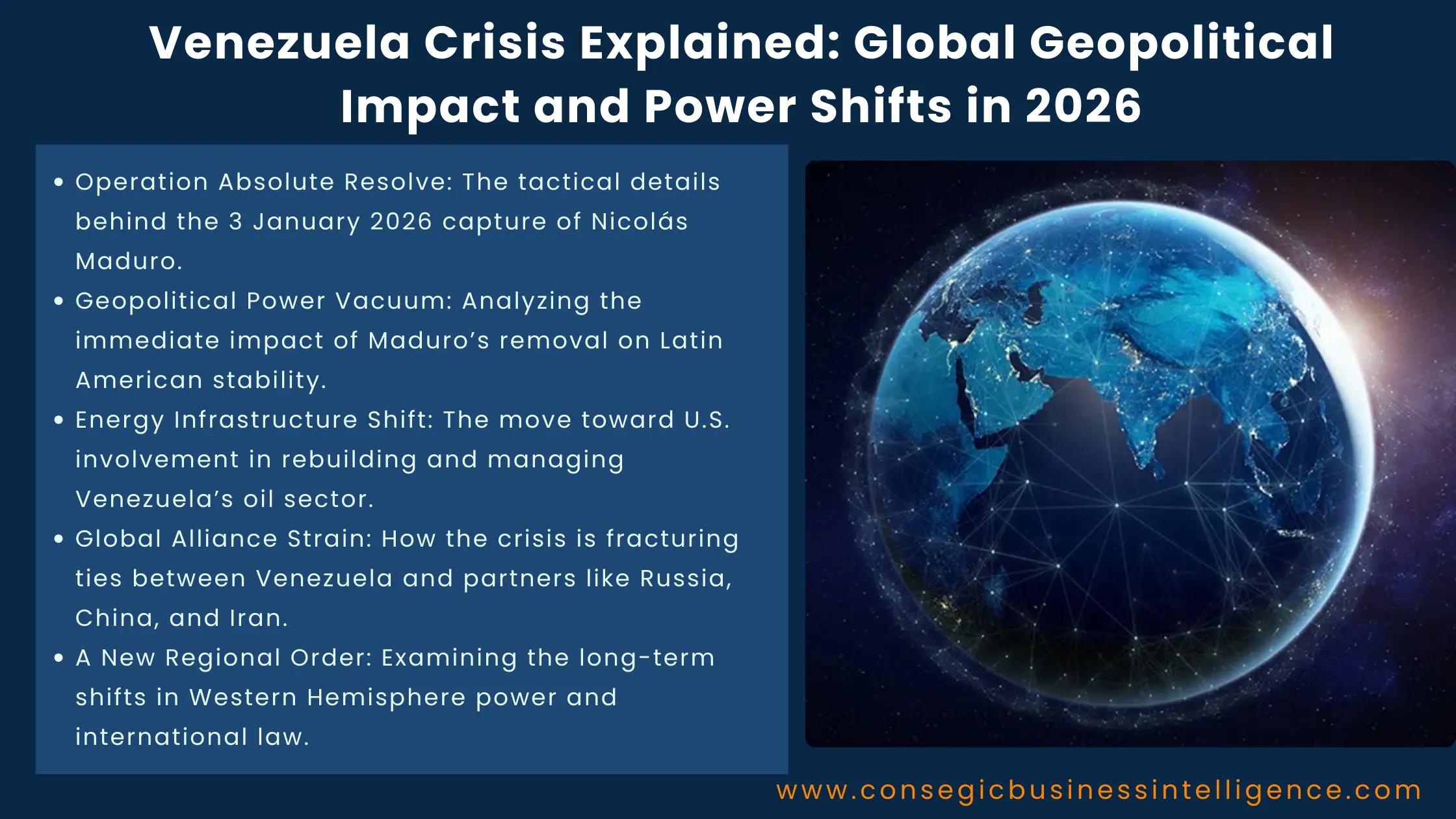
Venezuela Crisis Explained: Global Geopolitical Impact and Power Shifts in 2026
Background: Venezuela’s Deepening Crisis
Venezuela’s troubles began long before 2026. Years of government mismanagement, corruption, and declining oil production weakened the economy. Once responsible for a large share of regional oil exports, output fell dramatically, contributing to hyperinflation, food shortages, and a migration crisis. Millions of Venezuelans fled to neighboring countries in search of safety and opportunity, creating one of the Western Hemisphere’s largest displacement crises. Venezuela’s vast oil reserves, which are among the largest in the world, became a potential source of leverage and conflict as the country’s political crisis deepened.
Turning Point: The Capture of Maduro
In January 2026, a dramatic and controversial event reshaped the crisis. U.S. forces launched an operation in Venezuela that resulted in the capture of President Nicolás Maduro. This military action aimed to remove Maduro from power and was justified by some leaders as part of efforts to combat corruption and restore democratic governance. The move marked one of the largest U.S. military engagements in Latin America in decades and sparked intense debate around international law and national sovereignty.
Following the capture, Vice President Delcy Rodríguez assumed the role of interim president, backed by some elements of the Venezuelan state, including parts of the military and judiciary. Her position remains contested both internally and internationally, as Venezuela faces a fragile transitional period.
Impact on Global Energy Markets
Venezuela’s crisis has had immediate effects on global energy markets. Oil prices reacted quickly to the news of political upheaval, with crude benchmarks moving higher due to uncertainty over future supplies. Although Venezuela’s current production remains low compared to its potential, its huge reserves focus global attention on how future output could influence energy markets.
There is speculation that foreign energy companies could be invited to invest in rebuilding Venezuela’s oil sector, potentially increasing future production. However, years of underinvestment and damaged infrastructure mean that restoring output would require substantial capital and take many years to achieve.
Shifts in Geopolitical Power and Alliances
The Venezuelan crisis has contributed to significant geopolitical shifts. The United States direct involvement has signalled renewed interest in exerting influence in the Western Hemisphere, raising questions about power balances with other major global actors. Russia and China, which had maintained strategic ties with Venezuela, now face a recalibration of influence in the region.
In Russia, observers have noted a sense of strategic reassessment after seeing its ally dethroned, highlighting a potential weakening of Moscow’s influence on the global stage. This event feeds into broader narratives about shifting power dynamics between the United States and other great powers.
At the same time, some countries have expressed support for U.S. actions as beneficial for stabilizing energy markets, while others have criticized the intervention for violating international norms. This divergence underscores how Venezuela’s situation is dividing global opinion and affecting diplomatic alignments, particularly among nations in Latin America, Europe, and Asia.
Regional Consequences and Security Concerns
Regionally, the crisis has affected political and security dynamics in neighboring countries. Mass migration from Venezuela has put pressure on social services and economies in Colombia, Brazil, and other nearby states. The political instability within Venezuela has also raised concerns about the potential for renewed violence, especially if competing factions challenge the interim government’s authority.
There are also wider concerns about non-state actors taking advantage of the power vacuum. Armed groups and criminal networks may seek to strengthen their influence if state control remains weak or contested. The risk of wider instability has prompted neighboring countries to monitor developments closely and consider coordinated responses.
Humanitarian Impact and Long-Term Challenges
Beyond politics and energy, the crisis has inflicted deep humanitarian suffering. Basic services, including healthcare and food distribution, collapsed in many regions of Venezuela, leading to significant hardship. International aid organizations have struggled to deliver consistent support amid political disputes and security challenges.
Long-term recovery will require extensive reconstruction of both infrastructure and institutions. Economic revitalization efforts face a monumental task, as years of decline have eroded industrial capacity and public trust in governance.
Looking Ahead: What Comes Next
The future of Venezuela remains uncertain. The interim government faces the dual challenge of establishing legitimacy domestically and rebuilding international relationships. The path toward free and fair elections, economic reforms, and social healing could take years. Meanwhile, global powers will continue to adjust their strategies in response to changing geopolitical realities.
For global markets and governments, Venezuela serves as a case study in how internal political crises can have extensive external impacts, especially when tied to key resources like oil. As the world watches, the situation in Venezuela will likely influence geopolitical decision-making, energy policy discussions, and regional alliances throughout 2026 and beyond.
Conclusion
The Venezuela crisis is a complex blend of political upheaval, economic collapse, and global power competition. Its impacts reach far beyond the country’s borders, affecting energy markets, international relations, and regional security. In 2026, the removal of Nicolás Maduro and the emergence of a transitional government represent both a turning point and a source of ongoing uncertainty. How Venezuela navigates its recovery and how the world responds to these changes will help shape the geopolitical landscape for years to come.