Globally renowned as the world's favourite game, football connects more than a billion spectators of every colour and creed together. Every fourth year FIFA World Cup transcends sport and erupts in to a worldwide cultural spectacle. Expected to be the biggest in World Cup's history in terms of size; the 2026 FIFA World Cup will see the United States, Canada and Mexico sharing hosting duties, playing hosts to a record-breaking number of teams, games and football-crazy crowds from across the entire globe.
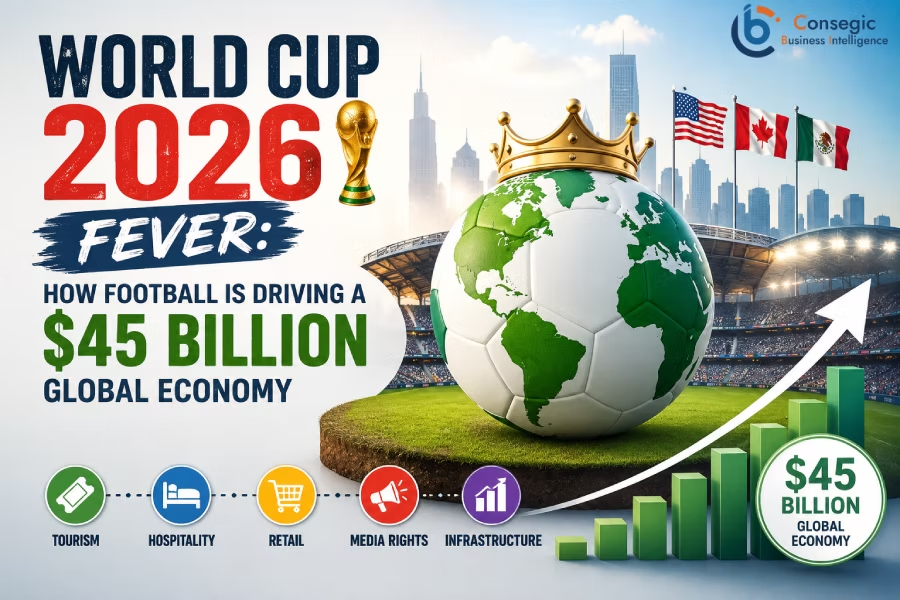
While the excitement on the field remains the primary attraction, the economic impact of the World Cup extends far beyond stadiums and scoreboards. From tourism and broadcasting to sponsorships and merchandise sales, football has evolved into a powerful economic engine. In 2026, the broader football ecosystem is expected to contribute approximately $45 billion in economic activity globally, demonstrating how sports can influence industries, create jobs and drive business growth worldwide.
The Global Popularity of Football
The widespread popularity of the game around the world explains why the economic impact of the game of football is significant. Other sports command interest only in their localized geography such as baseball in America, Rugby in a few European nations but in football, there is interest everywhere – the fans on continent like Asia, South America, Europe, North America, Africa and Middle East passionately follow their leagues, tournaments and championships as well.
The accessibility of football contributes significantly to its popularity. The sport requires minimal equipment and can be played almost anywhere, making it deeply embedded in communities around the world. This widespread participation creates a massive audience base that attracts broadcasters, advertisers, sponsors, and investors.
As the World Cup approaches, fan engagement reaches extraordinary levels, driving demand for tickets, travel packages, digital content and football-related products.
Tourism Receives a Major Boost
Perhaps the most tangible economic benefit of the World Cup comes from tourism, though. In every host city, millions of fans will descend on their chosen destinations to catch matches in person, spending generously in restaurants, bars, hotels and transportation networks, and stimulating local economies along the way. The 2026 event is going to pull the footballing world to the US, Canada and Mexico and all that cash going to local economies will certainly give things a lift.
Beyond immediate spending, the tournament provides host destinations with global visibility. Many visitors return in the future as tourists, creating long-term benefits that extend well beyond the final match.
Broadcasting Rights Continue to Grow
Broadcasting is still among the world cup's biggest revenue generators. Broadcasters spend billions for World Cup viewing rights for the football events because it's always the premier draw for world entertainment. Digital streaming technologies make broadcast more accessible with viewing for fans on personal computer screens, tablet and smartphone screens. As media availability becomes broader it does also increase reach and therefore advertising revenue for broadcasting corporations. As broadcast viewership increases through direct fan interaction online and offline through broadcast channels the amount spent on broadcasting licenses rises as a testament to the premier status football possesses on the world stage of entertainment and viewing.
Sponsorships Fuel Business Growth
Major international brands view the World Cup as one of the most effective marketing platforms available. Sponsorship agreements allow companies to connect with billions of viewers while strengthening brand recognition on a global scale.
Football sponsorship ventures extend beyond the digital space as business sectors like technology, finance, consumer products and vehicle manufacturing eagerly sponsor professional teams or tournaments. Such alliances involve marketing and publicity strategies that often include advertising campaigns, special promotions, online marketing material and a large emphasis on fan engagement and interactivity. In essence, through World Cup sponsorships, business and corporate enterprises, gain access to large captive consumers and create a unique avenue for them to leverage their customer relations. The game of football and its association with the World Cup offer business and corporate ventures an unprecedented marketing advantage and exposure.
Merchandise and Consumer Spending Surge
The World Cup generates significant consumer spending through official merchandise and football-related products. Fans purchase jerseys, scarves, collectibles, footwear, and various branded items to support their favourite teams and players.
During the tournaments, demand on retailers escalates when consumer are attracted to goods linked to the tournament and the growth of the football economy online on internet platforms and electronic shops allow merchandise to be bought by supporters on every part of the planet. During those weeks and months this money directly flows in the overall economy supporting manufacturers, distribution channels, retailers and logistic operators.
Digital Engagement Creates New Revenue Streams
The digital transformation of sports has created entirely new economic opportunities. Social media platforms, mobile applications, fantasy football games, and interactive content experiences allow fans to engage with the World Cup beyond live matches.
Football organizations, broadcasters, and sponsors leverage digital platforms to target audiences efficiently and offer unique personalized experiences. Through real-time updates, exclusive behind-the-scenes access, interviews with athletes, and interactive components, fan engagement is significantly boosted during the tournament.
These digital environments produce income by means of advertisements, subscriptions, sponsorships and data-based advertising efforts, to the greater extend amplifying the impact that football has economically.
Infrastructure Investments Leave a Lasting Legacy
Hosting a World Cup usually requires substantial spending on infrastructure. Building or refurbishing stadium, making necessary changes in transit and public works, as well as other city improvements would have an impact on economy prior to and during the tournament. The 2026 FIFA World Cup likely will create economic value for various projects throughout host cities, which will benefit local community, visitors, residents, as well as local and international economy, by developing and upgrading public works, as well as enhancing transport, infrastructure and communication networks.
Job Creation Across Multiple Industries
The World Cup supports employment opportunities across various sectors. Event planning, construction, hospitality, security, transportation, media production, and retail businesses often expand their workforce to meet increased demand.
Tournament related activity results in temporary and full-time employment. This can stimulate the local economy and provide some revenue streams for residents. Small businesses, such as those that rent out sporting equipment, can experience high volumes of business and customers.
The extensive ripple effect makes clear how a major sporting event can generate action across different industries at the same time.
Challenges and Economic Considerations
Despite the immense benefits of hosting and playing in the World Cup, there are also some disadvantages associated with this major event. Substantial initial expenditure, especially on the part of those who decide to act as hosts, needs to be meticulously done to create long-term value. The hosts are often faced with cost of organizing such events; security considerations and objectives concerning sustainability. The economic effect varies from case to case, depending on how efficiently a business or host cities are able to seize all opportunities and benefit from this event.
Nevertheless, the global popularity and commercial strength of football continue to make the World Cup one of the most influential economic events in the world.
Conclusion
The FIFA World Cup 2026 represents far more than a football tournament. It’s a global, economic phenomenon impacting tourism, broadcast media, sponsorships, retail, tech, infrastructure and jobs. A billion-plus fan base ensures businesses & industries across the globe see and experience the value of the brand.
With an estimated $45 billion impact across the global economy, football continues to demonstrate its power as both a cultural force and an economic driver. As the world prepares for the excitement of World Cup 2026, the tournament will once again showcase how sport can unite people while creating substantial value for economies around the globe.