Jump to Content
Diastematomyelia Market - Size, Share, Industry Trends, and Forecasts (2025-2032)
Diastematomyelia Market Size:
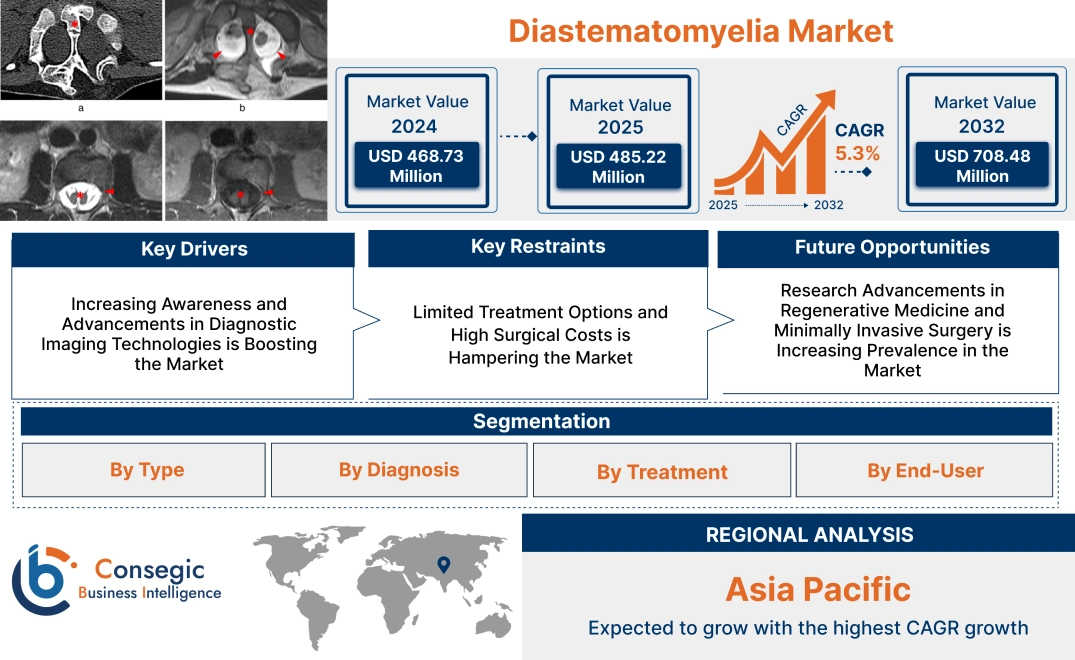
Diastematomyelia Market size is estimated to reach over USD 708.48 Million by 2032 from a value of USD 468.73 Million in 2024 and is projected to grow by USD 485.22 Million in 2025, growing at a CAGR of 5.3% from 2025 to 2032.
Diastematomyelia Market Scope & Overview:
The diastematomyelia aims on the diagnosis, treatment, and management of diastematomyelia, a rare congenital spinal cord disorder characterized by a split in the spinal cord, often associated with other spinal abnormalities. This market includes diagnostic imaging tools like MRI and CT scans, surgical interventions such as laminectomy and spinal cord decompression, and post-operative rehabilitation therapies.
Key characteristics of diastematomyelia treatments include precision in diagnosis through advanced imaging technologies, specialized surgical procedures to correct spinal defects, and comprehensive rehabilitation programs to improve mobility and neurological function. The benefits include early detection, effective symptom management, prevention of further spinal damage, and enhanced patient quality of life.
Applications span pediatric and adult neurology, orthopedic care, and spinal surgery. End-users include hospitals, specialty clinics, neurosurgeons, and orthopedic surgeons, driven by advancements in spinal imaging techniques, increasing awareness of congenital spinal disorders, and ongoing research into minimally invasive surgical procedures.
Diastematomyelia Market Dynamics - (DRO) :
Key Drivers:
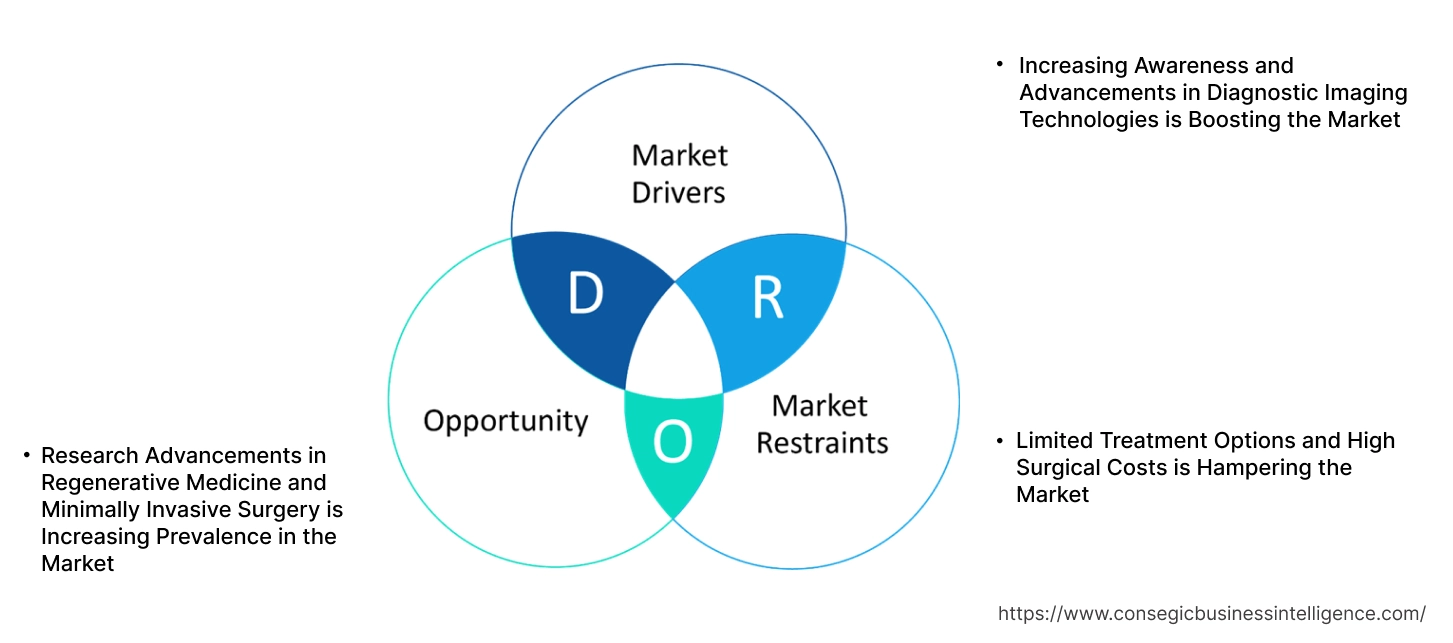
Increasing Awareness and Advancements in Diagnostic Imaging Technologies is Boosting the Market
The primary driver of the diastematomyelia market is the increasing awareness of congenital spinal cord abnormalities and advancements in diagnostic imaging technologies. Diastematomyelia, a rare congenital disorder characterized by the splitting of the spinal cord, is often diagnosed through advanced imaging techniques such as magnetic resonance imaging (MRI) and computed tomography (CT). Improved access to high-resolution imaging tools has enhanced early detection and accurate diagnosis, allowing for timely surgical intervention and better patient outcomes. Additionally, the growing availability of prenatal screening and fetal imaging has increased the detection rate of spinal anomalies during pregnancy, further driving the demand for specialized diagnostic and treatment services for diastematomyelia.
Key Restraints:
Limited Treatment Options and High Surgical Costs is Hampering the Market
One of the major restraints in the diastematomyelia market is the limited availability of treatment options and the high cost of surgical procedures. Treatment primarily involves complex spinal surgeries to remove bone spurs or fibrous bands causing the spinal cord split, often requiring specialized neurosurgeons and advanced medical infrastructure. These surgeries are not only expensive but also carry significant risks of complications, including nerve damage and spinal instability. Furthermore, the rare nature of diastematomyelia results in limited clinical expertise and fewer dedicated research initiatives, restricting the development of innovative treatment approaches. In developing regions, access to advanced surgical care remains scarce, further hindering market growth.
Future Opportunities:
Research Advancements in Regenerative Medicine and Minimally Invasive Surgery is Increasing Prevalence in the Market
The emergence of regenerative medicine and advancements in minimally invasive surgical techniques present significant opportunities for this market. Research into stem cell therapy and spinal cord regeneration offers the potential to repair spinal abnormalities without extensive surgical intervention, reducing patient recovery times and postoperative complications. Additionally, innovations in robotic-assisted surgery and neuro-navigation systems are improving the precision and safety of spinal cord surgeries. These technologies enable surgeons to operate with greater accuracy, minimizing damage to surrounding tissues and enhancing patient outcomes. Increased investment in clinical research aimed at developing safer, more effective treatment methods is expected to drive future diastematomyelia market expansion, particularly as personalized and precision medicine gain momentum in spinal disorder management.
These dynamics highlight the growing need for advanced diagnostic and treatment solutions in managing diastematomyelia. While limited treatment options and high surgical costs remain significant challenges, ongoing research in regenerative medicine and surgical innovations offers promising avenues for improving patient care and expanding the market.
Diastematomyelia Market Segmental Analysis :
By Type:
Based on type, the market is segmented into Type I diastematomyelia and Type II diastematomyelia.
The Type I diastematomyelia segment accounted for the largest revenue in diastematomyelia market share in 2024.
- Type I diastematomyelia is characterized by a bony or cartilaginous septum that divides the spinal cord, leading to more severe neurological symptoms.
- Patients with Type I are more likely to require surgical intervention, increasing the trends for advanced diagnostic and treatment solutions.
- Early diagnosis through advanced imaging techniques has led to more timely management, contributing to the dominance of this segments analysis.
- Rising awareness and screening programs for congenital spinal anomalies support diastematomyelia market growth in this segment.
The Type II diastematomyelia segment is anticipated to register the fastest CAGR during the forecast period.
- Type II is generally less severe, with a fibrous band separating the spinal cord, often requiring non-surgical management.
- Increasing prenatal detection and postnatal monitoring are driving trends in this segmental analysis.
- Advancements in non-invasive monitoring and rehabilitation therapies are supporting the segment's trends.
- Growing awareness of spinal cord malformations and preventive healthcare is expected to fuel growth in Type II diagnoses.
By Diagnosis:
Based on diagnosis, the market is segmented into magnetic resonance imaging (MRI), computed tomography (CT) scan, X-ray imaging, and ultrasound (for prenatal detection).
The magnetic resonance imaging (MRI) segment accounted for the largest revenue in diastematomyelia market share in 2024.
- MRI is the gold standard for diagnosing diastematomyelia due to its high-resolution imaging of spinal cord anomalies.
- Increasing availability of advanced MRI machines in hospitals and specialty clinics supports this segment’s trends.
- Rising preference for MRI due to its non-invasive and radiation-free nature further boosts diastematomyelia market demand.
- Technological advancements in MRI imaging, such as 3D and functional MRI, enhance diagnostic accuracy.
The ultrasound segment is anticipated to register the fastest CAGR during the forecast period.
- Ultrasound is widely used for prenatal detection of spinal anomalies, including diastematomyelia, due to its safety and accessibility.
- Increasing awareness of prenatal screening and advancements in fetal imaging techniques are driving segment trends.
- Rising adoption of routine prenatal scans to detect congenital abnormalities supports diastematomyelia market growth.
- Government initiatives promoting prenatal care and congenital anomaly screening are expected to fuel the diastematomyelia market demand for ultrasound diagnostics.
By Treatment:
Based on treatment, the market is segmented into surgical treatment and non-surgical treatment.
The surgical treatment segment accounted for the largest revenue share in 2024.
- Surgical intervention is often required for severe cases of diastematomyelia, particularly Type I, to remove bony or cartilaginous septa.
- Increasing advancements in neurosurgical techniques, such as minimally invasive spine surgery, are improving outcomes.
- Rising availability of specialized spinal surgery centers and skilled neurosurgeons supports this segment’s growth.
- Early surgical intervention helps prevent further neurological deterioration, driving diastematomyelia market trends for surgical treatments.
The non-surgical treatment segment is anticipated to register the fastest CAGR during the forecast period.
- Non-surgical management, including physical therapy and pain management, is preferred for milder cases or when surgery is not feasible.
- Advancements in physiotherapy and rehabilitation therapies are supporting trends in this segment.
- Increasing focus on non-invasive and patient-centered care contributes to higher adoption of non-surgical approaches.
- Growing awareness of early intervention and regular monitoring helps manage symptoms without surgical procedures.
By End-User:
Based on end-user, the market is segmented into hospitals, specialty clinics, ambulatory surgical centers (ASCs), and rehabilitation centers.
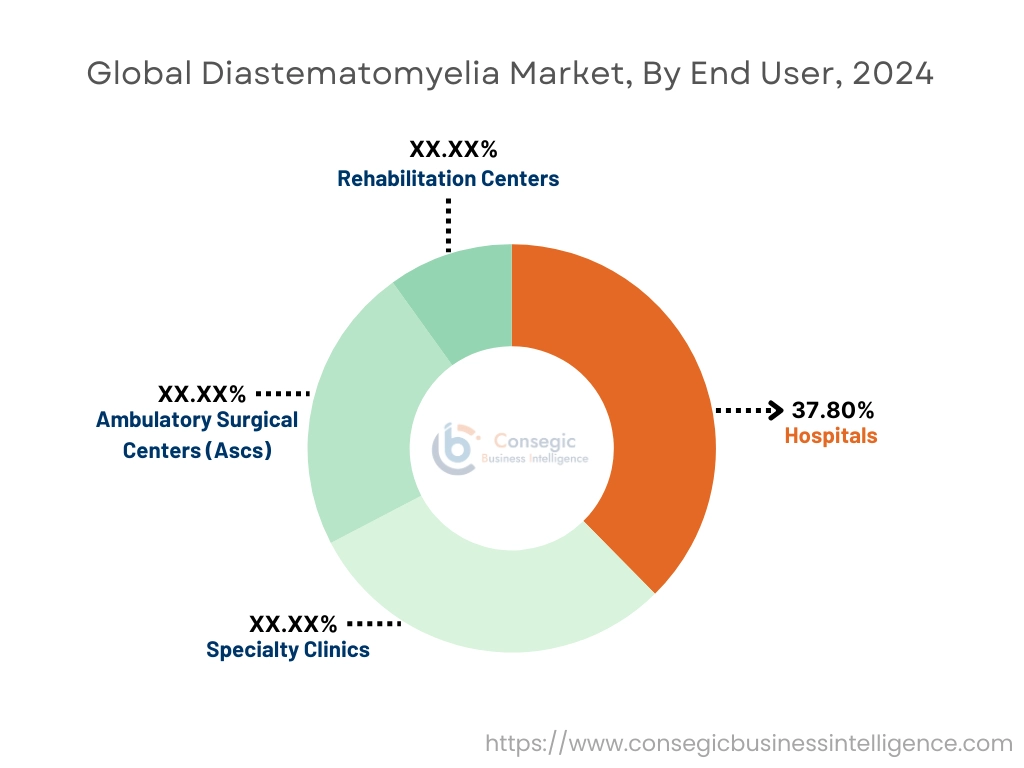
The hospitals segment accounted for the largest revenue share of 37.80% in 2024.
- Hospitals are the primary centers for diagnosing and surgically managing diastematomyelia due to advanced facilities and specialized healthcare professionals.
- Increasing hospital admissions for spinal abnormalities and related surgeries support the dominance of this segment.
- Availability of high-end imaging technologies and post-surgical care enhances patient outcomes in hospitals.
- Rising healthcare investments and infrastructural improvements in hospitals, especially in developing countries, drive diastematomyelia market trends.
The rehabilitation centers segment is anticipated to register the fastest CAGR during the forecast period.
- Rehabilitation centers provide essential post-surgical recovery and non-surgical management, including physical therapy and pain relief.
- Increasing trends for long-term care and rehabilitation for spinal cord conditions drives growth in this segment.
- Expanding access to specialized rehabilitation services in urban and semi-urban areas supports segment expansion.
- Growing emphasis on improving quality of life for patients with spinal cord abnormalities fuels diastematomyelia market demand for rehabilitation services.
Regional Analysis:
The regions covered are North America, Europe, Asia Pacific, the Middle East and Africa, and Latin America.
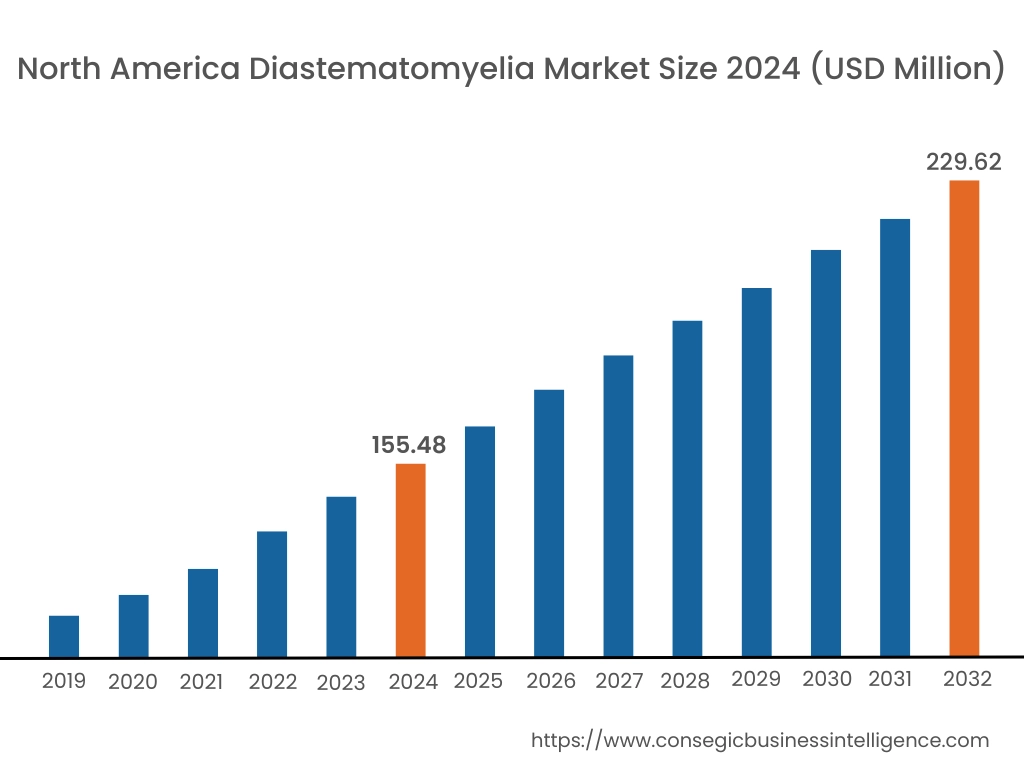
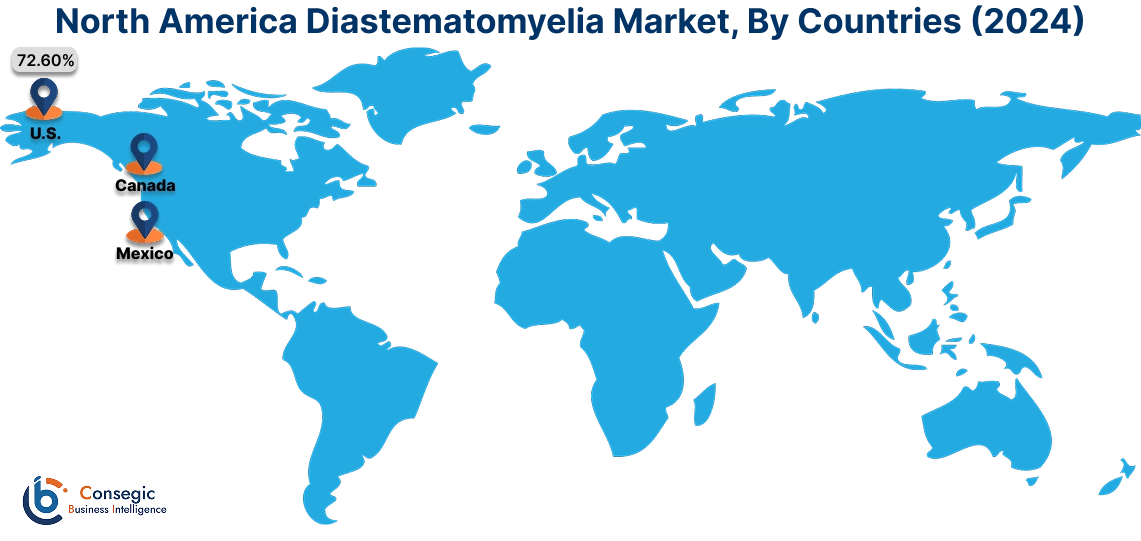
In 2024, North America was valued at USD 155.48 Million and is expected to reach USD 229.62 Million in 2032. In North America, the U.S. accounted for the highest share of 72.60% during the base year of 2024. North America holds a significant share in the global diastematomyelia market due to its advanced healthcare infrastructure, increased awareness of congenital spinal disorders, and access to specialized neurosurgical treatments. The U.S. leads the region with the presence of top-tier neurosurgical centers, strong research and development in spinal disorders, and early diagnosis facilitated by advanced imaging technologies. As pr the analysis, Canada contributes with growing healthcare initiatives to improve early detection and treatment of rare congenital disorders. However, high treatment costs and limited access to specialized care in rural areas may pose challenges to market expansion.
In Asia Pacific, the market is experiencing the fastest growth with a CAGR of 5.7% over the forecast period. The diastematomyelia market analysis is driven by improving healthcare infrastructure, rising awareness about rare congenital conditions, and increasing investments in advanced medical technologies in China, India, and Japan. China dominates the region with growing demand for early diagnosis and specialized neurosurgical treatments for spinal cord abnormalities. India’s expanding healthcare sector supports the need for cost-effective surgical treatments, particularly in urban areas. Japan emphasizes advanced medical imaging and minimally invasive surgical procedures for spinal conditions, leveraging its strong medical technology industry. However, limited access to specialized care in rural areas and affordability challenges may hinder diastematomyelia market opportunities.
Europe is a prominent market for diastematomyelia, supported by well-established healthcare systems, advanced diagnostic technologies, and significant government funding for rare disease research. Countries like Germany, France, and the UK are major contributors. Germany leads with its cutting-edge neurosurgical capabilities and extensive research into congenital spinal conditions. France emphasizes early diagnosis and public health initiatives to improve access to specialized treatments, while the UK invests in research on spinal malformations and related surgical advancements. However, budget constraints in public healthcare systems may impact access to specialized surgical procedures.
The Middle East & Africa region is witnessing steady growth in the diastematomyelia market, driven by increasing investments in healthcare infrastructure and rising awareness of congenital spinal disorders. Countries like Saudi Arabia and the UAE are enhancing specialized neurosurgical services and investing in advanced diagnostic technologies to detect rare conditions like diastematomyelia. In Africa, South Africa is emerging as a key market, focusing on improving access to neurosurgical care through public health initiatives and partnerships with global healthcare providers. However, limited neurosurgical expertise and reliance on imports for medical devices may restrict market development in some parts of the region.
Latin America is an emerging market for diastematomyelia treatment, with Brazil and Mexico leading the region. Brazil’s growing healthcare sector and increasing access to specialized care drive demand for neurosurgical procedures and diagnostic imaging for spinal cord abnormalities. Mexico focuses on expanding healthcare access and improving diagnostic capabilities for rare congenital disorders. The diastematomyelia market analysis shows, the region also benefits from increasing collaborations with international medical device companies to enhance neurosurgical care. However, economic instability and inconsistent healthcare infrastructure may pose challenges to diastematomyelia market expansion in smaller economies.
Top Key Players & Market Share Insights:
The diastematomyelia market is highly competitive with major players providing products and services to the national and international markets. Key players are adopting several strategies in research and development (R&D), product innovation, and end-user launches to hold a strong position in the global diastematomyelia market. Key players in the diastematomyelia industry include -
- Medtronic plc (Ireland)
- Johnson & Johnson (United States)
- Orthofix Medical Inc. (United States)
- Boston Scientific Corporation (United States)
- Roper Technologies, Inc. (United States)
- Stryker Corporation (United States)
- Zimmer Biomet Holdings, Inc. (United States)
- NuVasive, Inc. (United States)
- Globus Medical, Inc. (United States)
- Aesculap, Inc. (Germany)
Diastematomyelia Market Report Insights:
| Report Attributes | Report Details |
| Study Timeline | 2019-2032 |
| Market Size in 2032 | USD 708.48 Million |
| CAGR (2025-2032) | 5.3% |
| By Type |
|
| By Diagnosis |
|
| By Treatment |
|
| By End-User |
|
| By Region |
|
| Key Players |
|
| North America | U.S. Canada Mexico |
| Europe | U.K. Germany France Spain Italy Russia Benelux Rest of Europe |
| APAC | China South Korea Japan India Australia ASEAN Rest of Asia-Pacific |
| Middle East and Africa | GCC Turkey South Africa Rest of MEA |
| LATAM | Brazil Argentina Chile Rest of LATAM |
| Report Coverage |
|
Key Questions Answered in the Report
What is the projected size of the Diastematomyelia Market by 2032? −
Diastematomyelia Market size is estimated to reach over USD 708.48 Million by 2032 from a value of USD 468.73 Million in 2024 and is projected to grow by USD 485.22 Million in 2025, growing at a CAGR of 5.3% from 2025 to 2032.
What factors are driving the growth of the Diastematomyelia Market? +
Key drivers include the rising prevalence of congenital spinal conditions, advancements in MRI and CT imaging technologies, increased awareness, and the growing adoption of minimally invasive surgical techniques.
What are the major challenges impacting the Diastematomyelia Market? +
High costs of surgical treatments, limited availability of specialized neurosurgeons, and restricted access to advanced healthcare infrastructure in low-resource regions are significant barriers to market growth.
Which segment dominates the Diastematomyelia Market by treatment type? +
The surgical treatment segment holds the largest market share due to its critical role in managing severe cases of diastematomyelia, particularly Type I, requiring spinal decompression and correction.
Overview
Reputation & Certifications


Our Services
- Market Intelligence & Forecasting
- Custom Research Solutions
- Market Entry Strategy
- Competitive Intelligence
- Customer Insights
- Industry Innovation Analysis
- Investment Advisory