Jump to Content
ECG Stress Test Market - Size, Share, Industry Trends, and Forecasts (2025-2032)
ECG Stress Test Market Size:
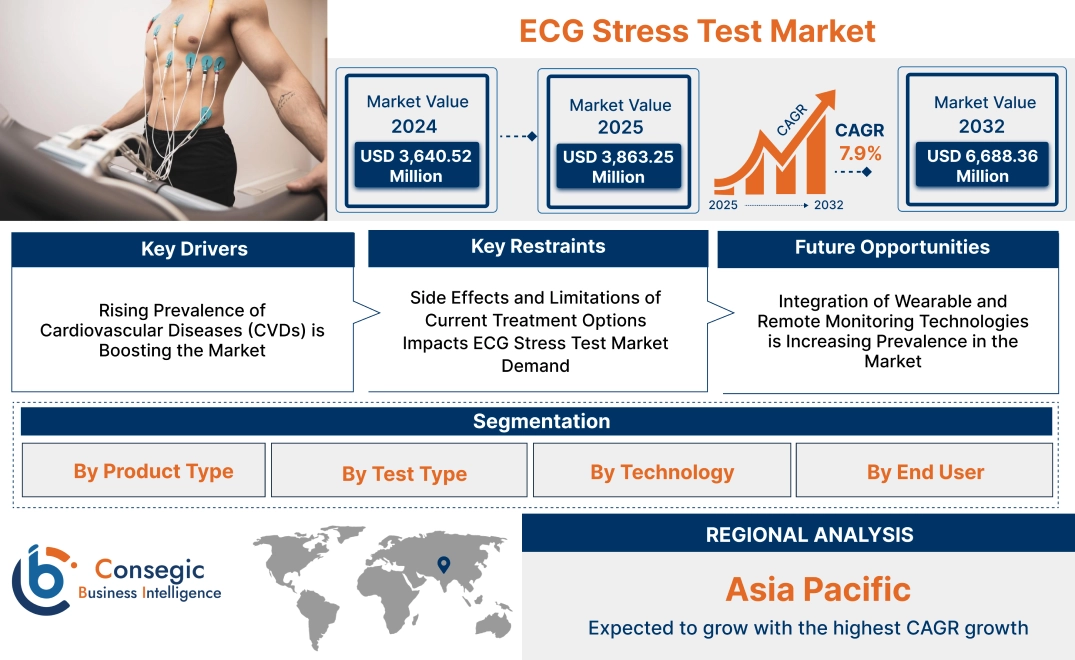
ECG Stress Test Market size is estimated to reach over USD 6,688.36 Million by 2032 from a value of USD 3,640.52 Million in 2024 and is projected to grow by USD 3,863.25 Million in 2025, growing at a CAGR of 7.9% from 2025 to 2032.
ECG Stress Test Market Scope & Overview:
The ECG stress test performs diagnostic procedures that evaluate the heart's response to physical exertion using electrocardiogram (ECG) technology. This test is essential for detecting cardiovascular conditions such as coronary artery disease, arrhythmias, and heart failure by monitoring heart activity under stress. The market includes treadmill and stationary bike-based stress testing systems, wearable ECG devices, and software solutions for real-time data analysis.
Key characteristics of ECG stress test systems include high diagnostic accuracy, real-time monitoring capabilities, and integration with advanced data analytics for precise risk assessment. The benefits include early detection of cardiac abnormalities, improved treatment planning, and reduced risk of heart-related complications.
Applications span hospitals, diagnostic centers, ambulatory care units, and specialized cardiology clinics for preventive care and diagnosis of heart conditions. End-users include cardiologists, healthcare providers, and diagnostic laboratories, driven by the rising prevalence of cardiovascular diseases, growing awareness of preventive cardiac care, and technological advancements in ECG monitoring devices.
How is AI Impacting the ECG Stress Test Market?
AI is significantly impacting the ECG stress test market by enhancing diagnostic accuracy, improving efficiency, and potentially enabling earlier and more precise diagnoses. AI algorithms can analyze ECG data to detect subtle patterns indicative of various heart conditions, including those that might be missed by the human eye, and predict future cardiac events. Also, AI algorithms identify complex and nonlinear patterns in ECGs that may be missed by human experts, leading to earlier detection of diseases. Further, AI algorithms are being developed to improve the detection of coronary artery disease, including identifying high-risk patients with normal ECGs.
ECG Stress Test Market Dynamics - (DRO):
Key Drivers:
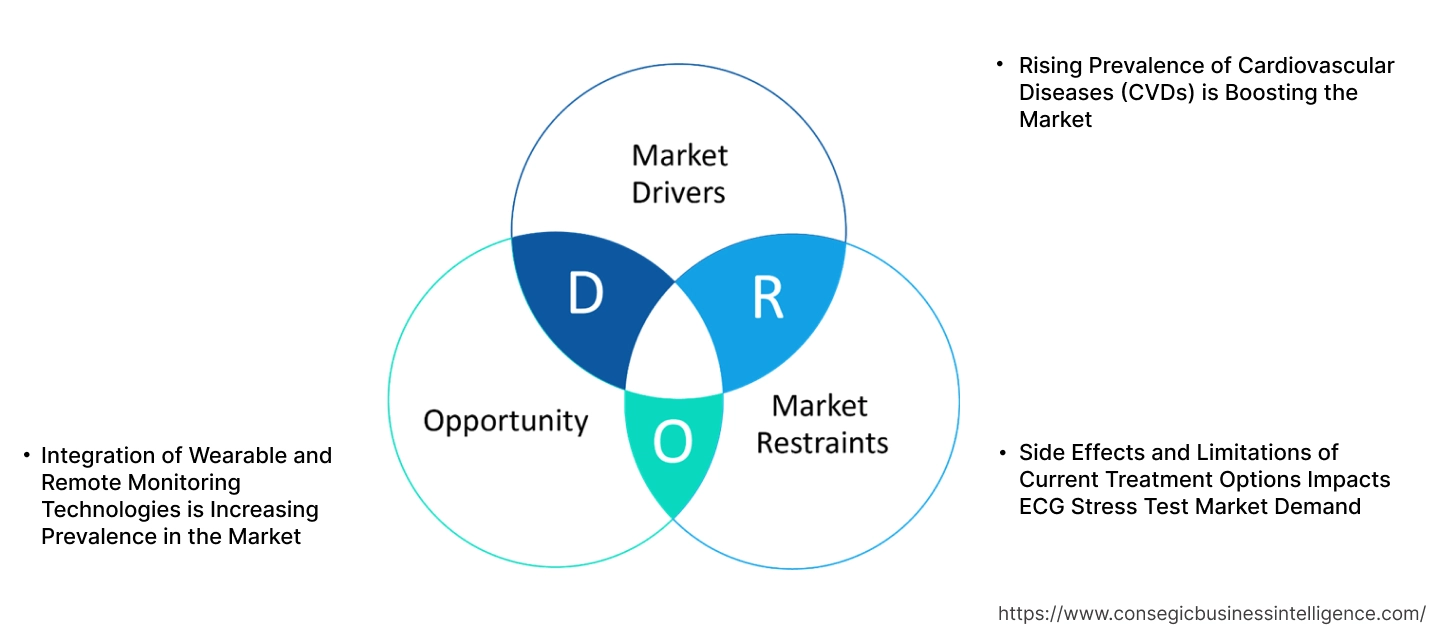
Rising Prevalence of Cardiovascular Diseases (CVDs) is Boosting the Market
The growing global burden of cardiovascular diseases (CVDs) is a significant driver of the ECG stress test market. Conditions such as coronary artery disease, arrhythmias, and heart failure are becoming increasingly prevalent due to sedentary lifestyles, poor dietary habits, smoking, and rising obesity rates. According to the World Health Organization (WHO), CVDs are the leading cause of mortality globally, driving the need for effective diagnostic tools. ECG stress tests, which evaluate the heart's response to physical exertion, are widely used for early detection and risk assessment of heart-related conditions. The increasing awareness of preventive healthcare and the need for early diagnosis have further propelled the ECG stress test market demand for ECG stress tests across hospitals, clinics, and diagnostic centers.
Key Restraints:
Side Effects and Limitations of Current Treatment Options Impacts ECG Stress Test Market Demand
Despite its clinical significance, the market faces challenges due to limited accessibility in low- and middle-income regions. High equipment costs, lack of trained personnel, and underdeveloped healthcare infrastructure hinder the widespread adoption of ECG stress testing in resource-constrained areas. Additionally, healthcare systems in these regions often prioritize acute care over preventive diagnostic procedures, limiting the focus on early cardiovascular disease detection. The maintenance costs associated with ECG stress testing equipment and the need for specialized facilities further restrict adoption, slowing ECG stress test market growth in emerging economies.
Future Opportunities:
Integration of Wearable and Remote Monitoring Technologies is Increasing Prevalence in the Market
The integration of wearable devices and remote monitoring technologies into cardiac diagnostics presents a significant opportunity for the market. Technological advancements have led to the development of portable and wireless ECG monitoring devices that allow continuous cardiac assessment during physical activity. These innovations enable remote stress testing, making it possible to monitor patients in real-world conditions outside clinical settings. Wearable ECG devices integrated with AI-powered analytics can provide real-time insights into heart health, facilitating early detection of cardiac abnormalities and improving patient outcomes. Moreover, the growing adoption of telemedicine and digital health platforms has expanded access to cardiac diagnostics, particularly in rural and underserved regions. Companies investing in the development of advanced, user-friendly, and connected ECG stress testing solutions are well-positioned to capitalize on this evolving ECG stress test market trends.
These dynamics highlight the critical role of ECG stress tests in the early detection and management of cardiovascular diseases. While accessibility challenges persist in emerging markets, advancements in wearable technologies and remote monitoring are poised to drive market growth, making cardiac diagnostics more accessible and efficient worldwide.
ECG Stress Test Market Segmental Analysis :
By Product Type:
Based on product type, the market is segmented into treadmill stress test systems, ergometer stress test systems, wearable stress monitors, stress ECG monitors, and software solutions.
The treadmill stress test systems segment accounted for the largest revenue in ECG stress test market share in 2024.
- Treadmill stress test systems are widely used for cardiovascular assessment during physical exertion, making them the standard in clinical diagnostics.
- Increasing prevalence of cardiovascular diseases (CVDs) globally has led to a rise in ECG stress test market demand for treadmill-based ECG stress testing.
- Technological advancements, such as integration with imaging systems and automated data analysis, have enhanced the efficiency of treadmill stress systems.
- High adoption rates in hospitals and diagnostic centers for routine cardiac screenings contribute to this segment's dominance.
The wearable stress monitors segment is anticipated to register the fastest CAGR during the forecast period.
- Wearable stress monitors offer continuous and real-time monitoring, making them suitable for homecare and remote patient monitoring.
- Increasing adoption of wearable devices for preventive healthcare and early diagnosis of heart conditions is driving trends.
- Advancements in wireless technologies and integration with mobile health apps have boosted patient engagement and compliance.
- The rising trends for non-invasive, user-friendly diagnostic solutions is expected to propel this ECG stress test market growth in this segment.
By Test Type:
Based on test type, the market is segmented into exercise stress tests and pharmacologic stress tests.
The exercise stress test segment accounted for the largest revenue share in 2024.
- Exercise stress tests are the most commonly used diagnostic tool for detecting coronary artery disease (CAD) and evaluating exercise tolerance.
- Widespread use in routine cardiac screenings and post-recovery assessments after cardiac interventions supports this segment.
- Increasing health awareness and preventive healthcare measures have driven demand for exercise-based cardiac evaluations.
- Advancements in treadmill and ergometer systems with integrated ECG monitoring enhance the accuracy and reliability of exercise stress tests.
The pharmacologic stress test segment is anticipated to register the fastest CAGR during the forecast period.
- Pharmacologic stress tests are vital for patients unable to undergo physical exercise due to physical limitations or severe cardiac conditions.
- Rising geriatric population and increased prevalence of chronic diseases drive trends for pharmacologic stress testing.
- Improved safety profiles and effectiveness of pharmacologic agents, such as adenosine and dobutamine, support trends.
- Expanding use in hospitals and specialized cardiology clinics for comprehensive cardiac evaluation is expected to propel this segment.
By Technology:
Based on technology, the market is segmented into manual stress ECG systems, automated stress ECG systems, and wireless stress ECG systems.
The automated stress ECG systems segment accounted for the largest revenue in ECG stress test market share in 2024.
- Automated systems reduce manual errors, improve workflow efficiency, and offer advanced data analysis features.
- Increasing adoption in hospitals and diagnostic centers for quick and accurate cardiac assessments drives demand.
- Integration with electronic health records (EHRs) and cloud-based data storage enhances patient data management.
- Advancements in automation technology and user-friendly interfaces support the dominance of this segment.
The wireless stress ECG systems segment is anticipated to register the fastest CAGR during the forecast period.
- Wireless ECG systems provide real-time, remote monitoring, offering flexibility for both patients and healthcare providers.
- Growing adoption in homecare settings and ambulatory monitoring is driving demand for wireless ECG solutions.
- Technological advancements in wireless sensors and secure data transmission have improved reliability and accuracy.
- Increasing trends for remote healthcare solutions, particularly after the COVID-19 pandemic, supports rapid growth in this segment.
By End-User:
Based on end-user, the market is segmented into hospitals, cardiology clinics, diagnostic centers, and ambulatory surgical centers.
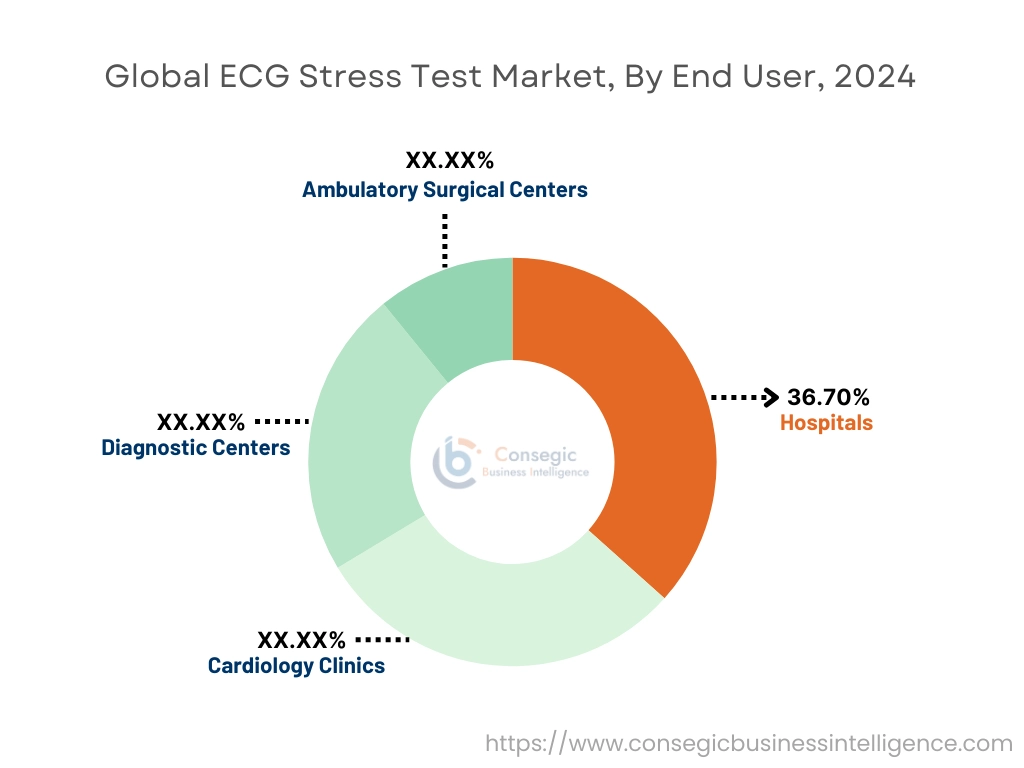
The hospitals segment accounted for the largest revenue share of 36.70% in 2024.
- Hospitals are the primary providers of ECG stress testing due to their advanced infrastructure and availability of specialized healthcare professionals.
- Increasing hospital admissions for cardiovascular diseases and the need for comprehensive cardiac evaluations support segment analysis.
- Government initiatives and funding for improving cardiac care facilities further bolster demand in hospitals.
- Rising investments in healthcare infrastructure, particularly in developing economies, contribute to this segment's dominance.
The cardiology clinics segment is anticipated to register the fastest CAGR during the forecast period.
- Cardiology clinics offer specialized and comprehensive cardiac care, making them a preferred setting for ECG stress testing.
- Increasing awareness about cardiovascular health and early disease detection is driving patient visits to cardiology clinics.
- Expansion of standalone cardiology clinics equipped with advanced diagnostic tools is supporting ECG stress test market trends.
- Growing collaborations between cardiology clinics and diagnostic device manufacturers are expected to boost this segment.
Regional Analysis:
The regions covered are North America, Europe, Asia Pacific, the Middle East and Africa, and Latin America.
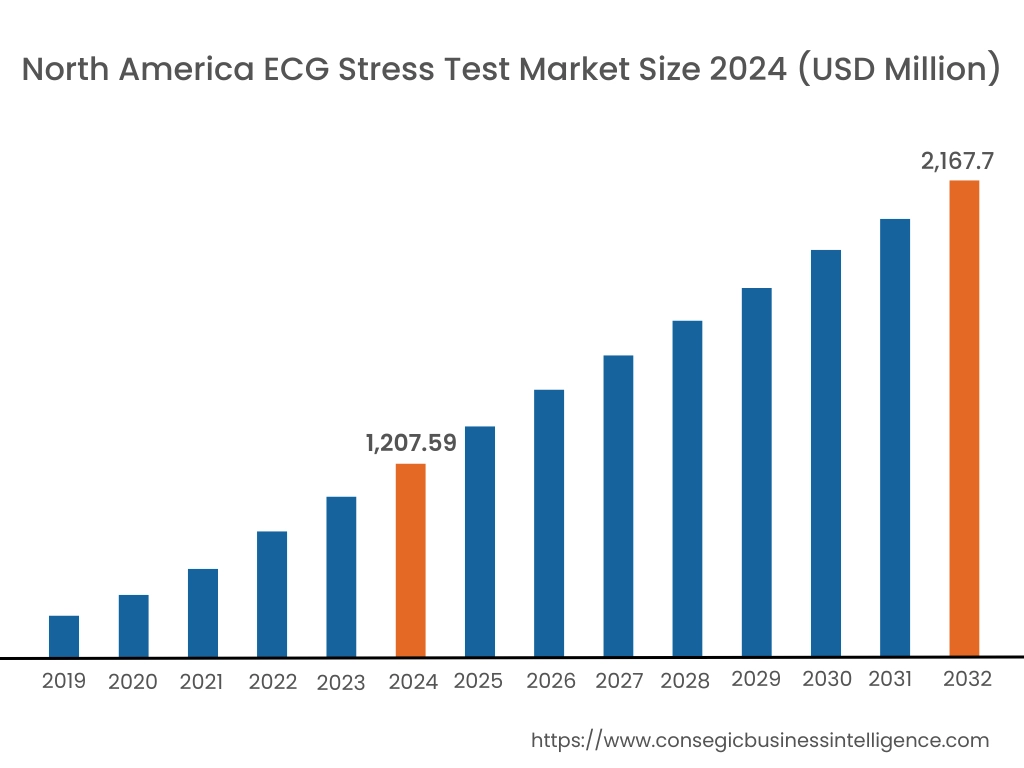
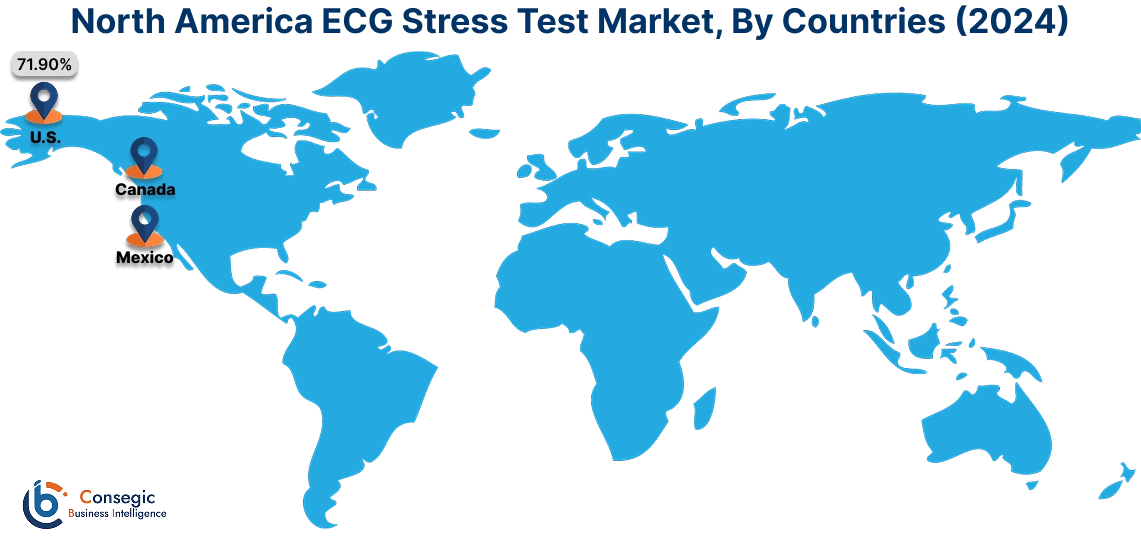
In 2024, North America was valued at USD 1,207.59 Million and is expected to reach USD 2,167.70 Million in 2032. In North America, the U.S. accounted for the highest share of 71.90% during the base year of 2024. North America holds a significant share in the global ECG stress test market, driven by a high prevalence of cardiovascular diseases, advanced healthcare infrastructure, and growing awareness about preventive cardiac care. The U.S. dominates the region due to the increasing adoption of stress testing in routine cardiac evaluations, supported by technological advancements in ECG devices and strong healthcare reimbursement policies. Canada contributes to market growth through rising government initiatives to manage heart diseases and increasing adoption of digital healthcare solutions. However, the high cost of advanced ECG systems may limit accessibility for smaller healthcare facilities.
In Asia Pacific, the market is experiencing the fastest growth with a CAGR of 8.4% over the forecast period. The ECG stress test market analysis is fueled by rising healthcare investments, a growing burden of cardiovascular diseases, and improving healthcare infrastructure in China, India, and Japan. China dominates the region with significant government initiatives to expand access to cardiovascular diagnostics and the adoption of ECG stress tests in hospitals and diagnostic centers. India’s expanding healthcare sector drives the demand for cost-effective ECG testing solutions, especially in urban areas. Japan emphasizes advanced ECG technologies for accurate cardiac diagnosis, leveraging its strong medical device industry. However, affordability challenges and limited access to diagnostic tools in rural areas may hinder growth in certain parts of the region.
Europe is a prominent market for ECG stress tests, supported by a growing geriatric population, increasing incidence of heart diseases, and well-established healthcare systems. Countries like Germany, France, and the UK are key contributors. Germany drives ECG stress test market opportunities with its advanced cardiology departments and adoption of high-precision diagnostic devices. France emphasizes preventive healthcare programs for early detection of cardiovascular conditions, while the UK focuses on integrating digital ECG solutions into public health services. However, budget constraints in public healthcare systems may impact the widespread adoption of advanced ECG technologies.
The Middle East & Africa region is witnessing steady growth in the market, driven by increasing healthcare investments and rising prevalence of cardiovascular diseases. Countries like Saudi Arabia and the UAE are adopting advanced ECG stress testing technologies in hospitals and specialty cardiac centers, supported by government-led healthcare reforms. In the ECG stress test market analysis, it is presented that Africa, South Africa is emerging as a key market, focusing on improving access to diagnostic tools for early detection of heart diseases. However, limited healthcare infrastructure and affordability constraints may restrict market development in some regions.
Latin America is an emerging market for ECG stress tests, with Brazil and Mexico leading the region. Brazil’s expanding healthcare sector and increasing incidence of heart diseases drive trends for ECG stress testing in public and private healthcare facilities. Mexico focuses on improving access to diagnostic cardiac care through government initiatives and partnerships with global medical device manufacturers. The region is also seeing rising awareness about preventive cardiac health and non-invasive diagnostic testing. However, economic instability and inconsistent healthcare infrastructure may pose challenges to ECG stress test market expansion in smaller economies.
Top Key Players & Market Share Insights:
The ECG stress test market is highly competitive with major players providing products and services to the national and international markets. Key players are adopting several strategies in research and development (R&D), product innovation, and end-user launches to hold a strong position in the global ECG stress test market. Key players in the ECG stress test industry include -
- GE Healthcare (United States)
- Philips Healthcare (Netherlands)
- Fukuda Denshi Co., Ltd. (Japan)
- Edan Instruments, Inc. (China)
- BPL Medical Technologies (India)
- Schiller AG (Switzerland)
- Cardioline S.p.A. (Italy)
- Nihon Kohden Corporation (Japan)
- Hill-Rom Holdings, Inc. (United States)
- Mortara Instrument, Inc. (United States)
ECG Stress Test Market Report Insights:
| Report Attributes | Report Details |
| Study Timeline | 2019-2032 |
| Market Size in 2032 | USD 6,688.36 Million |
| CAGR (2025-2032) | 7.9% |
| By Product Type |
|
| By Test Type |
|
| By Technology |
|
| By End-User |
|
| By Region |
|
| Key Players |
|
| North America | U.S. Canada Mexico |
| Europe | U.K. Germany France Spain Italy Russia Benelux Rest of Europe |
| APAC | China South Korea Japan India Australia ASEAN Rest of Asia-Pacific |
| Middle East and Africa | GCC Turkey South Africa Rest of MEA |
| LATAM | Brazil Argentina Chile Rest of LATAM |
| Report Coverage |
|
Key Questions Answered in the Report
What is the projected size of the ECG Stress Test Market by 2032? −
ECG Stress Test Market size is estimated to reach over USD 6,688.36 Million by 2032 from a value of USD 3,640.52 Million in 2024 and is projected to grow by USD 3,863.25 Million in 2025, growing at a CAGR of 7.9% from 2025 to 2032.
What factors are driving the growth of the ECG Stress Test Market? +
The market is primarily driven by the increasing prevalence of cardiovascular diseases, greater awareness of preventive cardiac care, and technological advancements in ECG monitoring devices.
What challenges are limiting the growth of the ECG Stress Test Market? +
Limited accessibility to ECG stress testing in low-resource regions, high equipment costs, and the need for specialized healthcare infrastructure are key barriers to market growth.
Which segment holds the largest share in the ECG Stress Test Market? +
The treadmill stress test systems segment currently holds the largest market share due to its widespread use in hospitals and diagnostic centers for cardiovascular assessments.
Overview
Reputation & Certifications


Our Services
- Market Intelligence & Forecasting
- Custom Research Solutions
- Market Entry Strategy
- Competitive Intelligence
- Customer Insights
- Industry Innovation Analysis
- Investment Advisory