Jump to Content
Ethyl Linalool Market - Size, Share, Industry Trends, and Forecasts (2025-2032)
Ethyl Linalool Market Size:
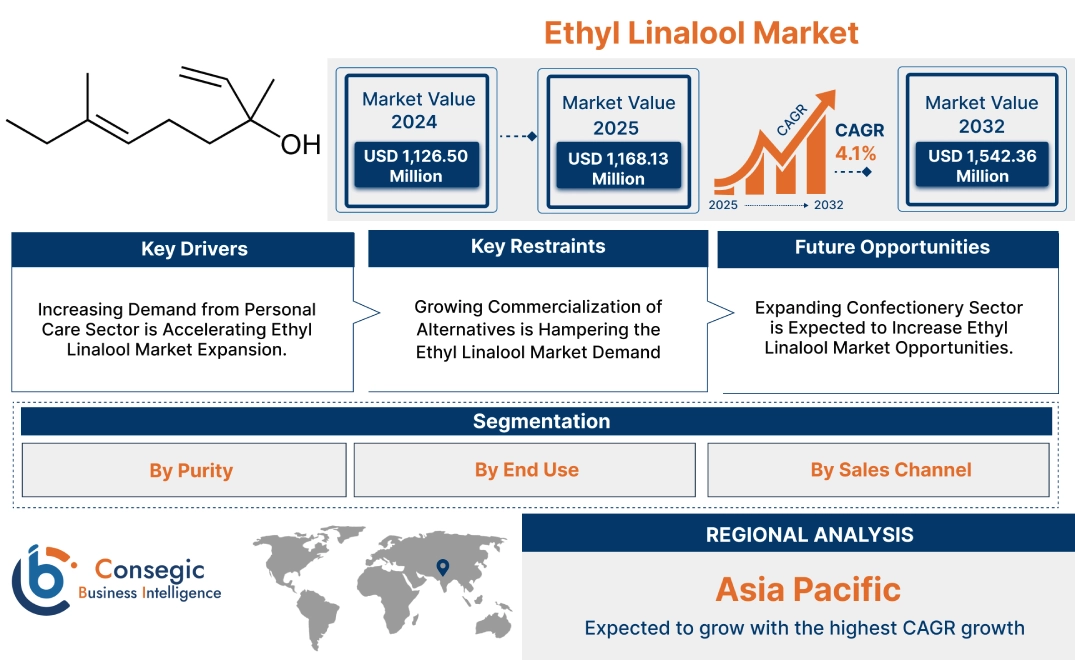
Ethyl Linalool Market size is growing with a CAGR of 4.1% during the forecast period (2025-2032), and the market is projected to be valued at USD 1,542.36 Million by 2032 from USD 1,126.50 Million in 2024. Additionally, the market value for 2025 attributes to USD 1,168.13 Million.
Ethyl Linalool Market Scope & Overview:
Ethyl linalool is a colorless scented alcohol. It has a floral, citrus-like scent. It is produced through chemical synthesis. Linalool is reacted with ethanol under controlled conditions. The purity of it varies depending on the applications. There are two purity levels available. This includes up to 98% and above 98%. High purity is used in perfumes and cosmetics. Lower-purity versions are used in cleaning products and air fresheners. Moreover, it is also used in baked goods, skincare products, confectionery, laundry detergents, and fabric conditioners amongst others. Sales occur through multiple channels. Direct sales include manufacturers supplying products directly to firms. Indirect channels include mediators for supplying products. This includes distributors and online retailers.
Ethyl Linalool Market Dynamics - (DRO) :
Key Drivers:
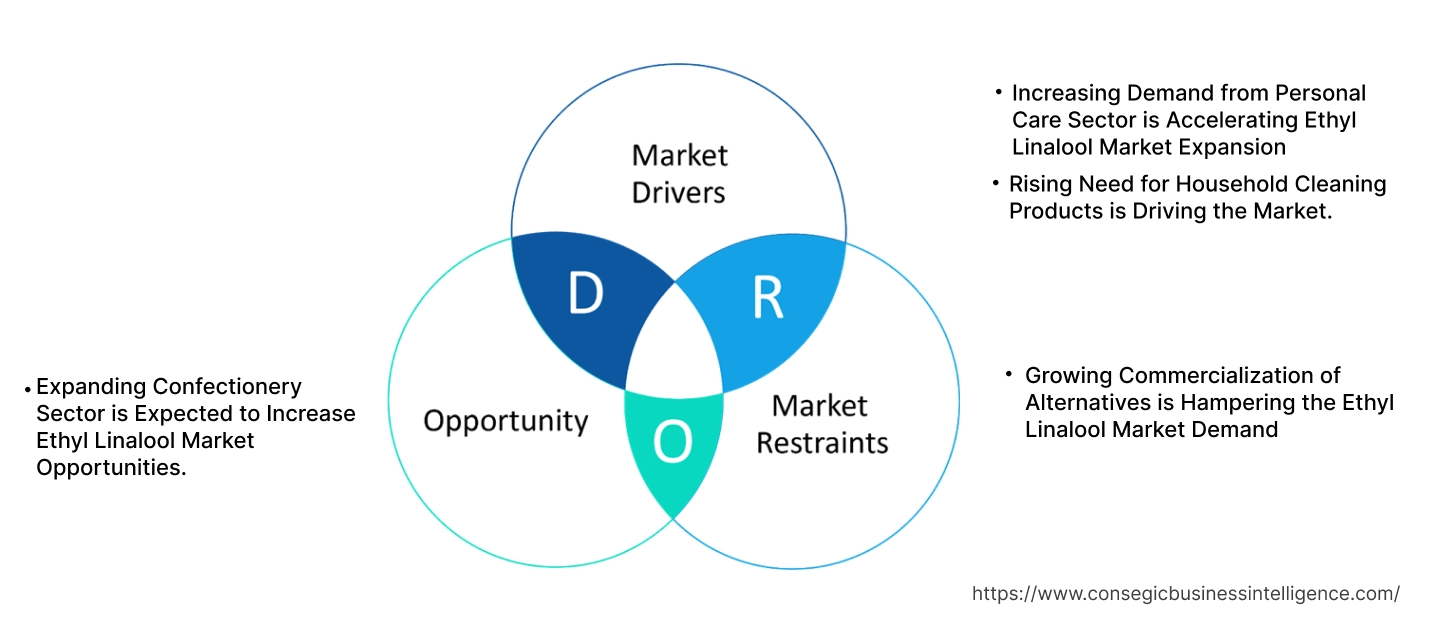
Increasing Demand from Personal Care Sector is Accelerating Ethyl Linalool Market Expansion.
Ethyl linalool in the personal care sector is used in perfumes, lotions, shampoos, deodorants, and soaps amongst others. This chemical compound provides a pleasant scent in these products. It has the ability to mask up unwanted odors. It enhances the longevity in perfumes and deodorants. Moreover, it adds fresh aroma to skincare and haircare products. Rising awareness of self-care has led to increase in sector.
For instance,
- According to Happi, the U.S. skincare products sales has increased by 10% in the last five years. This has required ethyl linalool for fragrance purposes, thus driving the market.
Overall, the increasing need from the personnel care sector is significantly boosting the ethyl linalool market expansion.
Rising Need for Household Cleaning Products is Driving the Market.
Ethyl linalool is used in household cleaning products such as laundry detergents, surface cleaners, dishwashing liquids, and fabric softeners. It adds a fresh floral scent to these products. Its antimicrobial properties enhance hygiene by reducing the bacteria. Consumer awareness about hygiene and cleanliness is leading to an increase in the demand for these products.
For instance,
- According to Jungle Scout, Amazon's sales of household cleaning supplies experienced a 30% growth in 2023, when compared to previous year. This is driving ethyl linalool demand to add freshness scent in the products, thus driving market.
Thus, rising need for household cleaning products are accelerating the global ethyl linalool market growth.
Key Restraints:
Growing Commercialization of Alternatives is Hampering the Ethyl Linalool Market Demand
The market faces strong competition from natural fragrance ingredients. This includes essential oils such as lavender, rose, citrus and plant-derived linalool. Consumers are becoming aware of the risk of synthetic ingredients to their health. Due to this, they prefer natural ingredients in personal care, cosmetics, and cleaning products. Natural ingredients do not have toxicity. Moreover, they are gentler on skin. This shift reduces demand for the market. At the same time, strict regulations on synthetic ingredients are making it harder for manufacturers to use this ingredient in cosmetics and food products. Hence, the growing commercialization of alternatives is hampering the ethyl linalool market demand.
Future Opportunities :
Expanding Confectionery Sector is Expected to Increase Ethyl Linalool Market Opportunities.
Ethyl linalool is a valuable ingredient in confectionery such as gummies, and hard candies. It adds sweet, floral, and subtly fruity aroma. It is helpful in creating unique and memorable flavor combinations. This results in a more appealing sensory experience for consumers. Increasing convenience of on-the-go snacking and rising consumer interest in artisanal production has led to sector increase.
For instance,
- According to International Confectionery Magazine, the confectionery sector is expected to grow at a CAGR of 7.3% from 2023-2033. This will require ethyl linalool compound to add sweet and fruity flavor to products, creating potential for the market.
Overall, the expanding confectionery sector is expected to increase ethyl linalool market opportunities.
Ethyl Linalool Market Segmental Analysis :
By Purity:
Based on purity, the market is categorized into upto 98% and above 98%.
Trends in Purity:
- Manufacturers are implementing advanced purification techniques and quality control measures to meet the rising need for high level purity compound.
- Improved analytical techniques, such as gas chromatography and mass spectrometry are enabling more precise measurement of purity.
The above 98% segment accounted for the largest market share in 2024 and is expected to grow at the fastest CAGR over the forecast period.
- Above 98% segment dominated the ethyl linalool market trends. It contains minimal impurities.
- It contains a higher concentration of the desired linalool compound. This level of purity is important for applications requiring precise & consistent aromatic profiles.
- It's preferred in fine fragrances, premium cosmetics, and high-quality flavor formulations. It also minimizes the risk of unwanted off-notes.
- There is a growing desire for luxury experiences. Consumers prefer high quality products due to increased disposable income.
- For instance, according to BeautyMatter, U.S. prestige beauty market sales increased by 7% in 2024 when compared to previous year. This has required ethyl linalool to add premium fragrance notes in products.
- Overall, as per the market analysis, the increased need for premium products is driving a segment in ethyl linalool market growth.
By End Use:
Based on end-use, the market is categorized into personal care & cosmetics, food & beverage, household, and others.
Trends in End-Use:
- The rising popularity of essential oils and aromatherapy is boosting market growth.
- Food and beverage manufacturers are exploring new flavor combinations to create unique and appealing products, driving segment.
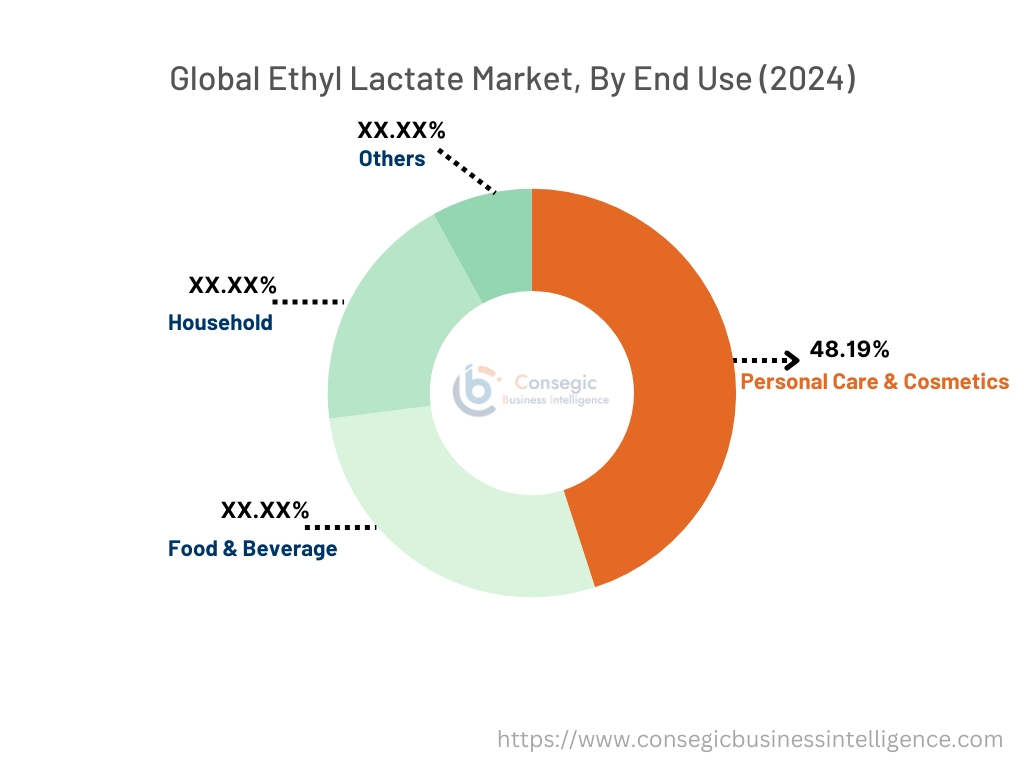
The personal care & cosmetics segment accounted for the largest market share of 48.19% in 2024.
- Personal care & cosmetics segment dominated the ethyl linalool market trends. It is further categorized into skincare products, haircare products, perfumes & deodorants, and others. It is used as a fragrance ingredient in this industry.
- It has a floral scent with notes of lavender, rosewood, and bergamot. It is less volatile than linalool. Moreover, it has more wood and less citrus.
- It is mainly used in soaps, shampoos, conditioners, lotions, moisturizers, deodorants, perfumes, and lipstick amongst others.
- It also functions as a masking agent. It neutralizes unpleasant odors from other ingredients.
- Overall, as per the market analysis, the increasing consumer awareness of personal grooming is driving a segment.
The food & beverage segment is expected to grow at the fastest CAGR over the forecast period.
- The food & beverage segment is emerging in market trends. It is further categorized as baked goods, confectionery, alcoholic beverages, and others. It acts as a flavoring agent.
- It contributes a sweet, floral, and slightly citrusy note to various products such as baked goods, candy, beverages such as tea and wine, ice creams, gelatin puddings.It enhances the aroma and taste of the products.
- Rising global populations and preferences towards convenient food options have led to sector growth.
- For instance, according to Amazon Web Services, the food and beverage sector is expected to grow at a CAGR of 7.0% from 2021-2025. This will require ethyl alcohol for incorporating flavors in the food products.
- According to market analysis, the increased food and beverage production supports segment for the upcoming years.
By Sales Channel:
Based on sales channel, the market is categorized into direct sales and indirect sales.
Trends in the Sales Channel:
- Large-scale buyers are strengthening direct relationships with manufacturers for better quality control, customized formulations, and supply chain security.
- Distributors are gaining prominence. They are offering tailored solutions and technical expertise to customers.
The direct sales segment accounted for the largest market share in 2024.
- Direct sales segment dominated the market trends. Direct sales involve selling directly from manufacturers to end users, without using distributors or retailers.
- One key advantage is higher profit margins since there are no middlemen taking a share. It also ensures better quality control and faster delivery.
- Additionally, companies offer personalized pricing and bulk discounts. This makes it attractive for large buyers.
- Direct sales also improve customer trust and loyalty by providing direct support and technical assistance.
- Overall, as per the market analysis, bigger companies purchasing in the bulk the amount of this chemical compound is a driving segment in the ethyl linalool industry.
The indirect sales segment is expected to grow at the fastest CAGR over the forecast period.
- The indirect sales segment is emerging in market trends. This sales channel involves selling through distributors, wholesalers, or retailers instead of directly to end users.
- One advantage of indirect sales is the wider market reach. Distributors have an existing network of buyers.
- There is a growing preference for easy and convenient shopping experience, leading to growth in indirect sales.
- For instance, according to the United States Census Bureau, the U.S. retail sales increased by 2.8% in year 2024 when compared to previous year. This creates potential for segment in the market.
- Thus, the growing preference for convenience will drive the segment for the forecasted years.
Regional Analysis:
The regional segment includes North America, Europe, Asia Pacific, the Middle East and Africa, and Latin America.
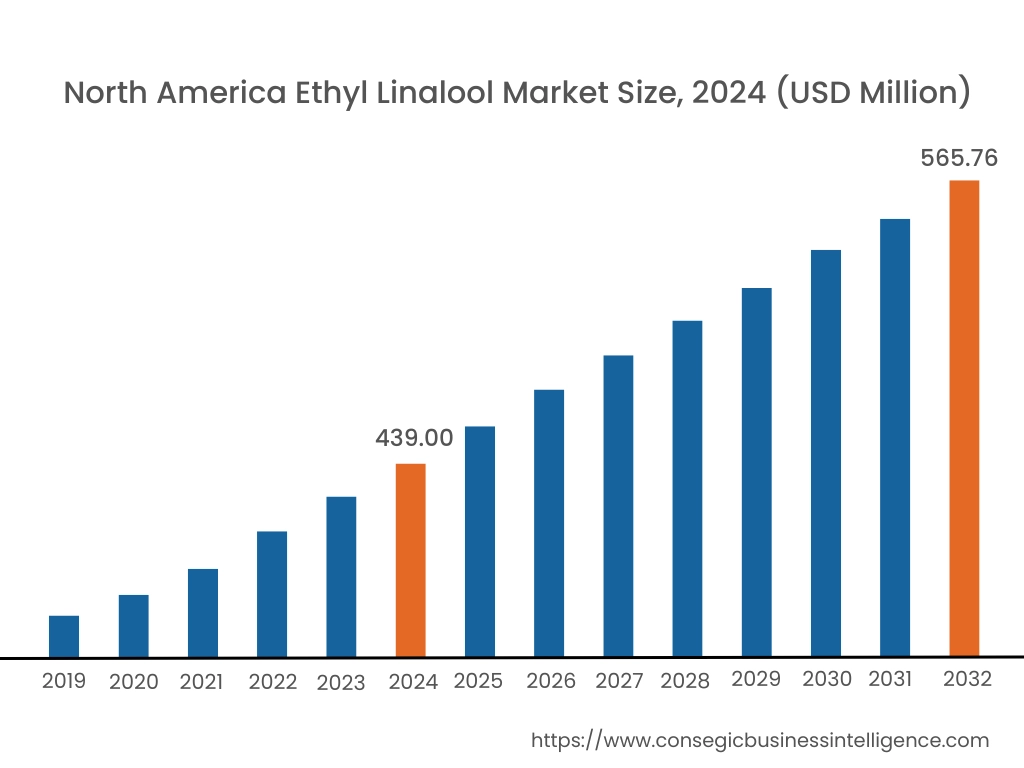
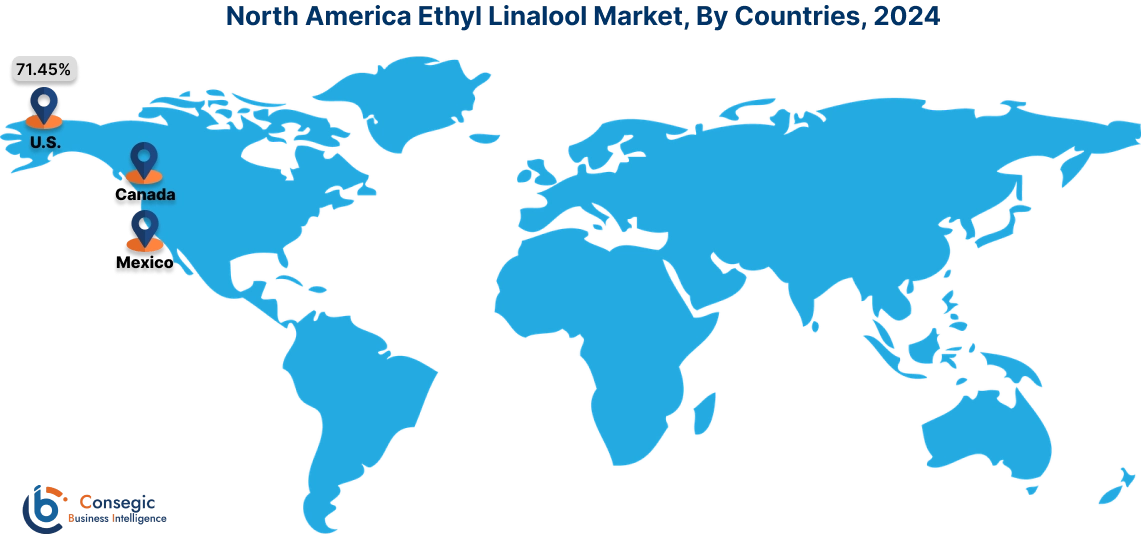
In 2024, North America accounted for the highest ethyl linalool market share at 38.97% and was valued at USD 439.00 Million and is expected to reach USD 565.76 Million in 2032. In North America, the U.S. accounted for the ethyl linalool market share of 71.45% during the base year of 2024. In the region, increased focus on personal grooming and the influence of social media and celebrity endorsements has led to increase in the need for premium fragrances.
- For instance, according to Cosmetics Business, U.S. premium fragrance sales increased by 12% in the year 2024 when compared to 2023. Luxury brands use ethyl linalool for its floral and citrus-like scent. This helps create long-lasting and unique fragrances.
Moreover, the indirect sales channel for is growing fast in North America due to expanding e-commerce, retail stores, and distributor networks. Overall, the rising need for premium fragrances and e-commerce expansion is driving the market in region.
In Asia Pacific, the ethyl linalool market is experiencing the fastest growth with a CAGR of 5.5% over the forecast period. Countries such as China, India, and Japan are experiencing rapid population increase. This is leading to more requirements for effective cleaning solutions. Growing urbanization and awareness of hygiene and sanitation drive this shift. Moreover, the haircare and skincare market in APAC is expanding due to increasing beauty consciousness and rising disposable income. People are spending more on shampoos, conditioners, lotions, and serums that contain higher quality products. Ethyl linalool is widely used in cleaning and personal care products for its pleasant floral scent.
Europe's ethyl linalool market analysis states that several trends are responsible for the progress of the market in the region. The food and beverage industry in Europe is increasing its use of ethyl linalool as a flavoring agent in baked goods, confectionery, and beverages. The growth of the premium and organic food sector further supports the market. Countries such as France, Germany, and Italy are leading the market. However, Europe has strict regulations. Authorities such as EFSA and ECHA limit the use of synthetic ingredients. This is restraining the market.
The Middle East and Africa (MEA) ethyl linalool market analysis states that the region is also witnessing several trends for notable surge. The region is seeing a strong increase in premium cosmetics. This is due to rising income levels, urbanization, and beauty awareness. Countries such as UAE, Saudi Arabia, and South Africa are leading the market. Ethyl linalool is widely used in these products for its floral and refreshing scent. This enhances the appeal of high-end cosmetics. However, high import costs and limited local production are restraining the market in region.
Latin America's ethyl linalool market is also emerging. More people are using aromatherapy for relaxation and wellness. Ethyl linalool is popular for essential oils, scented candles, and diffusers. It is because of its calming floral scent. Countries such as Brazil, Mexico, and Argentina are seeing higher need for stress-relief products. At the same time, technological advancements in formulations are helping improve scent longevity and product performance, making ethyl linalool more effective. However, logistical challenges are disrupting the supply chain of raw materials and finished products.
Top Key Players & Market Share Insights:
The Ethyl Linalool market is highly competitive with major players providing products to the national and international markets. Key players are adopting several strategies in research and development (R&D) and product innovation to hold a strong position in the global Ethyl Linalool market. Key players in The Ethyl Linalool industry include-
- Givaudan (Switzerland)
- Zhejiang NHU Co., Ltd (China)
- Vigon International, LLC (U.S.)
- PAT IMPEX (India)
- Koninklijke DSM N.V. (Netherlands)
- BASF SE (Germany)
- Hefei TNJ Chemical Co., Ltd. (China)
- VedaOils (India)
Ethyl Linalool Market Report Insights:
| Report Attributes | Report Details |
| Study Timeline | 2019-2032 |
| Market Size in 2032 | USD 1,542.36 Million |
| CAGR (2025-2032) | 4.1% |
| By Purity |
|
| By End Use |
|
| By Sales Channel |
|
| By Region |
|
| Key Players |
|
| North America | U.S. Canada Mexico |
| Europe | U.K. Germany France Spain Italy Russia Benelux Rest of Europe |
| APAC | China South Korea Japan India Australia ASEAN Rest of Asia-Pacific |
| Middle East and Africa | GCC Turkey South Africa Rest of MEA |
| LATAM | Brazil Argentina Chile Rest of LATAM |
| Report Coverage |
|
Key Questions Answered in the Report
How big is the Ethyl Linalool market? −
In 2024, the Ethyl Linalool market is USD 1,126.50 Million.
Which is the fastest-growing region in the Ethyl Linalool market? +
Asia Pacific is the fastest-growing region in the Ethyl Linalool market.
What specific segmentation details are covered in the Ethyl Linalool market? +
Purity, End-Use, and Sales Channel segmentation details are covered in the Ethyl Linalool market.
Who are the major players in the Ethyl Linalool market? +
Givaudan (Switzerland), Zhejiang NHU Co., Ltd (China), Koninklijke DSM N.V. (Netherlands), BASF SE (Germany), and Hefei TNJ Chemical Co.,Ltd. (China) are some major players in the market.
Overview
Reputation & Certifications


Our Services
- Market Intelligence & Forecasting
- Custom Research Solutions
- Market Entry Strategy
- Competitive Intelligence
- Customer Insights
- Industry Innovation Analysis
- Investment Advisory