Accueil > > Semi-conducteurs et Électronique > > Détecteur de rayonnement à semi-conducteur Marché Dépasse un TCAC de 5,8 % de 2025 à 2032
Marché des détecteurs de radiations semi-conducteurs - taille, part, tendances de l'industrie et prévisions (2025-2032)
ID : CBI_3112 | Mis à jour le : | Auteur : Rashmee Shrestha | Catégorie : Semi-conducteurs et Électronique
Semiconductor Radiation Detector Market Size:
Semiconductor Radiation Detector Market Size is estimated to reach over USD 4.23 Billion by 2032 from a value of USD 2.57 Billion in 2024 and is projected to grow by USD 2.70 Billion in 2025, growing at a CAGR of 5.8% from 2025 to 2032.
Semiconductor Radiation Detector Market Scope & Overview:
A semiconductor radiation detector is a device that utilizes a semiconductor material, typically silicon or germanium, to detect and measure ionizing radiation. These detectors operate by generating charge carriers (electrons and holes) when radiation interacts with the semiconductor material, thereby creating a measurable current pulse.

Semiconductor Radiation Detector Market Dynamics - (DRO) :
Key Drivers:
Growing focus on nuclear applications and security across the globe is driving the semiconductor radiation detector market expansion
The increasing urgency to combat climate change and achieve net-zero emissions is the primary driver for increased interest in nuclear power. Nuclear energy produces virtually no greenhouse gas emissions during operation, making it a vital component of a decarbonized energy mix. Countries are increasingly seeking to diversify their energy portfolios to enhance resilience against supply disruptions and price fluctuations. Nuclear power, with its stable fuel supply and long operational life, contributes significantly to this diversification. Semiconductor radiation detectors play a vital role in monitoring and controlling radiation levels, thereby preventing potential hazards. Government regulations and international safety standards mandate the use of advanced radiation detection materials, thus creating a steady demand in this industry.
- For instance, Kromek’s Co-planar grid (CPG) detectors are used for nuclear spectroscopy applications. The eV-CPG detectors are ideal for tasks demanding better efficiency, precise resolution, and room-temperature functionality.
Thus, according to the semiconductor radiation detector market analysis, the growing focus on nuclear applications and security is driving the semiconductor radiation detector market size.

Key Restraints:
Stringent regulatory environment is affecting the semiconductor radiation detector market demand
Regulatory bodies enforce strict standards and guidelines to ensure the safety and effectiveness of these materials, which can pose significant challenges for manufacturers. Compliance with these regulations often requires substantial investments in research and development, testing, and certification, which can increase operational costs and affect profitability. Additionally, any delays in regulatory approvals can impede the timely launch of new products, impacting the global market. Thus, the aforementioned factors would further impact the semiconductor radiation detector market size.
Future Opportunities :
Growing healthcare applications are expected to drive semiconductor radiation detector market opportunities
The growth in healthcare applications, particularly in the use of radiation detection devices, is being driven by the increasing adoption of advanced medical imaging and therapeutic technologies. As the prevalence of chronic diseases such as cancer, cardiovascular disorders, and neurological conditions rises, there is a heightened demand for diagnostic and treatment solutions that rely on radiation.
Further, advancements in medical technology are also contributing to this development. The innovations in imaging techniques and radiation therapy are leading to the development of more precise, efficient, and less invasive procedures. Moreover, the development of healthcare infrastructure in emerging markets is creating new opportunities for development in semiconductor radiation detector applications. As countries invest in upgrading their healthcare systems, there is an increased need for modern medical equipment, including radiation detection devices. Government initiatives, rising healthcare expenditure, and growing awareness of radiation safety are driving the adoption of these devices in hospitals, clinics, and diagnostic centers worldwide.
- For instance, in October 2024, Sanofi announced the partnership with Orano Med, to speed up the creation of advanced radioligand therapies (RLTs) for rare cancers. Their collaboration involves jointly investing in a new entity, operating under the Orano Med brand, that will concentrate on finding, designing, and clinically developing these next-generation RLTs using the alpha-emitting isotope.
Thus, based on the above semiconductor radiation detector market analysis, the growing healthcare applications are expected to drive the semiconductor radiation detector market semiconductor radiation detector market opportunities.
Semiconductor Radiation Detector Market Segmental Analysis :
By Product Type:
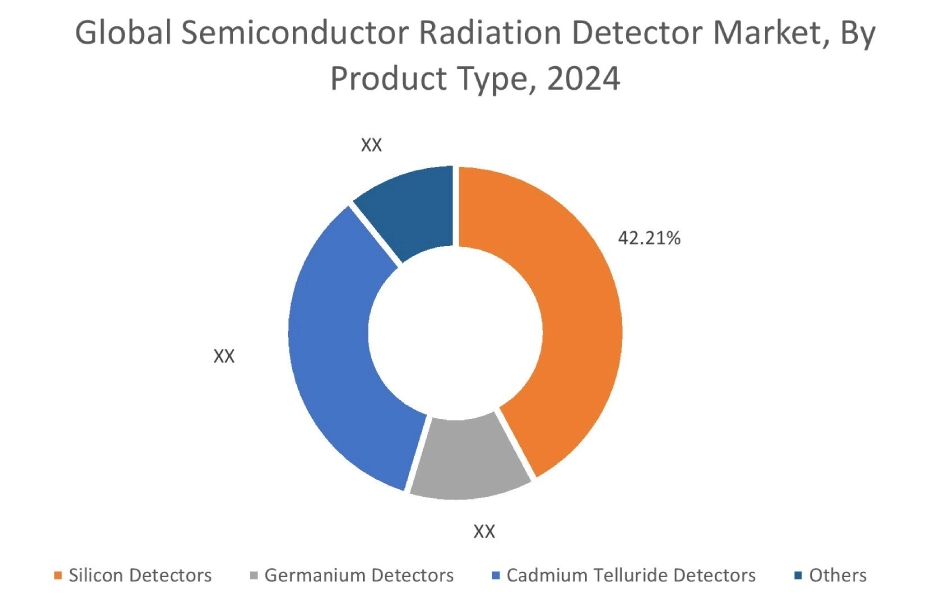
Based on product type, the market is segmented into silicon detectors, germanium detectors, cadmium telluride detectors, and others.
Trends in the product type:
- The increasing prevalence of nuclear energy and medical diagnostics, coupled with growing concerns about radiation safety, is driving the segment.
- The ongoing research and development in semiconductor materials are expected to further enhance their performance, thereby expanding their adoption across various industry verticals.
- Thus, based on the above analysis, these factors are driving the semiconductor radiation detector market demand.
The silicon detectors segment accounted for the largest revenue share of 42.21% in the year 2024.
- The capacity of silicon detectors to offer high sensitivity and rapid response times makes them a necessary component in the semiconductor sector, leading to their increasing adoption and development within the market.
- Silicon detectors are critical in modalities such as X-ray, computed tomography (CT), and mammography, where they enhance image quality and diagnostic accuracy.
- For instance, in April 2025, researchers at Berkeley Lab used pulsed ion beams, to explore defect information in silicon. This capability helps researchers gain a deeper insight into the fundamental ways radiation affects materials, in turn promoting lucrative prospects for breakthroughs in numerous fields.
- Thus, based on the above analysis, these factors are further driving the semiconductor radiation detector market growth and trends.
The cadmium telluride detectors segment is anticipated to register the fastest CAGR during the forecast period.
- The unique properties of cadmium telluride (CdTe), such as high atomic number and wide bandgap, make it highly suitable for creating highly sensitive and efficient detectors.
- Moreover, the continuous research and development in the semiconductor sector have led to the production of more efficient and cost-effective CdTe detectors.
- The growing need for non-destructive testing in industrial applications is also fueling the need for CdTe detectors. Industrial inspection requires high-precision imaging to detect defects without causing damage to the materials being inspected.
- Thus, based on the above analysis, these factors are expected to drive the semiconductor radiation detector market share and growth during the forecast period.
By Application:
Based on the application, the semiconductor radiation detector market is segmented into medical imaging, security screening, industrial inspection, radiation damage assessment, scientific research, space missions, material testing, and others.
Trends in the application:
- The need for radiation detectors is driven by the increasing need for advanced diagnostic tools and security solutions that can accurately detect and analyze radiation.
- The continuous investment in research and development activities and the growing emphasis on innovation are expected to drive the need for radiation detectors in research applications.
The medical imaging segment accounted for a substantial revenue share in the year 2024.
- Medical imaging techniques such as X-rays, CT scans, and PET scans rely heavily on these materials to ensure accurate imaging and patient safety.
- The increasing prevalence of cancer and other diseases, coupled with advancements in medical technology, is driving the need for radiation detection materials in healthcare.
- Additionally, radiation therapy for cancer treatment uses these materials to monitor and control radiation doses, ensuring effective treatment while minimizing side effects.
- Thus, based on the above analysis, these factors would further supplement the semiconductor radiation detector market share and trends.
The scientific research segment is anticipated to register the fastest CAGR during the forecast period.
- Scientific research is a vital application area, where high-performance radiation detectors are essential for various experiments and studies.
- In fields such as nuclear physics, space research, and environmental monitoring, compound semiconductor radiation detectors provide the necessary sensitivity and accuracy for detecting and measuring radiation.
- The ongoing advancements in detector technologies and increasing funding for research projects are expected to support the growth of this application segment.
- Governments and defense agencies are investing in advanced technologies to enhance their detection and response capabilities, thereby fueling the need for radiation detection materials in this sector.
- Thus, based on the above analysis, these factors are anticipated to further drive the semiconductor radiation detector market trends and share during the forecast period.
By End User:
Based on end user, the semiconductor radiation detector market is segmented into healthcare, aerospace and defense, industrial, research institutes, and others.
Trends in the end user:
- The continuous improvement of detection materials and technologies ensures that radiation detectors remain essential tools in various fields, providing accurate and reliable measurements to ensure safety, compliance, and efficiency.
- The rise in geopolitical tensions and the threat of nuclear terrorism have underscored the importance of robust radiation detection systems.
The industrial segment accounted for the largest revenue share in the year 2024.
- Industrial end-users encompass a wide array of sectors such as aerospace, automotive, and manufacturing. These industries require high-precision non-destructive testing (NDT) solutions to ensure the quality and safety of their products.
- CdTe detectors are extensively used in industrial inspection applications to detect defects and inconsistencies without causing any damage to the materials.
- The stringent quality control standards and regulatory requirements in these industries are driving the need for reliable and efficient NDT solutions, thereby boosting the adoption of CdTe detectors.
- Therefore, the above factors are driving the semiconductor radiation detector market growth and trends.
The healthcare segment is anticipated to register the fastest CAGR during the forecast period.
- The healthcare sector is one of the largest end-users, driven by the growing adoption of advanced imaging technologies for accurate diagnosis and treatment.
- Hospitals, clinics, and diagnostic centers are increasingly investing in state-of-the-art medical imaging equipment equipped with CdTe detectors to enhance diagnostic accuracy and improve patient outcomes.
- The rising prevalence of chronic diseases and the need for early detection are major factors contributing to the high need for radiation detectors in the healthcare sector.
- These factors are anticipated to further drive the semiconductor radiation detector market trends during the forecast period.
Regional Analysis:
The global market has been classified by region into North America, Europe, Asia-Pacific, Middle East & Africa, and Latin America.
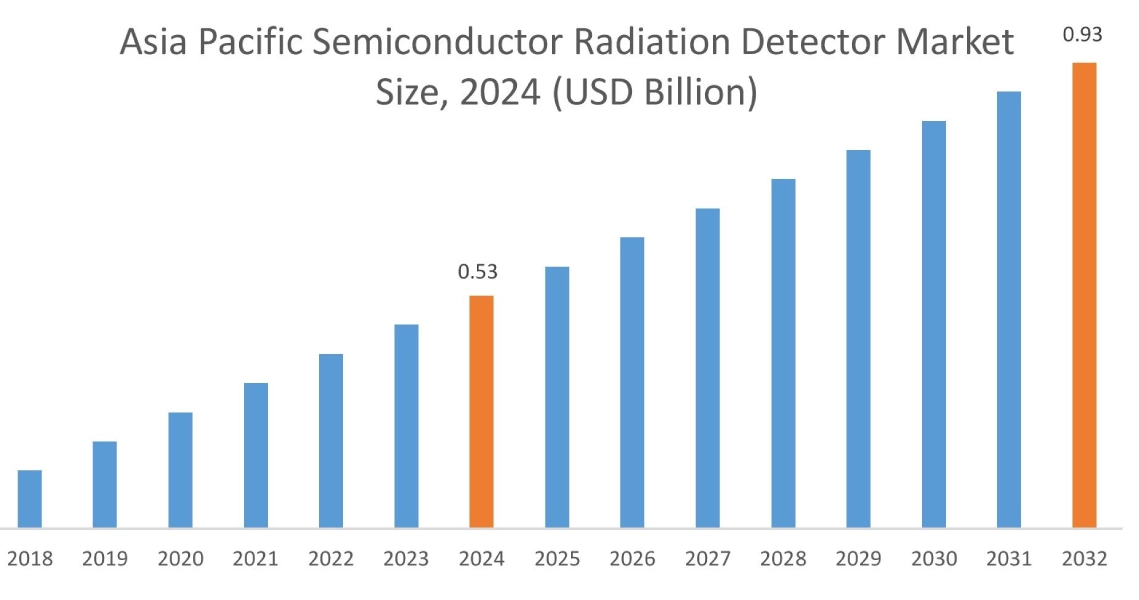
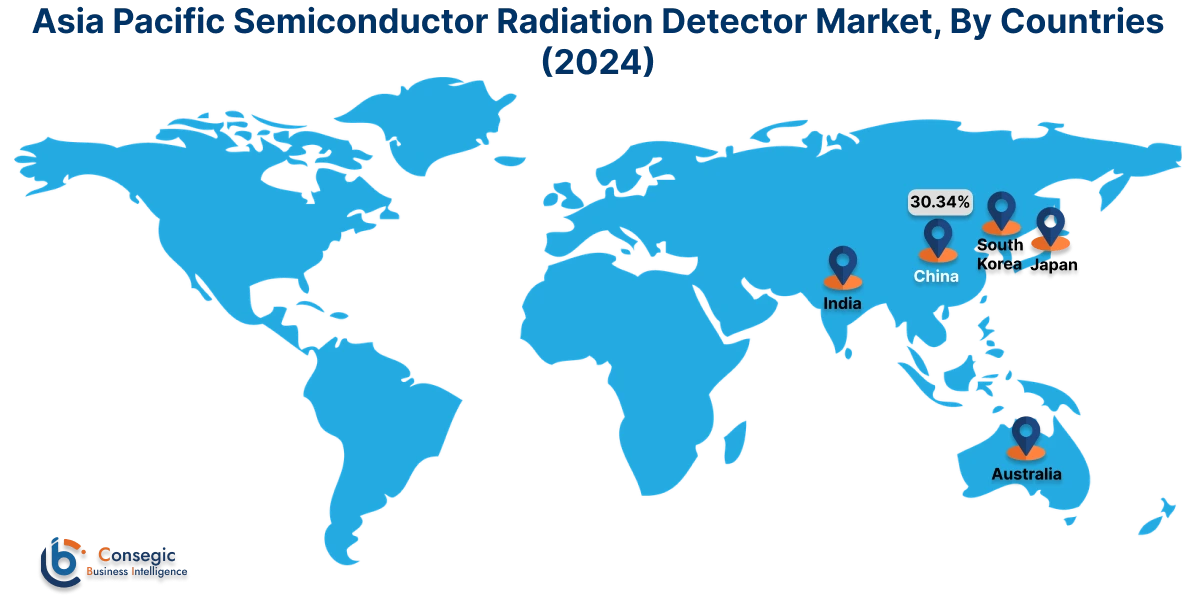
Asia Pacific semiconductor radiation detector market expansion is estimated to reach over USD 0.93 billion by 2032 from a value of USD 0.53 billion in 2024 and is projected to grow by USD 0.56 billion in 2025. Out of this, the China market accounted for the maximum revenue split of 30.34%. The regional growth can be attributed to rapid industrialization, expanding healthcare services, and increasing adoption of nuclear energy in countries like China and India. Further, the region's growing population and rising prevalence of chronic diseases are driving the need for advanced diagnostic and therapeutic technologies, thereby fueling the adoption of radiation detection materials. Additionally, government initiatives to enhance nuclear safety and investments in defense infrastructure are further supporting market growth. These trends would further drive the regional semiconductor radiation detector market during the forecast period.
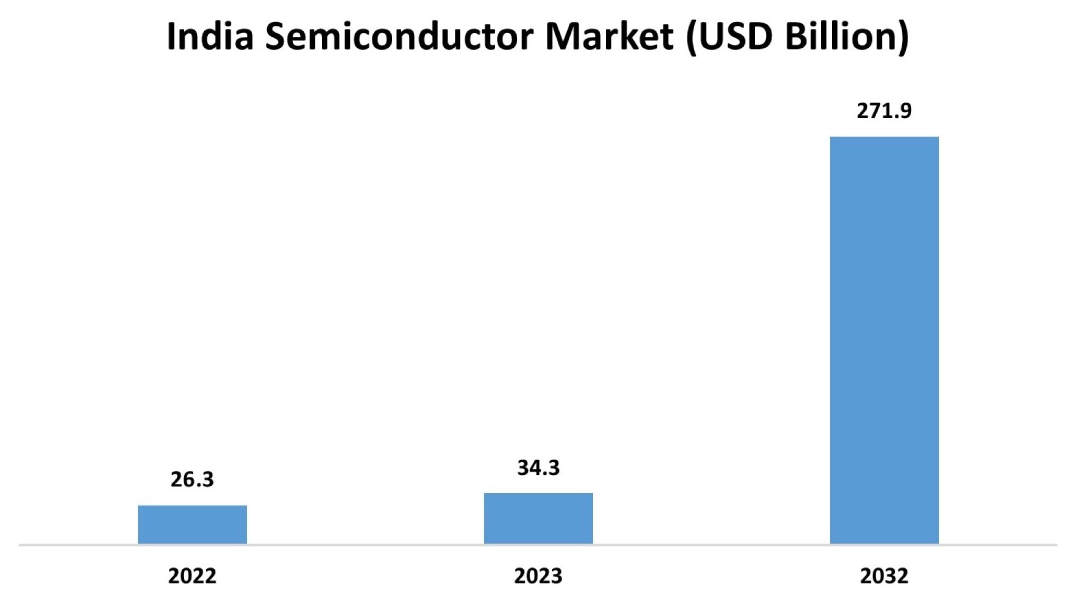
- For instance, Bharat Electronics Limited (BEL) has developed a variety of silicon detectors with different sizes, shapes, and features for diverse uses. Their range includes PIN diodes, strip detectors, micro-strip detectors, photodiode detectors, linear array detectors, and array detectors.
North America market is estimated to reach over USD 1.63 billion by 2032 from a value of USD 0.99 billion in 2024 and is projected to grow by USD 1.04 billion in 2025. The region's dominance can be attributed to the presence of major market players, high healthcare expenditure, and advanced industrial infrastructure. The United States is a key market due to its well-established healthcare system and the high adoption of advanced imaging technologies. The growing focus on early disease detection and increasing investment in healthcare infrastructure are driving the need for radiation detectors in the region. Additionally, the industrial sector's emphasis on quality control and non-destructive testing is contributing to market growth. These factors would further drive the market trends in North America.
- For instance, Mirion, a U.S.-based company offers Silicon Lithium detectors that are designed to measure highly penetrating charged particles at room temperature. Additionally, they can function in either a vacuum or at atmospheric pressure.
As per the analysis, the semiconductor radiation detector industry in Europe is expected to witness significant development during the forecast period. The region's well-developed healthcare infrastructure and the high adoption of advanced medical imaging technologies are major factors contributing to market development. Additionally, the stringent quality control standards and regulatory requirements in the industrial sector are boosting the adoption of non-destructive testing solutions, thereby driving the need for radiation detectors in Latin America.
Further, the market demand in the Middle East & Africa region is driven by expanding telecommunications networks, government initiatives, and the need for reliable network performance in various industries. Countries like the UAE, Saudi Arabia, South Africa, and Kenya are key markets where network testing equipment plays a crucial role in supporting technological advancement and operational efficiency.
Top Key Players and Market Share Insights:
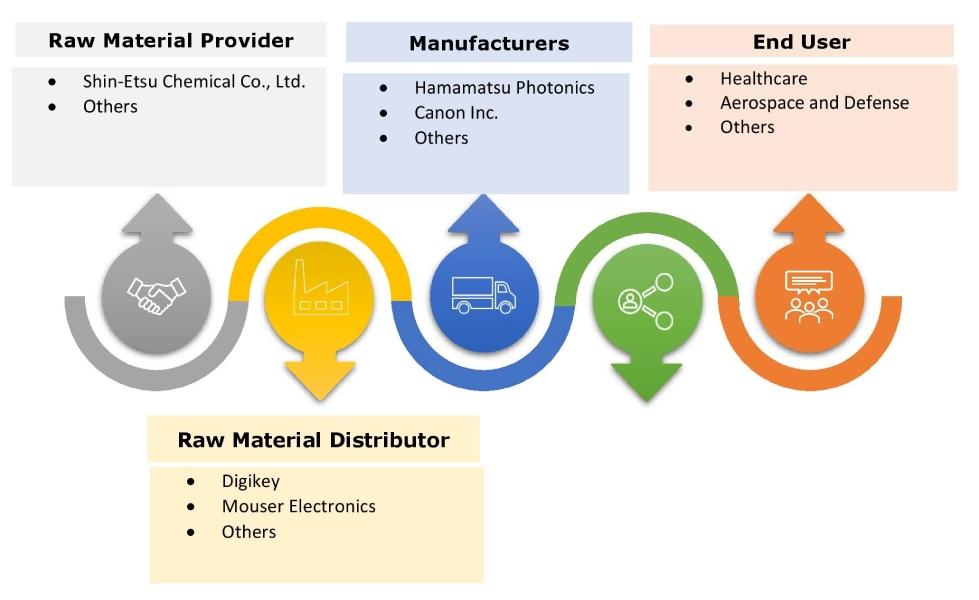
The global semiconductor radiation detector market is highly competitive, with major players providing products to the national and international markets. Key players are adopting several strategies in research and development (R&D), product innovation, and end-user launches to hold a strong position in the market. Key players in the semiconductor radiation detector industry include-
- Hamamatsu Photonics (Japan)
- TE Connectivity (Ireland)
- RaySpec Ltd (U.K.)
- STMicroelectronics N.V. (Switzerland)
- ON Semiconductor Corporation (U.S.)
- Hitachi High-Technologies Corporation (Japan)
- Canon Inc. (Japan)
- Mirion Technologies, Inc. (U.S.)
- AMETEK (U.S.)
- Kromek (U.K.)
Semiconductor Radiation Detector Market Report Insights :
| Report Attributes | Report Details |
| Study Timeline | 2019-2032 |
| Market Size in 2032 | USD 4.23 Billion |
| CAGR (2025-2032) | 5.8% |
| By Product Type |
|
| By Application |
|
| By End User |
|
| By Region |
|
| Key Players |
|
| North America | U.S. Canada Mexico |
| Europe | U.K. Germany France Spain Italy Russia Benelux Rest of Europe |
| APAC | China South Korea Japan India Australia ASEAN Rest of Asia-Pacific |
| Middle East and Africa | GCC Turkey South Africa Rest of MEA |
| LATAM | Brazil Argentina Chile Rest of LATAM |
| Report Coverage |
|
Key Questions Answered in the Report
Quelle est la taille du marché des détecteurs de rayonnement semi-conducteurs ? −
Le marché des détecteurs de rayonnement à semi-conducteurs devrait atteindre plus de 4,23 milliards de dollars américains d'ici 2032, contre 2,57 milliards de dollars américains en 2024, et devrait croître de 2,70 milliards de dollars américains en 2025, avec un TCAC de 5,8 % de 2025 à 2032.
Quelle est la région qui connaît la croissance la plus rapide sur le marché des détecteurs de rayonnement semi-conducteurs ? +
La région Asie-Pacifique connaît la croissance la plus rapide sur le marché.
Quels détails spécifiques de segmentation sont abordés dans le rapport sur les détecteurs de rayonnement des semi-conducteurs ? +
Le rapport sur les détecteurs de rayonnement semi-conducteurs comprend des détails de segmentation spécifiques pour le type de produit, l'application, l'utilisateur final et la région.
Qui sont les principaux acteurs du marché des détecteurs de rayonnement semi-conducteurs ? +
Les principaux acteurs du marché sont Hamamatsu Photonics (Japon), TE Connectivity (Irlande), Hitachi High-Technologies Corporation (Japon), Canon Inc. (Japon), Mirion Technologies, Inc. (États-Unis), AMETEK (États-Unis), Kromek (Royaume-Uni), RaySpec Ltd (Royaume-Uni), STMicroelectronics NV (Suisse), ON Semiconductor Corporation (États-Unis) et d'autres.