Jump to Content
Heart Tumor Market - Size, Share, Industry Trends, and Forecasts (2025-2032)
Heart Tumor Market Size:
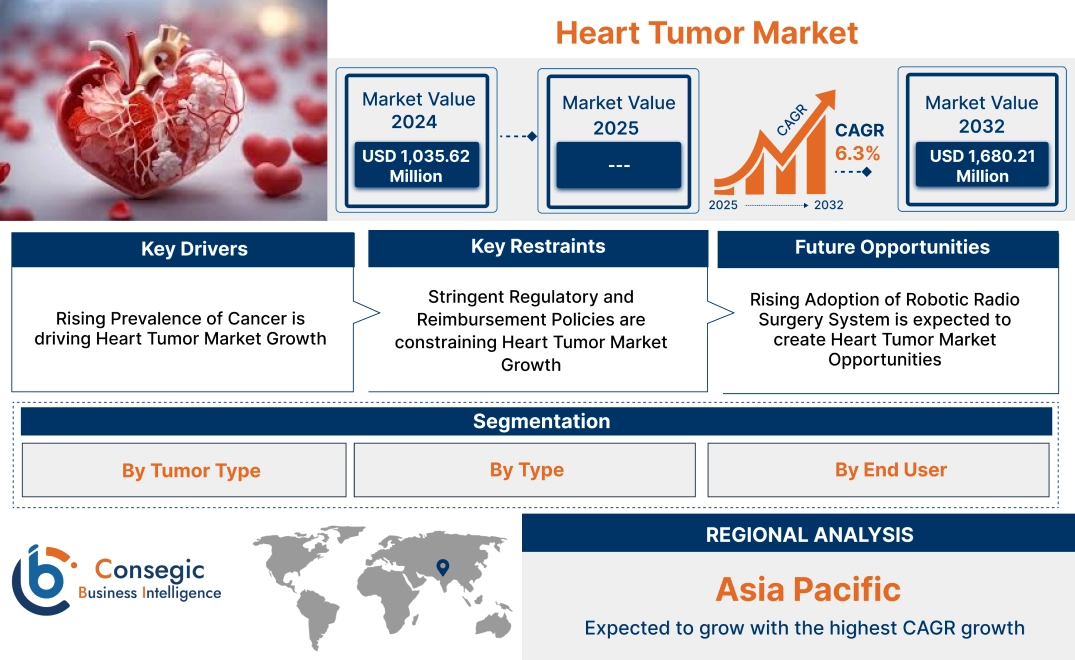
Heart tumor market size is estimated to reach over USD 1,680.21 Million by 2032 from a value of USD 1,035.62 Million in 2024, growing at a CAGR of 6.3% from 2025 to 2032.
Heart Tumor Market Scope & Overview:
Heart tumor is an abnormal growth of tissue within or on the heart, which is classified as either primary tumor or secondary tumor. This tumor affects heart function, blood flow, and overall cardiovascular health. Symptoms include chest pain, shortness of breath, and heart failure. Diagnosis methods for heart tumor include echocardiography, computer tomography (CT) scan, magnetic resonance imaging (MRI), nuclear imaging, and others. Treatment depends on the size, location and severity of the tumor which includes surgical and non-surgical approaches such as surgery, chemotherapy, radiotherapy, and others. Further, advancements in surgical techniques such as robotic assisted surgery and adoption of high-resolution echocardiography is driving heart tumor market.
Heart Tumor Market Dynamics - (DRO) :
Key Drivers:
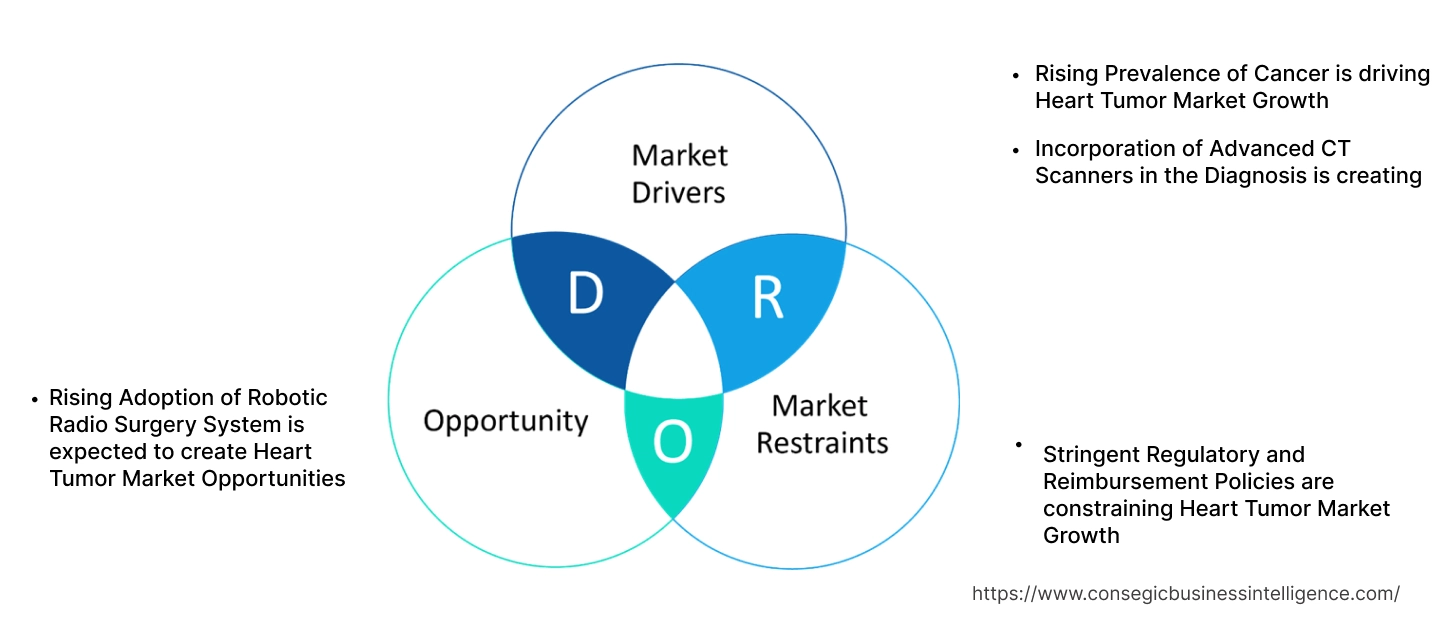
Rising Prevalence of Cancer is driving Heart Tumor Market Growth
The prevalence of lung and cardiac cancer is rising due to several factors such as smoking, tobacco use, pollution, and genetic mutations. Lung cancer is a type of cancer that begins in the lungs and is associated with symptoms such as persistent cough, chest pain, and difficulty breathing. While cardiac cancer is a type of cancer that affects the heart, either originating within the heart itself or spreading to the heart from other organs. Lung cancer and cardiac cancer frequently metastasizes to the cardiac tissues resulting in secondary heart tumor affecting the pericardium and myocardium.
- In 2022, according to World Cancer Research Fund, there are 2,480,675 new casesof lung cancer diagnosed globally. Lung cancer typically spreads into the heart affecting cardiac tissues which results in secondary heart tumors.
- According to BioMed Central Ltd, cardiac tumors, whether benign or malignant, are relatively rare among oncological diseases, with an overall prevalence of no more than 0.33%
Thus, rising prevalence of cancers is creating heart tumor market demand due to spread in the cardiac tissues and affecting pericardium & myocardium.
Incorporation of Advanced CT Scanners in the Diagnosis is creating
CT scanners are diagnostic imaging tools that use X-rays to create detailed cross-sectional images of the body, enabling healthcare providers to visualize organs and tissues. They play a major role in the diagnosis of heart tumor by providing high resolution images to identify tumors, access their size, location and plan for surgical interventions.
- In 2023, Siemens Healthineers launched Somatom Pro.Pulse CT scanner. It is enabled with dual source technology with two radiation tubes and detectors which provides high quality cardiac imaging essential in the diagnosis of heart tumor. This scanner integrated 3D camera further simplifying operations by personalizing scans based on patient data, optimizing scan parameters, and automating precise patient positioning.
Thus, incorporation of CT scanners in the tumor diagnosis is leading to heart tumor market expansion through early detection and personalized scans.
Key Restraints:
Stringent Regulatory and Reimbursement Policies are constraining Heart Tumor Market Growth
Stringent regulatory frameworks govern the approval of medical devices, imaging technologies and therapies, typically leading to delays in bringing innovative solutions in heart tumor market. Manufacturers of medical devices such as MRI, CT scanners must meet stringent safety, efficacy and quality standards, which increases the cost and time required for product development. Additionally, inadequate reimbursement policies in many regions hinder the accessibility of diagnostic tools like MRI, positron emission tomography (PET) CT scan. Many healthcare systems do not fully cover these procedures making them unaffordable for patients, particularly in low and middle-income countries.
Thus, stringent regulatory and reimbursement policies are constraining heart tumor market expansion due to increased cost of medical devices and inadequate reimbursement policies for the diagnosis and treatment.
Future Opportunities :
Rising Adoption of Robotic Radio Surgery System is expected to create Heart Tumor Market Opportunities
A robotic radio surgery system is a non-invasive technology that delivers precise, high-dose radiation to tumors using advanced robotics and real-time imaging, minimizing damage to the surrounding healthy tissues. These systems allows for targeted radiation therapy in cases where surgery is risky or infeasible, particularly for patients with inoperable or metastatic heart tumor.
- In 2024, Apollo Cancer Centre introduced CyberKnife* S7™ FIM robotic radio surgery system in India. It features a radiation delivery device, called a linear accelerator, directly mounted on a robot to deliver the high-energy X-rays or photons used in radiation therapy for heart tumor. This system also uses real-time image guidance and a robot to deliver doses of radiation to the patients.
Thus, growing adoption of robotic radio surgery system in the treatment is expected to create heart tumor market opportunities through high precision and improved patient outcomes.
Heart Tumor Market Segmental Analysis :
By Tumor Type:
By tumor type, the market is divided into primary and secondary.
Trends in Tumor Type:
- According to heart tumor market trends, rising cases of lung and breast cancer is leading to a greater number of primary tumor patients.
- Advancements in echocardiography have led to the early detection of primary tumor as per market trends.
The secondary heart tumor accounted for the largest market share in the year 2024.
- Secondary heart tumor is a tumor that originates in other parts of the body and metastasize to the heart.
- This tumor is more common than the primary tumors and typically results from cancers like lung, breast, and melanoma and lymphomas spreading to cardiac tissues.
- Further, rising cases of breast cancer are contributing to the dominance of secondary heart tumor in the market.
- For instance, in 2022, according to World Health Organization, there are 2.3 million women diagnosed with breast cancer globally. Breast cancer frequently spreads to the cardiac tissues leading to secondary heart tumor.
- Thus, secondary heart tumor is growing significantly in the market due to growing prevalence of lung and breast cancer.
The primary tumor is expected to grow at the fastest CAGR over the forecast period.
- A primary tumor is a tumor that originates in the heart tissues and the most common type is myxoma, typically found in the left atrium. Genetic syndromes like Carney complex play a major role in the development of this tumor.
- Myxomas are benign and cause significant complications including embolism and obstruction of blood flow.
- Other benign primary heart tumors include papillary fibroelastomas and rhabdomyomas among which rhabdomyomas is more common in infants and children.
- Malignant primary heart tumors such as sarcoma are extremely rare leading to poor prognosis.
- Moreover, advancements in oncology and echocardiography have led to the early detection of primary tumors in the patients.
- Thus, primary tumors are growing significantly in the market due to genetic factors and advancement in diagnostic methods.
By Type:
By type, the market is divided into diagnosis and treatment. Diagnosis is further classified into physical examination, imaging tests, and others. Similarly, treatment is further classified into surgical and non-surgical.
Trends in Type:
- As per heart tumor market trends, imaging tests such as nuclear imaging, CT scan effectively display tumor morphology and cardiac function in the patients.
- Surgical removal of tumors is widely used in patients supported by technological advancement such as robotic assisted surgery for improving procedure outcomes as per market trends.
The diagnosis accounted for the largest market share in the year 2024.
- Diagnosis for heart tumor includes physical examination, imaging tests, and others.
- Physical examination includes echocardiography which is widely used in the diagnosis of heart tumor due to its accessibility, cost effectiveness, and ability to provide real-time imaging.
- Further, tranesophageal echocardiography (TEE) offering superior resolution, is particularly effective in identifying smaller tumors and those in difficult location.
- Imaging tests such as CT scan, and MRI are also used which display heart tumor morphology and its impact on cardiac function in the diagnosis.
- Thus, diagnostic methods such as echocardiography, CT scan and MRI help in the early and confirm diagnosis of the heart tumor as per market trends.
The treatment is expected to grow at the fastest CAGR over the forecast period.
- Treatment for heart tumor includes surgical and non-surgical approaches. The surgical approach involves cardiac surgery while non-surgical approaches involve radiotherapy, chemotherapy and others.
- Surgical treatment is widely used for treating heart tumor and improvements in surgery such as robotic assisted surgery has improved the patient and surgical outcomes.
- For instance, in 2021, Apollo Proton Cancer Centre launched the robot-assisted cancer surgery unit in India. It helps to perform complex surgeries essential in treating heart tumor, lung tumor, and others with Da Vinci surgical system with reduced instances of infections along with increased precision of surgery.
- Radiotherapy and chemotherapy are also utilized as an adjunct treatment following surgery to target any remaining cancer cells or to shrink tumors before surgical removal.
- Thus, treatment is growing in the market supported by technological advancements and improved patient outcomes.
By End User:
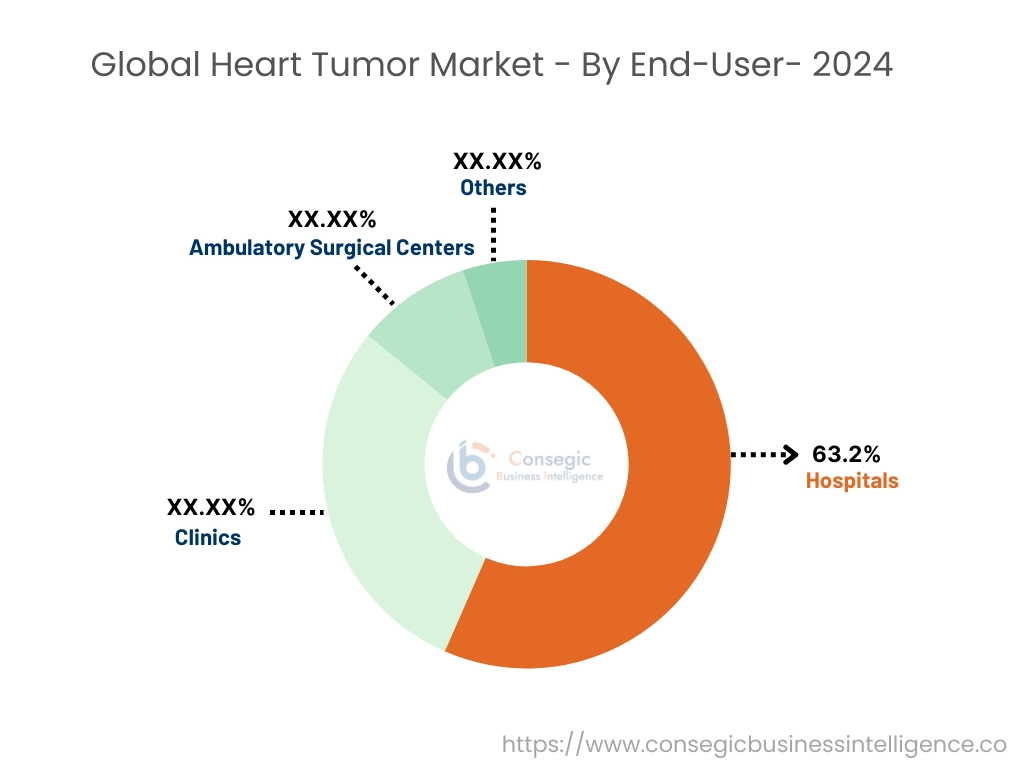
By end-user, the market is divided into hospitals, clinics, ambulatory surgical centers, and others.
Trends in End-User:
- As per market trends, hospitals are widely adopting advanced diagnostic and surgical techniques providing comprehensive care to the patients.
- Adoption of ambulatory surgical centers is rising in the market due to availability of modern diagnostic techniques and minimally invasive surgeries as per trends.
The hospitals accounted for the largest market share of 63.2% in the year 2024.
- A hospital is a healthcare facility that provides medical and nursing careas well as medical supplies to patients.
- Hospitals play major role in the heart tumor market due to their well-established infrastructure and advanced imaging technologies.
- Hospitals are the primary providers of diagnostic and treatment services, offering comprehensive care to patients with heart tumor.
- Furthermore, the expanding hospital market in countries contributes to the heart tumor market.
- For instance, in 2024, according to India Brand Equity Foundation, the hospital market in India projected to grow at 8.0% from 2024 to 2032. Hospitals are integral in the heart tumor through advanced diagnosis methods and personalized treatment.
- Thus, hospitals are dominating the market due to advanced infrastructure and modern imaging technologies.
The ambulatory surgical centers is expected to grow at the fastest CAGR over the forecast period.
- An ambulatory surgical center is a healthcare facility that provides same day surgical care, including diagnostic and preventive procedures.
- The adoption of ambulatory surgical center is growing in the market due to its ability to handle wide range of diagnostic methods like echocardiography, cardiac MRI, minimally invasive surgeries for tumor removal.
- The shift towards outpatient settings, driven by advancements in surgical techniques and imaging technology has contributed to the growing role of ambulatory surgical centers in the treatment of heart tumor.
- Thus, adoption of ambulatory surgical center is rising in the market, supported by advanced surgical techniques and improved clinical outcomes.
Regional Analysis:
The regional segment includes North America, Europe, Asia Pacific, the Middle East and Africa, and Latin America.
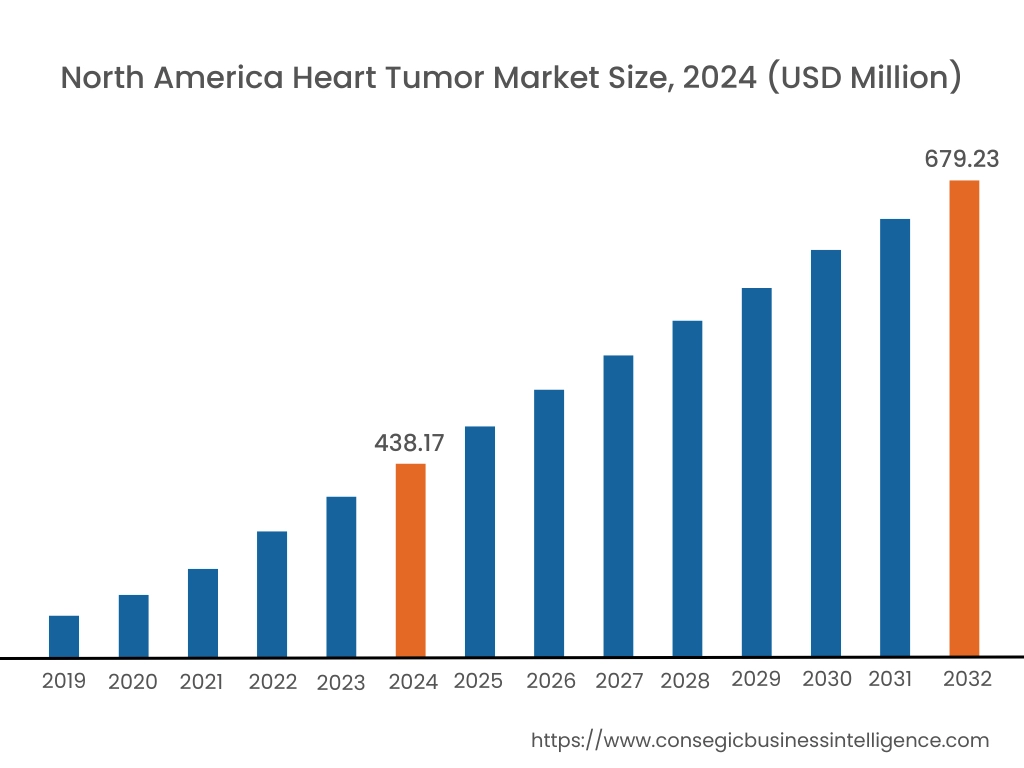
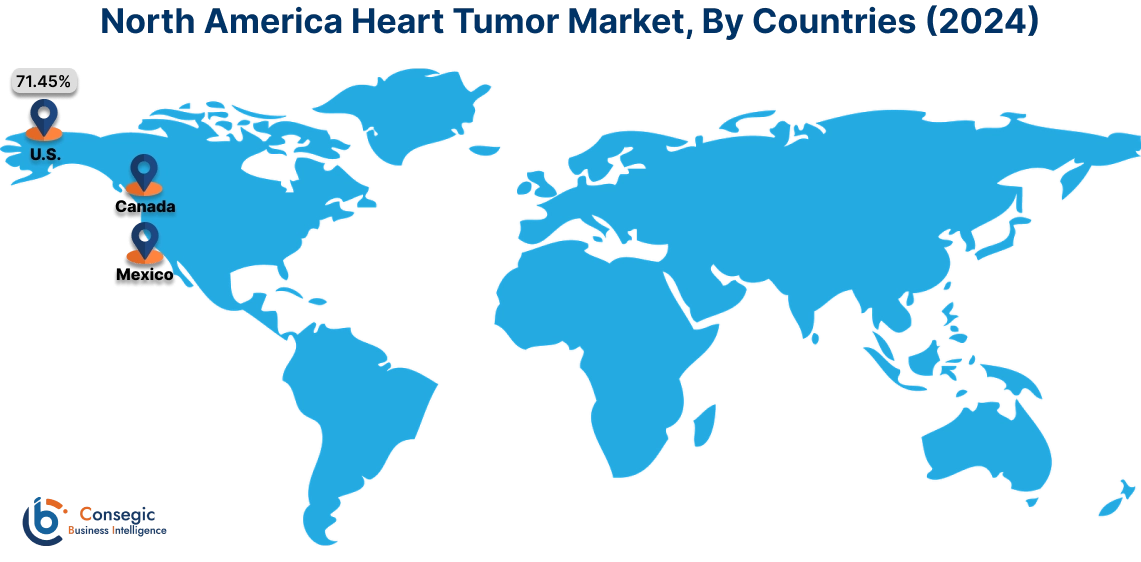
In 2024, North America accounted for the highest market share at 42.31% and was valued at USD 438.17 Million and is expected to reach USD 679.23 Million in 2032. In North America, United States accounted for the highest market share of 71.45% during the base year of 2024. The heart tumor market share of North America is significant due to well-established healthcare industry and rising government initiatives. The region benefits from advanced healthcare technology and growing adoption of digital imaging systems. The healthcare providers in the region are adopting modern surgical techniques such as robotic assisted surgery for improving clinical outcomes in the treatment. Moreover, the rising prevalence of melanoma, lung cancer and breast cancer cases in the region is driving the market.
- In 2024, according to American Cancer Society, about 100,640 new melanomas cases are diagnosed in the United States. Melanoma causes cardiac metastatic affecting myocardium and epicardium in the heart which results in secondary heart tumor.
Thus, North America is leading in the market due to high prevalence of melanoma and advanced healthcare technology as per analysis.
Asia-pacific is expected to witness the fastest CAGR of 7.5% over the forecast period during 2025-2032. As per heart tumor market analysis, Asia-Pacific region is experiencing rapid growth in the market driven by high prevalence of lung, breast cancer, and melanoma in countries like China, India, and Japan. The region’ s growing population and urbanization also contribute to increased healthcare demand leading to medical facilities with advanced diagnostic techniques. The hospitals and clinics in the region are largely incorporating modern diagnostic methods for the accurate and confirmed diagnosis of heart tumor. Additionally, the advancement in healthcare technology and improved accessibility in both rural and urban areas is expanding the market.
Thus, heart tumor market share of Asia-Pacific is expanding due to rising prevalence of lung, breast cancer and improved healthcare infrastructure as per market analysis.
According to heart tumor market analysis, Europe region is experiencing steady growth in the market driven by high prevalence of breast cancer and advanced imaging technologies. The hospitals and clinics in the region are well equipped with modern diagnostic technology and skilled radiologists along with digital healthcare infrastructure. Clinics and diagnostic centers in the region are playing an important role in making advanced diagnosis and treatment services available to the patients. Research and developments in the region are focused on improving the MRI and reducing side effects associated with long-term use of contrast agents which further boosts the market demand in the region.
The Middle East and Africa region is experiencing gradual proliferation in the market, driven by increasing awareness, improving healthcare infrastructure and rising healthcare investments. The region is experiencing rapid growth in lung cancer cases along with melanoma further leading to cardiac metastatic affecting cardiac tissues in the pericardium and myocardium. Countries like Dubai, UAE, and South Arica are major contributors in the market where advanced hospitals and government organizations provide access to advanced imaging techniques. The diagnostic centers and private clinics in the region are widely adopting nuclear imaging, echocardiography, CT scan for the treatment of heart tumor as per analysis.
As per analysis, the market is growing steadily in Latin America driven by improving healthcare infrastructure and increasing adoption of advanced imaging techniques. Key factors driving growth include a higher prevalence of lung, breast cancer and an aging population. Countries like Brazil, Mexico, and Argentina are major contributors in the market due to advanced imaging technology centers and rising healthcare investments. The rise of diagnostic centers and private clinics has significantly impacted the availability of advanced diagnostic methods for the patients. Additionally, the growing awareness of early tumor detection alongside government support is expected to drive the market demand in the region.
Top Key Players and Market Share Insights:
The heart tumor industry is highly competitive with major players providing services in national and international markets. Key players are adopting several strategies in research and development (R&D) and product innovation to hold a strong position in the heart tumor market. Key players in the heart tumor industry include-
- Koninklijke Philips N.V. (Netherlands)
- FUJIFILM Corporation (Japan)
- Toshiba Corporation (Japan)
- Shimadzu Corporation (Japan)
- Integer Holdings Corporation (United States)
- Siemens Healthcare Private Limited (Germany)
- GE Healthcare (United States)
- TOMTEC Imaging SystemsGmbH (Germany)
- Boston Scientific Corporation (United States)
- CardioComm Solutions Inc. (Canada)
Recent Industry Developments :
Partnerships and Collaborations:
- In 2024, Royal Philips collaborated with Mayo Clinic for advancing MRI for cardiac applications. It will harness the power of artificial intelligence and the expertise of Mayo Clinic physicians to increase operational efficiency by shortening complex MRI in the diagnosis of heart tumor.
Heart Tumor Market Report Insights :
| Report Attributes | Report Details |
| Study Timeline | 2019-2032 |
| Market Size in 2032 | USD 1,680.21 Million |
| CAGR (2025-2032) | 6.3% |
| By Tumor Type |
|
| By Type |
|
| By End User |
|
| By Region |
|
| Key Players |
|
| North America | U.S. Canada Mexico |
| Europe | U.K. Germany France Spain Italy Russia Benelux Rest of Europe |
| APAC | China South Korea Japan India Australia ASEAN Rest of Asia-Pacific |
| Middle East and Africa | GCC Turkey South Africa Rest of MEA |
| LATAM | Brazil Argentina Chile Rest of LATAM |
| Report Coverage |
|
Key Questions Answered in the Report
How big is the heart tumor market? −
In 2024, the heart tumor market is USD 1,035.62 million.
Which is the fastest-growing region in the heart tumor market? +
Asia-Pacific is the fastest-growing region in the heart tumor market.
What specific segmentation details are covered in the heart tumor market? +
Tumor type, type, and end-user are covered in the heart tumor market.
Who are the major players in the heart tumor market? +
Koninklijke Philips N.V. (Netherlands), FUJIFILM Corporation (Japan), and Siemens Healthcare Private Limited (Germany) are some of the major players in the market.
Overview
Reputation & Certifications


Our Services
- Market Intelligence & Forecasting
- Custom Research Solutions
- Market Entry Strategy
- Competitive Intelligence
- Customer Insights
- Industry Innovation Analysis
- Investment Advisory