Jump to Content
In-Flight Voice Recognition Market - Size, Share, Industry Trends, and Forecasts (2025-2032)
In-Flight Voice Recognition Market Size:
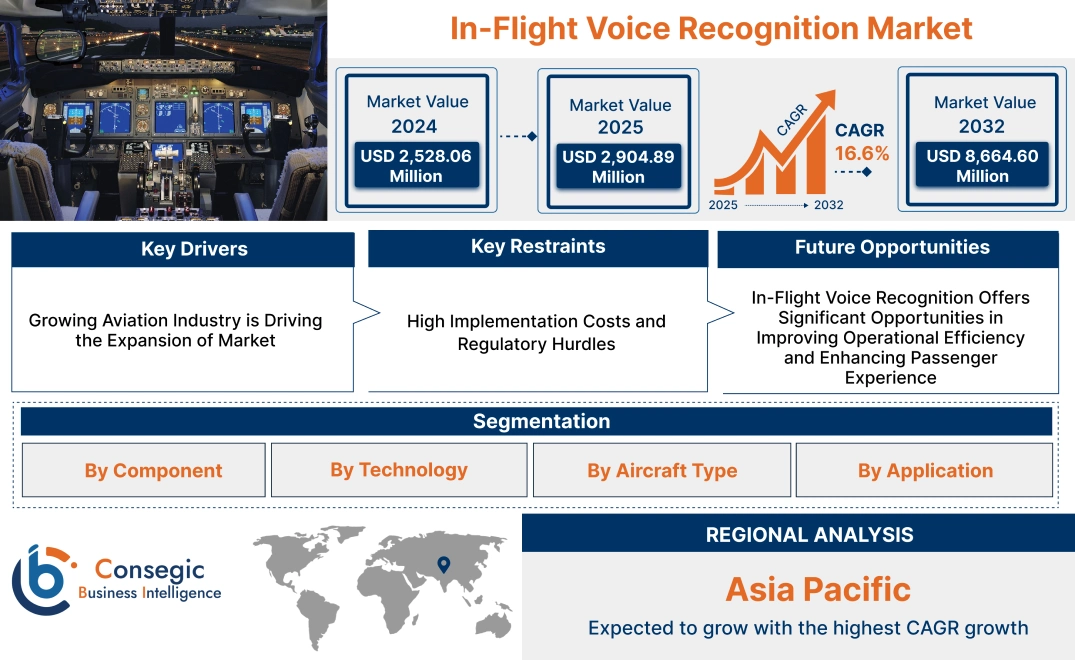
In-Flight Voice Recognition Market is estimated to reach over USD 8,664.60 Million by 2032 from a value of USD 2,528.06 Million in 2024 and is projected to grow by USD 2,904.89 Million in 2025, growing at a CAGR of 16.6% from 2025 to 2032.
In-Flight Voice Recognition Market Scope & Overview:
In-flight voice recognition market encompasses technologies that enable passengers and crew to interact with aircraft systems through voice commands. The market is experiencing significant growth, driven by advancements in artificial intelligence and a rising demand for personalized and contactless experiences. In-flight voice recognition enhances safety by reducing manual tasks for pilots and crew, streamlines operations, and significantly improves the overall passenger experience. in-flight voice recognition offers a wide range of applications, including cabin crew controlling environmental settings, pilots accessing critical flight data, and passengers seamlessly managing in-flight entertainment and services. Additionally, the growth of aviation industry is primarily driven by the ever-increasing demand for global connectivity and travel, fueled by factors like globalization, economic growth, and the desire for faster and more convenient transportation which in turn fuels the in-flight voice recognition market.
In-Flight Voice Recognition Market Dynamics - (DRO) :
Key Drivers:
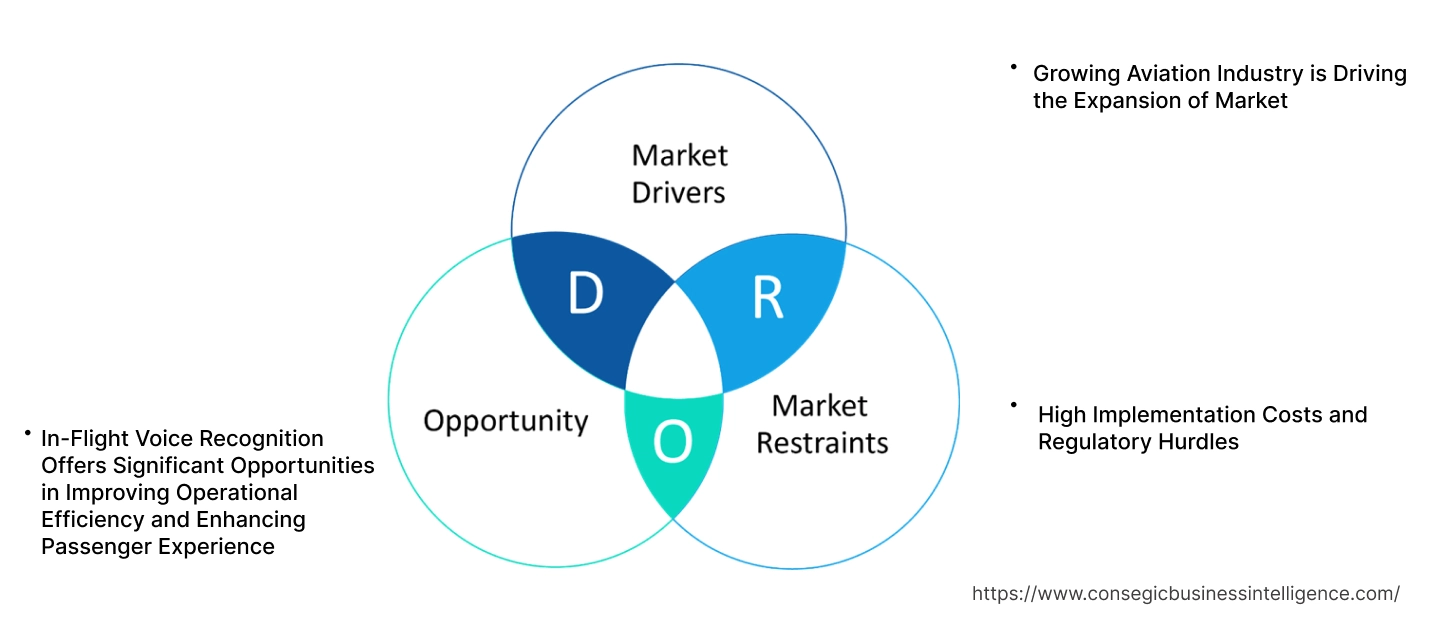
Growing Aviation Industry is Driving the Expansion of Market
The escalating growth of the aviation sector is a major catalyst for the burgeoning in-flight voice recognition market. As air travel demand surges, airlines are actively seeking innovative solutions to enhance passenger experiences and streamline their operations. Voice recognition technology offers a powerful tool to achieve these goals. Moreover, by integrating voice-controlled interfaces, airlines can empower passengers with hands-free control over in-flight voice recognition systems, allowing them to effortlessly select movies, adjust volume, and browse content. Furthermore, voice recognition can revolutionize passenger service by enabling seamless communication with flight attendants for requests such as food orders, assistance with baggage, or inquiries about flight information. This not only enhances the passenger experience but also streamlines cabin crew operations, leading to increased efficiency and reduced service times.
- For instance, according to Boeing’s Commercial Market Outlook (CMO), South Asia aviation market is poised for significant growth, with a projected fourfold increase in fleet size over the next two decades. Boeing's forecast for the region by the year 2042 anticipates 2,705 new aircraft deliveries, with 72% dedicated to fleet expansion and 28% allocated to replacing older models with more fuel-efficient ones.
Thus, growing aviation industry is driving the expansion of in-flight voice recognition market.
Key Restraints:
High Implementation Costs and Regulatory Hurdles
The in-flight voice recognition market faces significant hurdles in the form of high implementation costs and stringent regulatory requirements. Integrating voice recognition technology into aircraft necessitates substantial investments in hardware, software, and system integration. This includes the procurement of advanced microphones, powerful processors, and robust communication networks. Additionally, airlines must invest in training programs for flight crews and maintenance personnel to effectively utilize these systems.
Furthermore, the aviation industry is subject to rigorous safety regulations and stringent data privacy laws. Implementing voice recognition technology requires careful consideration of these regulations, including obtaining necessary certifications and ensuring compliance with data protection standards. This regulatory scrutiny can significantly increase development timelines and add to the overall implementation costs in turn restraining the growth of in-flight voice recognition market.
Future Opportunities :
In-Flight Voice Recognition Offers Significant Opportunities in Improving Operational Efficiency and Enhancing Passenger Experience
In-flight voice recognition technology presents significant opportunities for enhancing both operational efficiency and passenger experience within the aviation sector. By integrating voice-controlled interfaces, airlines can streamline various processes. Aircraft maintenance technicians can utilize voice commands to access maintenance manuals, document inspection findings, and communicate with ground personnel, leading to faster and more efficient maintenance procedures. Similarly, flight attendants can use voice commands to place orders, request assistance, and communicate with the cockpit, improving service delivery and reducing workload.
Further, for passengers, voice recognition offers a more intuitive and personalized travel experience. Passengers can effortlessly control entertainment systems, select movies, adjust volume, and browse content using voice commands, enhancing their entertainment experience. Furthermore, passengers can easily request services such as food and beverages, inquire about flight information, and request assistance from flight attendants using voice commands, improving convenience and satisfaction. In conclusion, in-flight voice recognition technology has the potential to revolutionize the aviation industry by streamlining operations and enhancing passenger satisfaction.
In-Flight Voice Recognition Market Segmental Analysis :
By Component:
Based on the component, the market is segmented into hardware, software, and services
Trends in the Component:
- Increasing trend towards smaller, more compact, and less intrusive hardware components is driving the in-flight voice recognition market.
- Growing demand for customized services tailored to specific airline needs and passenger preferences driving the in-flight voice recognition market.
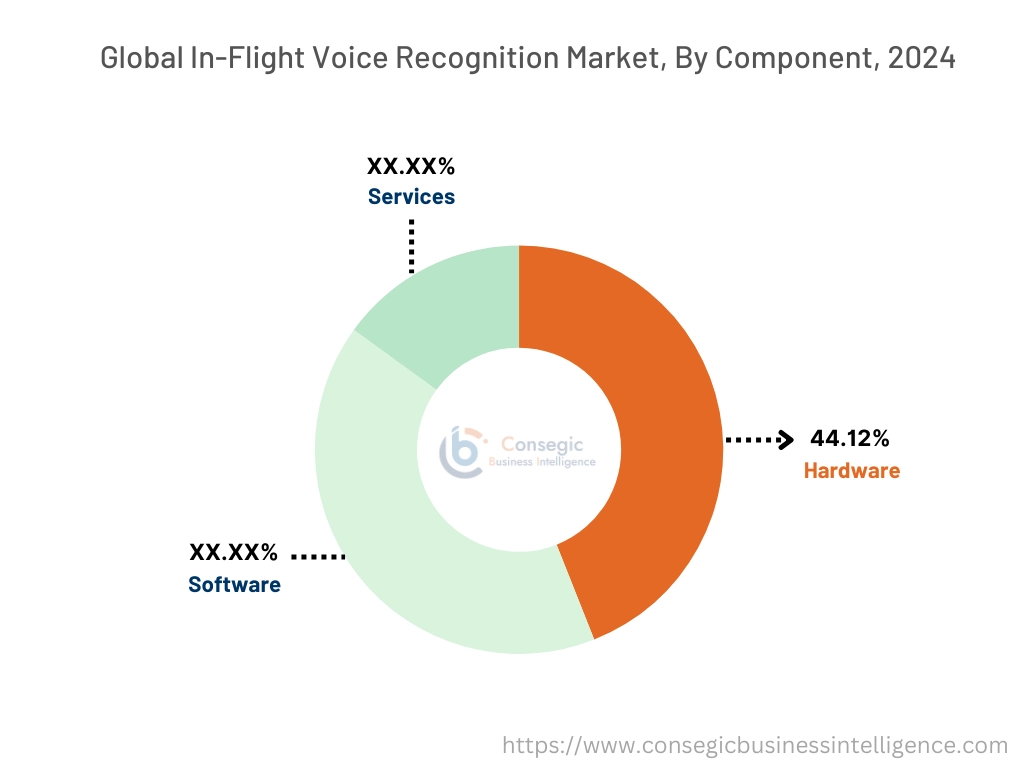
Hardware accounted for the largest revenue share of 44.12% in the year 2024.
- Development of advanced noise cancellation technologies to improve accuracy in noisy aircraft environments.
- Further, integration of hardware with other in-flight IoT devices for a more connected and seamless experience is driving the hardware component.
- Growing emphasis on developing hardware components that are highly durable, reliable, and resistant to extreme temperatures, vibrations, and other environmental factors.
- Thus, emphasis on developing hardware components that are highly durable and integration of hardware with other in-flight IoT devices is driving the hardware component of market.
Services is anticipated to register the fastest CAGR during the forecast period.
- Integration of predictive maintenance capabilities to anticipate and prevent potential issues with voice recognition systems is expected to boost the services segment
- Further, provision of comprehensive customer support services, including training, troubleshooting, and ongoing maintenance is driving the in-flight voice recognition market.
- Furthermore, increasing adoption of cloud-based solutions is driving the growth of the services segment. Cloud-based services offer scalability, flexibility, and cost-effectiveness, making them an attractive option for airlines.
- As per analysis predictive maintenance and increasing adoption of cloud-based solutions is anticipated to boost the in-flight voice recognition market during the forecast period.
By Technology:
Based on the technology, the market is bifurcated into voice recognition and speech recognition
Trends in the Technology:
- The integration of technologies including AI and ML are driving significant advancements in voice recognition technology.
- The emergence of edge computing allows for faster processing and reduced latency, making voice recognition more responsive and efficient in the in-flight environment
Speech Recognition accounted for the largest revenue share in the year 2024 and is expected to grow with the highest CAGR
- The integration of voice biometrics, such as speaker recognition, enhances security and personalization. This allows for secure authentication and personalized settings based on individual voice profiles.
- Further, speech recognition is increasingly being integrated with other in-flight systems, such as entertainment systems, cabin management systems, and aircraft maintenance systems, creating a more seamless and interconnected user experience.
- Thus, integration of voice biometrics and integration with other in-flight systems is driving the in-flight voice recognition market.
By Aircraft Type:
Based on the aircraft type, the market is segmented into commercial aviation, military aviation, and general aviation
Trends in the Aircraft Type:
- Strong emphasis on enhancing passenger experience through personalized services, improved in-flight entertainment, and streamlined communication.
- Utilizing voice recognition for improved situational awareness in the cockpit, enabling faster and more accurate communication between pilots and crew members.
Commercial Aviation accounted for the largest revenue share in the year 2024.
- Increasing trend of focus on improving operational efficiency through automation of tasks, such as baggage handling, catering services, and aircraft maintenance.
- Further, integration of voice recognition technology for enhanced safety and security measures, such as emergency communications and security checks.
- Thus, based on analysis improved operational efficiency and integration of voice recognition technology is driving the market.
General Aviation is anticipated to register the fastest CAGR during the forecast period.
- Enhancing pilot safety through voice-controlled navigation systems, communication systems, and emergency alerts boosts the market growth
- Further, more comfortable and private travel experiences, catering to discerning travelers is driving the market.
- Furthermore, offering personalized experiences for passengers in private jets, such as customized in-flight entertainment and personalized service requests.
- Therefore, enhanced pilot safety through voice-controlled navigation systems is anticipated to boost the in-flight voice recognition market size.
By Application:
Based on the application, the market is segmented into in-flight entertainment, passenger assistance, aircraft maintenance, flight crew operations, and others
Trends in the Application:
- Improving situational awareness in the cockpit through clear and concise communication between crew members.
- Using voice data to identify potential maintenance issues and proactively schedule maintenance activities.
In-flight Entertainment accounted for the largest revenue share in the year 2024.
- Seamless integration with passengers' own devices (smartphones, tablets) for a more personalized and interactive experience.
- Further, exploring the use of voice control for more immersive in-flight entertainment experiences, such as augmented reality and virtual reality.
- Furthermore, offering customized entertainment options based on passenger preferences and past behavior.
- Thus, as per analysis use of voice control for more immersive in-flight entertainment experiences driving the segment.
Passenger Assistance is anticipated to register the fastest CAGR during the forecast period.
- Anticipating passenger needs and proactively offering assistance, such as recommending nearby attractions or suggesting dining options.
- Further, providing multilingual support to cater to a diverse passenger base is driving the share of passenger assistance.
- Therefore, aforementioned factors are anticipated to boost the size of passenger assistance segment.
Regional Analysis:
The regions covered are North America, Europe, Asia Pacific, Middle East and Africa, and Latin America.
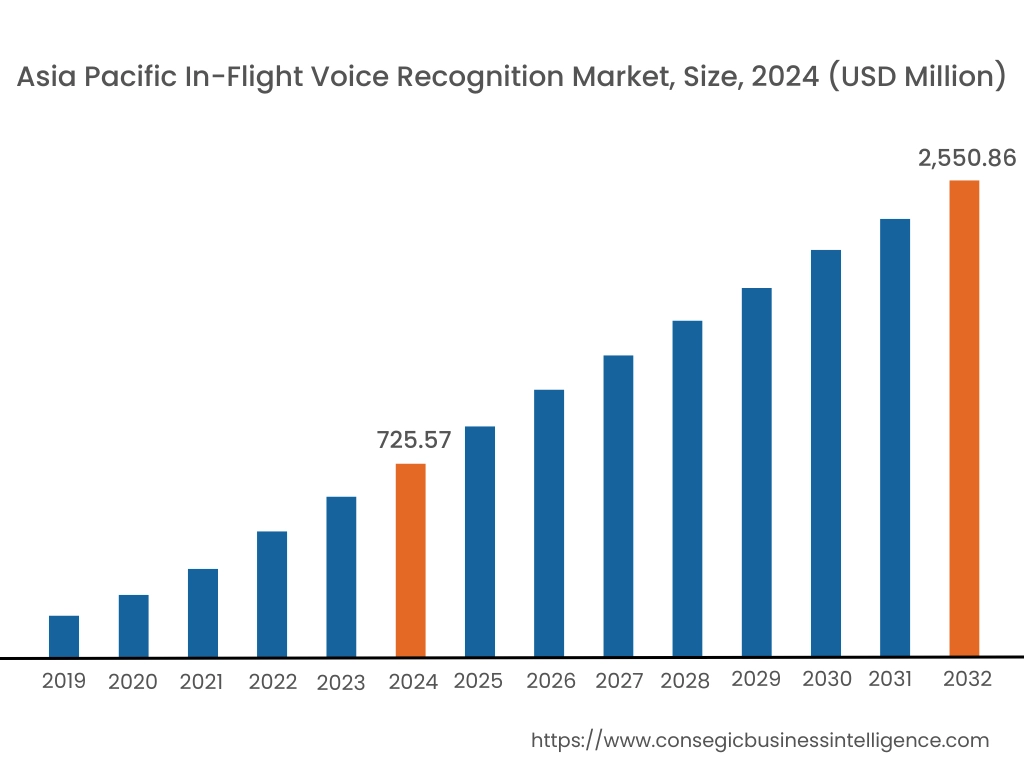
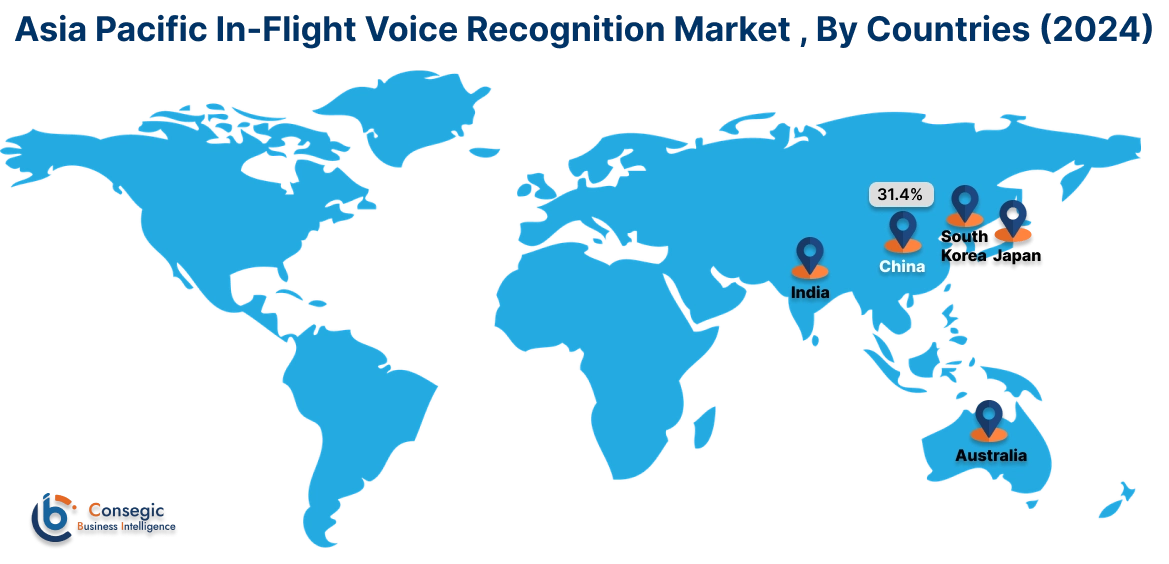
Asia Pacific region was valued at USD 725.57 Million in 2024. Moreover, it is projected to grow by USD 835.51 Million in 2025 and reach over USD 2,550.86 Million by 2032. Out of this, China accounted for the maximum revenue share of 31.4%. As per research analysis, the in-flight voice recognition market is mainly driven by surge in air travel demand and strong focus on technological advancements. Furthermore, governments in the Asia Pacific region are actively promoting the development and adoption of advanced technologies, including in the aviation sector. This support accelerates the growth of the in-flight voice recognition market.
North America is estimated to reach over USD 2,703.36 Million by 2032 from a value of USD 791.73 Million in 2024 and is projected to grow by USD 909.46 Million in 2025. The North American region's growing investment in technological advancement offer lucrative prospects for the in-flight entertainment market. Additionally, passengers in the region are increasingly demanding personalized experiences. In-flight voice recognition technology can be used to provide customized services, entertainment options, and other amenities, enhancing passenger satisfaction.
- For instance, according to Air Transport Action Group (ATAG), 4.7% of all employment and 4.7% of all GDP in the United States and Canada in 2023 contributed by the aviation sector. The presence of large aviation market results in the increased spending on personalized services.
The regional analysis shows that strong focus on passenger experience and investment in innovation and technology is driving the in-flight entertainment market in Europe. Additionally, the primary factors driving the market in the Middle East and African region are growing aviation sector, focus on modernization, and emphasis on luxury & personalized service. Further, as per the analysis, growing domestic and international travel, focus on enhancing passenger experience, and technological advancements are paving the way for the progress of in-flight entertainment trends in Latin America region.
Top Key Players and Market Share Insights:
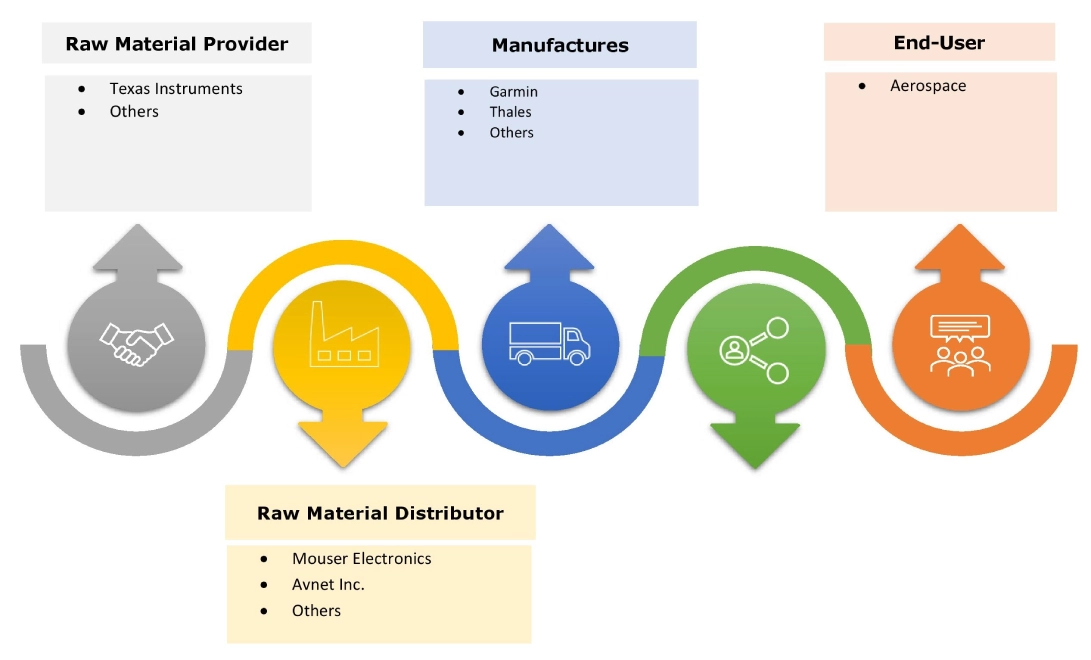
The global in-flight voice recognition market is highly competitive with major players providing solutions to the national and international markets. Key players are adopting several strategies in research and development (R&D), product innovation, and end-user launches to hold a strong position in the in-flight voice recognition market. Key players in the in-flight voice recognition market include-
- RTX (US)
- Collins Aerospace (US)
- NLR - Royal Netherlands Aerospace Centre (Netherlands)
- Airbus S.A.S. (France)
- Garmin (US)
- VoiceFlight Systems LLC (US)
- Thales Group France (France)
- SRI INTERNATIONAL (US)
- ADACEL SYSTEMS INC. (US)
- Honeywell International Inc (US)
Recent Industry Developments :
- For instance, in September 2024, AI released version 2.7.0.1 which includes two new features: AI Co-Pilot and Readback Enforcement. AI Co-Pilot is a virtual wingman that can take over all radio communications, allowing pilots to focus on flying. It can handle all ATC communications, including handoffs, frequency changes, and clearances. Pilots can control the co-pilot through voice-activated commands and choose from a variety of co-pilot personalities.
In-Flight Voice Recognition Market Report Insights :
| Report Attributes | Report Details |
| Study Timeline | 2019-2032 |
| Market Size in 2032 | USD 8,664.60 Million |
| CAGR (2025-2032) | 16.6% |
| By Component |
|
| By Technology |
|
| By Aircraft Type |
|
| By Application |
|
| By Region |
|
| Key Players |
|
| North America | U.S. Canada Mexico |
| Europe | U.K. Germany France Spain Italy Russia Benelux Rest of Europe |
| APAC | China South Korea Japan India Australia ASEAN Rest of Asia-Pacific |
| Middle East and Africa | GCC Turkey South Africa Rest of MEA |
| LATAM | Brazil Argentina Chile Rest of LATAM |
| Report Coverage |
|
Key Questions Answered in the Report
How big is the In-Flight Voice Recognition Market? −
The In-Flight Voice Recognition Market is estimated to reach over USD 8,664.60 Million by 2032 from a value of USD 2,528.06 Million in 2024 and is projected to grow by USD 2,904.89 Million in 2025, growing at a CAGR of 16.6% from 2025 to 2032.
What specific segmentation details are covered in the In-Flight Voice Recognition report? +
The In-Flight Voice Recognition report includes specific segmentation details for component, technology, aircraft type, application, and regions.
Which is the fastest segment anticipated to impact the market growth? +
In the In-Flight Voice Recognition Market, services is the fastest-growing segment during the forecast period due to the increasing demand for enhanced passenger experiences and improved operational efficiency.
Who are the major players in the In-Flight Voice Recognition Market? +
The key participants in the In-Flight Voice Recognition Market are RTX (US), Collins Aerospace (US), VoiceFlight Systems LLC (US), Thales Group France (France), SRI INTERNATIONAL (US), ADACEL SYSTEMS INC. (US), Honeywell International Inc (US), NLR - Royal Netherlands Aerospace Centre (Netherlands), Airbus S.A.S. (France), Garmin (US), and others.
What are the key trends in the In-Flight Voice Recognition Market? +
The In-Flight Voice Recognition Market is being shaped by several key trends including increasing demand for enhanced passenger experiences, advancements in artificial intelligence (AI) and machine learning, growing adoption of voice-enabled devices, and the need for improved safety and efficiency in aviation operations.
Overview
Reputation & Certifications


Our Services
- Market Intelligence & Forecasting
- Custom Research Solutions
- Market Entry Strategy
- Competitive Intelligence
- Customer Insights
- Industry Innovation Analysis
- Investment Advisory