Jump to Content
Makeup Market - Size, Share, Industry Trends, and Forecasts (2025-2032)
Makeup Market Size:
Makeup Market size is estimated to reach over USD 161.60 billion by 2032 from a value of USD 106.91 billion in 2024 and is projected to grow by USD 110.67 billion in 2025, growing at a CAGR of 5.3% from 2025 to 2032.
Makeup Market Scope & Overview:
Makeup products are cosmetic solutions formulated to enhance or alter the appearance of facial features, including skin, lips, and eyes. These include foundations, lipsticks, blushes, mascaras, and eyeliners, offering features like long-lasting wear, vibrant pigments, and skin-conditioning ingredients. These products improve aesthetic appeal, boost personal confidence, and often provide additional skincare benefits, including hydration and protection. Its trending usage is for personal grooming, professional environments, entertainment, and special occasions, meeting diverse consumer needs. Key end-use industries include personal care, retail, entertainment, and fashion, emphasizing innovative cosmetic products for various applications.
How is AI Impacting the Makeup Market?
AI is impacting the makeup market by delivering highly personalized consumer experiences. It is moving beyond a one-size-fits-all approach by using virtual try-on tools powered by augmented reality and computer vision. This allows customers to see how products look on their faces before buying, significantly boosting confidence, and reducing product returns. Additionally, AI-driven shade-matching algorithms analyze skin tone and undertones to provide precise foundation and concealer recommendations. AI also assists brands with demand forecasting and supply chain management by analyzing market trends and consumer data to optimize inventory and product development.

Makeup Market Dynamics - (DRO) :
Key Drivers:
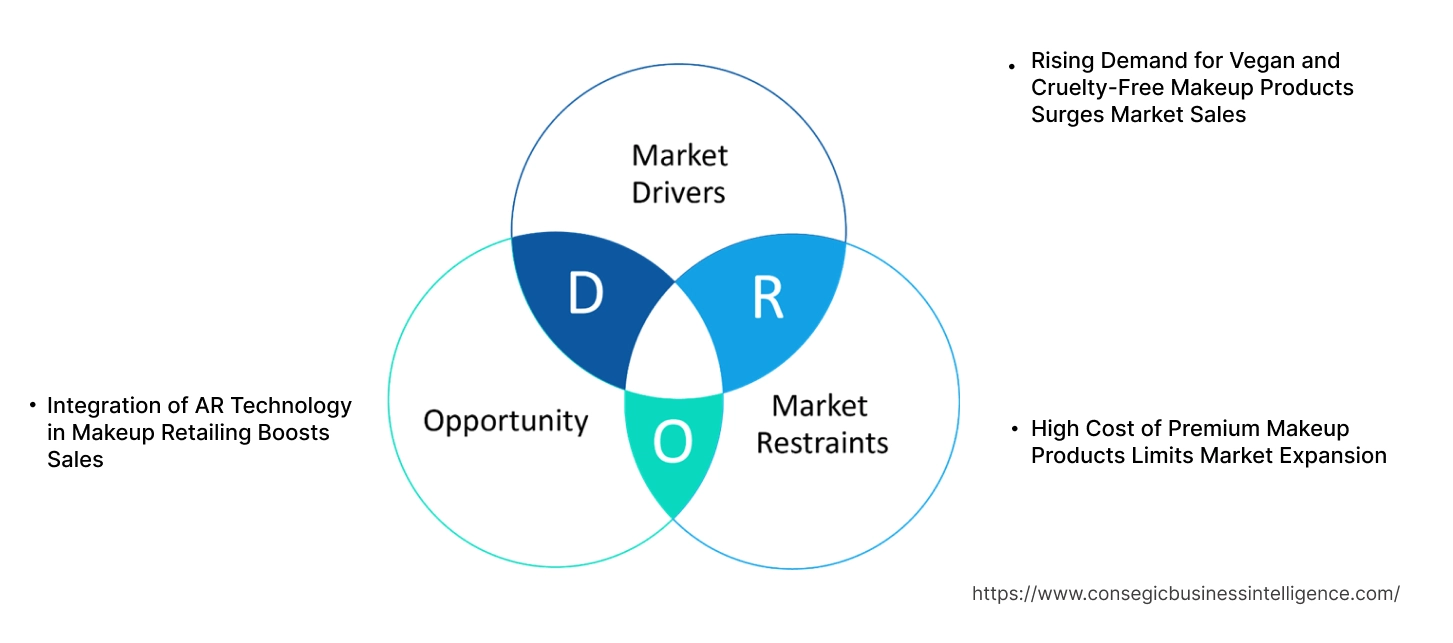
Rising Demand for Vegan and Cruelty-Free Makeup Products Surges Market Sales
The makeup market demand for vegan and cruelty-free products has surged as consumers prioritize ethical and sustainable choices. Vegan products excludes animal-derived ingredients like beeswax or carmine, ensuring that products cater to eco-conscious preferences. Similarly, cruelty-free certification assures buyers that the products have not undergone animal testing, building trust among ethical consumers. For example, brands such as Fenty Beauty and E.L.F. Cosmetics have expanded their product lines with vegan and cruelty-free offerings, which is trending with younger demographics, particularly millennials and Gen Z. These groups actively advocate for sustainability and animal welfare, often influencing purchasing trends through social media. As awareness of these issues continues to grow globally, particularly in developed markets such as North America and Europe, vegan and cruelty-free products are expected to play a pivotal role in driving the makeup market growth by meeting evolving consumer values.
Key Restraints:
High Cost of Premium Makeup Products Limits Market Expansion
Premium makeup products, characterized by exclusive formulations, luxury packaging, and superior quality, come at significantly higher price points compared to drugstore alternatives. These high costs create a barrier for price-sensitive consumers, particularly in developing economies where disposable incomes are lower. Moreover, mid-range and local brands offering cost-effective solutions further intensify competition for premium brands. For instance, budget-friendly brands like Maybelline or Nykaa Cosmetics provide comparable quality at affordable prices, diverting consumers from high-cost premium products. The disparity in affordability is especially evident in emerging markets in Asia-Pacific and Latin America, where consumers prioritize value for money. This pricing gap stubs the makeup market trend of premium products, thereby restraining their contribution to the overall market growth.
Future Opportunities :
Integration of AR Technology in Makeup Retailing Boosts Sales
Augmented Reality (AR) is poised to revolutionize the sector by enhancing the shopping experience, particularly in e-commerce and physical retail, opening multiple makeup market opportunities. AR-powered tools allow customers to virtually try on products, such as lipsticks or foundations, without physically applying them. This innovation addresses hygiene concerns and facilitates accurate product selection, reducing purchase hesitations. For example, Sephora's Virtual Artist and L'Oréal's ModiFace provide AR-based solutions, enabling consumers to experiment with various shades and styles in real time. These tools have gained traction during the rise of online shopping, particularly post-pandemic, as consumers increasingly value convenience and interactivity creating multiple creative opportunities. The integration of AR technology in retailing is expected to expand further, as advancements in AI and smartphone capabilities make these tools more user-friendly. This technological shift presents a significant makeup market opportunities for brands to differentiate themselves, increase conversion rates, and foster customer loyalty.
Makeup Market Segmental Analysis :
By Product Type:
Based on product type, the market is segmented into facial, eye, lip, and nail.
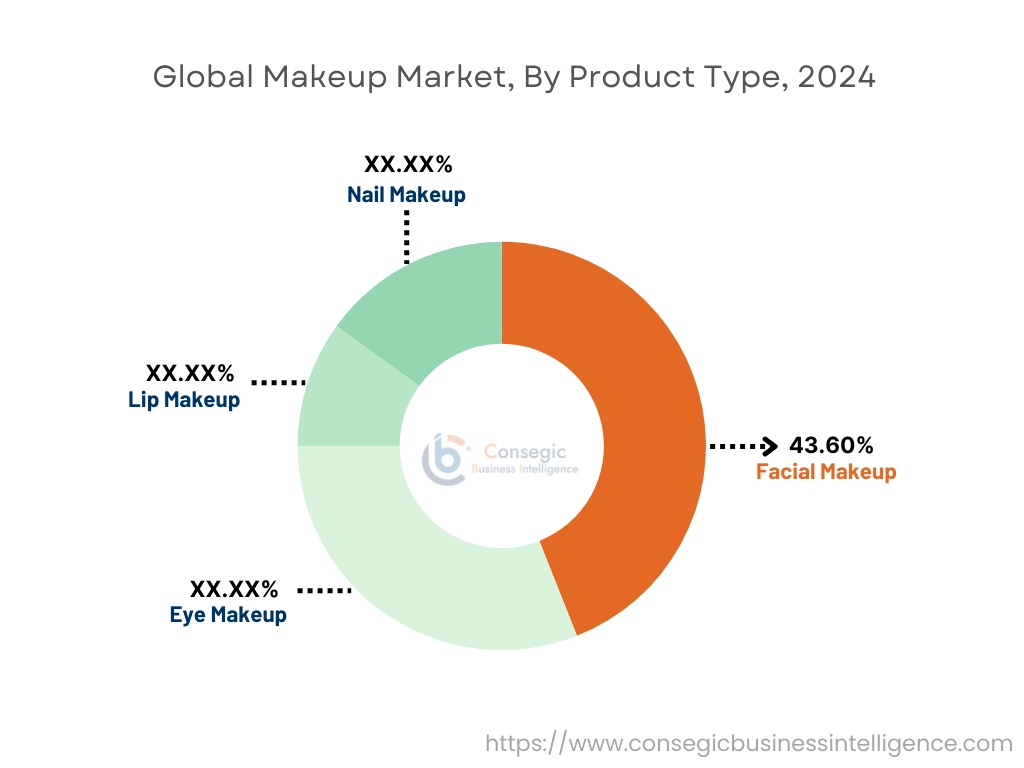
The facial segment accounted for the largest revenue share by 43.60% in 2024.
- Facial products include foundation, concealer, blush, highlighter, and compact powder designed to enhance skin texture and appearance.
- These products are widely adopted due to their versatility and ability to address diverse skin concerns like uneven tone, blemishes, and dullness.
- The makeup market demand is bolstered by product innovations such as lightweight formulations, long-lasting effects, and the inclusion of SPF for skin protection.
- Enhanced consumer focus on skincare-infused products has further driven the preference for facial makeup products.
- Hence, according to makeup market analysis, facial makeup leads to market growth due to its extensive consumer base and ongoing advancements in product formulation.
The eye segment is anticipated to register the fastest CAGR during the forecast period.
- Eye products comprise mascara, eyeliner, eyeshadow, and brow products used to define and accentuate the eyes.
- Growing interest in bold and creative eye looks, supported by social media trends and influencer campaigns, is driving adoption.
- Waterproof and smudge-proof innovations have increased product appeal among consumers with active lifestyles.
- Rising need for premium and organic eye product options contributes to segment trends.
- The Makeup Market analysis suggests that the eye segment is projected to gain momentum due to evolving makeup market trends and increasing consumer preference for expressive and high-performance products.
By Distribution Channel:
Based on distribution channel, the market is segmented into online platforms, supermarkets/hypermarkets, specialty stores, and others.
The specialty stores segment accounted for the largest revenue share in makeup market share in 2024.
- Specialty stores provide a curated shopping experience with expert consultations, personalized recommendations, and exclusive product launches.
- These outlets ensure access to premium and professional-grade brands, enhancing consumer satisfaction.
- The ability to test and sample products before purchase significantly influences buying decisions, driving revenue.
- Loyalty programs and in-store events further solidify customer engagement in this segment.
- Thus, the analysis of segment trends suggests that specialty stores dominate the market trends, owing to their tailored services and focus on customer-centric experiences, leading to the makeup market growth.
The online platforms segment is anticipated to register the fastest CAGR during the forecast period.
- Online platforms offer unmatched convenience, variety, and competitive pricing, making them increasingly popular among tech-savvy consumers.
- Integration of AI-driven personalization and virtual try-on features enhances the online shopping experience.
- Collaborations with influencers and exclusive online product launches have boosted visibility and sales.
- Rising internet penetration and smartphone adoption further drive growth in emerging economies.
- Therefore, according to market analysis, online platforms segment is set for expansion due to its accessibility, technological advancements, and evolving consumer shopping preferences.
By End-User:
Based on end-user, the market is segmented into individual consumers and professional makeup artists.
The individual consumers segment accounted for the largest revenue share in makeup market share in 2024.
- Individual consumers form the primary customer base, driven by everyday use, social occasions, and self-care routines.
- Availability of affordable and high-quality products caters to a diverse demographic, ensuring steady demand.
- Rising awareness about grooming and beauty among men and women alike has further expanded this segment.
- Direct-to-consumer (DTC) strategies adopted by brands enhance accessibility and engagement with end-users.
- Thus, the analysis of segment trends shows that the dominance of individual consumers has a critical role in makeup market expansion across all product categories.
The professional makeup artists segment is anticipated to register the fastest CAGR during the forecast period.
- Professional makeup artists rely on premium-quality, performance-focused products for events, photoshoots, and special occasions.
- Increasing need for specialized services like bridal makeup and theatrical looks drives this segment.
- Growth in the entertainment and fashion industries directly influences the adoption of professional-grade makeup products.
- Training academies and certifications encourage a steady influx of professionals into the industry.
- Therefore, the analysis of market trends shows that professional makeup artists segment showcases significant growth potential due to expanding industries requiring specialized expertise.
Regional Analysis:
The regions covered are North America, Europe, Asia Pacific, the Middle East and Africa, and Latin America.
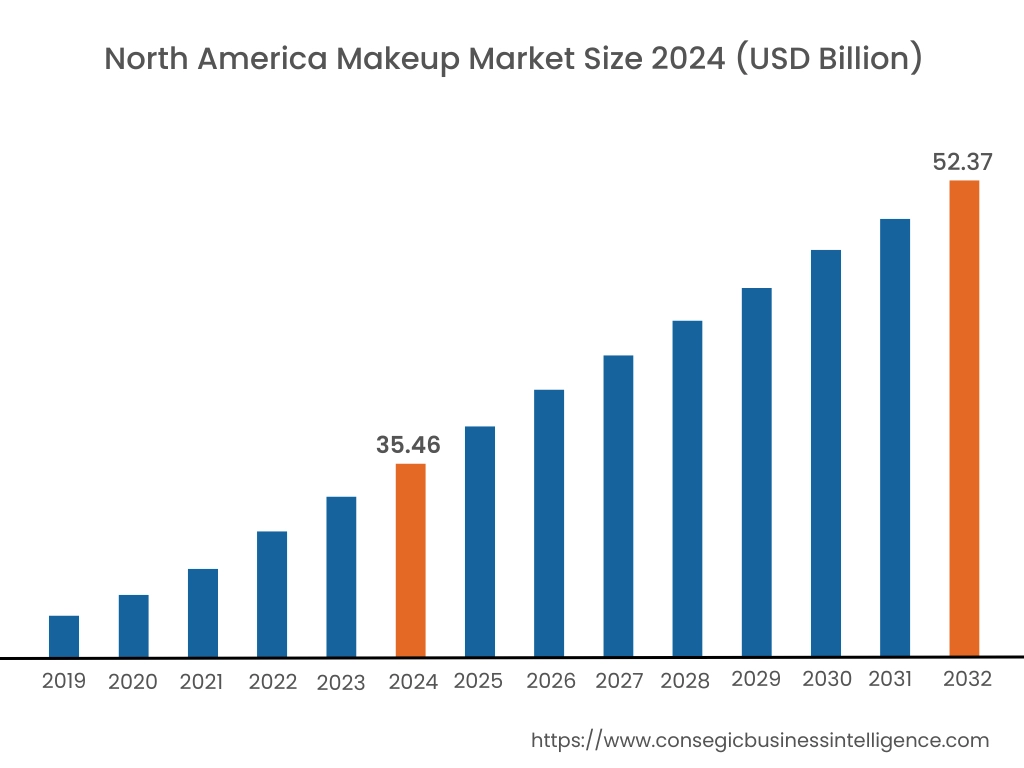
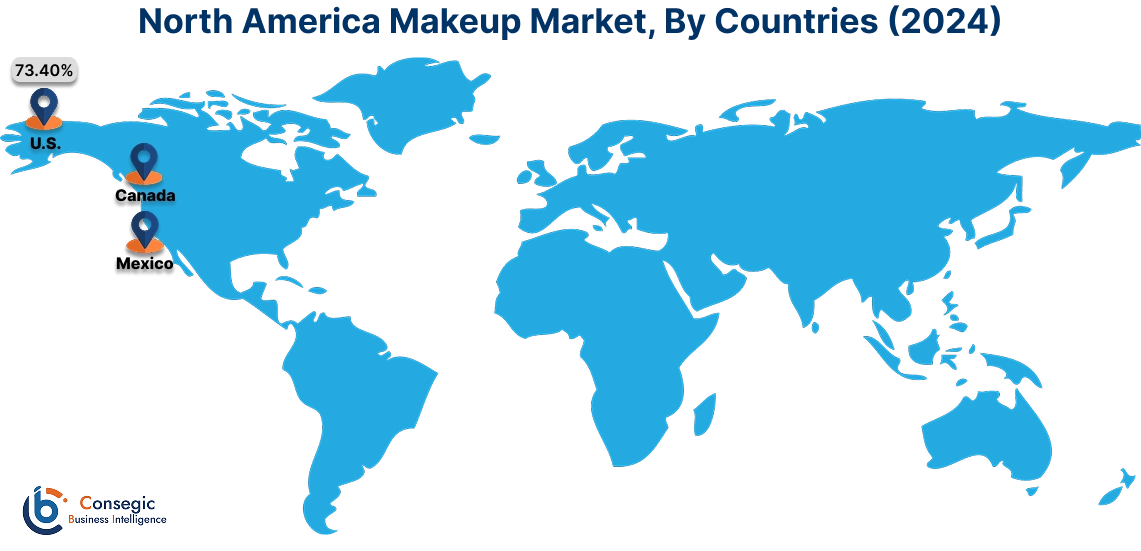
In 2024, North America was valued at USD 35.46 billion and is expected to reach USD 52.37 billion in 2032. In North America, the U.S. accounted for the highest share of 73.40% during the base year of 2024. The makeup industry in North America benefits from a strong preference for premium and organic products. The United States and Canada witness high demand for innovative cosmetics, supported by a robust retail network. Social media influence and celebrity endorsements further enhance consumer interest in luxury brands. Additionally, increasing awareness of clean beauty fuels the makeup market expansion of sustainable and cruelty-free products market.
In Asia Pacific, the market is experiencing the fastest growth with a CAGR of 5.7% over the forecast period. Asia-Pacific dominates the makeup industry due to rising disposable incomes and the popularity of skincare-infused makeup. Countries like China, Japan, and South Korea experience significant need for multifunctional cosmetics, driven by consumer preference for efficiency. E-commerce platforms play a key role in expanding product accessibility, particularly in urban areas. Cultural emphasis on beauty and frequent product launches contribute to the dynamic nature of this regional market.
Europe's makeup market benefits from a well-established cosmetic industry and increasing interest in natural and vegan products. Countries like France, Germany, and Italy emphasize sustainable packaging and ethical sourcing of raw materials. Regulatory standards encourage transparency in product labeling, influencing consumer purchasing behavior. Local brands leverage heritage and innovation to cater to diverse consumer preferences, strengthening regional market performance.
The market in the Middle East and Africa sees steady demand, driven by rising urbanization and an increasing number of working women. Countries like the UAE and Saudi Arabia witnessed growing interest in high-end cosmetics and international brands. The market is influenced by cultural preferences for modest makeup and vibrant color palettes. Limited local production leads to heavy reliance on imported products in this region.
In Latin America, the market is shaped by rising consumer spending on personal care and cosmetics. Countries like Brazil and Mexico showcase growing demand for affordable and mid-range brands. Regional brands emphasize local ingredients and cultural relevance, resonating with consumers. Economic disparities across the region impact market penetration, but expanding e-commerce platforms are addressing accessibility challenges.
Top Key Players & Market Share Insights:
The global makeup market is highly competitive with major players providing products to the national and international markets. Key players are adopting several strategies in research and development (R&D), product innovation, and end-user launches to hold a strong position in the makeup market. Key players in the global makeup industry include-
- L'Oréal S.A. (France)
- Estée Lauder Companies Inc. (United States)
- Shiseido Company, Limited (Japan)
- LVMH Moët Hennessy Louis Vuitton (France)
- Mary Kay Inc. (United States)
- Procter & Gamble Co. (United States)
- Coty Inc. (United States)
- Revlon, Inc. (United States)
- Chanel S.A. (France)
- Unilever PLC (United Kingdom)
Recent Industry Developments :
Product launches:
- In October 2024, Bottega Veneta's launched its first Eau de Parfum, inspired by Venice, features five exotic scents with natural ingredients. The luxurious bottles, crafted with Murano glass techniques, are refillable and eco-friendly.
Makeup Market Report Insights:
| Report Attributes | Report Details |
| Study Timeline | 2019-2032 |
| Market Size in 2032 | USD 161.60 Billion |
| CAGR (2025-2032) | 5.3% |
| By Product Type |
|
| By Distribution Channel |
|
| By End-User |
|
| By Region |
|
| Key Players |
|
| North America | U.S. Canada Mexico |
| Europe | U.K. Germany France Spain Italy Russia Benelux Rest of Europe |
| APAC | China South Korea Japan India Australia ASEAN Rest of Asia-Pacific |
| Middle East and Africa | GCC Turkey South Africa Rest of MEA |
| LATAM | Brazil Argentina Chile Rest of LATAM |
| Report Coverage |
|
Key Questions Answered in the Report
How big is the Makeup Market? −
In 2024, the Makeup Market was USD 106.91 billion.
What will be the potential market valuation for the Makeup Market by 2032? +
In 2031, the market size of Makeup Market is expected to reach USD 150.91 billion and 161.60 billion by 2032.
What are the segments covered in the Makeup Market report? +
The product type, distribution channel and end-user are the segments covered in this report.
Who are the major players in the Makeup Market? +
L'Oréal S.A. (France), Estée Lauder Companies Inc. (United States), Shiseido Company, Limited (Japan), Procter & Gamble Co. (United States), Coty Inc. (United States), Revlon, Inc. (United States), Chanel S.A. (France), Unilever PLC (United Kingdom), LVMH Moët Hennessy Louis Vuitton (France), Mary Kay Inc. (United States) are the major players in the Makeup market.
Overview
Reputation & Certifications


Our Services
- Market Intelligence & Forecasting
- Custom Research Solutions
- Market Entry Strategy
- Competitive Intelligence
- Customer Insights
- Industry Innovation Analysis
- Investment Advisory