Jump to Content
Metagenomic Sequencing Market - Size, Share, Industry Trends, and Forecasts (2025-2032)
Metagenomic Sequencing Market Scope & Overview:
Metagenomic sequencing involves analyzing genetic material directly extracted from environmental or clinical samples. It enables the identification and characterization of microbial communities without requiring cultivation.
This technology offers features like high-throughput sequencing, comprehensive microbial profiling, and detection of rare organisms. It supports advanced research by providing insights into microbial diversity, gene functions, and evolutionary relationships.
Its benefits include enhanced diagnostic accuracy, improved understanding of microbial ecosystems, and accelerated research in genomics. Applications extend to healthcare, environmental monitoring, agriculture, and biotechnology industries. End-use sectors include hospitals, research institutions, pharmaceutical companies, and environmental agencies seeking advanced solutions for microbial analysis and related applications.
Metagenomic Sequencing Market Size:
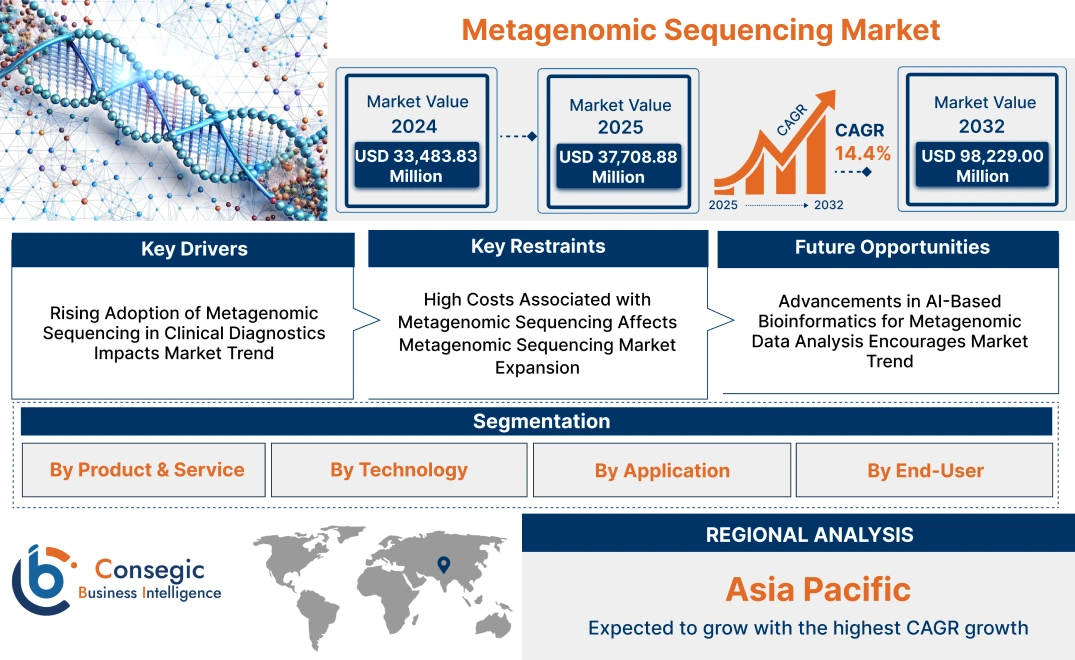
Metagenomic Sequencing Market size is estimated to reach over USD 98,229.00 Million by 2032 from a value of USD 33,483.83 Million in 2024 and is projected to grow by USD 37,708.88 Million in 2025, growing at a CAGR of 14.4% from 2025 to 2032.
Metagenomic Sequencing Market Dynamics - (DRO) :
Key Drivers:
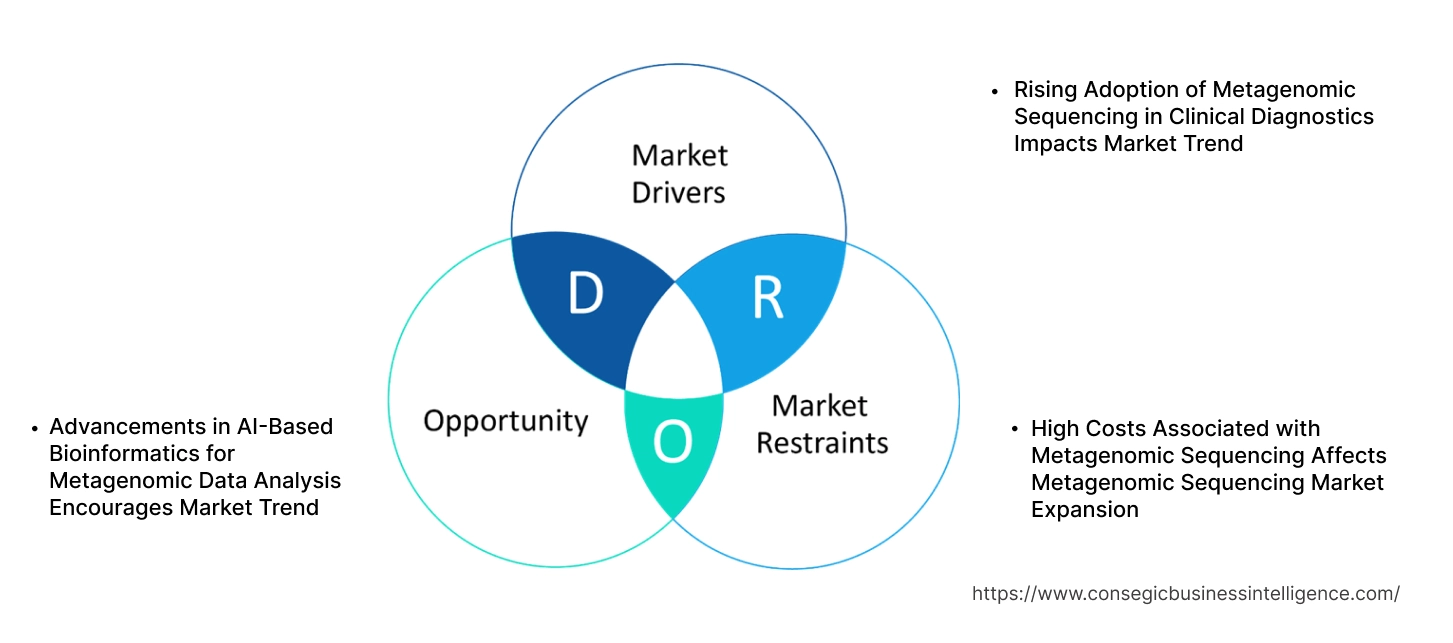
Rising Adoption of Metagenomic Sequencing in Clinical Diagnostics Impacts Market Trend
Metagenomic sequencing is increasingly utilized in clinical diagnostics for identifying pathogens in complex and unexplained infections. Unlike traditional diagnostic methods, which often require targeted approaches, metagenomic sequencing provides unbiased, comprehensive data by analyzing genetic material from a wide range of microorganisms. This enhances diagnostic accuracy and expedites treatment decisions.
For example, hospitals are employing metagenomic sequencing to diagnose sepsis and other life-threatening infections, where early detection is critical for patient outcomes. This technology eliminates the need for prolonged culture-based tests, reducing diagnosis time significantly.
Thus, its expanding application in clinical diagnostics boosts its adoption, contributing to the metagenomic sequencing market growth.
Key Restraints:
High Costs Associated with Metagenomic Sequencing Affects Metagenomic Sequencing Market Expansion
The cost of metagenomic sequencing remains a significant barrier to widespread adoption, particularly in developing economies. Expenses include equipment procurement, consumables, and skilled personnel required for data analysis and interpretation.
For instance, a single sequencing run, including sample preparation and bioinformatics, can cost thousands of dollars, making it inaccessible for smaller research labs or low-resource clinical settings. Moreover, insurance coverage for metagenomic diagnostics is limited, further restricting its utilization.
Therefore, the high cost associated with metagenomic sequencing hinders its widespread adoption and limits metagenomic sequencing market growth.
Future Opportunities :
Advancements in AI-Based Bioinformatics for Metagenomic Data Analysis Encourages Market Trend
The integration of artificial intelligence (AI) and machine learning (ML) into bioinformatics is expected to revolutionize metagenomic data analysis. AI-driven algorithms can process vast amounts of genetic data more quickly and accurately, enabling researchers and clinicians to identify pathogens and analyze microbial communities with greater precision.
For instance, emerging AI tools are being developed to streamline metagenomic workflows by automating annotation and interpretation processes. These advancements reduce analysis time and operational costs, making metagenomic sequencing more accessible.
Thus, advancements in AI-based bioinformatics present significant metagenomic sequencing market opportunities for the trend of the market in the near future.
Top Key Players and Market Share Insights:
The Global Metagenomic Sequencing Market is highly competitive with major players providing products and services to the national and international markets. Key players are adopting several strategies in research and development (R&D), product innovation, and end-user launches to hold a strong position in the Global Metagenomic Sequencing Market. Key players in the Metagenomic Sequencing industry include-
- Illumina, Inc. (United States)
- Thermo Fisher Scientific Inc. (United States)
- Agilent Technologies, Inc. (United States)
- Becton, Dickinson and Company (BD) (United States)
- SegaGen, Inc. (United States)
- Qiagen N.V. (Germany)
- Pacific Biosciences of California, Inc. (United States)
- Oxford Nanopore Technologies Ltd. (United Kingdom)
- Bio-Rad Laboratories, Inc. (United States)
- PerkinElmer, Inc. (United States)
Metagenomic Sequencing Market Segmental Analysis :
By Product & Service:
Based on product and service, the market is segmented into instruments, kits & reagents, services, and software.
The kits & reagents sector accounted for the largest revenue in metagenomic sequencing market share in 2024.
- Kits & reagents are critical for sample preparation, DNA/RNA extraction, and library construction in metagenomic sequencing workflows.
- These products are widely adopted due to their ease of use, high specificity, and accuracy in detecting microorganisms from complex samples.
- Advances in reagent chemistry and automation-compatible kits have increased their efficiency and reliability.
- The metagenomic sequencing market demand for reliable and standardized reagents in clinical diagnostics and research is also contributing to their dominance in the market.
- Additionally, the availability of improved and ready-to-use reagent kits accelerates adoption in both academic and commercial sectors.
- Therefore, according to metagenomic sequencing market analysis, kits & reagents are essential due to their role in accurate sample preparation, driving their large market share.
The services sector is anticipated to register the fastest CAGR during the forecast period.
- Services include sequencing-as-a-service and data analysis solutions offered by specialized companies and research institutions.
- Growing outsourcing trends among pharmaceutical and biotechnology companies for sequencing and bioinformatics are propelling the metagenomic sequencing market demand for these services.
- Additionally, the availability of end-to-end metagenomics services, covering sample collection to data interpretation, has enhanced accessibility for non-specialist users.
- The rise of personalized medicine and the need for expert bioinformatics services further drive the trend of this sector.
- Increased awareness of the advantages of outsourced sequencing over in-house operations is also influencing market dynamics.
- Thus, according to metagenomic sequencing market analysis, the increasing reliance on outsourced sequencing services and customized data analysis is projected to fuel the rapid trend of this segment.
By Technology:
Based on technology, the market is segmented into shotgun metagenomic sequencing, 16S rRNA sequencing, whole-genome sequencing, and others.
The shotgun metagenomic sequencing sector accounted for the largest revenue in metagenomic sequencing market share in 2024.
- Shotgun sequencing is a high-throughput approach that provides comprehensive insights into microbial diversity and functional analysis.
- This technology is preferred for its ability to sequence all genetic material in a sample, delivering detailed profiles of microbial communities.
- It is widely used in drug discovery, disease diagnostics, and environmental studies due to its capability to analyze unculturable microbes.
- Shotgun sequencing provides unparalleled depth, allowing researchers to analyze complex samples with greater precision.
- Its adaptability to a variety of sample types and research areas has made it the leading choice in metagenomic sequencing.
- The ability to provide an in-depth view of microbial ecosystems underpins the widespread adoption of shotgun sequencing, driving the metagenomic sequencing market expansion.
The 16S rRNA sequencing sector is anticipated to register the fastest CAGR during the forecast period.
- 16S rRNA sequencing is a targeted approach focusing on bacterial and archaeal identification through specific gene regions.
- Its cost-effectiveness and ease of use make it suitable for large-scale microbiome studies, particularly in gut microbiome research.
- The increasing focus on microbiome-based therapeutic development and diagnostics is bolstering the adoption of this technology.
- The simplicity of the process, along with the ability to profile diverse bacterial communities efficiently, is fueling metagenomic sequencing market trend.
- Its application in clinical microbiology and food safety is further driving its rapid adoption.
- The cost advantages and growing applications in microbiome research are accelerating the demand for 16S rRNA sequencing.
By Application:
Based on application, the market is segmented into infectious disease diagnostics, environmental monitoring, drug discovery, agriculture, gut microbiome analysis, and others.
The infectious disease diagnostics sector accounted for the largest revenue share in 2024.
- Metagenomic sequencing enables the precise detection of pathogens without prior knowledge of their genomic sequences.
- It is increasingly used for diagnosing complex infections, antimicrobial resistance profiling, and identifying emerging pathogens.
- The growing burden of infectious diseases and the need for advanced diagnostic tools are major factors driving this segment.
- The ability to identify a wide range of pathogens in a single test is significantly improving the speed and accuracy of diagnostics.
- Rising concerns over antibiotic resistance are further boosting the adoption of metagenomic sequencing in diagnostics.
- The high prevalence of infectious diseases and the need for advanced pathogen detection are contributing to the dominance of this application.
The gut microbiome analysis sector is anticipated to register the fastest CAGR during the forecast period.
- Gut microbiome analysis helps in understanding host-microbe interactions, which are crucial for developing therapeutic interventions for metabolic and immune disorders.
- The rising interest in personalized medicine and dietary interventions based on microbiome profiles is boosting demand for metagenomic sequencing in this field.
- Growing research into the links between the gut microbiome and diseases like obesity, diabetes, and neurological disorders is fueling metagenomic sequencing market trend.
- Advances in data analysis techniques and the emergence of microbiome-based therapies are further enhancing the sector's expansion.
- The growing awareness about the gut microbiome's role in overall health is contributing to its increasing clinical importance.
- The growing emphasis on personalized health solutions and therapeutic advancements is fueling the rapid expansion of gut microbiome analysis.
By End User:
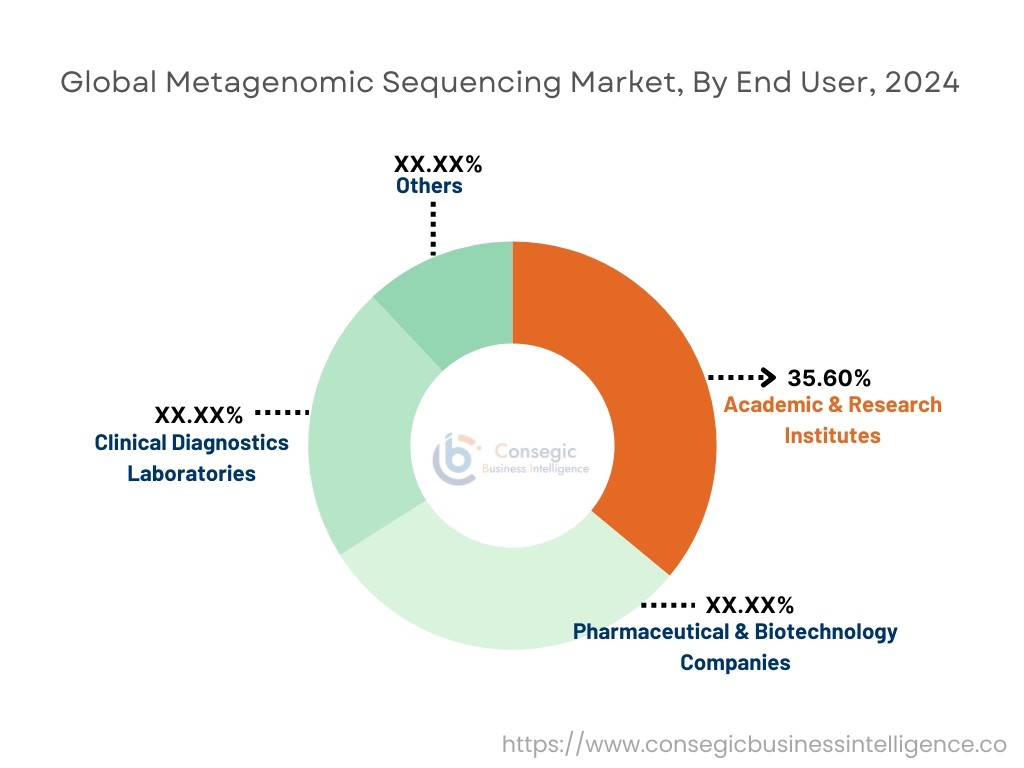
Based on end-user, the market is segmented into academic & research institutes, pharmaceutical & biotechnology companies, clinical diagnostics laboratories, and others.
The academic & research institutes sector accounted for the largest revenue share by 35.60% in 2024.
- Academic and research institutions extensively utilize metagenomic sequencing for microbial ecology studies, evolutionary research, and disease mechanisms.
- Availability of research funding and collaborative initiatives focusing on microbiome and pathogen research contribute significantly to this segment's revenue.
- Increased governmental and private sector investment in genomics research further strengthens this segment's growth prospects.
- The involvement of academic institutions in pioneering research is accelerating the development of new sequencing technologies and applications.
- As a major source of innovation, academic institutions remain a central driver of metagenomic sequencing advancements.
- The pivotal role of academic institutions in advancing microbial and genomic research supports their leading position in the market.
The clinical diagnostics laboratories sector is anticipated to register the fastest CAGR during the forecast period.
- Clinical laboratories are adopting metagenomic sequencing for precise infectious disease diagnostics, antibiotic resistance detection, and biomarker discovery.
- Increasing partnerships with diagnostic companies and integration of sequencing into routine diagnostic workflows are fueling this segment’s growth.
- The rising prevalence of chronic diseases and infections is driving the demand for more accurate and efficient diagnostic tools.
- Metagenomic sequencing is transforming clinical diagnostics by enabling more personalized treatment strategies based on microbial profiles.
- As clinical laboratories continue to expand their genomic testing capabilities, the sector is expected to see rapid growth.
- The adoption of advanced sequencing techniques for clinical applications is driving the rapid growth of clinical diagnostics laboratories, further creating significant metagenomic sequencing market opportunities.
Metagenomic Sequencing Market Report Insights :
| Report Attributes | Report Details |
| Study Timeline | 2019-2032 |
| Market Size in 2032 | USD 98,229.00 Million |
| CAGR (2025-2032) | 14.4% |
| By Product & Service |
|
| By Technology |
|
| By Application |
|
| By End-User |
|
| By Region |
|
| Key Players |
|
| North America | U.S. Canada Mexico |
| Europe | U.K. Germany France Spain Italy Russia Benelux Rest of Europe |
| APAC | China South Korea Japan India Australia ASEAN Rest of Asia-Pacific |
| Middle East and Africa | GCC Turkey South Africa Rest of MEA |
| LATAM | Brazil Argentina Chile Rest of LATAM |
| Report Coverage |
|
Regional Analysis:
The regional segment includes North America, Europe, Asia Pacific, Middle East and Africa, and Latin America.
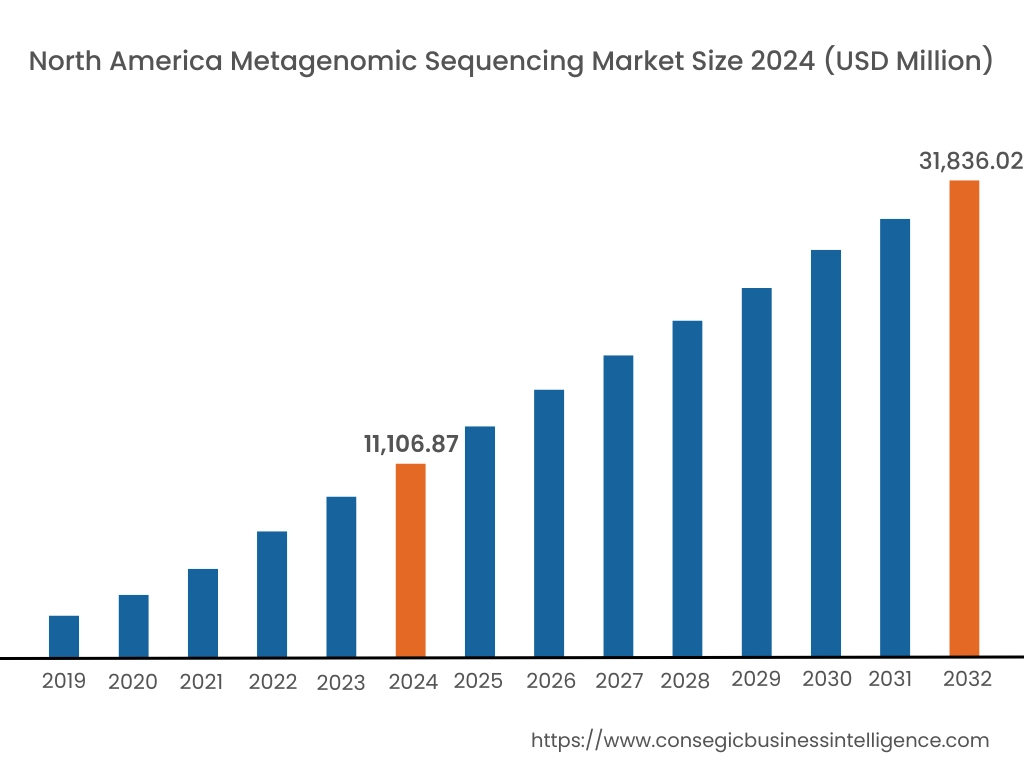
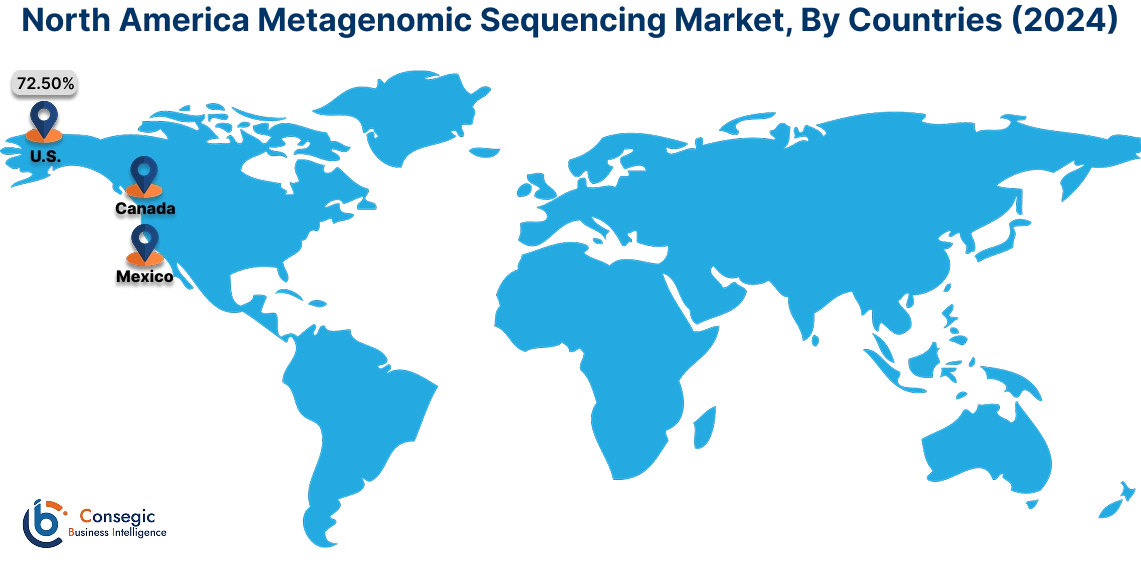
In 2024, North America was valued at USD 11,106.87 Million and is expected to reach USD 31,836.02 Million in 2032. In North America, the U.S. accounted for the highest share of 72.50% during the base year of 2024.
North America dominates the metagenomic sequencing market, driven by advanced research facilities, strong healthcare infrastructure, and significant investments in genomic technologies. The United States leads the region with its focus on innovative research and development in areas like microbiome studies and infectious disease diagnostics. Key players in the industry have a strong presence, enabling rapid technological advancements. Additionally, increasing government funding and the growing application of metagenomics in personalized medicine support the market’s development. However, the high cost of sequencing technologies and regulatory challenges remain constraints for widespread adoption.
In Asia Pacific, the market is experiencing the fastest growth with a CAGR of 14.9% over the forecast period.
The Asia-Pacific region is witnessing substantial progress in the metagenomic sequencing market. Countries like China, Japan, and India are focusing on enhancing their healthcare and research capabilities to expand metagenomic sequencing applications. China has become a hub for genomics research, with significant investments from both government and private sectors. The region benefits from the large population, offering a diverse microbial environment for metagenomic studies. However, challenges related to the availability of skilled professionals and high sequencing costs limit broader market accessibility, particularly in developing countries.
Europe has a well-established market for metagenomic sequencing, with strong emphasis on healthcare applications, including microbiome research and infectious disease detection. Countries like Germany, the United Kingdom, and France are at the forefront of research and clinical adoption. The European Union’s funding for scientific research and regulatory bodies, such as the European Medicines Agency (EMA), support innovation and standardization in metagenomics. However, there are hurdles, including the disparity in access to advanced sequencing technologies and healthcare systems across different countries. As a result, market penetration is uneven, with Western Europe outpacing Eastern Europe.
The Middle East and Africa (MEA) region faces challenges in developing a robust metagenomic sequencing market. Limited infrastructure, low awareness, and insufficient investment in research hinder market growth. However, countries like the UAE and South Africa are making progress by improving healthcare systems and research initiatives. The increased focus on genomics and microbiome research in these regions is helping to raise awareness and promote collaboration. Nonetheless, the market remains small, and advancements in sequencing technologies are primarily concentrated in specific countries with more developed healthcare infrastructure.
In Latin America, the metagenomic sequencing market is emerging, with Brazil, Mexico, and Argentina showing the most potential. The region benefits from growing research collaboration and an increasing focus on microbiome and genetic research. However, market adoption remains limited due to high costs, lack of specialized infrastructure, and insufficient awareness. Public and private sector investments in scientific research are increasing, which may help overcome these challenges. As healthcare systems improve and more initiatives focus on genomic studies, the market is expected to expand in the long term.
Recent Industry Developments :
Product launches:
- In October 2024, Illumina introduced the MiSeq i100 and i100 Plus, compact, low-cost benchtop gene sequencing devices priced at $49,000 and $109,000, respectively. These devices offer rapid results in just four hours and support various genetic testing applications, including cancer research and pathogen detection. They are designed to make sequencing more accessible for smaller research and testing laboratories.
Partnerships & Collaborations:
- In August 2024, Illumina partnered with the Broad Institute to develop new gene sequencing kits utilizing CRISPR technology, specifically through PerturbSeq screening. This collaboration aims to enhance large-scale gene sequencing, potentially revolutionizing disease and treatment research. Additionally, Illumina is collaborating with the Broad Institute and Harvard to conduct single-cell research sequencing using technology from Fluent BioSciences, which Illumina recently acquired.
Mergers and Acquisitions:
- In July 2024, Illumina, a leading gene-sequencing company, acquired Fluent BioSciences, a smaller competitor specializing in single-cell analysis kits. This acquisition has raised concerns for 10x Genomics, a company that also produces single-cell analysis kits compatible with Illumina's machines. Analysts suggest that Illumina's extensive customer base could boost Fluent's kit sales, potentially marginalizing 10x Genomics. Despite Illumina's assurance of maintaining an open platform and supporting partnerships with other kit manufacturers, skepticism remains about the future competitive landscape.
Key Questions Answered in the Report
How big is the Metagenomic Sequencing Market? −
In 2024, the Metagenomic Sequencing Market was USD 33,483.83 million.
What will be the potential market valuation for the Metagenomic Sequencing Market by 2032? +
In 2032, the market size of Metagenomic Sequencing Market is expected to reach USD 98,229.00 million.
What are the segments covered in the Metagenomic Sequencing Market report? +
The product and service, technology, application, and end-user are the segments covered in this report.
Who are the major players in the Metagenomic Sequencing Market? +
Illumina, Inc. (United States), Thermo Fisher Scientific Inc. (United States), Qiagen N.V. (Germany), Pacific Biosciences of California, Inc. (United States), Oxford Nanopore Technologies Ltd. (United Kingdom), Bio-Rad Laboratories, Inc. (United States), PerkinElmer, Inc. (United States), Agilent Technologies, Inc. (United States), Becton, Dickinson and Company (BD) (United States), SegaGen, Inc. (United States) are the major players in the Metagenomic Sequencing market.
Overview
Reputation & Certifications


Our Services
- Market Intelligence & Forecasting
- Custom Research Solutions
- Market Entry Strategy
- Competitive Intelligence
- Customer Insights
- Industry Innovation Analysis
- Investment Advisory