Jump to Content
Microplate Readers Market - Size, Industry Share, Growth Trends and Forecasts (2023 - 2030)
Microplate Readers Market Summary :
Consegic Business Intelligence analyzes that the Microplate Readers Market size is growing with a healthy CAGR of 5.7% during the forecast period (2023-2030), and the market is projected to be valued at USD 822.33 Million by 2030 from USD 527.78 Million in 2022. This steady market growth is driven by increasing demand for high-throughput screening, rising pharmaceutical R&D activities, and expanding applications in genomics and clinical diagnostics.
Key Market Trends & Insights:
- 2022 Market Size: USD 527.78 million
- 2030 Projected Market Size: USD 822.33 million
- CAGR (2022-2030): 5.7%
- North America accounted for 36.75% market share in 2022.
- North America market size reached USD 193.96 million in 2022 and is projected to hit USD 302.86 million by 2030.
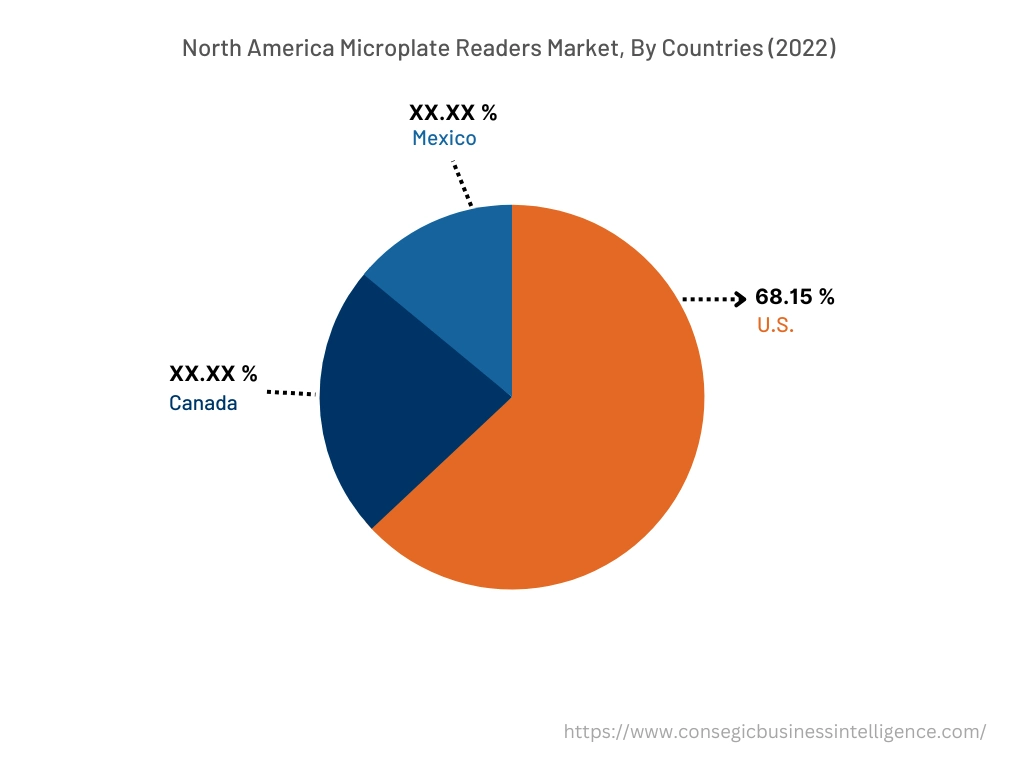
- The U.S. contributed 68.15% of North America’s market share in 2022.
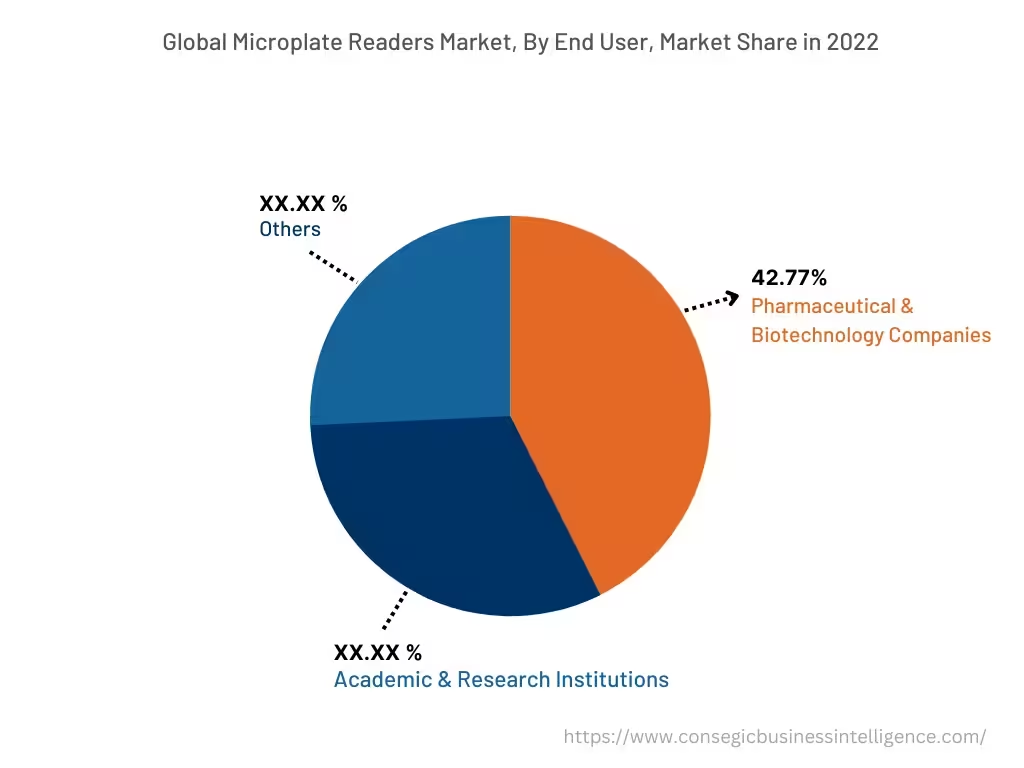
- Pharmaceutical & biotechnology companies held 42.77% market share in 2022.
- Single-mode readers dominated the product segment in 2022.
- Drug discovery was the largest application segment in 2022.
- Genomics & proteomics research is expected to be the fastest-growing application segment.
- Asia Pacific is projected to grow at a CAGR of 6.2%, the fastest region.
Microplate Readers Market Scope & Overview:
The microplate reader is laboratory equipment that is utilized to measure chemical, properties, biological or physical reactions, and ensure efficient sampling. The microplate is equipped with small wells to undertake separated reactions. These reactions in the microplate transform the presence of a sample or the development of biochemical processes within optical signals.
The microplate reader efficiently detects these signals and thus calibrates the parameter of interest. The prominent features of microplate readers include assay-specific features, sensitivity and read speed, and easy upgradability, among others. These features ensure superior user-friendliness of the microplate reader. As a result of the superior performance properties mentioned above, microplate readers are utilized in various applications, including drug discovery, genomics & proteomics research, clinical diagnostics, and others.
Microplate Readers Market Insights :

Microplate Readers Market Dynamics - (DRO) :
Key Drivers :
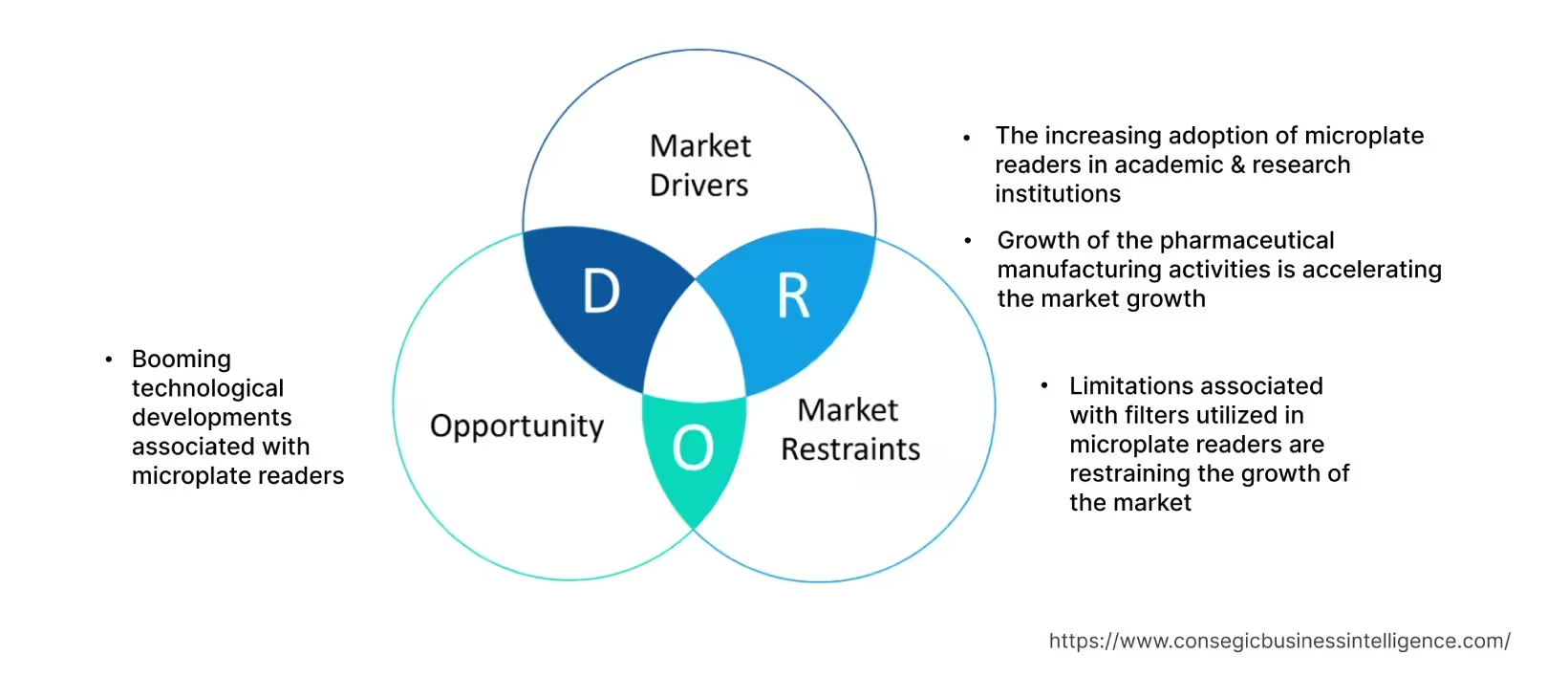
The increasing adoption of microplate readers in academic & research institutions
The microplate readers can efficiently handle up to 3,456 samples in minutes or seconds. Thus, the plate reader minimizes operational time and saves reagent costs. This enables the researchers in academic & research institutions to efficiently focus more on data analysis and the generation of accurate actionable insights. The increasing prevalence of chronic diseases, increasing demand for advanced research centers for healthcare, and others are some of the vital aspects contributing to the rise in the development of new academic and research institutes. For instance, in October 2022, the University of Leicester, located in the United Kingdom launched the Institute for Precision Health for the accurate diagnoses study. Hence, the development of new academic and research institutes at the global level is spurring the demand for microplate readers to efficiently detect biological. This, in turn, is driving the growth of the microplate readers market.
Growth of the pharmaceutical manufacturing activities is accelerating the market growth
Microplate readers are frequently utilized in the pharmaceutical industry for ensuring high-throughput drug screening. The growth of pharmaceutical manufacturing is attributed to factors, including the development of a new range of drugs, and increasing research & development activities, among others. For instance, according to the recent 2022 report named pharmaceutical industry figures published by the European Federation of Pharmaceutical Industries and Associations (EFPIA), in 2020, Europe pharmaceutical drug production was Euro 286,697 million (USD 320,950.1 million). In 2021, the Europe production of pharmaceuticals increased to Euro 300,000 million (USD 335,842.5 million), an increase of 4.6% over 2020. Hence, the growth of pharmaceutical manufacturing is accelerating the scanning activities of pharmaceutical drugs, which, in turn, is boosting market growth.
Key Restraints :
Limitations associated with filters utilized in microplate readers are restraining the growth of the market
The microplate readers are equipped with various diverse range of features, including integral dispensers, shakers, and efficient temperature control, among others. These features help in maintaining and driving reactions. As a result, microplate readers are often deployed in various end uses such as pharmaceutical & biotechnology companies, and academic & research institutions, among others. However, on the contrary, the limitations associated with filters utilized in microplate readers have several limitations, which are impacting the market growth. For illustration, filters employed in the manufacturing of microplate reader limits the wavelength range in the range of 400 and 750 nm. This impacts the functioning performance of the microplate reader. Thus, the limitations associated with filters utilized in microplate readers are restraining the growth of the market.
Future Opportunities :
Booming technological developments associated with microplate readers
The key players dealing in the microplate readers product range are substantially investing in the technological innovations of microplate readers, which are utilized for improved drug discovery and development, efficient diagnosis, and other similar applications in various industries such as pharmaceutical companies, research institutes, and others. As a result of this, microplate reader manufacturers are continuously leveraging their technological potential to develop new products with updated technological advancements. For instance, in February 2023, BMG LABTECH launched Advanced Assay Stability (AAS) system for microplate readers. Thus, the launch of new products with upgraded technology will create a potential opportunity for the expansion of the global microplate readers market.
Microplate Readers Market Report Insights :
| Report Attributes | Report Details |
| Study Timeline | 2017-2030 |
| Market Size in 2030 | USD 822.33 Million |
| CAGR (2023-2030) | 5.7% |
| By Product Type | Single-mode Readers and Multi-mode Readers |
| By Application | Genomics & Proteomics Research, Drug Discovery, Clinical Diagnostics, and Others |
| By End User | Pharmaceutical & Biotechnology Companies, Academic & Research Institutions, and Others |
| By Region | North America, Europe, Asia-Pacific, Latin America, and Middle East & Africa |
| Key Players | Molecular Devices, LLC., Thermo Fisher Scientific, Inc., BMG Labtech, PerkinElmer, Inc., Promega Corporation, Bio-Rad Laboratories, Lonza, Agilent Technologies, Inc., Enzo Life Sciences, and Berthold Technologies GmbH & Co. KG |
Microplate Readers Market Segmental Analysis :
By Product Type :
The product type segment is categorized into single-mode readers and multi-mode readers. In 2022, the single-mode readers segment accounted for the highest market share in the microplate readers market. The single-mode microplate readers can efficiently measure and detect technology. The single-mode microplate readers are utilized in laboratories to perform all the applications in one mode. For instance, with an absorbance microplate spectrophotometer, the single-mode microplate reader can efficiently measure enzyme activities, cell viability, the quantity of DNA & proteins, and many more. Therefore, due to the above benefits, the adoption of single-mode microplate readers is increasing, which, in turn, is driving segment growth.
This is due to the development of a new range of multi-mode readers. For instance, in April 2022, Molecular Devices, LLC., headquartered in the United States that manufactures microplate readers launched SpectraMax, a cost-effective multi-mode microplate reader. The product is ideal for application in academia and biotech laboratories. The prime aim of the company was to expand its product offering in the United States market.
By Application :
The application segment is categorized into genomics & proteomics research, drug discovery, clinical diagnostics, and others. In 2022, the drug discovery segment accounted for the highest market share in the microplate readers market. Microplate readers are an ideal solution for drug discovery, enabling researchers to quantify nucleic proteins and acids, efficiently assess how proteins & drugs interact, and study protein-protein interactions. Thus, microplate readers enable superior basic scientific inquiry for drug development. For instance, according to the European Federation of Pharmaceutical Industries and Associations (EFPIA), in 2019, the research and development associated with pharmaceutical and drug discovery in Europe were valued at Euro 37,754 million (USD 42,264.66 million), and in 2020, it was Euro 39,656 million (USD 44393.9 million), an increase of 5%. Hence, the increasing research and development for new drug discovery to efficiently measure physical reactions. This, in turn, is propelling the growth of the market.
However, genomics & proteomics research is expected to be the fastest-growing segment during the forecast period because of the increasing research and development activities.
By End User :
The end user segment is categorized into pharmaceutical & biotechnology companies, academic & research institutions, and others. In 2022, the pharmaceutical & biotechnology companies segment accounted for the highest market share of 42.77% in the overall microplate readers market. Microplate readers are employed by pharmaceutical & biotechnology companies to ensure efficient drug screening, target identification, and validation workflows. Furthermore, the utilization of microplate readers ensures the highest standards of quality as these systems focus on the details. This results in ensuring that the data for pharmaceuticals is accurate and consistent. For instance, according to India Brand Equity Foundation (IBEF), in the year 2020, the pharmaceuticals market in India was valued at USD 42.0 billion, and by the year 2024, it is projected at USD 65.0 billion, an increase of 54.8%. Henceforth, the growth of pharmaceutical production is accelerating the demand for microplate readers to improve routine laboratory processes. This prominent factor is accelerating market growth.
However, the academic & research institutions segment is expected to be the fastest-growing segment in the microplate readers market during the forecast period. This is due to increasing investment in new manufacturing facilities, rising research & development activities, and others.
By Region :
The regional segment includes North America, Europe, Asia Pacific, Middle East and Africa, and Latin America.
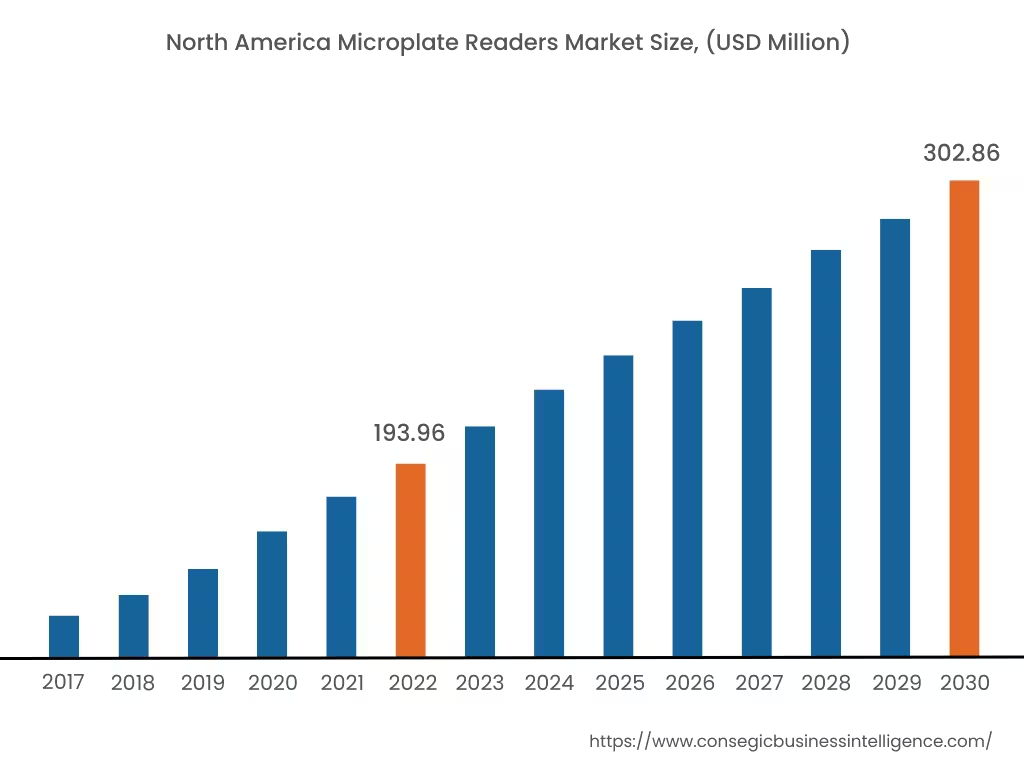
In 2022, North America accounted for the highest market share at 36.75% and was valued at USD 193.96 million, and is expected to reach USD 302.86 million in 2030. In North America, the U.S. accounted for the highest market share of 68.15% during the base year of 2022. This is due to the growth of drug discovery, increasing institutional & healthcare research, and others. For instance, according to the recent data published by the United States National Center for Science and Engineering Statistics, in 2020, the research and development in the United States healthcare sector were valued at USD 25,372 million, and in 2021, it was USD 27,532 million. The year-on-year growth rate of United States research and development in the healthcare sector was 8.5% in 2021. Thus, the increase in research and development in the North America healthcare sector is boosting the growth of academics and research institutes, which, in turn, is proliferating the microplate readers market growth in the region.
Furthermore, Asia Pacific is expected to witness significant growth over the forecast period, growing at a CAGR of 6.2% during 2023-20230. This is attributed to the growing demand for microplate readers from various end users, including pharmaceutical & biotechnology companies, academic & research institutions, and others.
Top Key Players & Market Share Insights :
The microplate readers market is highly competitive, with several large players and numerous small and medium-sized enterprises. These companies have strong research and development capabilities and a strong presence in the market through their extensive product portfolios and distribution networks. The market is characterized by intense competition, with companies focusing on expanding their product offerings and increasing their market share through mergers, acquisitions, and partnerships. The key players in the market include-
- Molecular Devices, LLC.
- Thermo Fisher Scientific, Inc.
- Agilent Technologies, Inc.
- Enzo Life Sciences
- Berthold Technologies GmbH & Co. KG
- BMG Labtech
- PerkinElmer, Inc.
- Promega Corporation
- Bio-Rad Laboratories
- Lonza Group AG
Recent Industry Developments :
- In February 2022, BMG LABTECH, a Germany-based medical device manufacturer introduced a new range of VANTAstar products. The microplate reader ensures simplified workflows. The primary focus of BMG LABTECH with this launch was to expand its market position in the global microplate readers industry.
Coclusion:- The microplate readers market is poised for steady growth, driven by increasing demand for advanced laboratory solutions, rising pharmaceutical R&D, and expanding healthcare infrastructure. As the industry evolves, innovations in automation, sensitivity, and scalability will play a crucial role in shaping the future. The market’s trajectory highlights strong opportunities for stakeholders across life sciences, diagnostics, and research sectors.
Key Questions Answered in the Report
What is the microplate readers market? −
The microplate readers market refers to the global industry focused on devices used to detect and measure biological, chemical, or physical reactions in microplate wells. These instruments convert biochemical reactions into optical signals, enabling precise analysis in laboratory settings. Microplate readers are widely used in drug discovery, clinical diagnostics, and genomics research. Their ability to process thousands of samples quickly makes them essential for high-throughput screening. With increasing demand for accurate and efficient laboratory analysis, the market is expanding across pharmaceutical companies, research institutions, and healthcare facilities globally.
What is the microplate readers market size and forecast? +
The microplate readers market size is expected to grow from USD 527.78 million in 2022 to USD 822.33 million by 2030, at a CAGR of 5.7%. This growth is driven by increasing pharmaceutical research, rising demand for advanced diagnostic tools, and expanding applications in life sciences. The forecast indicates steady expansion supported by technological advancements and increasing investments in healthcare research infrastructure. Emerging markets are expected to contribute significantly to future growth, driven by rising research activities and improved access to advanced laboratory technologies.
What are the key growth drivers of the market? +
The market is primarily driven by the increasing adoption of microplate readers in academic and research institutions and the growth of pharmaceutical manufacturing activities. These devices enable high-throughput screening, reducing operational time and improving efficiency. Rising prevalence of chronic diseases is driving demand for advanced diagnostics and drug discovery. Additionally, increasing global investments in healthcare R&D and expansion of research facilities are further accelerating market growth. The ability of microplate readers to deliver accurate and rapid results makes them essential tools in modern laboratories.
Which region dominates the microplate readers market and why? +
North America dominates the microplate readers market due to its advanced healthcare infrastructure, strong presence of pharmaceutical companies, and high investment in research and development. The region benefits from increasing drug discovery activities and well-established academic and research institutions. Additionally, government funding and technological advancements support the adoption of advanced laboratory equipment. The United States holds a significant share due to its robust R&D ecosystem and growing demand for precision diagnostics, making North America a leading contributor to global market revenue.
Which region is growing the fastest? +
Asia Pacific is expected to witness the fastest growth in the microplate readers market, driven by increasing healthcare investments, expansion of pharmaceutical industries, and rising research activities. Governments in the region are focusing on strengthening healthcare infrastructure and promoting scientific research. Additionally, the growing demand for advanced diagnostic tools and increasing prevalence of chronic diseases are fueling market expansion. The region’s large population base and rapid industrialization further contribute to its strong growth potential during the forecast period.
Which segments dominate the microplate readers market? +
The single-mode readers segment dominates the market due to its efficiency in performing specific assays with high accuracy. In terms of application, drug discovery holds the largest share, driven by increasing pharmaceutical research and development activities. Among end users, pharmaceutical and biotechnology companies lead the market with over 42.77% share, owing to their extensive use of microplate readers in drug screening and validation processes. These segments are expected to maintain their dominance due to continuous advancements and growing demand for high-throughput analysis.
What are the key applications of microplate readers? +
Microplate readers are widely used in drug discovery, clinical diagnostics, and genomics & proteomics research. In drug discovery, they enable researchers to study protein interactions and analyze biochemical reactions efficiently. In clinical diagnostics, they support accurate disease detection and monitoring. Additionally, in genomics and proteomics research, they facilitate the analysis of DNA, RNA, and proteins. Their versatility and ability to handle multiple samples simultaneously make them essential tools across various life science applications.
Overview
Reputation & Certifications


Our Services
- Market Intelligence & Forecasting
- Custom Research Solutions
- Market Entry Strategy
- Competitive Intelligence
- Customer Insights
- Industry Innovation Analysis
- Investment Advisory